ToolMage
Sign in

Best 1 Multi Model Chat AI tools for Chatbots

Popular Multi Model Chat AI tools in Chatbots include AI Chat, helping you work more efficiently.

AI Chat
Freemium

AI Chat

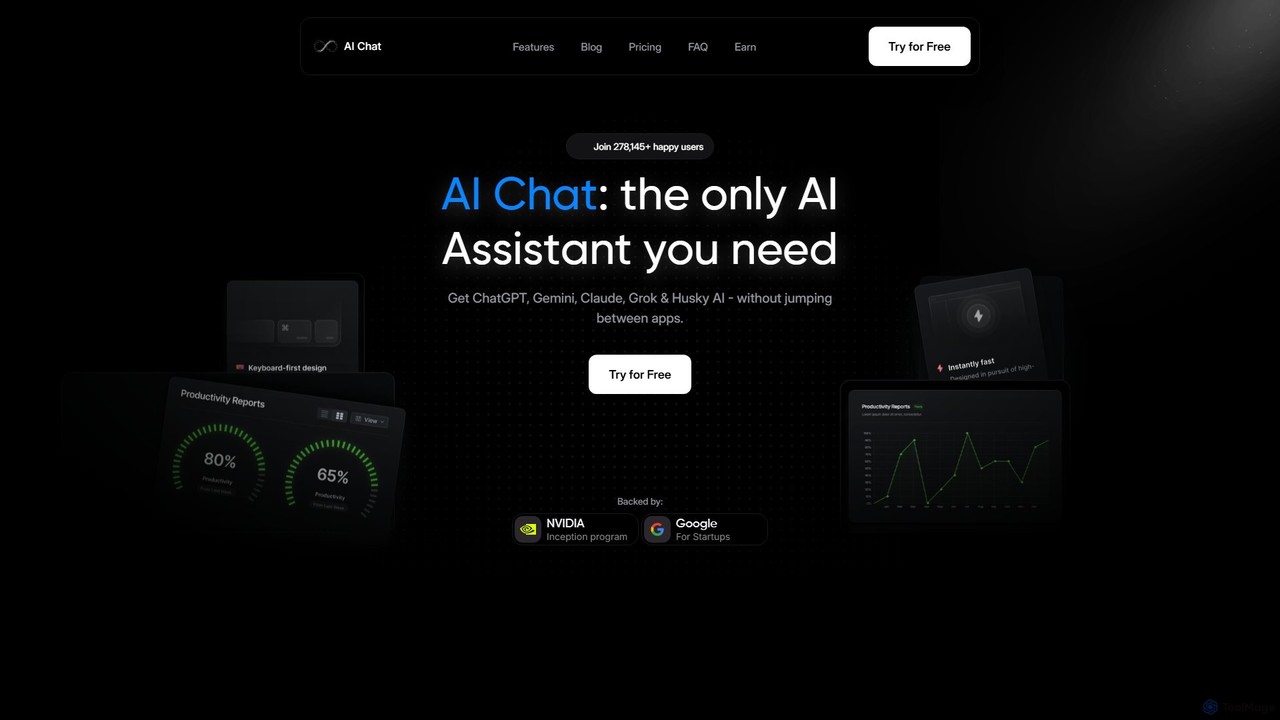
AI Chat is an all-in-one AI assistant that integrates leading models like ChatGPT, Claude, Gemini, and Grok into a single, cost-effective platform. It's a multi-modal tool for creating text, images, audio, and video, designed to boost productivity, streamline workflows, and enhance creativity for daily use.

Multi Model Chat
Visits 12.2KFavorites 139Likes 151

About Multi Model Chat

Multi Model Chat tools are platforms that allow users to interact with and compare various large language models (LLMs) from a single interface. Instead of being tied to a single AI, these tools provide access to a suite of different models like GPT, Claude, and Gemini. This enables users to run the same prompt across multiple AIs simultaneously, comparing their responses for quality, accuracy, and creativity. The primary value lies in leveraging the unique strengths of each model for specific tasks and avoiding the limitations of a single AI provider.

Core Features

  • Model Switching: Instantly select and chat with different LLMs within one conversation.
  • Side-by-Side Comparison: View responses from two or more models to the same prompt in parallel for direct evaluation.
  • Unified Prompt Management: Save, organize, and reuse prompts across all available AI models without retyping.
  • Cost-Performance Optimization: Choose less expensive models for simple tasks and more powerful ones for complex analysis, managing costs effectively.

Use Cases

These tools are ideal for developers evaluating APIs, marketers A/B testing ad copy, researchers cross-referencing information, and writers seeking diverse creative inspiration. Any professional who relies on nuanced or high-stakes AI output benefits from comparing models to find the optimal response.

How to Choose

When selecting a Multi Model Chat tool, consider the range of supported models, the quality of the comparison interface (e.g., side-by-side vs. tabbed), whether it requires your own API keys or offers an all-inclusive subscription, and its collaboration features for team use. Also, evaluate the platform's privacy policy and data handling practices.

Featured tool rankings

Multi Model Chat use cases

1

A/B Testing Marketing Copy

A digital marketer needs to create compelling ad copy for a new product campaign. Using a Multi Model Chat tool, they input a single prompt describing the product's key features and target audience. The platform generates responses simultaneously from three different models: one known for creativity (like Claude 3 Opus), one for concise messaging (like GPT-4), and one for a more direct, sales-oriented tone. By comparing the outputs side-by-side, the marketer can quickly mix and match the best phrases or select the single most effective version, reducing brainstorming time and improving the quality of their A/B tests.

2

Optimizing Code Generation and Debugging

A software developer is working on a complex algorithm and is stuck on a specific function. They use a Multi Model Chat tool to ask for a solution. They query a model specialized in Python (like a fine-tuned Code Llama) and a general-purpose reasoning model (like GPT-4) at the same time. One model might provide a more efficient, Pythonic solution, while the other might offer a more verbose, easier-to-understand implementation. This comparative approach allows the developer to understand different coding paradigms and choose the most suitable solution, accelerating the development and debugging process.

3

Cross-Referencing for Academic Research

An academic researcher is writing a paper on a niche historical topic and needs to summarize complex sources. They use a Multi Model Chat tool to ask for a summary of a specific event from multiple AI perspectives. One model might provide a concise, fact-based summary, while another might offer a more narrative-driven account, and a third could highlight lesser-known details. By comparing these outputs, the researcher can identify potential biases in a single model, synthesize a more comprehensive understanding, and uncover new angles for their research, ensuring a more robust and well-rounded analysis in their paper.

4

Evaluating AI Models for API Integration

A product manager is tasked with choosing an LLM to integrate into their company's customer support application. Instead of setting up separate test environments for multiple APIs, they use a Multi Model Chat platform. They create a standardized set of 50 common customer queries and run them through all candidate models (e.g., GPT-4, Claude 3 Sonnet, Gemini Pro). The platform allows them to easily compare response accuracy, tone, speed, and cost per query. This streamlined evaluation process saves significant development resources and provides clear, comparable data to make an informed decision on which model API best fits their product's needs and budget.

5

Enhancing Creative Writing and Brainstorming

A novelist is experiencing writer's block while developing a new character. They use a Multi Model Chat tool and ask several models the same prompt: "Describe a cynical detective who secretly enjoys poetry." One model might focus on the detective's gritty backstory, another on their witty, sarcastic dialogue, and a third on the internal conflict between their tough exterior and sensitive soul. This variety of interpretations provides a rich tapestry of ideas. The writer can then synthesize these different elements to create a more nuanced, multi-dimensional character than they might have conceived on their own or with a single AI.

6

Verifying Translation Nuances

A localization specialist is translating a marketing slogan with a cultural idiom from English to Japanese. A direct translation might lose its meaning. They use a Multi Model Chat tool to input the slogan and ask for translations and cultural explanations from several top-tier models. One model might offer a literal translation, another might suggest a completely different but culturally equivalent idiom in Japanese, and a third could explain the subtle connotations of each option. This allows the specialist to make an informed choice that preserves the original intent and emotional impact, avoiding potentially awkward or nonsensical translations.

Multi Model Chat FAQ

What is a Multi Model Chat tool?

A Multi Model Chat tool is a software application or web platform that provides a single interface to access and interact with multiple different large language models (LLMs). Instead of using separate websites or APIs for models like GPT-4, Claude 3, and Gemini, users can switch between them or even compare their outputs to the same prompt side-by-side. The primary purpose is to leverage the unique strengths of various AIs for different tasks, enhance creativity, and provide a more robust and versatile chat experience than a single-model platform can offer.

How does a Multi Model Chat differ from a standard chatbot like ChatGPT?

The key difference is choice and comparison. A standard chatbot like ChatGPT is built on a specific family of models (e.g., GPT-3.5, GPT-4) from a single provider. A Multi Model Chat tool is an aggregator or a 'meta-layer' on top of multiple providers. It doesn't develop its own foundational models but provides unified access to models from OpenAI, Anthropic, Google, and others. This allows you to directly compare which AI performs best for your specific query in real-time, a feature not available in standard single-provider chatbots.

What are the main benefits of using a Multi Model Chat platform?

The primary benefits of using a Multi Model Chat platform include:

  • Optimal Results: You can find the best possible answer by comparing outputs from different models, each with unique strengths in reasoning, creativity, or conciseness.
  • Reduced Bias: Cross-referencing responses helps identify and mitigate the inherent biases or factual errors of a single model.
  • Cost Efficiency: Users can select cheaper, faster models for simple tasks and reserve more expensive, powerful models for complex challenges, thus optimizing their spending.
  • Increased Productivity: It streamlines the workflow for developers, writers, and researchers by centralizing access and eliminating the need to switch between multiple tabs or applications.
How do I choose the right Multi Model Chat tool?

When selecting a Multi Model Chat tool, consider these factors:

  • Model Availability: Does the platform support the specific LLMs you need to access (e.g., the latest models from OpenAI, Anthropic, Google, open-source options)?
  • Comparison Interface: How effective is the user interface for comparing responses? Look for features like side-by-side views, response rating, and easy switching.
  • Pricing Model: Does the tool require you to bring your own API keys (PAYG), or does it offer an all-inclusive monthly subscription? Choose based on your expected usage and budget.
  • Features and Integrations: Look for additional features like prompt libraries, team collaboration, chat organization (folders), and potential integrations with other software you use.
Who are Multi Model Chat tools best suited for?

Multi Model Chat tools are particularly useful for 'power users' of AI. This includes a wide range of professionals such as:

  • Developers and AI Engineers: For testing, comparing, and selecting the best model APIs for their applications.
  • Content Creators and Marketers: To generate a variety of creative ideas, ad copy, and content styles by leveraging the unique 'personalities' of different models.
  • Researchers and Academics: For cross-referencing information, summarizing complex topics from multiple perspectives, and identifying potential model biases.
  • Consultants and Analysts: To gather and synthesize diverse insights for reports and strategic decision-making.

Essentially, anyone who needs to go beyond the capabilities of a single AI model to get more nuanced, reliable, or creative results will find value in these tools.