Chatbots Best in category 1 results Research Assistant AI Tool

Popular AI tools in the Research Assistant field of Chatbots include Ogt.ai, etc., helping you quickly improve efficiency.

Ogt.ai

Ogt.ai

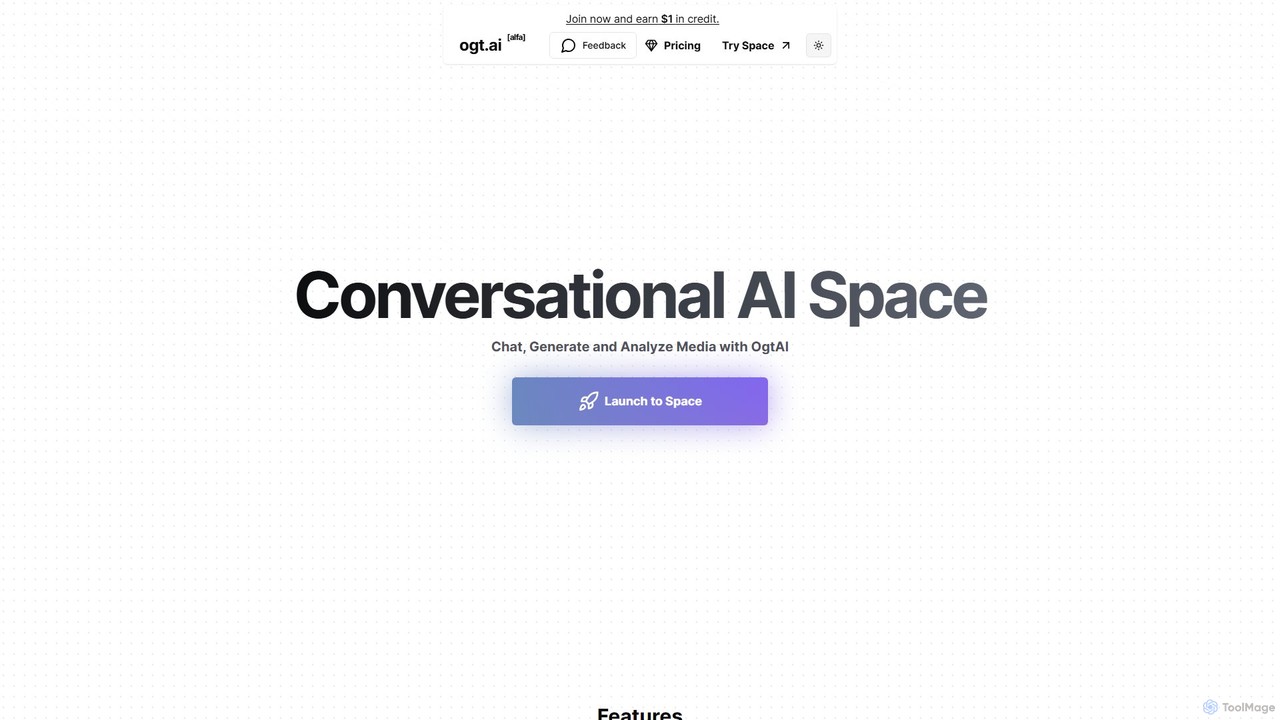
Ogt.ai is an all-in-one conversational AI platform that allows you to chat, generate, and analyze various media formats. …

4.0K

About Research Assistant

Research Assistant tools are specialized AI-powered chatbots engineered to significantly streamline the information gathering, analysis, and synthesis process. Unlike general conversational AI, these tools leverage advanced natural language processing (NLP) and machine learning to efficiently sift through vast datasets, academic papers, and web content. They excel at extracting relevant insights, summarizing complex documents, and identifying key patterns, thereby enhancing productivity for academics, market researchers, and consultants engaged in deep research.

Core Features

  • Advanced Information Retrieval: Quickly search and retrieve specific data, facts, or documents from diverse sources with high precision.
  • Document Analysis & Summarization: Process lengthy texts, identify key arguments, and generate concise summaries or abstracts.
  • Data Extraction & Synthesis: Extract structured data from unstructured text and synthesize information from multiple sources into coherent narratives.
  • Citation & Reference Management: Automatically identify and format citations, helping maintain academic integrity and streamline bibliography creation.
  • Hypothesis Generation & Validation: Assist in formulating research questions and identifying potential avenues for investigation based on existing data.

Use Cases

Academics can accelerate literature reviews, while market researchers can quickly analyze industry trends. Consultants benefit from rapid competitive intelligence gathering, and students can efficiently prepare for essays and presentations. These tools are invaluable for anyone needing to process and understand large volumes of information efficiently.

How to Choose

When selecting an AI Research Assistant, consider the breadth and depth of its data sources, the accuracy of its summarization and analysis capabilities, and its integration with existing research workflows. Evaluate its ability to handle various document types, its citation management features, and crucially, its data privacy and security protocols to ensure sensitive information is protected.

Research AssistantUse Cases

1

Accelerating Academic Literature Reviews

University researchers and PhD candidates often spend hundreds of hours on literature reviews. An AI Research Assistant can rapidly scan thousands of academic papers, identify seminal works, extract key findings, and summarize relevant sections based on specific research questions. This drastically reduces manual effort, allowing researchers to focus on critical analysis and novel contributions, potentially saving 70-80% of initial review time.

2

Analyzing Market Trends and Competitor Strategies

Market analysts and business strategists need to stay ahead of industry shifts. An AI Research Assistant can monitor news, reports, and social media, identifying emerging market trends, competitor activities, and consumer sentiment. It synthesizes this disparate information into actionable insights, providing a comprehensive overview for strategic decision-making and helping businesses react faster to market changes.

3

Drafting Comprehensive Reports and Proposals

Consultants and grant writers frequently compile extensive reports and proposals. These tools can gather background information, synthesize data from various internal and external sources, and even draft initial sections of reports or proposals. By automating the data collection and preliminary writing phases, they enable professionals to produce high-quality, well-researched documents more efficiently, cutting drafting time by up to 50%.

4

Enhancing Journalistic Fact-Checking and Background Research

Journalists require quick and accurate verification of facts and comprehensive background information for their stories. An AI Research Assistant can rapidly cross-reference claims across multiple reputable sources, identify potential biases, and compile detailed dossiers on subjects or events. This ensures higher accuracy in reporting and significantly speeds up the investigative process, allowing journalists to meet tight deadlines.

5

Supporting Legal Case Preparation and Document Review

Legal professionals face immense volumes of documents for case preparation. An AI Research Assistant can quickly review contracts, precedents, and discovery documents, identifying relevant clauses, key evidence, and potential conflicts. It can summarize complex legal texts and highlight critical information, streamlining the document review process and enabling lawyers to build stronger cases more efficiently.

6

Personal Learning and Skill Development Research

Individuals pursuing self-education or professional development often need to quickly grasp new subjects. An AI Research Assistant can curate learning resources, summarize complex topics, and answer specific questions from various educational materials. This personalized research support helps learners efficiently acquire new knowledge, understand intricate concepts, and accelerate their skill development journey without extensive manual searching.

Research AssistantFrequently Asked Questions