Compliance Best in category 1 results Vendor Management AI Tool

Popular AI tools in the Vendor Management field of Compliance include ZeroRisk, etc., helping you quickly improve efficiency.

ZeroRisk

ZeroRisk

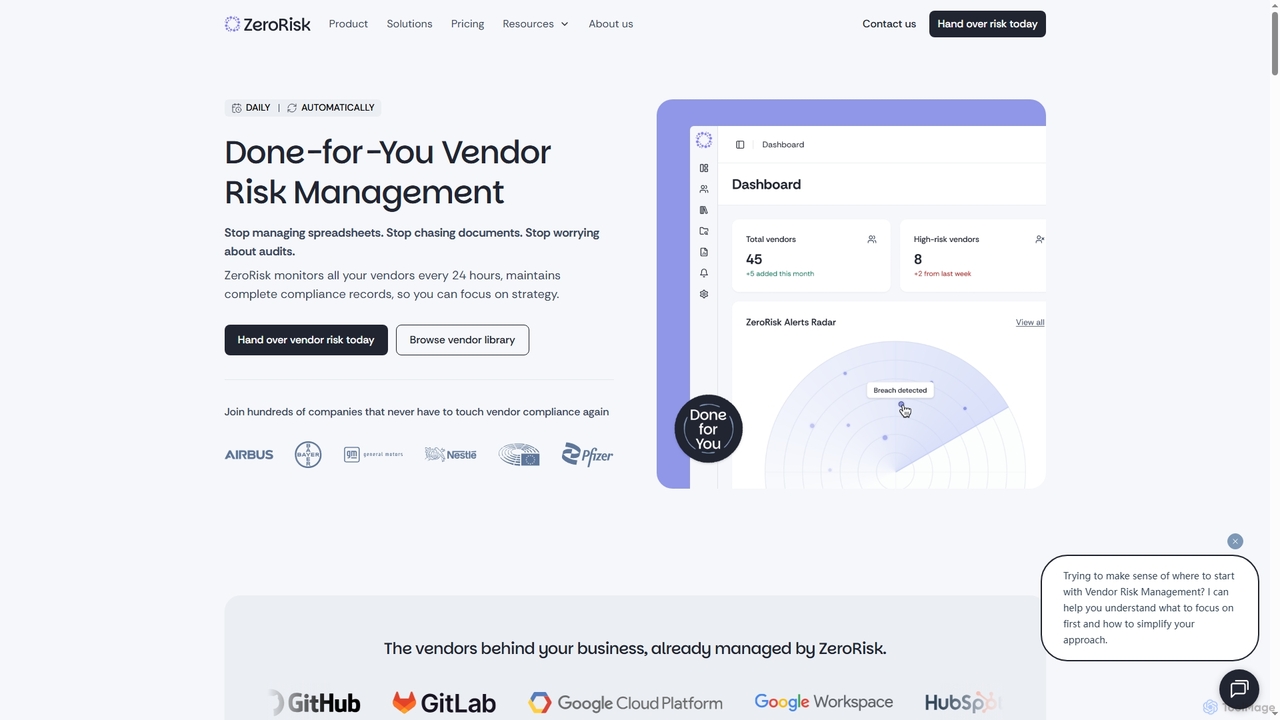
ZeroRisk offers a done-for-you vendor risk management service, automating daily monitoring, compliance mapping, and audit-ready reporting for third-party …

3.7K

About Vendor Management

AI Vendor Management tools are specialized platforms that use artificial intelligence to automate and enhance the oversight of third-party suppliers and partners. These tools leverage machine learning and natural language processing to analyze vendor data, assess risks, and monitor performance continuously. They provide businesses with deep insights into their supply chain, helping to ensure compliance, mitigate risks, and optimize vendor relationships. This proactive approach transforms traditional, reactive vendor management into a data-driven, strategic function within a company's overall compliance framework.

Core Features

  • AI-Powered Risk Assessment: Automatically analyzes vendor data, security postures, and financial health to score and prioritize risks.
  • Automated Due Diligence: Streamlines the onboarding process by automatically collecting, verifying, and managing vendor documentation and certifications.
  • Continuous Performance Monitoring: Tracks vendor performance against Service Level Agreements (SLAs) in real-time, using AI to predict potential issues.
  • Intelligent Contract Analysis: Employs NLP to extract key terms, obligations, and renewal dates from contracts, ensuring contractual compliance.
  • Centralized Audit Trail: Maintains a secure and immutable record of all vendor interactions, approvals, and compliance activities for audit purposes.

Applicable Scenarios

These tools are crucial for industries with stringent regulatory requirements, such as finance, healthcare, and technology. Procurement managers, compliance officers, and IT security teams use them to manage complex supplier ecosystems, from vetting new software providers to monitoring the compliance of critical raw material suppliers. They are essential for ensuring that all third-party partners adhere to standards like GDPR, HIPAA, or PCI DSS.

Selection Criteria

When choosing an AI Vendor Management tool, consider its integration capabilities with your existing ERP or procurement systems. Evaluate the sophistication and customizability of its risk-scoring models. Assess the scope of automation across the entire vendor lifecycle, from onboarding to offboarding. Finally, ensure the platform supports the specific compliance frameworks and regulations relevant to your industry.

Vendor ManagementUse Cases

1

Automating Third-Party Risk Assessment

A compliance officer at a financial institution is tasked with evaluating dozens of new fintech partners each quarter. Using an AI Vendor Management tool, they can automate the initial screening process. The platform automatically pulls public financial data, scans for security vulnerabilities, and checks against global compliance watchlists. The AI generates a comprehensive risk score for each potential vendor in minutes, allowing the officer to focus their manual review efforts on high-risk candidates, reducing assessment time by over 70% and strengthening the institution's risk posture.

2

Streamlining Vendor Onboarding and Due Diligence

A procurement team at a large manufacturing company needs to onboard over 100 new suppliers annually. The manual process of collecting and verifying documents like ISO certifications and insurance policies was slow and error-prone. By implementing an AI Vendor Management platform, they create a self-service portal for suppliers to upload documents. The AI automatically validates the documents, extracts key data, and flags any missing or expired certifications. This streamlines the onboarding workflow, reduces the average onboarding time from weeks to days, and ensures a complete and auditable record for every supplier.

3

Continuous Performance and SLA Monitoring

An e-commerce company relies on multiple third-party logistics (3PL) providers for timely deliveries. Manually tracking each provider's performance against their Service Level Agreements (SLAs) is impossible at scale. Their AI Vendor Management tool integrates with the 3PLs' systems to continuously monitor delivery times, order accuracy, and inventory levels. The AI detects negative trends and predicts potential SLA breaches before they occur, automatically sending alerts to the operations manager. This allows the company to proactively address issues with underperforming vendors and optimize their logistics network for better customer satisfaction.

4

AI-Powered Contract Analysis and Management

A corporate legal team manages thousands of active vendor contracts. Manually tracking renewal dates, pricing terms, and specific compliance obligations is a significant burden. They use an AI Vendor Management tool to digitize and analyze their entire contract repository. The platform's NLP capabilities automatically extract and categorize key information, such as auto-renewal clauses, liability limits, and data privacy requirements. The system then creates a centralized dashboard and sends proactive alerts for upcoming renewals or deadlines, preventing missed dates and ensuring the company can renegotiate terms from a position of strength.

5

Ensuring GDPR and Data Privacy Compliance

A SaaS company operating in Europe must ensure all its third-party subprocessors are GDPR compliant. The compliance team uses an AI Vendor Management tool to manage Data Processing Agreements (DPAs). The platform tracks which vendors have signed DPAs, uses AI to scan the agreements for non-standard clauses, and automates the annual review process. When a new vendor is onboarded, the system automatically initiates the DPA workflow. This creates a centralized, auditable system of record, simplifying GDPR compliance and demonstrating due diligence to regulators and customers.

6

Centralizing Audit Trails for Regulatory Scrutiny

A healthcare technology company is preparing for a regulatory audit. The auditor requires a complete history of due diligence and interactions for a critical software vendor. Instead of manually compiling emails, spreadsheets, and documents, the IT security manager generates a comprehensive report from their AI Vendor Management platform. The report includes time-stamped records of the initial risk assessment, all security questionnaires, contract approvals, and performance reviews. This ability to produce a complete, immutable audit trail on demand significantly reduces audit preparation time and demonstrates a robust, systematic approach to vendor oversight.

Vendor ManagementFrequently Asked Questions