Construction Best in category 1 results Robotics AI Tool

Popular AI tools in the Robotics field of Construction include AIM Intelligent Machines, etc., helping you quickly improve efficiency.

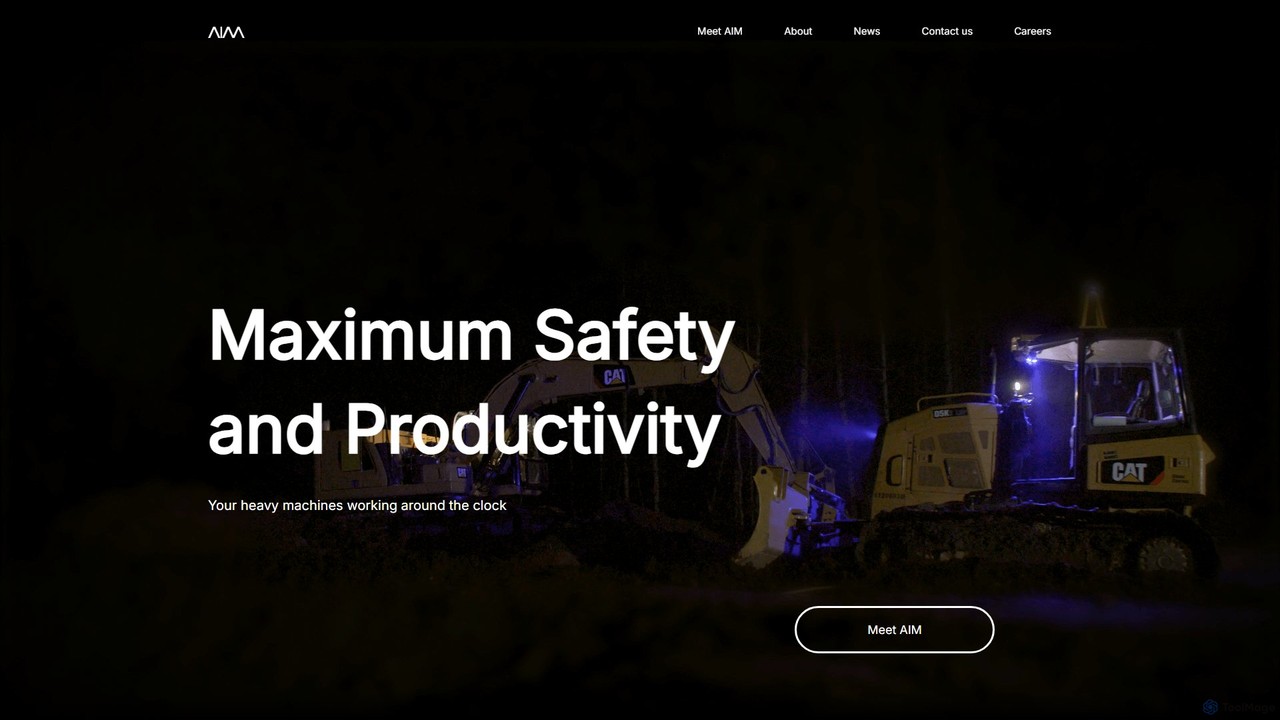
AIM Intelligent Machines

AIM Intelligent Machines

AIM Intelligent Machines provides an AI-powered technology platform that retrofits heavy equipment for autonomous operation in mining and …

10.7K

About Robotics

Robotics in construction are AI-powered machines designed to automate physical tasks on building sites. These tools utilize advanced sensors, computer vision, and autonomous navigation to perform repetitive, hazardous, or precision-intensive work. Their primary value is in enhancing worker safety, accelerating project timelines, and improving the quality and accuracy of construction. They are particularly effective for large-scale projects where efficiency and consistency are paramount.

Core Features

  • Autonomous Site Navigation: The ability to move and operate independently in complex, unstructured construction environments.
  • Heavy Material Handling: Precisely lifting, transporting, and placing materials like bricks, steel beams, and precast concrete panels.
  • Automated Task Execution: Performing specific construction tasks such as welding, drilling, rebar tying, or 3D concrete printing.
  • Site Surveying & Data Capture: Using drones or ground robots equipped with LiDAR and cameras to monitor progress and create digital twins of the site.

Applicable Scenarios

Construction robotics are employed by general contractors, developers, and specialty subcontractors. Common applications include automated masonry for high-rise buildings, robotic demolition in hazardous zones, and autonomous excavation for foundations. They are also crucial for continuous site monitoring to compare as-built conditions with BIM models.

Selection Criteria

When choosing a construction robotics solution, first define the specific task (e.g., lifting, surveying, finishing). Evaluate the robot's mobility and adaptability to your site's terrain and conditions. Verify its integration capabilities with your project management and BIM software. Finally, ensure the system complies with all relevant industry safety standards and regulations.

RoboticsUse Cases

1

Automated Bricklaying for Commercial Buildings

A project manager for a large commercial construction firm uses a bricklaying robot to build exterior and interior walls. The robot operates continuously, 24/7, following digital blueprints with millimeter precision. This process significantly reduces construction time compared to manual labor, minimizes material waste due to consistent mortar application, and frees up human masons to focus on more complex, detailed work, improving overall project efficiency and quality.

2

Robotic Demolition in Unsafe Structures

A demolition contractor is tasked with dismantling a structurally compromised building. Instead of sending workers into a high-risk environment, they deploy a remote-controlled demolition robot. Equipped with powerful crushers and shears, the robot systematically deconstructs the building while the operator remains at a safe distance. This application prevents potential injuries or fatalities, allows work to proceed in conditions unsafe for humans, and often speeds up the demolition process.

3

Autonomous Site Surveying and Progress Monitoring

A site surveyor uses an autonomous rover or drone equipped with LiDAR scanners and high-resolution cameras. The robot regularly patrols the construction site, capturing vast amounts of data. This data is then processed to create accurate 3D models and point clouds, which are compared against the BIM (Building Information Modeling) plans. This allows for daily progress tracking, early detection of construction errors, and improved quality control, saving significant time and costs associated with rework.

4

Automated Rebar Tying for Foundations

On a large-scale infrastructure project, such as a bridge or high-rise foundation, a specialized robot autonomously ties rebar intersections. The robot moves along the grid of steel bars, securing them far faster and more consistently than human workers. This not only accelerates a critical and labor-intensive part of the construction process but also reduces the risk of ergonomic injuries for workers, who would otherwise spend hours bent over in repetitive motion.

5

Robotic Installation of Facade Panels

For high-rise building construction, a robotic arm mounted on a crane or platform is used to install heavy facade panels, such as glass or precast concrete. The robot handles the precise positioning and attachment of each panel, a task that is physically demanding and dangerous for humans at great heights. This method improves safety, ensures consistent installation quality, and can operate in weather conditions that might be too risky for manual installation crews.

6

3D Concrete Printing for Custom Structures

An architectural firm specializing in innovative designs uses a large-scale 3D printing robot to construct complex building components or even entire small structures on-site. The robot extrudes layers of a special concrete mix according to a digital model, creating curved walls and unique geometries that are difficult or expensive to achieve with traditional formwork. This enables greater design freedom, reduces material waste, and can significantly shorten the construction timeline for certain types of structures.

RoboticsFrequently Asked Questions