BuildSync
BuildSync is an AI-powered construction submittal review software designed to automate the verification of project compliance and generation …
BuildSync is an AI-powered construction submittal review software designed to automate the verification of project compliance and generation of submittal packages. It helps general contractors and subcontractors drastically reduce submittal rejection rates, save hours on manual reviews, and accelerate project timelines.
Unigo
Unigo is an AI-powered platform that simplifies the process of obtaining and comparing construction and renovation quotes. It …
Unigo is an AI-powered platform that simplifies the process of obtaining and comparing construction and renovation quotes. It transforms your project description into standardized technical specifications (bill of quantities), ensuring all contractors bid on the same detailed document for transparent and easy comparison.
autarc
autarc is an all-in-one B2B software for renewable energy professionals, streamlining the planning of heat pumps, PV systems, …
autarc is an all-in-one B2B software for renewable energy professionals, streamlining the planning of heat pumps, PV systems, and storage. It uses AI and LiDAR scanning to enable fully digital, compliant, and efficient project management from lead qualification to final proposal.
InspectMind
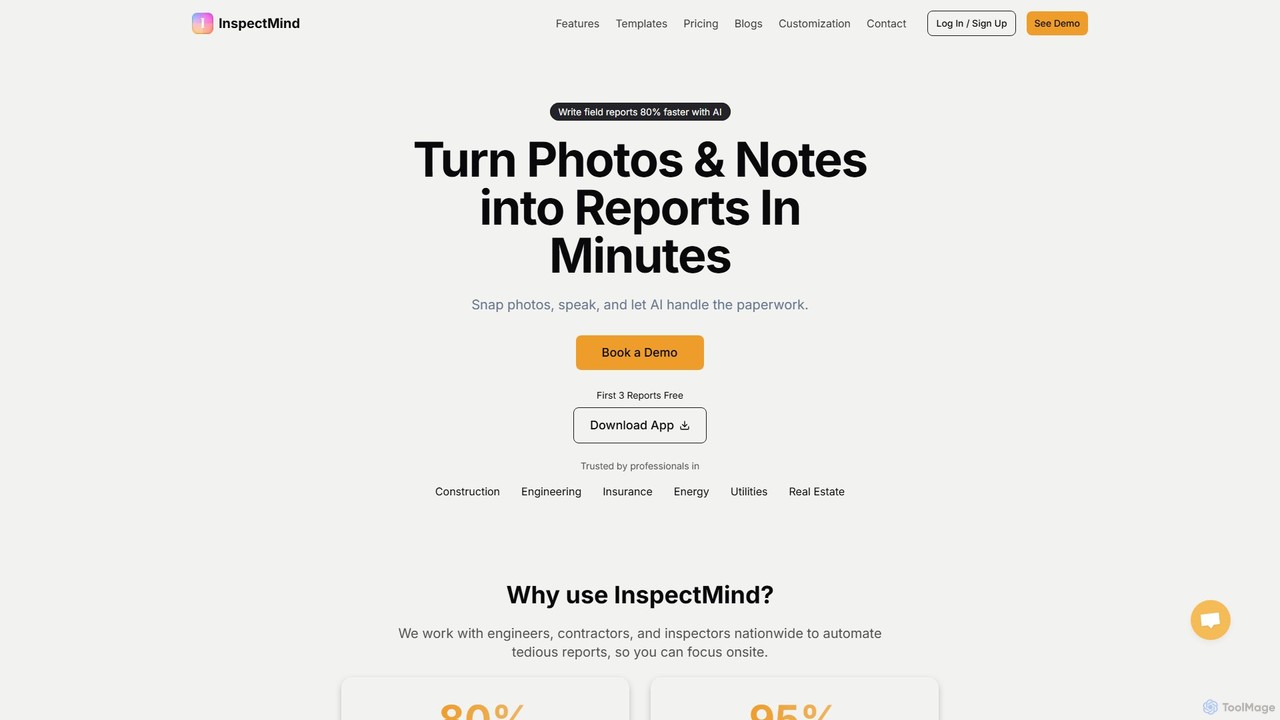
InspectMind is an AI-powered application designed for the construction, engineering, and real estate industries. It streamlines field reporting …
InspectMind is an AI-powered application designed for the construction, engineering, and real estate industries. It streamlines field reporting by converting photos and voice notes into detailed, professional reports in minutes. This tool reduces report writing time by up to 80%, improves accuracy, and supports real-time team collaboration, available on iOS, Android, and Web.
About Project Management
AI Project Management tools for construction are specialized platforms that leverage artificial intelligence to plan, execute, and oversee construction projects. These tools analyze vast datasets from blueprints, schedules, and real-time site data to automate complex decision-making processes. They significantly improve project outcomes by optimizing resource allocation, predicting risks, and providing data-driven insights for better budget and timeline control. This technology moves beyond traditional spreadsheets and Gantt charts by offering predictive and adaptive management capabilities unique to the construction industry.
Core Features
- AI-Powered Scheduling: Automatically generates and optimizes project timelines based on dependencies, resource availability, and BIM data.
- Predictive Risk Analysis: Identifies potential schedule delays, cost overruns, and safety hazards by analyzing historical and real-time project data.
- Automated Progress Tracking: Uses computer vision from drone and site photos to monitor construction progress against plans, reducing manual reporting.
- Resource Optimization: Intelligently allocates labor, equipment, and materials to minimize downtime and ensure efficient utilization across tasks.
- Budget Forecasting & Control: Continuously tracks expenditures and uses predictive analytics to forecast final costs, alerting managers to potential overruns.
Applicable Scenarios
These tools are essential for general contractors, real estate developers, and engineering firms managing complex projects like commercial high-rises, industrial facilities, or large-scale infrastructure. Project managers and site supervisors use them for daily operations, from task scheduling to safety compliance monitoring, while executives use the analytics for portfolio-level oversight.
Selection Criteria
When choosing a tool, prioritize its ability to integrate with existing construction software like BIM (e.g., Revit, Navisworks) and ERP systems. Evaluate its data processing capabilities, particularly for handling inputs from drones, IoT sensors, and mobile devices. Also, consider the platform's scalability for different project sizes and the specificity of its features for the construction sector, such as change order management and subcontractor coordination.

Project ManagementUse Cases
Automated Construction Schedule Generation
A project planner for a large commercial development inputs the project's BIM model, resource constraints, and key milestones into an AI project management tool. The AI analyzes thousands of task dependencies and simulates multiple scheduling scenarios. Within minutes, it generates a fully optimized critical path method (CPM) schedule that minimizes project duration and levels resource allocation. This process, which would manually take weeks, is completed accurately, allowing the team to identify potential bottlenecks before construction even begins.
Predictive Risk Mitigation on a High-Rise Project
A project manager uses an AI tool that analyzes historical weather data, subcontractor performance records, and current supply chain statuses for a 40-story building project. The AI flags a 75% probability of a key material shipment being delayed due to port congestion and a high risk of crane downtime from predicted high winds. This early warning allows the manager to proactively order materials from an alternative supplier and reschedule crane-dependent tasks to a calmer weather window, preventing costly delays.
Real-time Progress Monitoring with Drones and AI
A site supervisor uses a project management platform integrated with a drone service. After a weekly drone flight over the construction site, the AI automatically processes the images. It compares the current state of the site against the 4D BIM model, accurately calculating the percentage of completion for earthworks, foundations, and structural steel. The system generates a visual progress report and updates the project schedule automatically, providing stakeholders with an objective and up-to-date view of the project without manual surveys.
Optimizing Equipment and Labor Allocation
A general contractor managing multiple residential construction sites uses an AI platform to optimize resource allocation. The system analyzes daily work logs, project schedules, and equipment telematics data. It identifies that a crane at Site A will be idle for three days while Site B is facing a shortage. The AI recommends reallocating the crane and a specialized crew to Site B for that period, ensuring maximum asset utilization and preventing delays at Site B, thereby improving the overall portfolio efficiency.
AI-Powered Cost Overrun Prevention
A construction firm's financial controller links their AI project management tool with procurement and accounting software. The tool continuously monitors real-time spending on materials, labor, and subcontractor invoices against the project budget. The AI's forecasting model predicts a 15% cost overrun in the electrical scope due to rising copper prices. This alert enables the project team to immediately renegotiate with suppliers or explore value engineering options with the client, keeping the project within its financial targets.
Enhancing On-site Safety Compliance with Computer Vision
A safety manager deploys an AI system connected to existing site cameras. The AI's computer vision model is trained to identify safety hazards in real-time. It automatically detects instances of workers not wearing proper Personal Protective Equipment (PPE), such as hard hats, and flags unsafe conditions like equipment left too close to an excavation edge. The system sends instant alerts to the site supervisor's mobile device, allowing for immediate correction and creating a documented record for safety audits, ultimately reducing workplace accidents.