ToolMage
Sign in

Best 12 Podcasting AI tools for Content Creation

Popular Podcasting AI tools in Content Creation include RSS.com, Transistor, Revoicer, Tapesearch, Voiceslab, Audio.co, Voisi, Swellcast, GuestLab, and Relevant, helping you work more efficiently.

PodNami
Freemium

PodNami

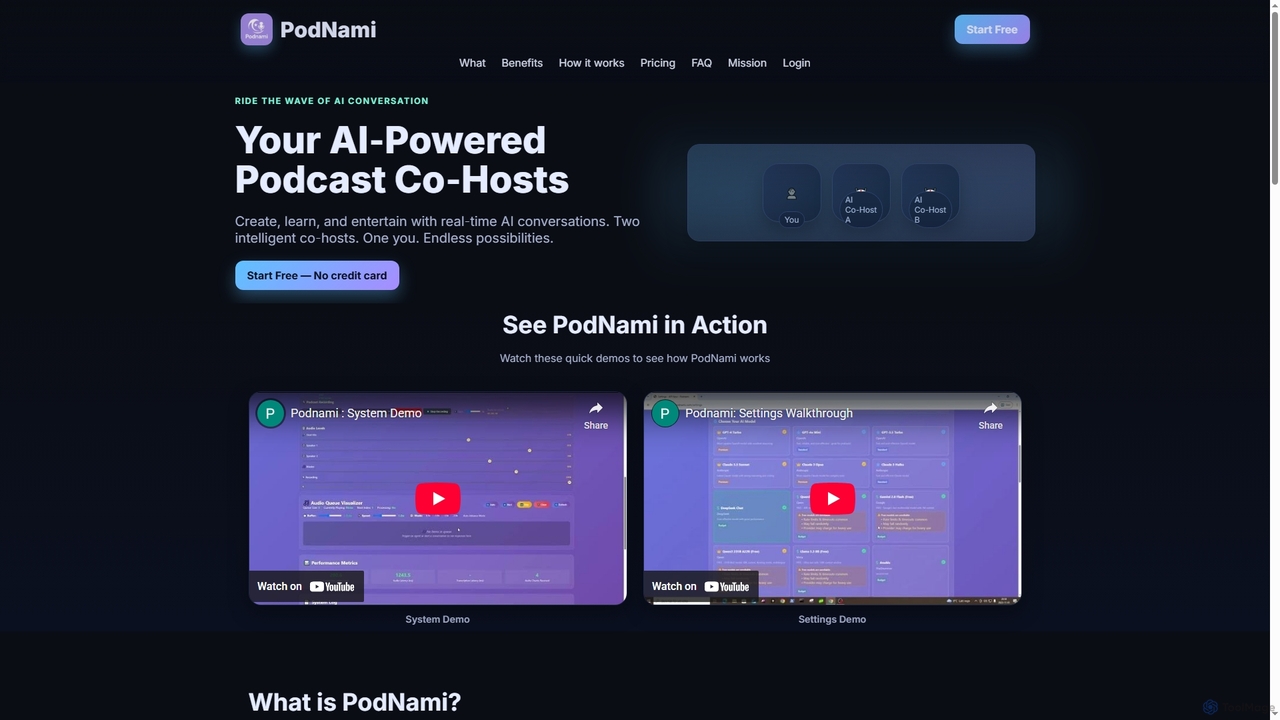
PodNami is an AI-powered podcast platform that provides two customizable AI co-hosts for real-time, dynamic conversations. It enables creators, learners, and professionals to generate ideas, learn through discussion, and produce engaging audio content effortlessly, transforming solo sessions into interactive experiences.

Virtual Co Host
Visits 4.2KFavorites 122Likes 110
Voiceslab
Freemium

Voiceslab

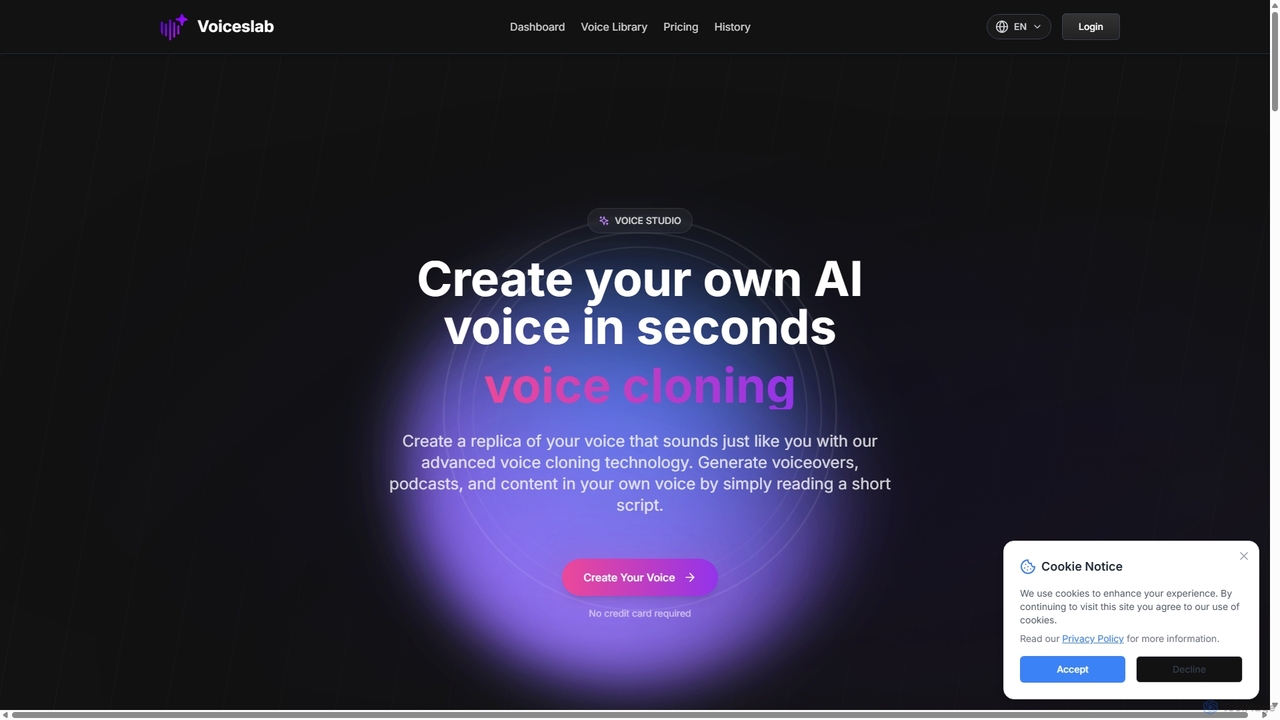
Voiceslab is an advanced AI voice cloning platform that allows users to create a digital replica of their own voice in seconds. It offers high-quality, multi-language text-to-speech synthesis, enabling content creators, marketers, and businesses to produce natural-sounding audio content like podcasts, audiobooks, and voiceovers efficiently and affordably.

Text To Speech
Visits 56.4KFavorites 137Likes 140
Voisi
Paid

Voisi

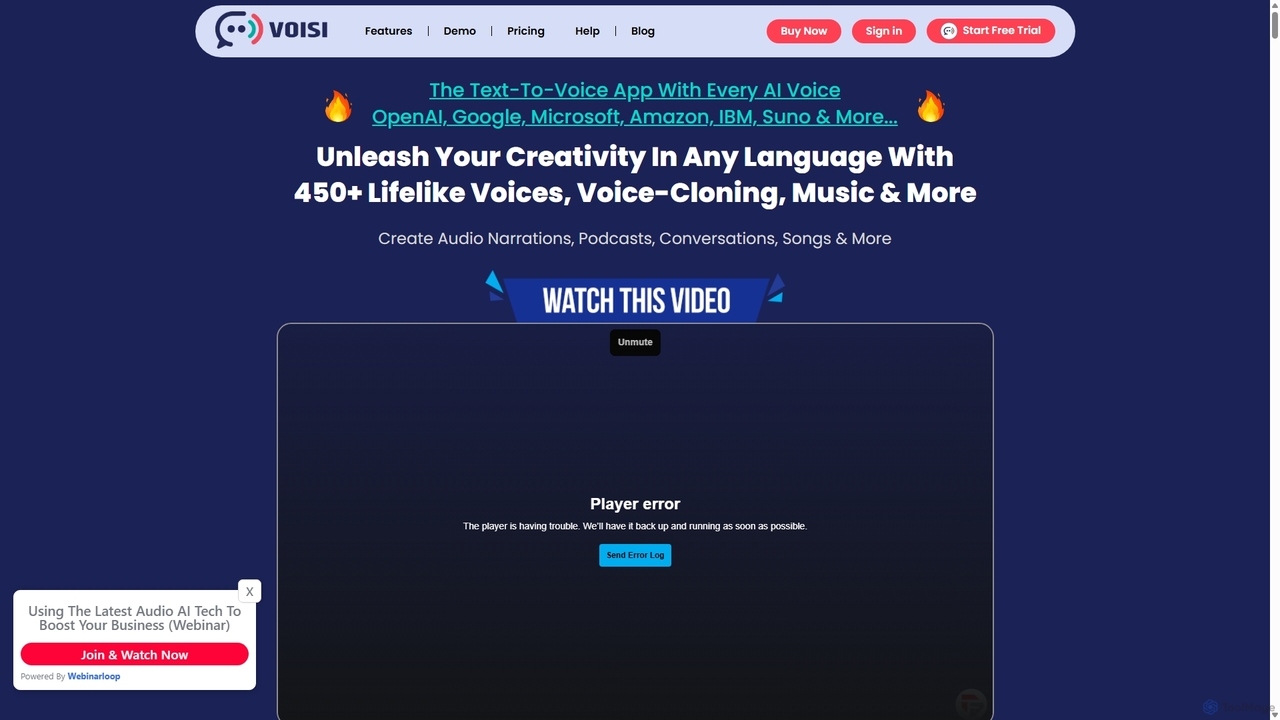
Voisi is a comprehensive AI audio toolkit that enables users to create realistic voice content. It features text-to-speech, voice cloning, translation, transcription, and AI music generation. With over 450 voices in hundreds of languages, it's designed for content creators, marketers, and developers to produce high-quality narrations, podcasts, and voice-overs effortlessly. The platform integrates multiple top-tier AI engines to ensure the best possible output quality.

Voice Generation
Visits 5.3KFavorites 107Likes 122
Swellcast
Free

Swellcast

Swellcast is a social audio platform for thoughtful conversations. Create and share short-form audio clips (swellcasts) up to 5 minutes long, reply to others, and join discussions on diverse topics. It's ideal for creators, authors, and anyone looking to engage in authentic, voice-based conversations and build communities asynchronously.

Discussion Platforms
Visits 4.6KFavorites 110Likes 122
GuestLab
Freemium

GuestLab

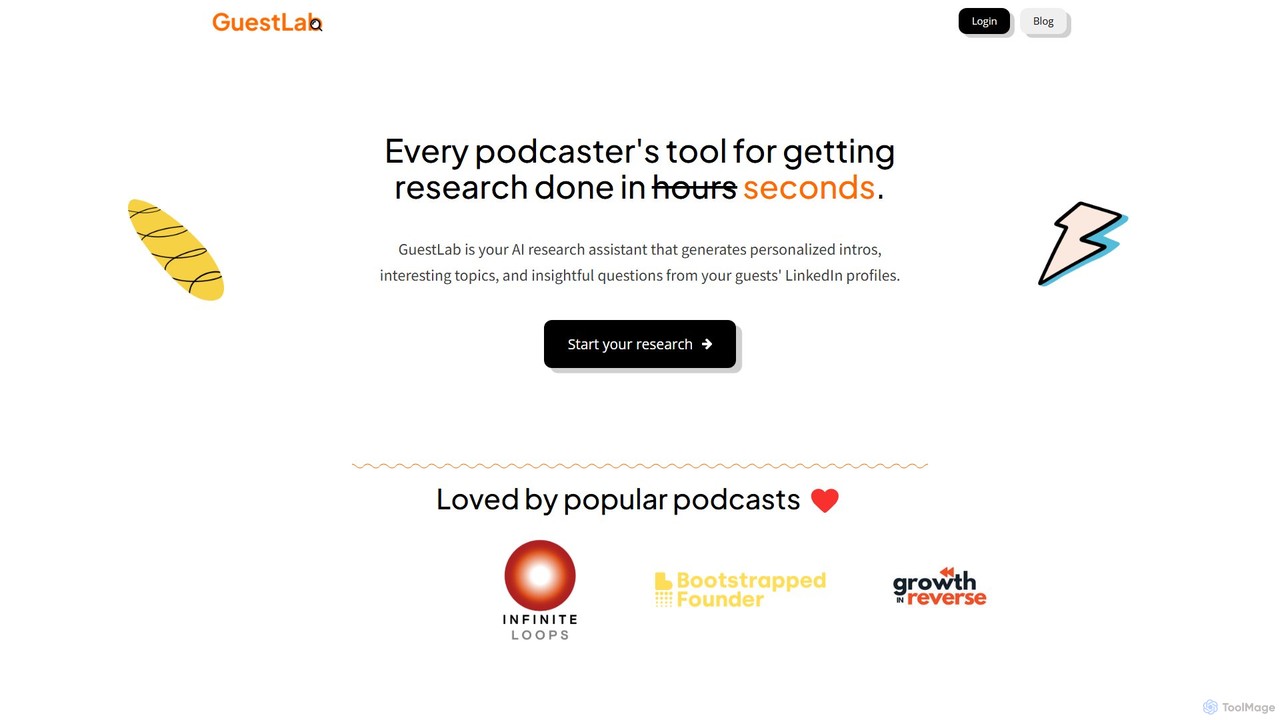
GuestLab is an AI research assistant for podcasters, designed to streamline guest preparation. By analyzing a guest's LinkedIn profile, it automatically generates personalized introductions, engaging discussion topics, and insightful questions. This saves hosts hours of manual research, helps uncover hidden insights, and elevates the quality of interviews. It's the perfect tool for podcasters of all levels, from hobbyists to professional agencies, looking to create more compelling and well-prepared content.

Podcasting
Visits 4.3KFavorites 173Likes 140
Guest Glance
Free

Guest Glance

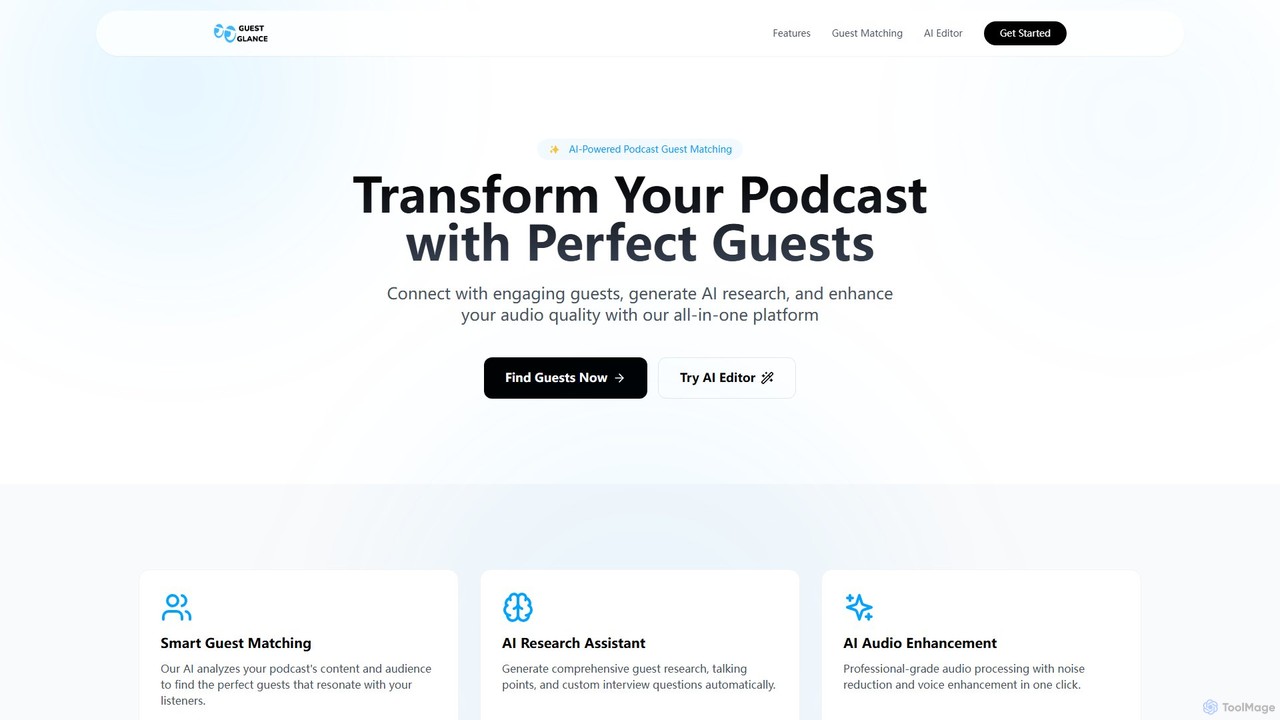
Guest Glance is an all-in-one AI platform for podcasters, offering smart guest matching, automated research, and one-click audio enhancement. It analyzes your podcast's content to find perfect guests, generates comprehensive interview prep materials, and improves audio quality, streamlining your entire production workflow.

Audio Editing
Visits 4.2KFavorites 124Likes 131
Relevant
Freemium

Relevant

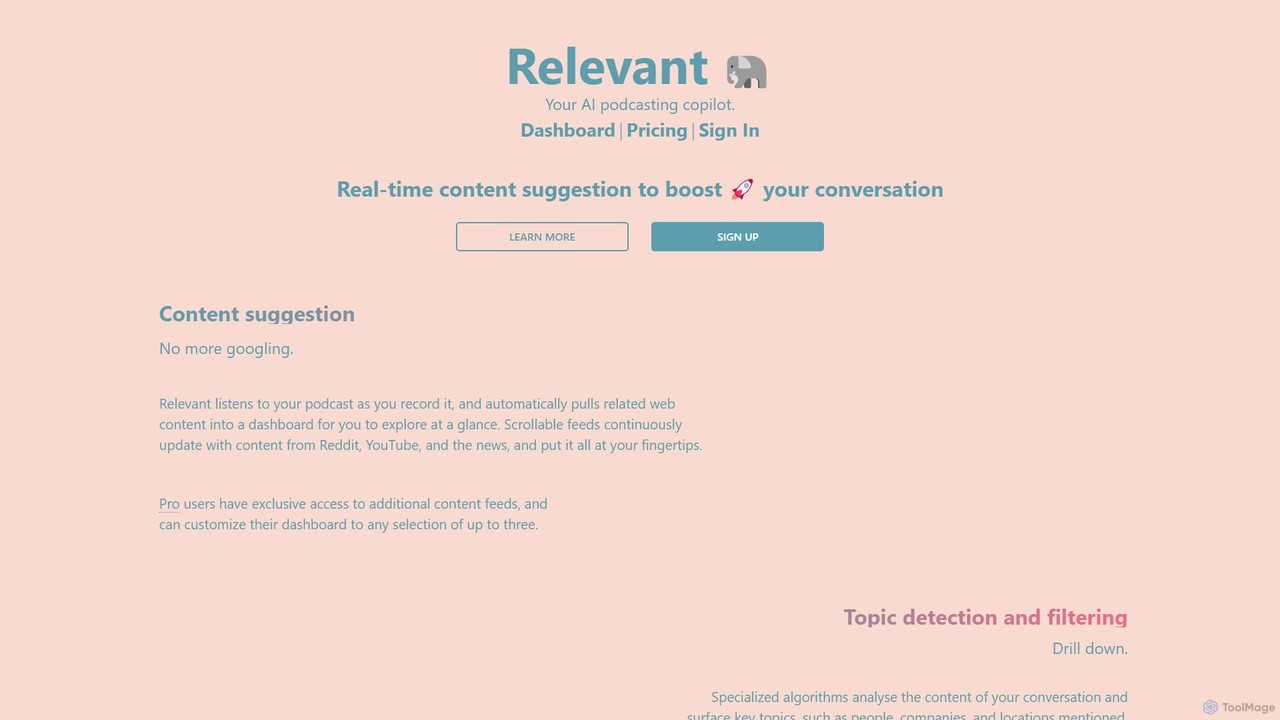
Relevant is an AI-powered co-host that supercharges podcast production. It listens to your conversation in real-time, automatically suggesting relevant content from the web (YouTube, Reddit, news). It also offers topic detection and automatic transcription to enrich your discussions and streamline your workflow.

Transcription
Visits 4.2KFavorites 145Likes 132
Transistor
Paid

Transistor

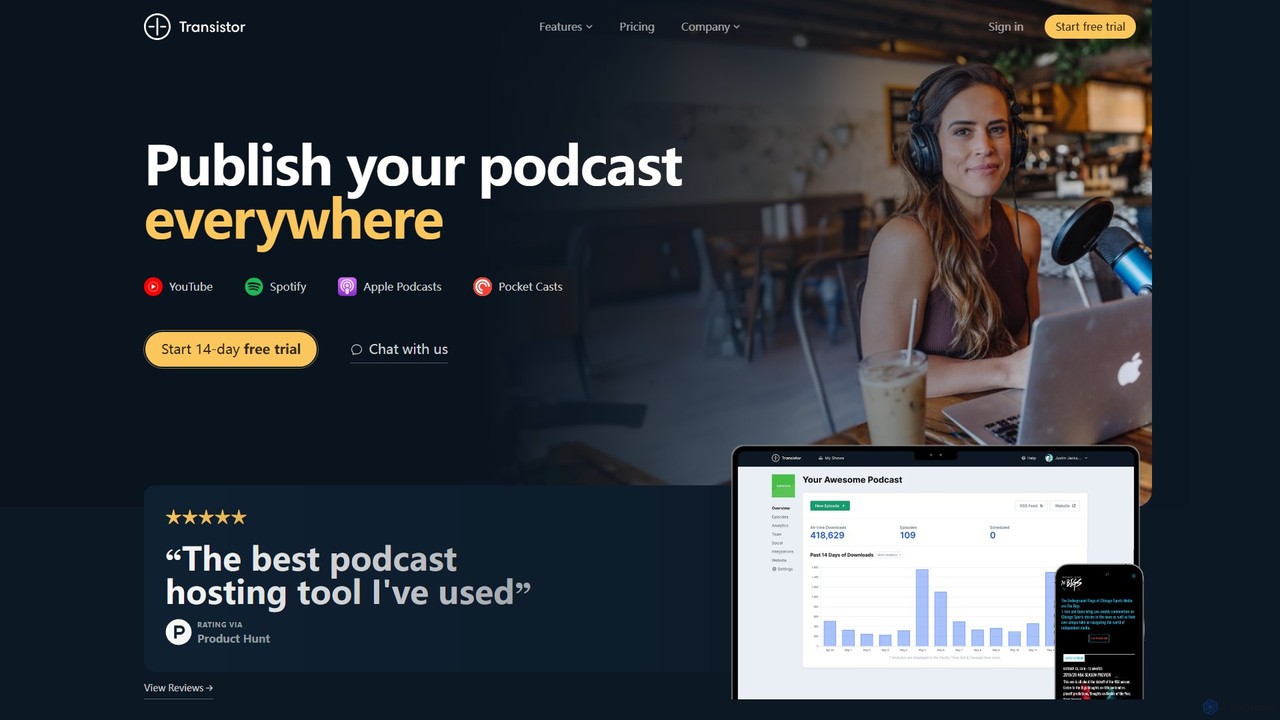
Transistor is a professional podcast hosting platform designed for creators and businesses. It allows you to host unlimited shows on a single account, provides detailed analytics, and simplifies distribution to major platforms like Spotify and Apple Podcasts. It also features AI-powered transcription, dynamic ad insertion, and private podcasting capabilities.

Podcasting
Visits 518.6KFavorites 145Likes 134
Tapesearch
Freemium

Tapesearch

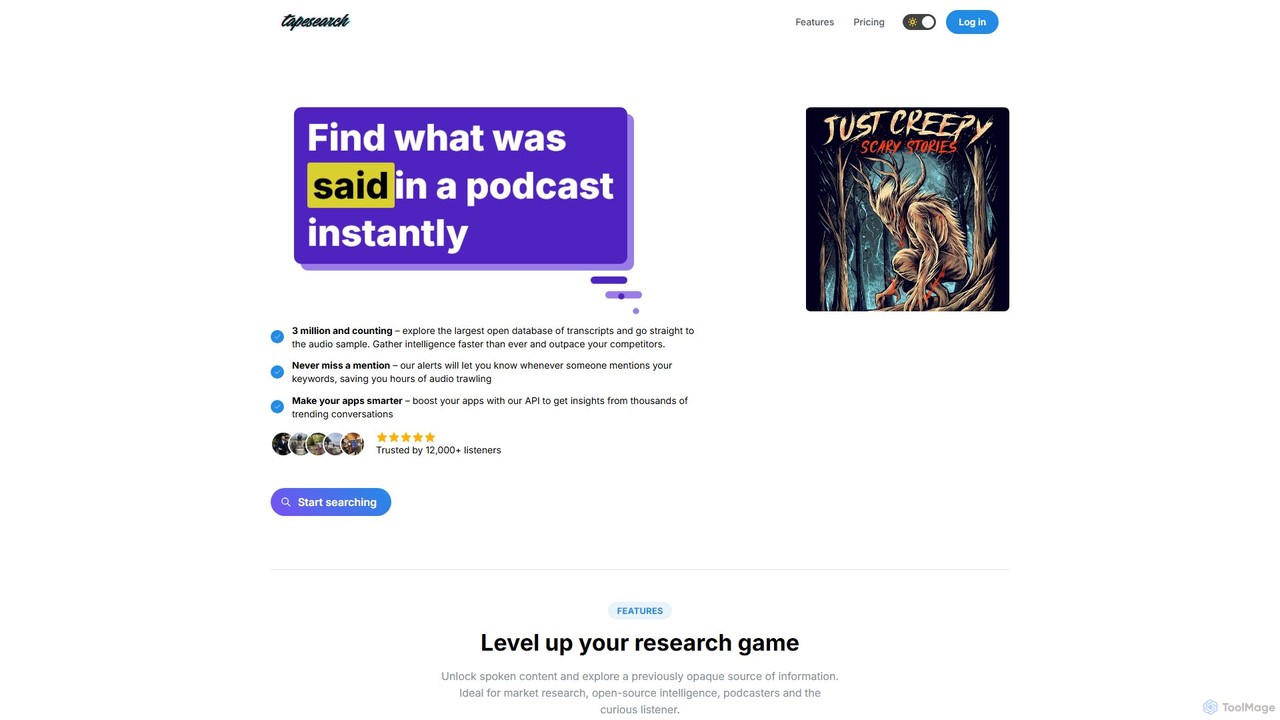
Tapesearch is a powerful AI-powered search engine for podcasts, allowing users to instantly search through millions of transcribed episodes. It helps you find exact moments, track brand mentions, analyze industry trends, and even chat with podcast content to extract deep insights. Ideal for researchers, marketers, journalists, and podcasters.

Competitive Intelligence
Visits 79.4KFavorites 124Likes 136
Audio.co
Paid

Audio.co

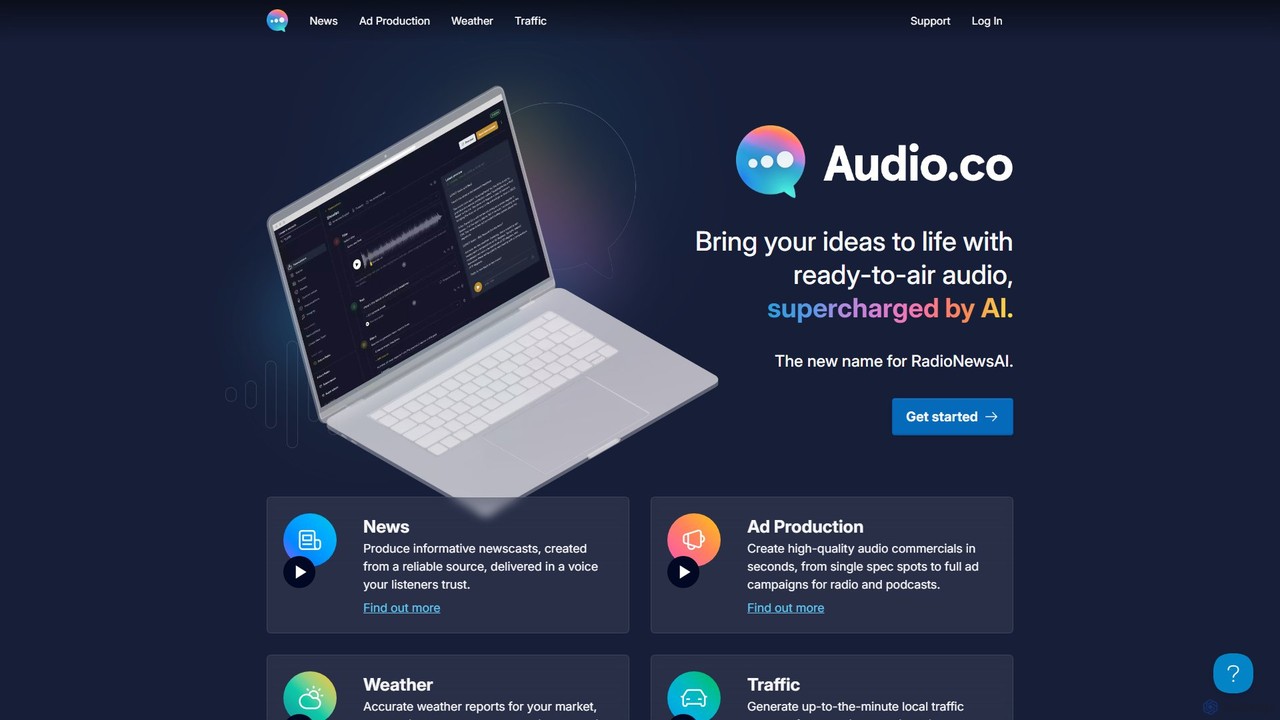
Audio.co (formerly RadioNewsAI) is an AI-powered platform designed for radio stations and podcasters to automatically generate broadcast-ready audio content. It creates high-quality newscasts, commercials, weather forecasts, and traffic reports in seconds, using customizable AI voices and scripting models.

Voice Generation
Visits 9.7KFavorites 108Likes 106
Revoicer
Paid

Revoicer

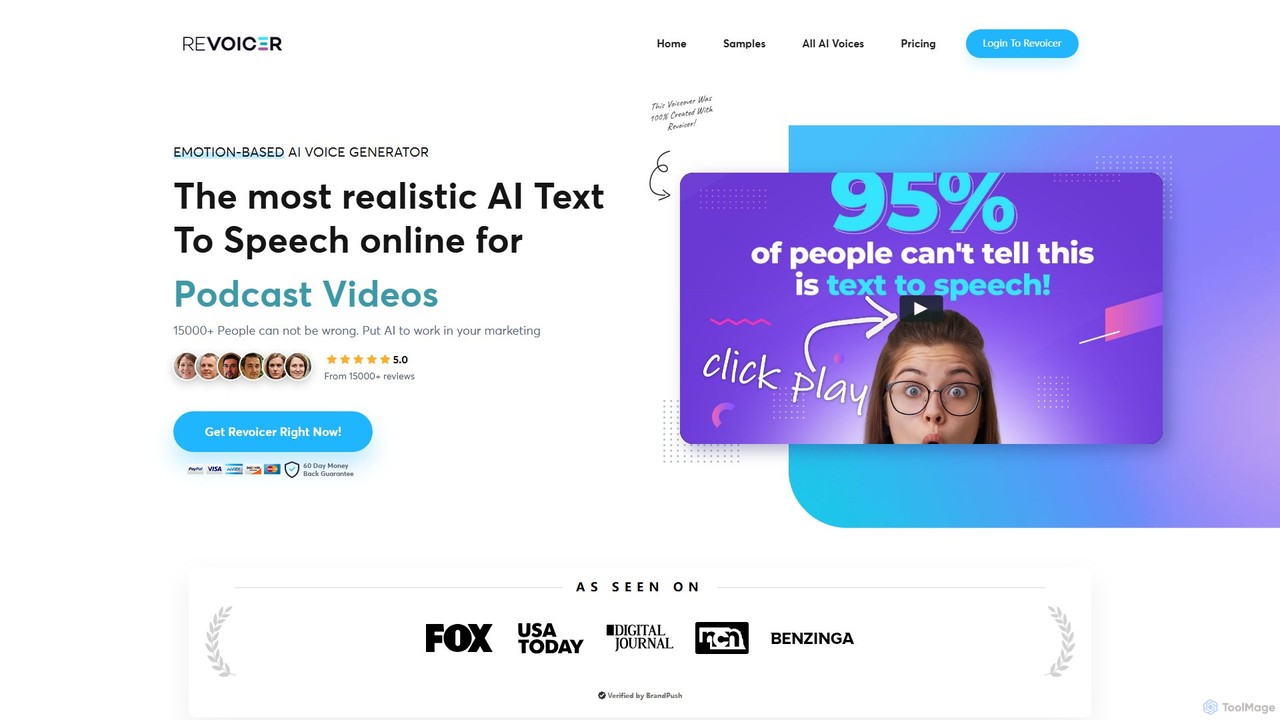
Revoicer is an advanced emotion-based AI voice generator that transforms text into remarkably human-like speech. It offers over 250 voices across 50+ languages, allowing users to add emotional tones like cheerful, sad, or angry. Ideal for marketers, content creators, and educators.

Text To Speech
Visits 83.9KFavorites 97Likes 109
RSS.com
Freemium

RSS.com

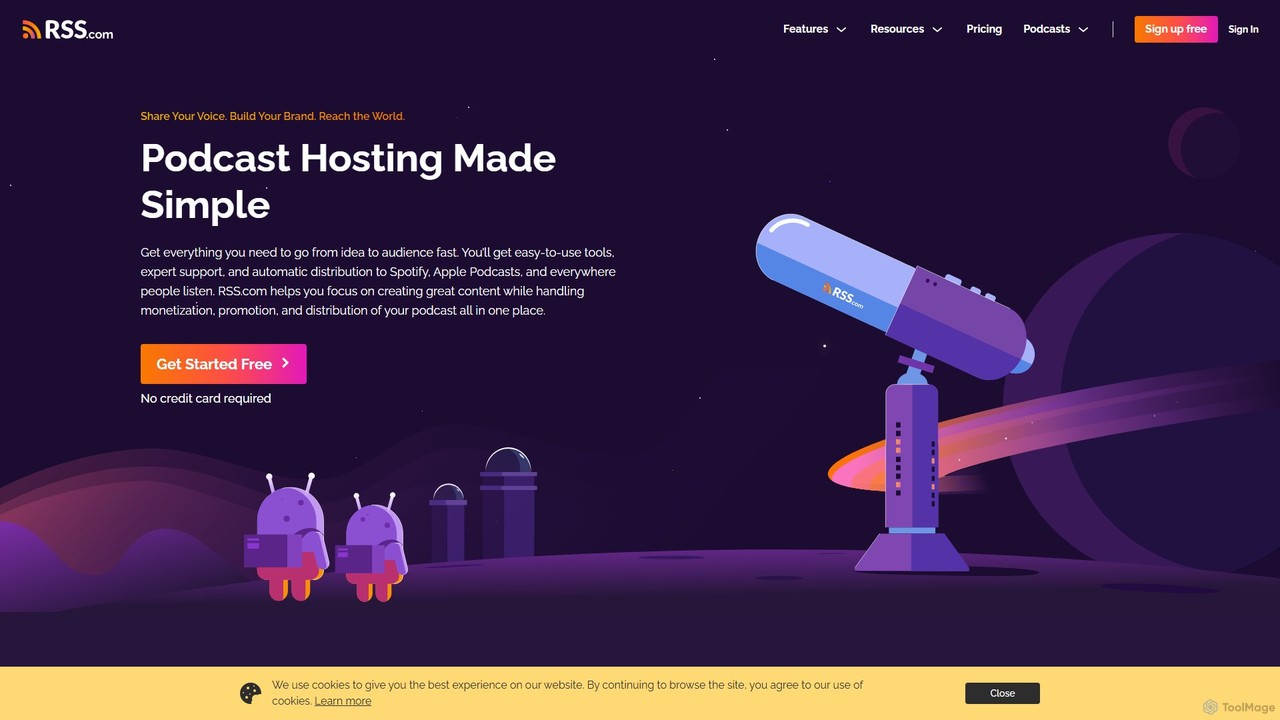
RSS.com is an all-in-one podcasting platform that simplifies hosting, distribution, monetization, and analytics. It offers user-friendly tools, automatic distribution to major platforms like Spotify and Apple Podcasts, cross-platform analytics, and monetization options. With features like automatic transcriptions and a free podcasting website, it empowers creators of all levels to launch, grow, and monetize their shows effortlessly.

Transcription
Visits 1MFavorites 141Likes 112

About Podcasting

AI Podcasting tools are a suite of applications designed to automate and enhance the entire podcast production workflow. They leverage technologies like speech-to-text, natural language processing, and audio synthesis to streamline tasks from recording to distribution. This allows creators to focus on content quality, reduce production time, and improve listener engagement through features like automated show notes and audio cleanup. These tools are particularly effective at handling tedious post-production tasks that traditionally required significant manual effort.

Core Features

  • Automated Transcription & Show Notes: Instantly convert audio to text and generate summaries, timestamps, and key takeaways for listeners.
  • AI Audio Enhancement: Automatically remove background noise, filler words (e.g., 'ums', 'ahs'), and balance audio levels for professional sound quality.
  • Content Repurposing: Efficiently create social media clips, blog posts, and audiograms from a single long-form episode.
  • Voice Cloning & Synthesis: Generate realistic voiceovers for ads, intros, or corrections without needing to re-record audio.
  • Text-Based Audio Editing: Edit audio recordings by simply editing the text transcript, making complex edits intuitive and fast.

Use Cases

These tools are ideal for solo podcasters, content marketing teams, and media production companies. They are used to accelerate episode turnaround times, create accessible content with accurate transcripts, and repurpose audio into multiple formats for broader audience reach across different platforms.

How to Choose

When selecting an AI Podcasting tool, consider the accuracy of its transcription, the effectiveness of its audio enhancement features, and its content repurposing capabilities. Also evaluate the editing workflow (e.g., text-based vs. timeline), integration with hosting platforms, and the pricing model (per-minute processing vs. a flat subscription).

Featured tool rankings

Podcasting use cases

1

Automating Post-Production for Solo Creators

A solo podcaster records a one-hour interview. Instead of spending hours manually editing, they upload the audio to an AI tool. The platform automatically removes filler words like 'ums' and 'ahs', balances inconsistent volume levels between speakers, and generates a full transcript. The creator then edits the audio by simply deleting words and sentences in the transcript, a process that saves over 80% of their typical editing time and allows them to publish new episodes much faster.

2

Generating Show Notes and Transcripts for SEO

A marketing team for a B2B company produces a weekly podcast. They use an AI tool to instantly generate a detailed transcript and an AI-powered summary for show notes. This content is published on their blog alongside the embedded audio player. This practice significantly improves the podcast's discoverability on search engines, as the text is indexable, and makes the content accessible to a wider audience, including those who are hearing-impaired or prefer reading.

3

Repurposing Episodes into Social Media Content

A content creator wants to promote their latest podcast episode on Instagram and TikTok. They use an AI tool that analyzes the episode's transcript to identify the most compelling soundbites and key moments. The tool then automatically creates short, engaging video clips (audiograms) with animated captions for each highlight. This allows them to generate a week's worth of promotional material from a single episode in minutes, dramatically increasing their reach and engagement on social platforms.

4

Correcting Audio Errors with Voice Cloning

During the final review, a podcast producer notices a factual error in a recorded sentence. Instead of scheduling a new recording session with the host, they use an AI voice cloning feature. They type the corrected sentence, and the tool generates the audio in the host's original voice, maintaining the same tone and pace. This allows for a seamless and undetectable fix, saving significant time and coordination effort for minor corrections.

5

Creating Multilingual Podcast Content

A global brand wants to reach an international audience with its podcast. They use an AI tool that not only transcribes the original English audio but also translates and synthesizes it into Spanish and German. The tool uses a cloned version of the host's voice to maintain brand consistency across languages. This enables them to launch multilingual versions of their podcast with minimal additional production effort, effectively scaling their content strategy globally.

6

AI-Assisted Interview Preparation

A podcast host preparing for an interview with an author uses an AI tool to analyze the author's previous interviews and published works. The tool summarizes key themes, identifies frequently asked questions to avoid, and suggests unique angles and follow-up questions based on recurring topics. This provides the host with a comprehensive research brief in a fraction of the time, enabling them to conduct a more insightful and well-prepared interview that stands out.

Podcasting FAQ

What are AI Podcasting tools?

AI Podcasting tools are software applications that use artificial intelligence to automate and improve various stages of podcast creation. They primarily focus on tasks like AI-powered audio enhancement, automatic transcription, filler word removal, and content repurposing. Unlike traditional audio editors, which require manual adjustments, these tools streamline complex workflows, allowing creators to produce high-quality content much faster and more efficiently.

How to choose the right AI podcasting tool?

To choose the right tool, consider these key factors:

  • Transcription Accuracy: How well does it convert speech to text, especially with multiple speakers or accents? Look for tools with high accuracy rates.
  • Audio Quality Features: Does it effectively remove background noise, filler words, and balance levels? The quality of the final audio is paramount.
  • Editing Workflow: Do you prefer text-based editing (editing the transcript to edit the audio) or a more traditional timeline? Choose one that matches your style.
  • Repurposing Capabilities: Can it easily create social clips, blog posts, or audiograms? This adds significant value by extending your content's reach.
  • Pricing Model: Evaluate if a per-hour processing fee or a monthly subscription better suits your production volume and budget.
What's the difference between AI podcasting tools and traditional audio editors (DAWs)?

The main difference is automation and workflow. Traditional Digital Audio Workstations (DAWs) like Audacity or Adobe Audition offer granular, manual control over every aspect of the audio. In contrast, AI podcasting tools automate tedious tasks like noise reduction, filler word removal, and mixing. Many AI tools also offer text-based editing, where you edit the audio by editing the transcript—a feature not typically found in DAWs. AI tools prioritize speed and efficiency for content creators, while DAWs prioritize precision and creative control for audio professionals.

Can AI tools replace a human podcast editor?

AI tools can significantly reduce the workload of a human editor but may not fully replace them for high-end productions. AI is excellent for technical tasks like cleaning up audio, removing 'ums' and 'ahs,' and generating initial transcripts. However, a human editor's expertise is still valuable for creative decisions, narrative pacing, sound design, and ensuring the final mix meets professional broadcast standards. For many creators, AI handles 80% of the technical work, leaving the final 20% for human polish and creative input.

Are AI-generated transcripts accurate enough for professional use?

The accuracy of AI-generated transcripts has improved dramatically, often reaching 95% or higher in ideal recording conditions (clear audio, minimal crosstalk). For most uses, like creating show notes, content repurposing, and internal review, this is sufficient. For legally sensitive content or verbatim quotes where 100% accuracy is critical, a quick human review is recommended to correct any errors in names, jargon, or ambiguous phrasing. Many tools include a built-in editor to make these corrections easily.