ToolMage
Sign in

Best 178 Chatbots AI tools for Customer Support

Popular Chatbots AI tools in Customer Support include Podium, Elfsight, Dust, D-ID Agents, Eesel, Wave AI, SleekFlow, Sierra, FPT.AI, and Sendbird, helping you work more efficiently.

norby
Freemium

norby

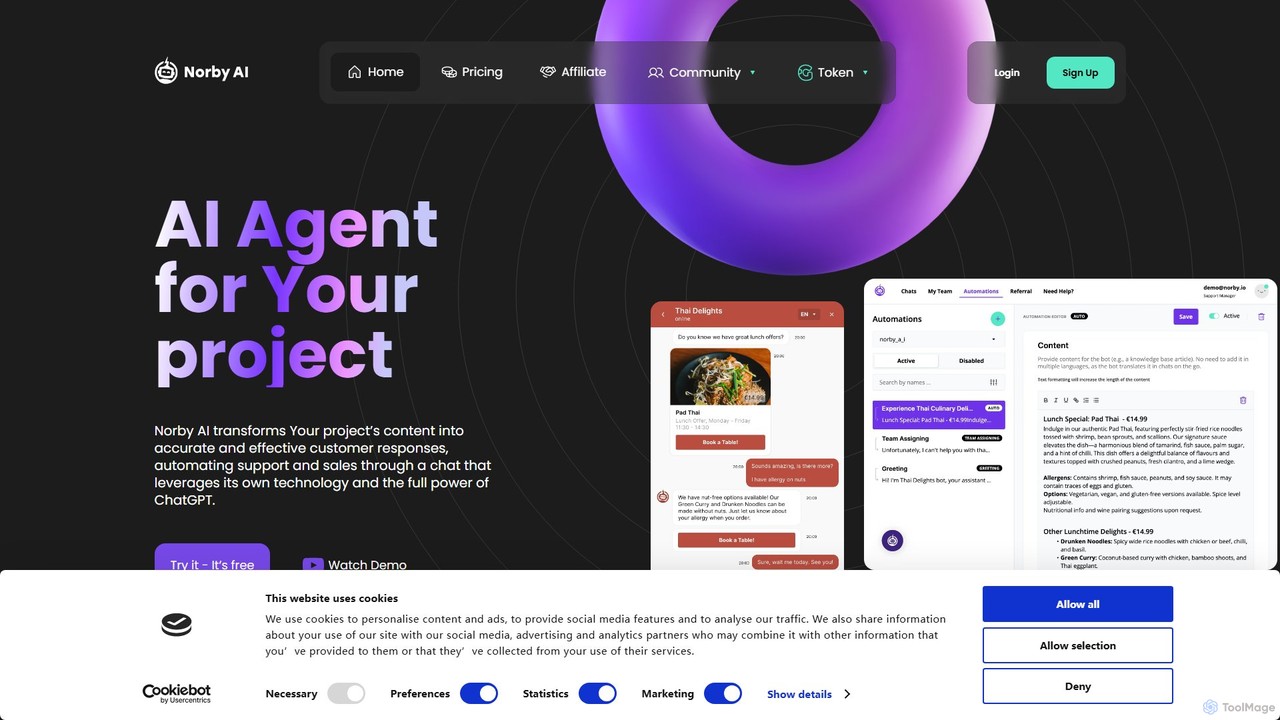
Norby is an advanced AI agent platform designed to automate customer support and sales with a unique focus on Web3 projects. Easily build and train a custom chatbot on your data to provide instant, 24/7 assistance on your website, Discord, or Telegram. Enhance user engagement, generate leads, and streamline operations for SaaS, e-commerce, and crypto communities without any coding knowledge.

Chatbots
Visits 8.5KFavorites 99Likes 108
Showfer.ai
Freemium

Showfer.ai

Showfer.ai is an AI platform that enables brands to create and deploy custom, interactive AI mascots. These mascots act as brand ambassadors, enhancing website engagement, automating customer support, and generating leads with a unique personality and visual identity.

Chatbots
Visits 6.2KFavorites 100Likes 104
SumoPPM
Paid

SumoPPM

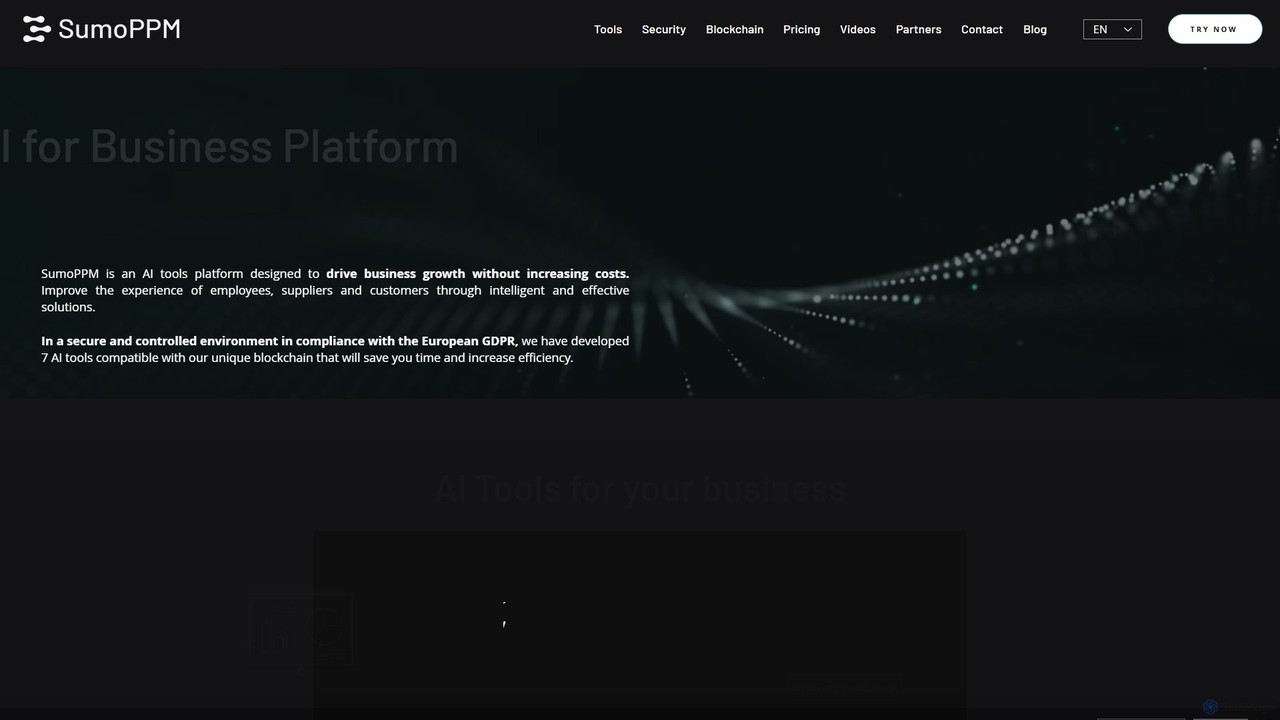
SumoPPM is an all-in-one AI platform for businesses, offering a suite of tools for automation, data analysis, and customer engagement. It helps streamline operations with data visualization, predictive modeling, AI agents, and chatbots in a secure, GDPR-compliant environment.

All In One
Visits 7KFavorites 121Likes 106
Parabrain
Freemium

Parabrain

Parabrain is an AI platform that allows you to create personalized expert AI chatbots by training them with your own knowledge. Upload documents, texts, or other data sources to build a specialized AI that can answer questions, share information, and act as a digital expert on any topic.

Chatbots
Visits 5.6KFavorites 180Likes 152
Cloozo
Freemium

Cloozo

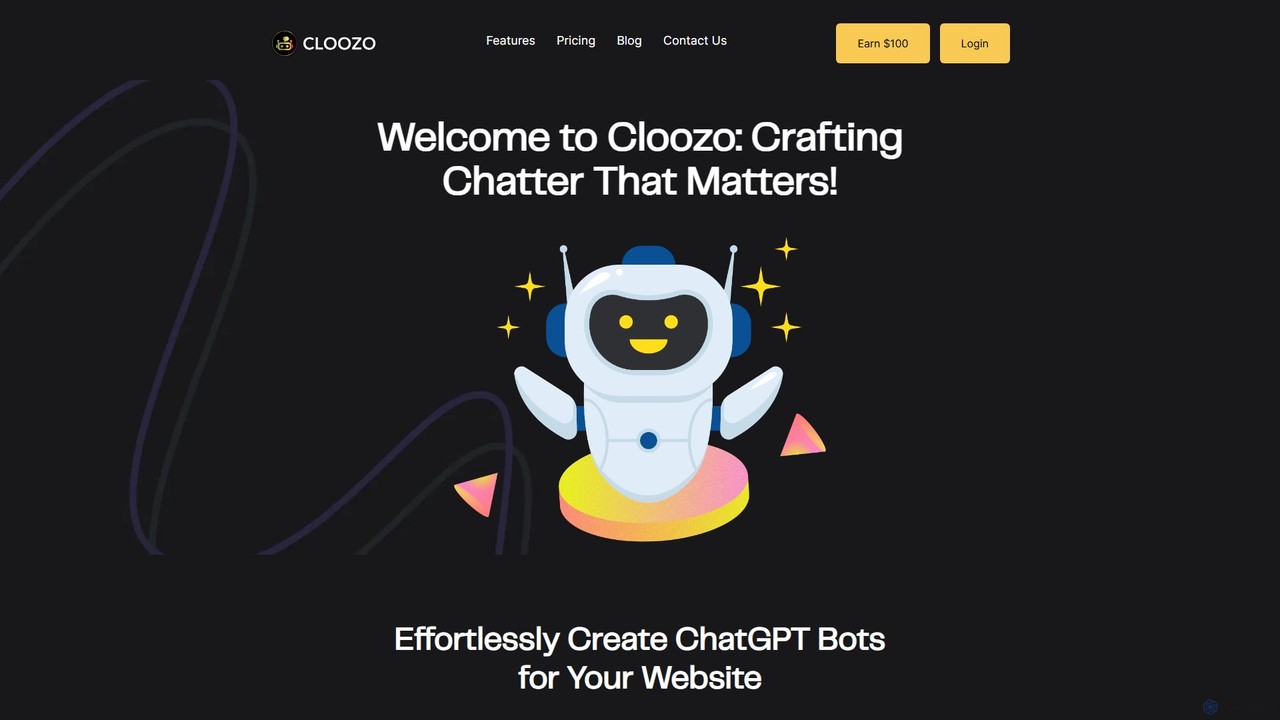
Cloozo is a no-code AI chatbot builder designed for agencies and SMBs. It allows you to create custom ChatGPT-like chatbots trained on your own knowledge base, such as website content or documents. Each chatbot can use individual OpenAI and Pinecone API keys for enhanced performance, security, and client management, making it an ideal solution for offering chatbot services.

Chatbots
Visits 5.7KFavorites 129Likes 126
Cirql Ai
Paid

Cirql Ai

A "Done-for-You" AI automation service that builds custom agents and workflows for B2B companies. Cirql transforms your manual processes, from sales and marketing to data entry and customer support, into fully automated systems, saving time, reducing errors, and boosting productivity.

Chatbots
Visits 6KFavorites 136Likes 121
Juji

Juji

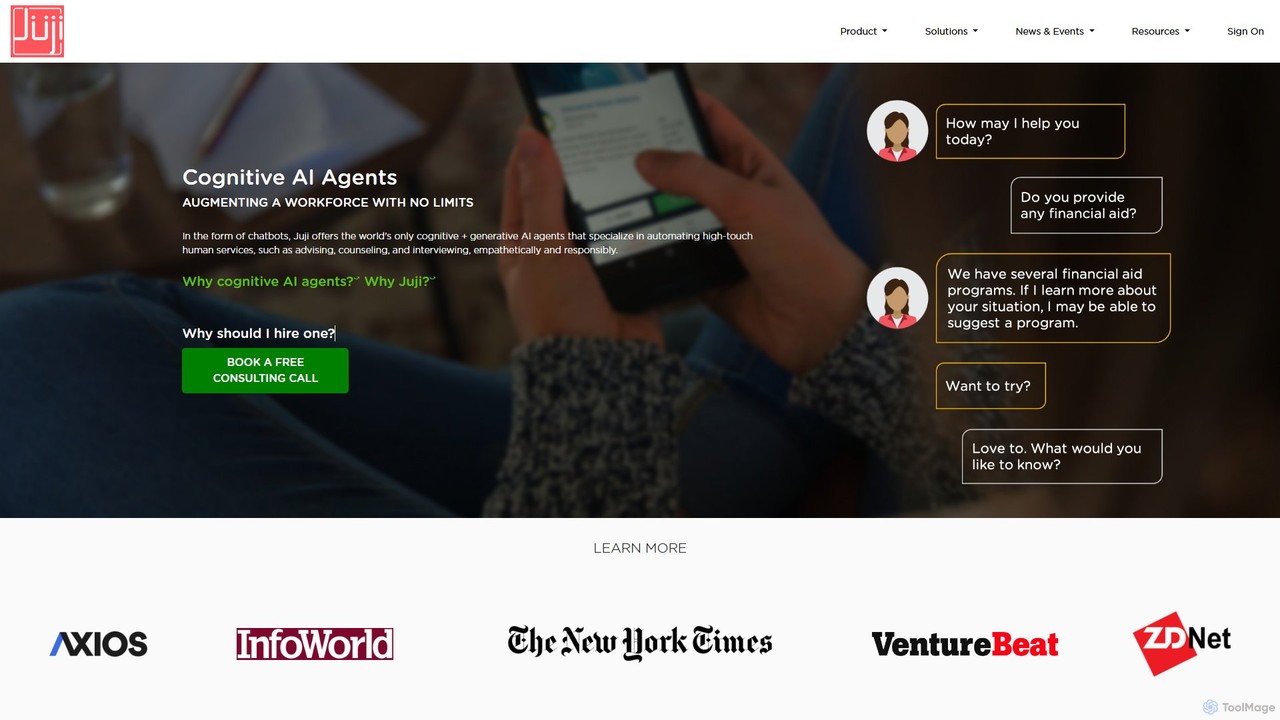
Juji is an advanced AI platform for creating cognitive chatbots that go beyond simple Q&A. It uses cognitive intelligence to understand user personality and emotions, enabling empathetic, human-like conversations. The no-code platform allows anyone to build, deploy, and manage powerful AI agents for customer service, marketing research, and HR.

Chatbots
Visits 12.1KFavorites 111Likes 111
VOC AI
Freemium

VOC AI

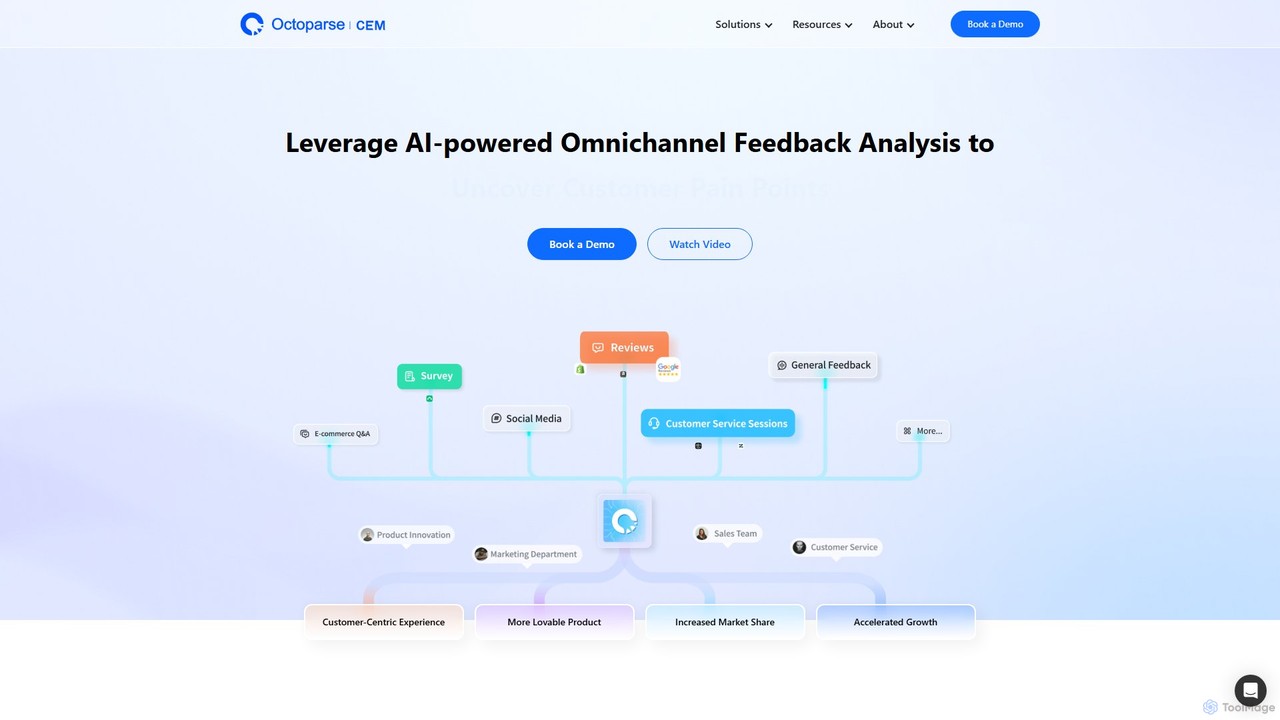
VOC AI is a unified customer experience management platform for e-commerce. It combines Solvea, an AI-powered customer service agent for 24/7 support, with Insight, an advanced Amazon review analysis tool for product research and market intelligence.

Sentiment Analysis
Visits 113.3KFavorites 142Likes 131
Gista
Freemium

Gista

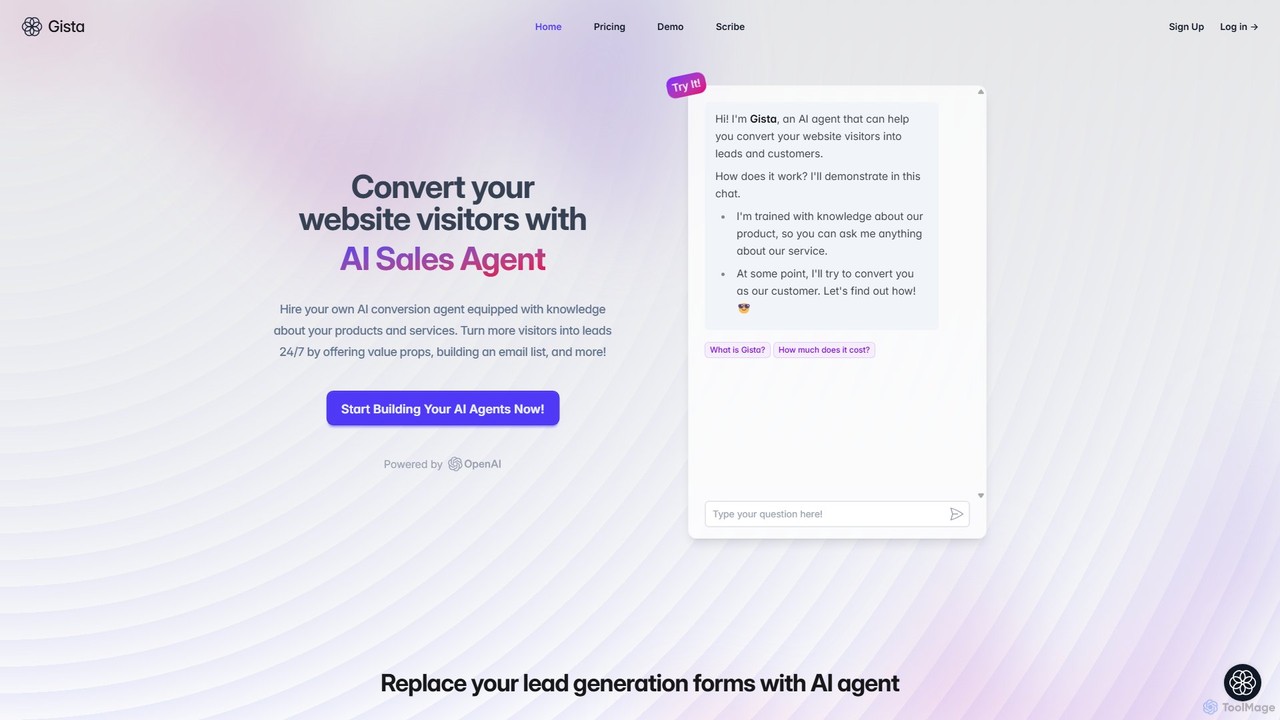
Gista is an AI conversion agent that transforms website visitors into leads and customers 24/7. By training on your business data, it provides personalized, multilingual support through a sleek chat widget. It also offers Gista Scribe, a free tool for transcribing meetings.

Chatbots
Visits 5.5KFavorites 146Likes 134
purechat.pro
Freemium

purechat.pro

purechat.pro is a professional AI chat platform for creating and deploying intelligent chatbots. It allows businesses to build custom assistants trained on their own data, integrate them seamlessly into websites for customer support and lead generation, and leverage top-tier AI models like GPT-4 for powerful, natural conversations.

Chatbots
Visits 5.5KFavorites 113Likes 121
Virtual Scale
Freemium

Virtual Scale

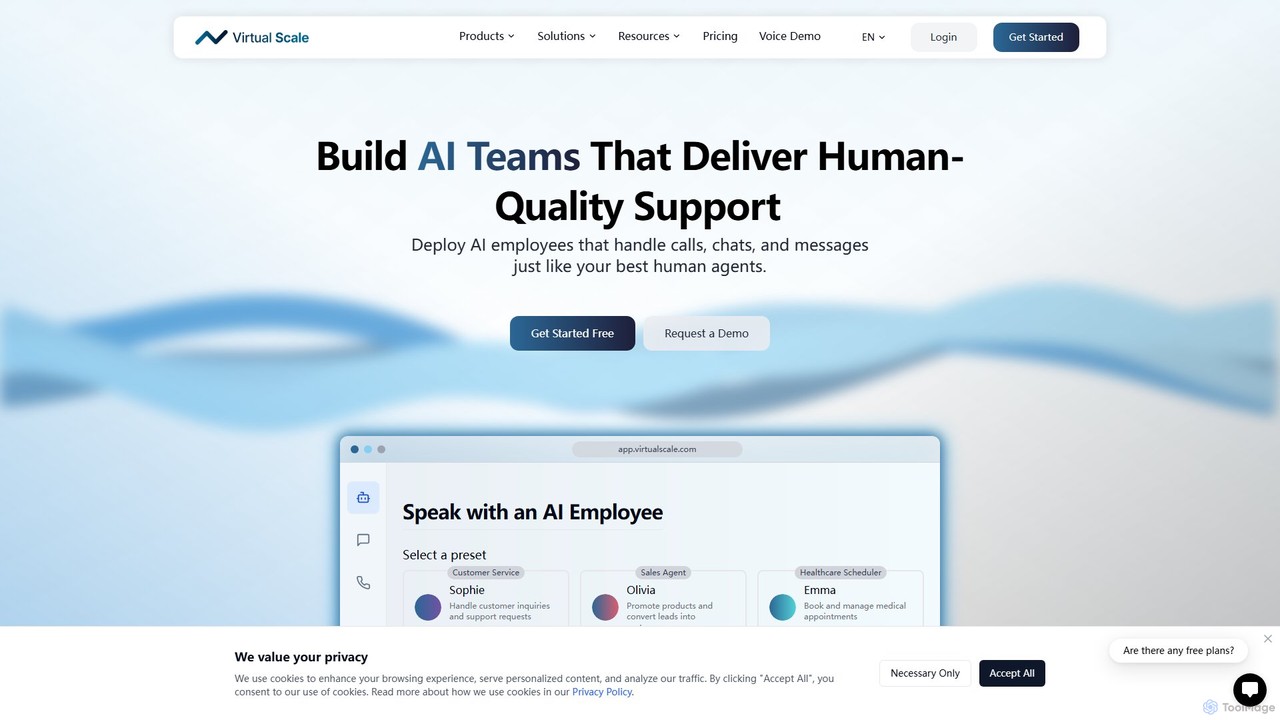
Virtual Scale is an AI platform that enables businesses to build and deploy a custom AI workforce. It provides AI-powered support on calls, chat, WhatsApp, and more, helping companies automate customer interactions, scale operations 24/7, and enhance engagement without the overhead of a large human team.

Call Center
Visits 6KFavorites 138Likes 152
Arsturn
Freemium

Arsturn

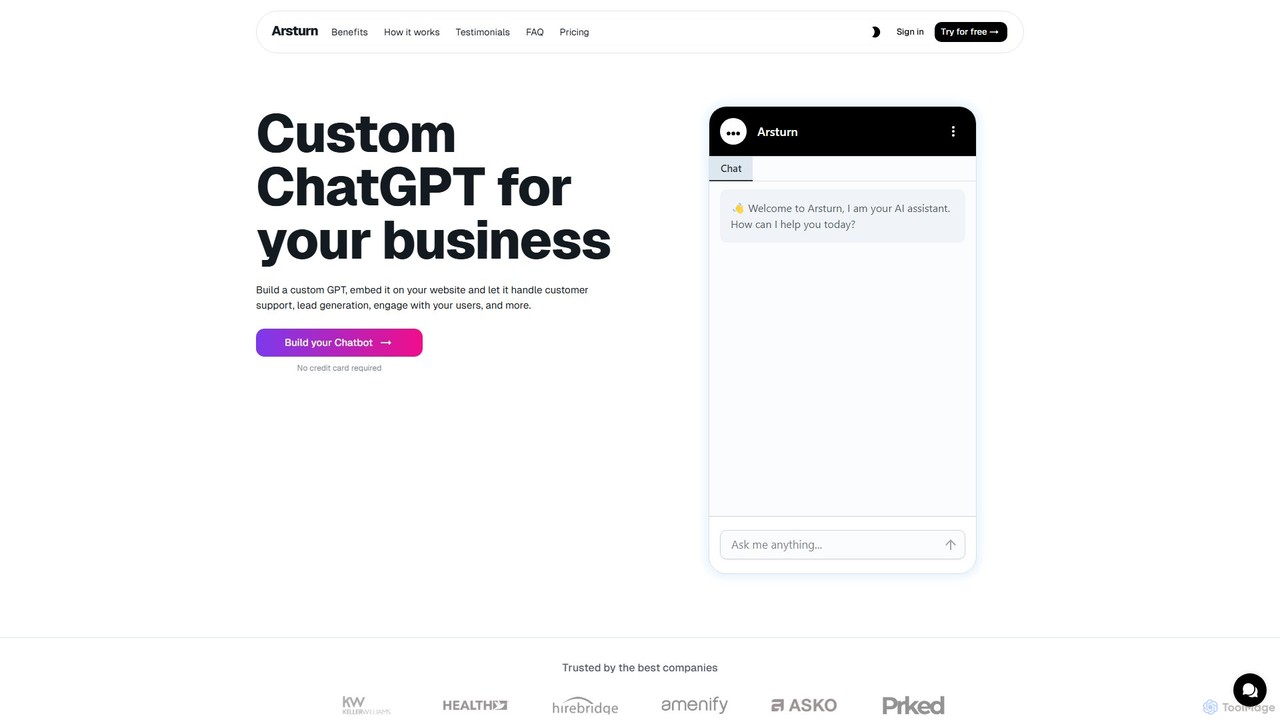
Arsturn is a no-code AI chatbot builder that lets you create custom ChatGPT-powered assistants for your website. Train the chatbot on your own data—files, text, or URLs—to provide instant, accurate answers to visitors. It's designed to boost audience engagement, automate customer support, and increase conversions without any coding skills required.

Chatbots
Visits 138.4KFavorites 130Likes 134
ChatbotBuilder.ai
Freemium

ChatbotBuilder.ai

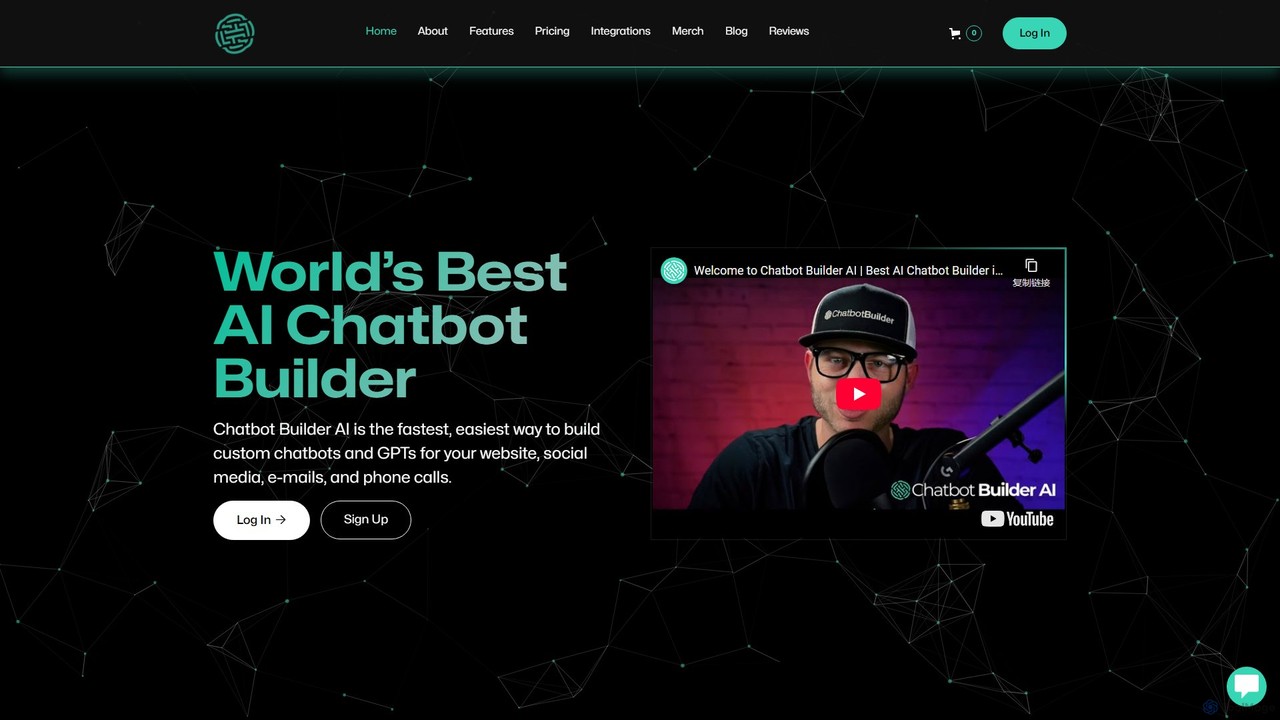
ChatbotBuilder.ai is a powerful no-code platform for creating custom AI chatbots and GPTs. It enables businesses to automate customer service, generate leads, and enhance user engagement across websites, social media, email, and voice channels. With seamless integrations and scalable plans, it's designed for businesses of all sizes, from startups to large agencies.

Chatbots
Visits 41KFavorites 132Likes 126
VASO AI
Freemium

VASO AI

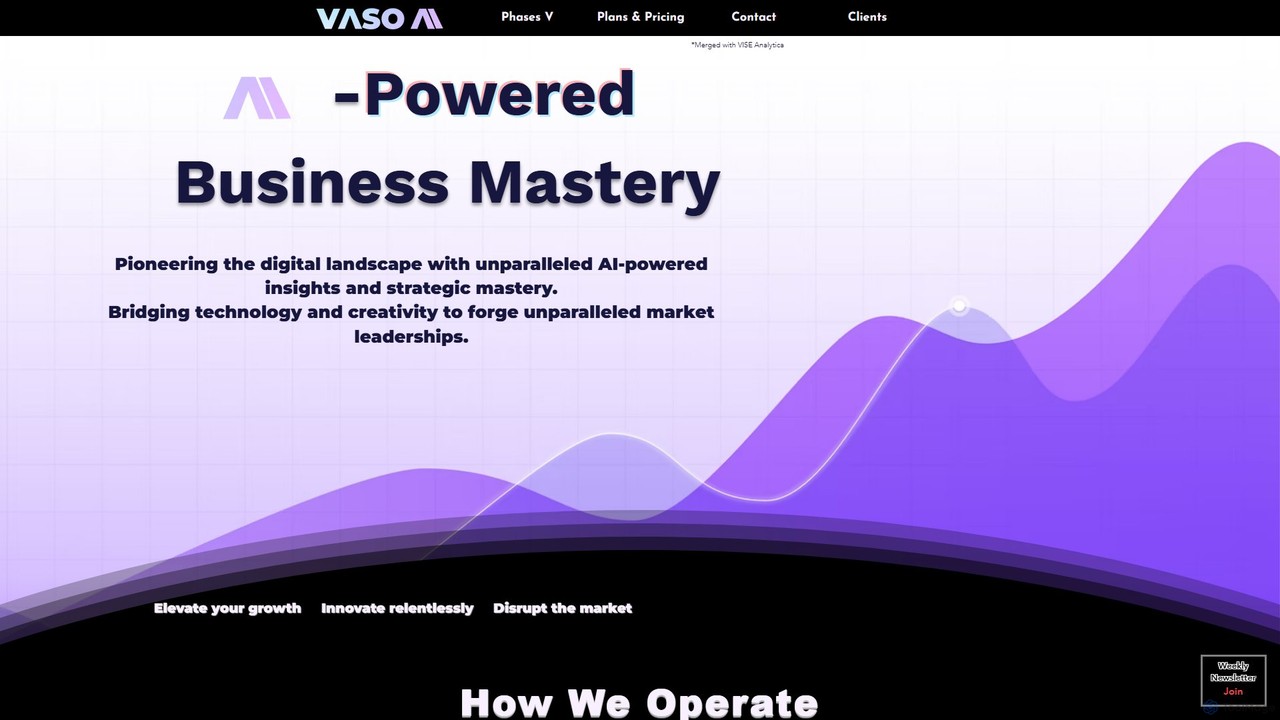
VASO AI is an AI-powered business intelligence and marketing platform designed to disrupt the marketing landscape. It offers a suite of tools including data analysis, personalized email marketing, AI chatbots, and social media management. By transforming complex data into actionable insights, VASO AI helps businesses of all sizes—from startups to enterprises—to innovate, accelerate growth, and achieve market leadership. The platform provides tailored subscription tiers and a mobile app for on-the-go strategy management.

Business Intelligence
Visits 6.2KFavorites 121Likes 126
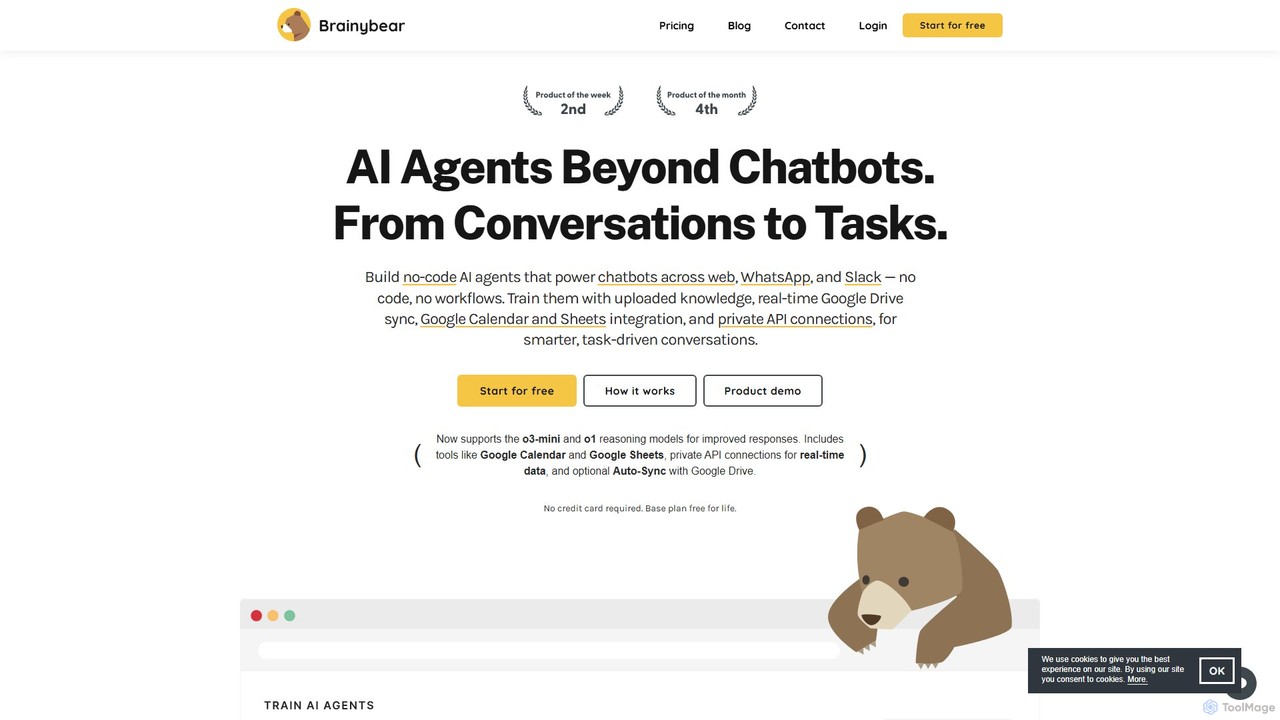
brainybear
Freemium

brainybear

brainybear is a no-code platform for building advanced AI agents that go beyond simple chatbots. Train agents with your own data, integrate with tools like Google Calendar and Slack, and deploy them across web, WhatsApp, and other channels to automate tasks and enhance customer engagement.

Chatbots
Visits 6.3KFavorites 153Likes 134
Klones
Freemium

Klones

Klones is an AI platform for creating interactive, personalized digital clones. By analyzing your voice, communication style, and knowledge, it generates a realistic AI twin that can engage in conversations, answer questions, and automate interactions on your behalf.

Digital Twin
Visits 5.7KFavorites 152Likes 146
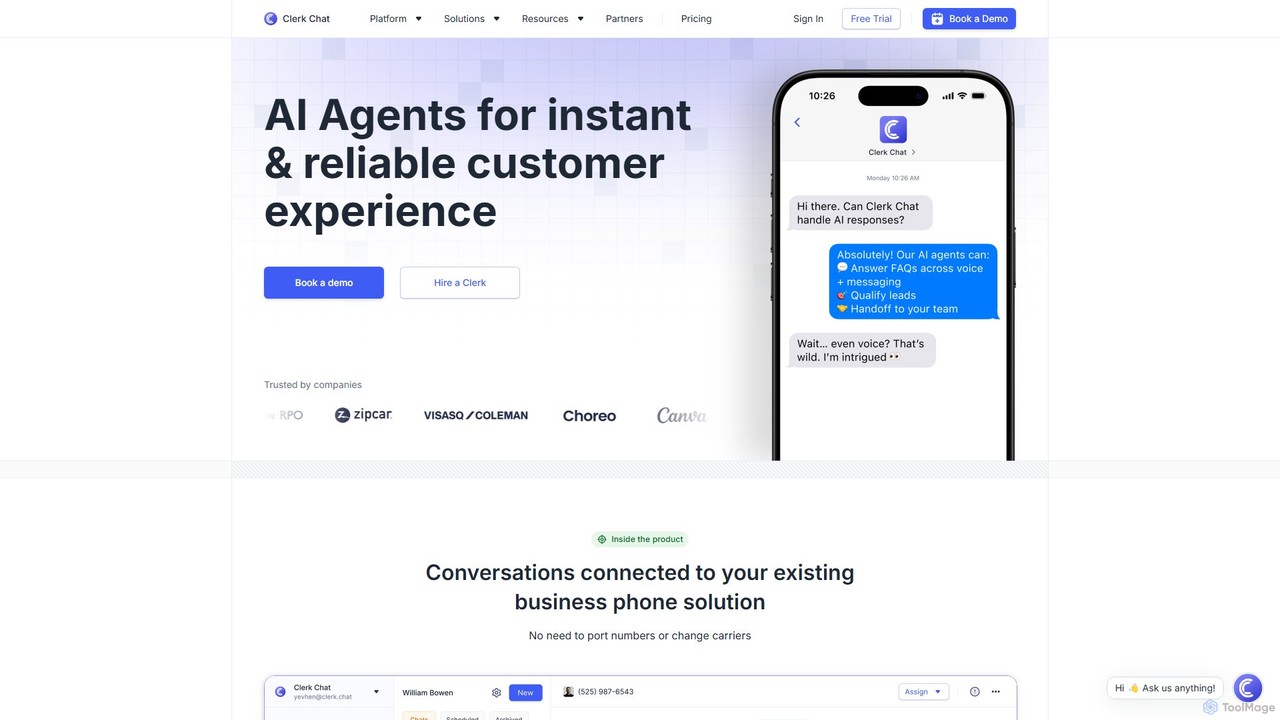
Clerk
Paid

Clerk

Clerk is an AI-powered business messaging platform that deploys intelligent agents to automate customer conversations across SMS, RCS, WhatsApp, and voice channels. It enhances customer experience, qualifies leads, and improves operational efficiency by integrating seamlessly with existing business phone solutions and CRMs like Salesforce.

Chatbots
Visits 100.7KFavorites 141Likes 125
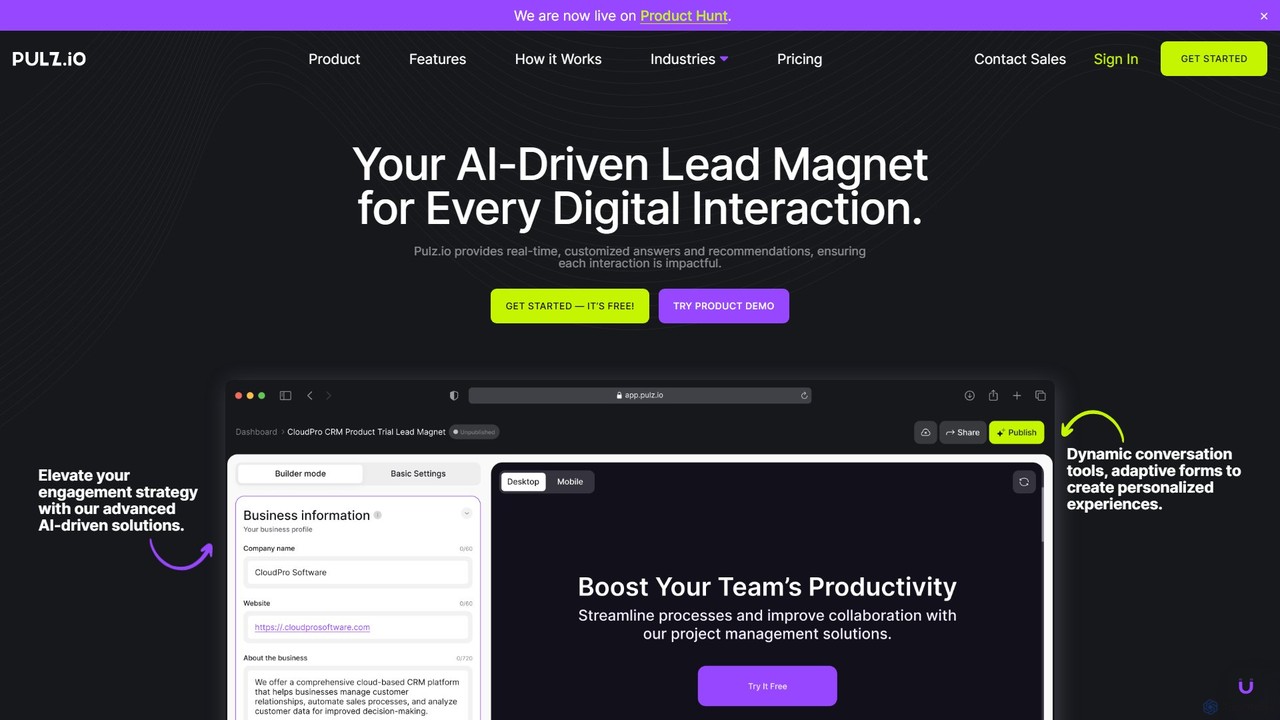
Pulz.io
Freemium

Pulz.io

Pulz.io is a no-code AI platform that empowers businesses to create personalized lead magnets, dynamic AI chat agents, and adaptive forms. It enhances user engagement and boosts conversion rates by delivering real-time, tailored recommendations and interactions. Ideal for various industries, Pulz.io simplifies AI integration, allowing users to build and deploy custom AI tools in minutes to capture qualified leads and analyze user behavior effectively.

Chatbots
Visits 7.3KFavorites 122Likes 133
Botsplash
Paid

Botsplash

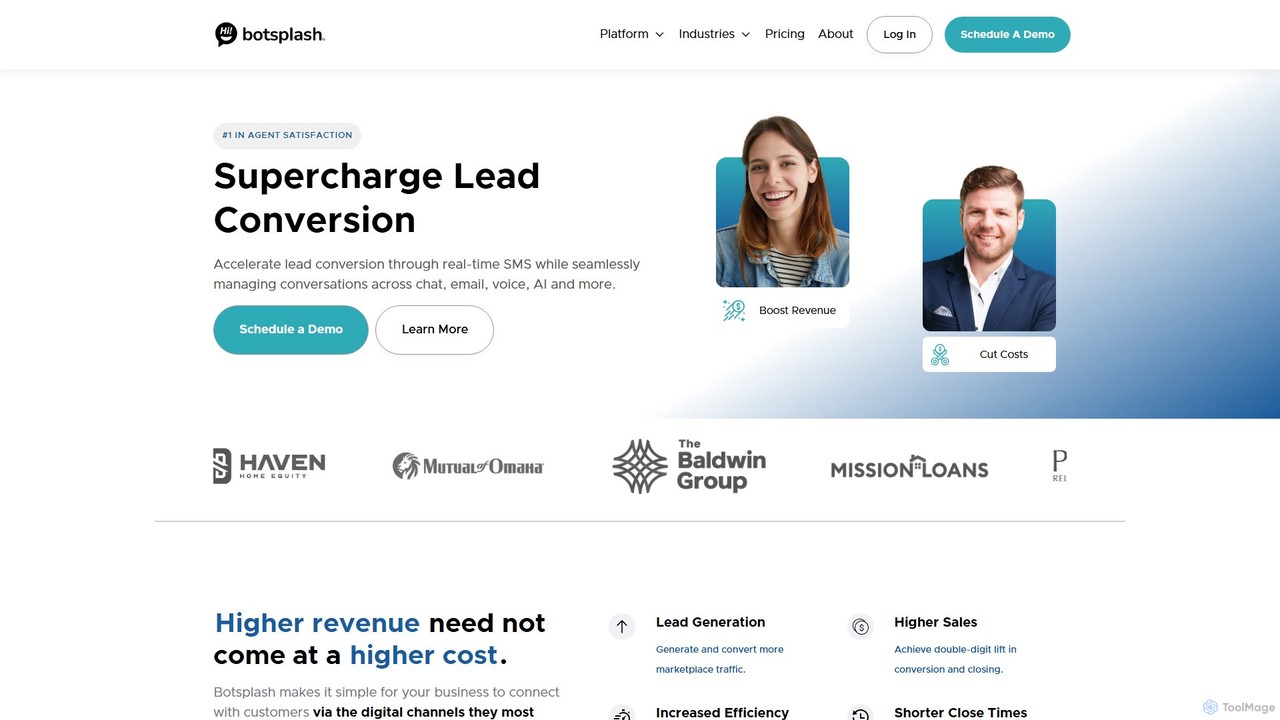
Botsplash is an AI-powered omnichannel customer engagement platform designed to help businesses increase revenue and efficiency. It combines generative AI, automation, and live messaging across channels like SMS, web chat, and social media. The platform facilitates lead generation, shortens sales cycles, and enhances customer satisfaction through personalized interactions, intelligent routing, and robust analytics, all while ensuring security and compliance.

Chatbots
Visits 22.9KFavorites 132Likes 153
Instant.bot
Freemium

Instant.bot

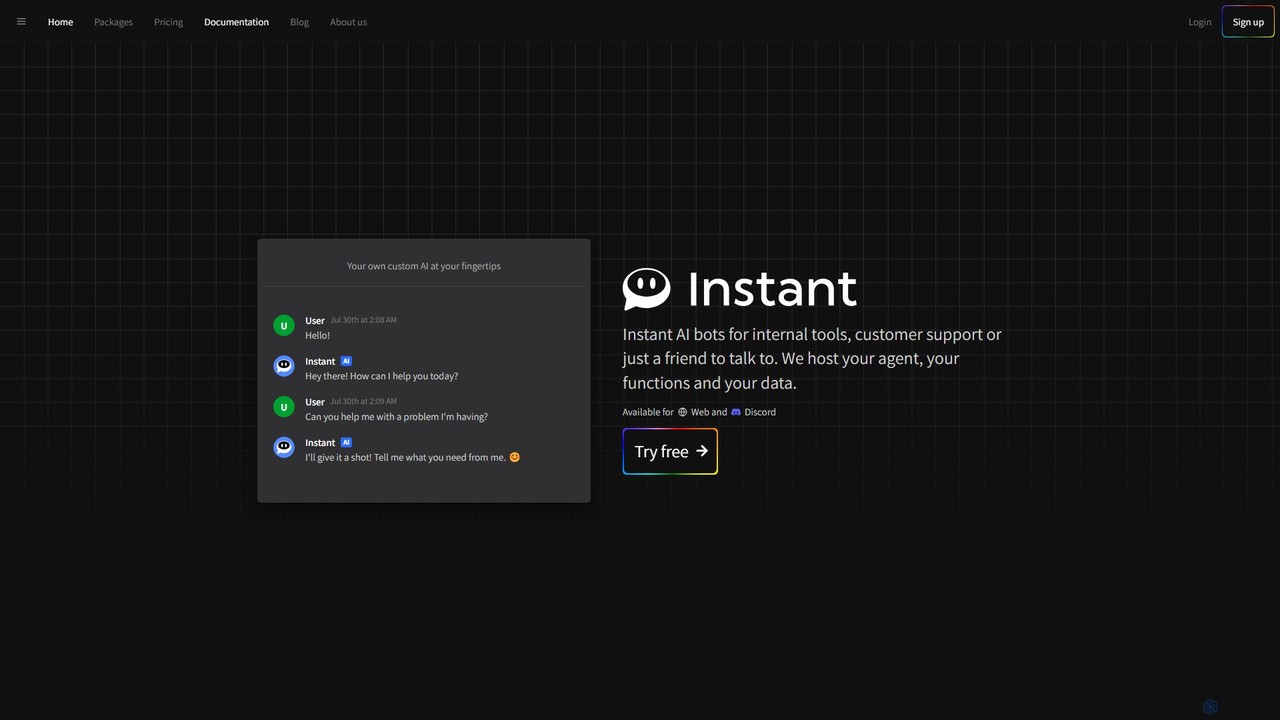
Instant.bot is a powerful platform for creating and deploying custom AI chatbots for internal tools, customer support, and community engagement. It offers seamless integration with Web and Discord, including features like image generation and custom functions, all hosted on their platform.

Chatbots
Visits 5.7KFavorites 111Likes 99
GPT-trainer
Freemium

GPT-trainer

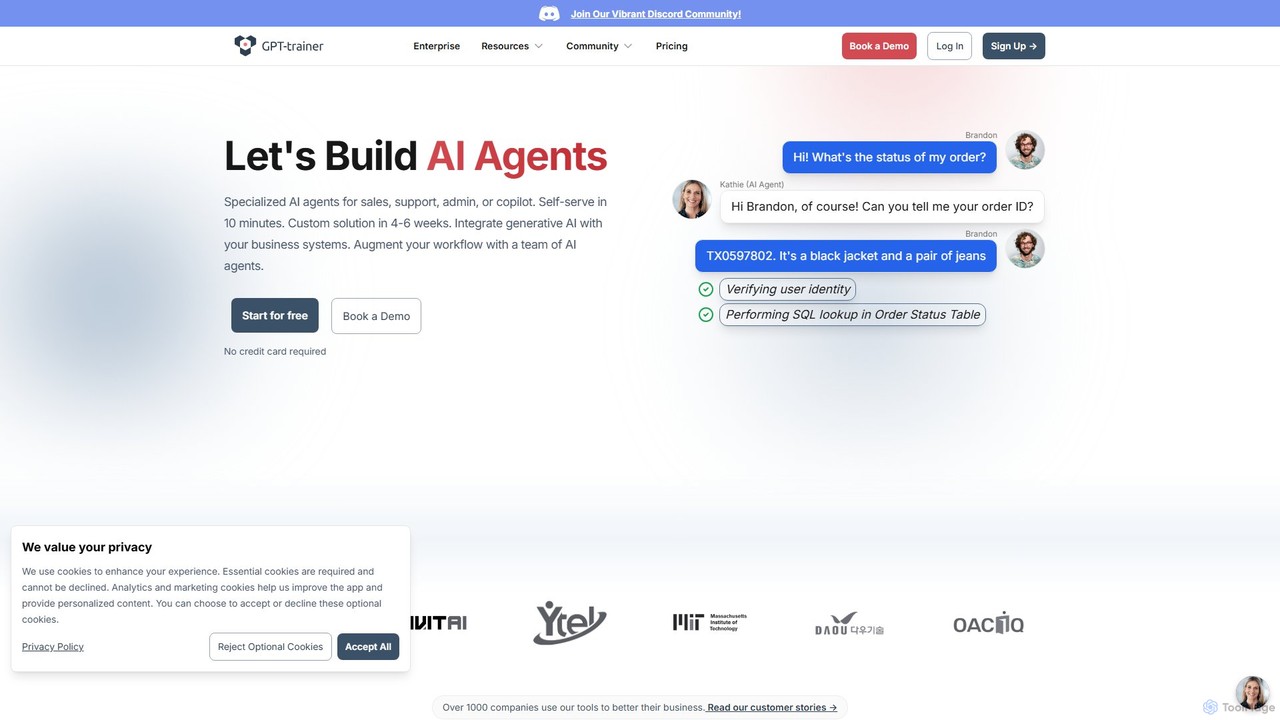
A no-code platform for building specialized AI agents for sales, support, and internal operations. Train ChatGPT-like bots on your own data, integrate with business systems, and deploy across multiple channels to automate workflows and enhance productivity.

Chatbots
Visits 27.3KFavorites 138Likes 139
Diaxel
Freemium

Diaxel

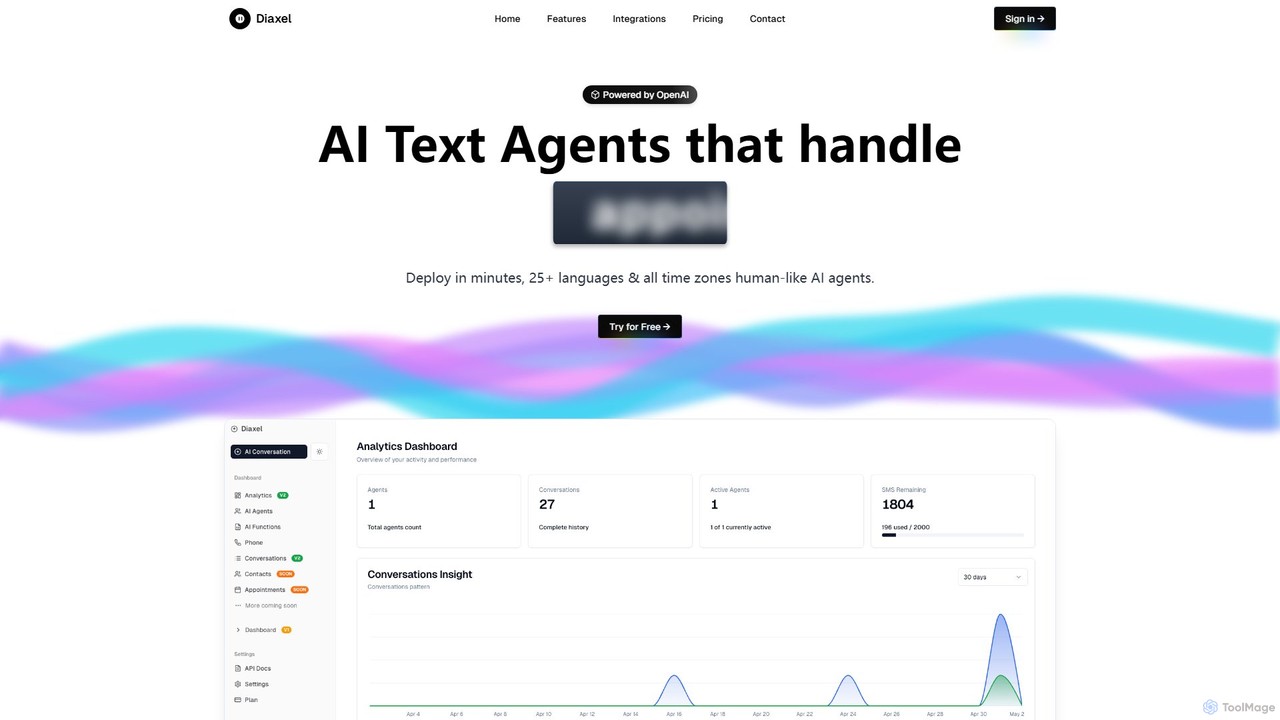
Diaxel is an advanced AI agent platform designed to automate customer engagement. It deploys human-like AI text agents for 24/7 appointment scheduling, intelligent lead qualification, and multi-language customer support. Powered by OpenAI, Diaxel helps businesses enhance efficiency, increase conversion rates, and provide superior customer service around the clock.

Chatbots
Visits 5.6KFavorites 134Likes 137
aicado
Freemium

aicado

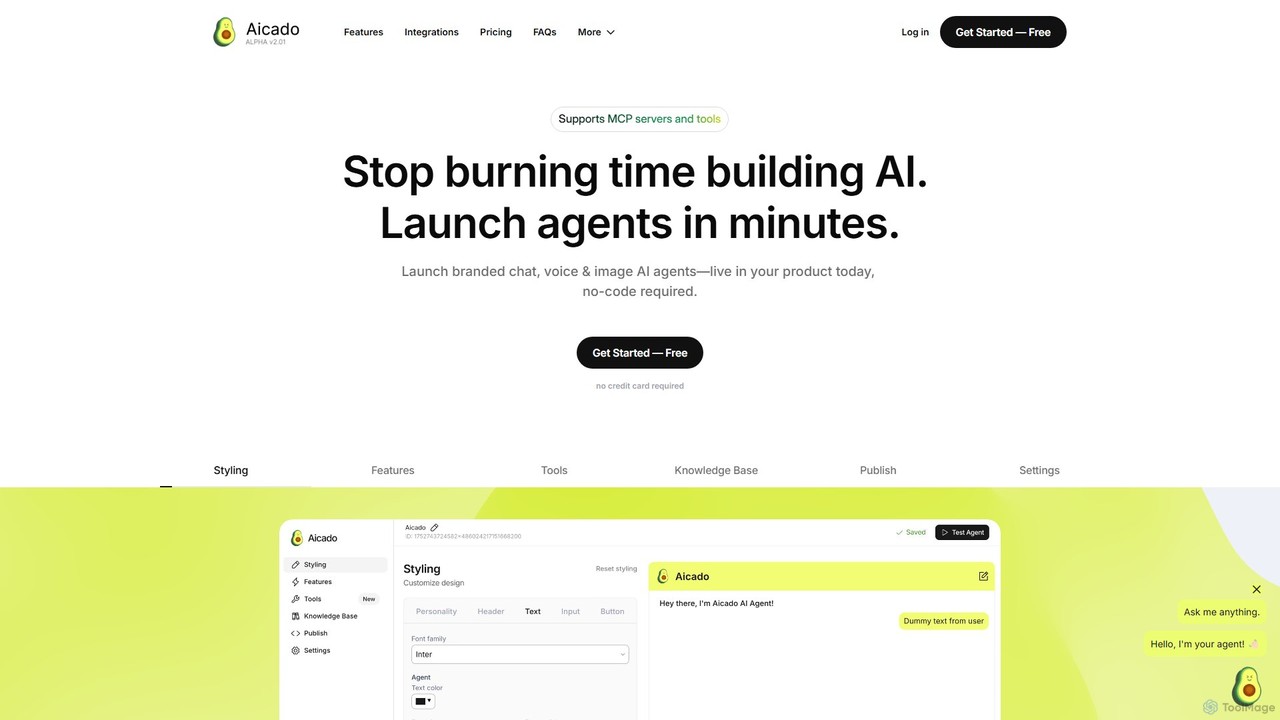
Aicado is a no-code platform that enables businesses to build and launch custom-branded AI agents for chat, voice, and image generation. Integrate AI into your product or website in minutes by training agents on your own data, connecting to external tools, and fully customizing the user interface. It's designed for simplicity, speed, and powerful integration without requiring any technical expertise.

Chatbots
Visits 31KFavorites 121Likes 128
Botbyte AI
Freemium

Botbyte AI

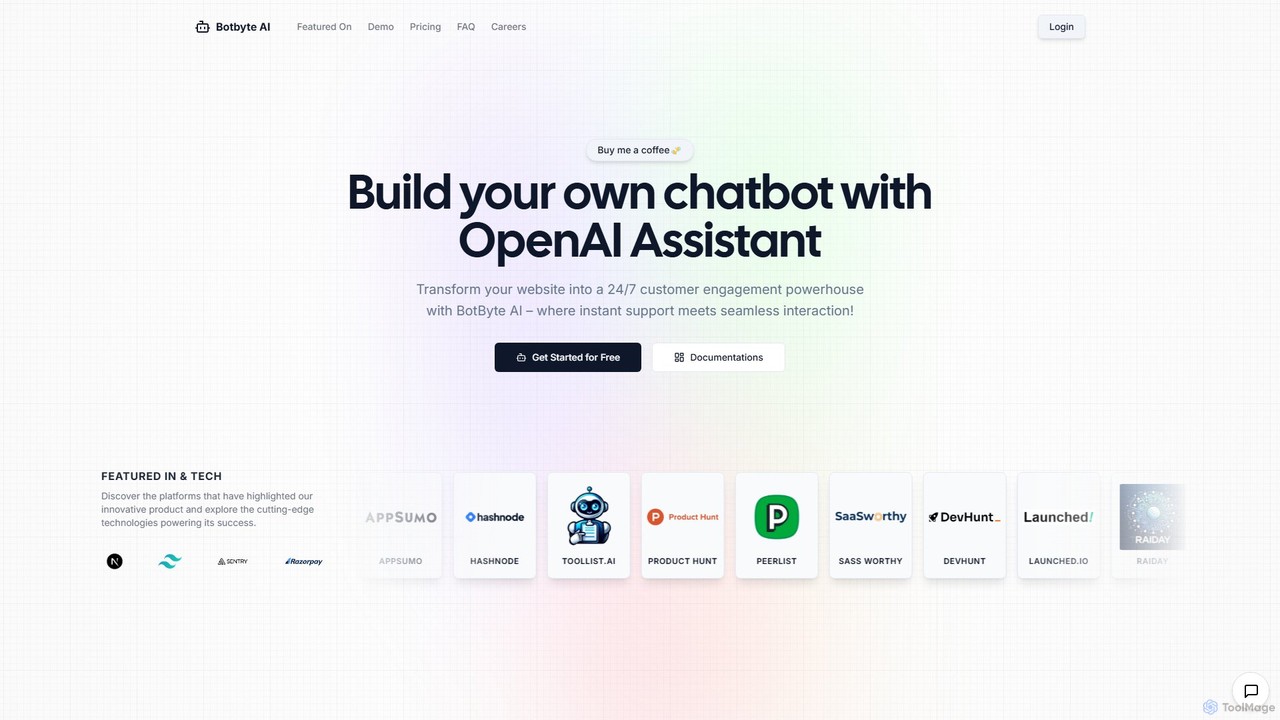
Botbyte AI is a platform for creating custom AI chatbots powered by OpenAI's Assistant API. Easily train a chatbot on your website's content by simply providing a URL. It offers low-code integration, lead generation features, and a 'bring your own API key' model for cost-effective, 24/7 customer engagement.

Chatbots
Visits 5.7KFavorites 132Likes 130

About Chatbots

Chatbots are AI-powered conversational programs designed to simulate human-like interactions with users through text or voice. Leveraging Natural Language Processing (NLP), they understand user intent, process requests, and provide relevant, real-time responses. As a key component of modern customer support, chatbots automate routine inquiries, guide users to solutions, and offer 24/7 availability. Unlike static FAQ pages, they provide a dynamic and interactive experience, capable of handling tasks from answering questions to processing orders.

Core Features

  • Natural Language Understanding (NLU): Interprets user intent, entities, and sentiment from unstructured language to provide accurate answers.
  • 24/7 Automated Responses: Provides instant support and information around the clock, reducing customer wait times.
  • Multi-channel Integration: Deploys consistently across websites, mobile apps, and messaging platforms like Messenger or WhatsApp.
  • Visual Flow Builder: Allows for the creation and customization of conversational paths using a drag-and-drop interface, often without coding.
  • Live Agent Handoff: Seamlessly transfers complex or sensitive conversations to a human agent when AI cannot resolve the issue.

Use Cases

Chatbots are widely used in e-commerce for order tracking and product recommendations, in SaaS for initial user onboarding and troubleshooting, and in healthcare for scheduling appointments. Internally, companies deploy them as IT helpdesks to resolve common technical issues for employees, streamlining support operations.

How to Choose

When selecting a chatbot tool, evaluate its NLP capabilities and language support. Consider its integration options with your existing CRM, helpdesk software, and communication channels. Assess the ease of use of its conversation builder and its scalability to handle growing query volumes. Finally, review its analytics features for insights into user interactions and performance.

Featured tool rankings

Chatbots use cases

1

Automate E-commerce Customer Service

An e-commerce manager implements a chatbot on their online store to handle common customer inquiries. When a customer asks, "Where is my order?", the chatbot authenticates the user, integrates with the store's backend system (like Shopify), retrieves the real-time shipping status, and provides a direct tracking link. This process deflects numerous routine tickets from the human support team, allowing them to focus on complex issues like returns or product defects, while improving customer satisfaction with instant, 24/7 answers.

2

Qualify Leads on a B2B Website

A marketing team uses a chatbot on their company's website to engage visitors proactively. The chatbot asks targeted questions to determine a visitor's needs, company size, and role. Based on the responses, it qualifies them as a Marketing Qualified Lead (MQL). For qualified leads, the chatbot can directly schedule a demo with a sales representative by integrating with their calendar, or route them to relevant case studies. This automates the top of the sales funnel, ensuring the sales team spends time only on high-potential prospects.

3

Provide 24/7 Internal IT Helpdesk Support

An IT department deploys a chatbot on the company's internal communication platform, like Slack or Microsoft Teams. When an employee faces a common issue, such as a password reset or VPN connection problem, they can message the chatbot first. The bot guides them through a series of troubleshooting steps. If the issue persists, the chatbot automatically creates a support ticket in the IT service management system (e.g., Jira Service Desk) with all the collected information, reducing resolution time and freeing up IT staff for more complex tasks.

4

Streamline Appointment Scheduling for Clinics

A healthcare clinic uses a chatbot on its website to manage patient bookings. A patient can initiate a conversation to schedule an appointment. The chatbot asks for the required specialty, preferred doctor, and desired date range. It then integrates with the clinic's scheduling software to display available time slots. The patient selects a slot, confirms their details, and the appointment is booked automatically. The system can also send automated reminders, reducing no-shows and administrative workload for the front-desk staff.

5

Guide New Users Through SaaS Product Onboarding

A product manager for a SaaS company implements an in-app chatbot to improve user activation. When a new user signs up, the chatbot initiates a welcome sequence, guiding them through critical first steps like setting up their profile or creating their first project. It can proactively point out key features and answer common "how-to" questions contextually. This interactive guidance helps users reach their "aha!" moment faster, reducing churn and increasing the likelihood of converting from a free trial to a paid subscription.

6

Facilitate Food Ordering and Reservations

A restaurant owner integrates a chatbot into their Facebook Messenger and website. Customers can interact with the bot to browse the menu, place a delivery or takeout order, and pay directly within the chat interface. The chatbot can also handle table reservations by checking real-time availability and confirming bookings. This provides a convenient, mobile-friendly channel for customers and reduces the time staff spend on the phone, allowing them to focus on in-person service.

Chatbots FAQ

What is an AI Chatbot?

An AI chatbot is a software application designed to simulate human conversation through text or voice commands. Unlike simple rule-based bots, AI chatbots use technologies like Natural Language Processing (NLP) and machine learning to understand the context and intent behind a user's query. This allows them to handle complex conversations, learn from interactions, and provide more accurate and personalized responses for tasks like customer support, lead generation, and user assistance.

How to choose the right chatbot for my business?

To choose the right chatbot, consider these factors:

  • Primary Goal: Determine if you need it for customer support, sales, or marketing. This will define the required features.
  • Integration Capabilities: Ensure it can connect with your essential tools like CRM, helpdesk software, and messaging platforms.
  • Ease of Use: Decide between a no-code platform for non-technical users or a more complex framework for developers.
  • NLP Performance: Evaluate its ability to understand user intent accurately in the languages you support.
  • Scalability: Choose a solution that can grow with your business and handle increasing conversation volumes.
What's the difference between an AI chatbot and a rule-based chatbot?

The key difference lies in how they process information. A rule-based chatbot follows a pre-defined script or decision tree. It can only respond to specific commands and keywords it's programmed to recognize. In contrast, an AI chatbot uses Natural Language Processing (NLP) to understand intent, context, and variations in user language. This allows AI chatbots to handle a wider range of queries, learn from conversations, and provide a more natural, human-like interaction, making them better suited for complex customer support scenarios.

What are the main benefits of using a chatbot for customer support?

Using a chatbot in customer support offers several key benefits. It provides 24/7 availability, allowing customers to get instant answers outside of business hours. It significantly reduces response times for common questions, improving customer satisfaction. By automating routine inquiries, chatbots free up human agents to focus on more complex, high-value issues. They can also handle a large volume of simultaneous conversations, making support operations highly scalable and cost-effective.

Can chatbots integrate with other business systems?

Yes, integration is a critical feature of modern chatbot platforms. They are designed to connect with a wide range of business systems to provide personalized and context-aware service. Common integrations include:

  • CRM systems (like Salesforce) to access customer history.
  • Helpdesk software (like Zendesk) to create and manage support tickets.
  • E-commerce platforms (like Shopify) to track orders and manage inventory.
  • Communication channels (like Slack, Messenger, WhatsApp) to meet users where they are.

These integrations allow the chatbot to perform actions, not just answer questions, making it a powerful automation tool.