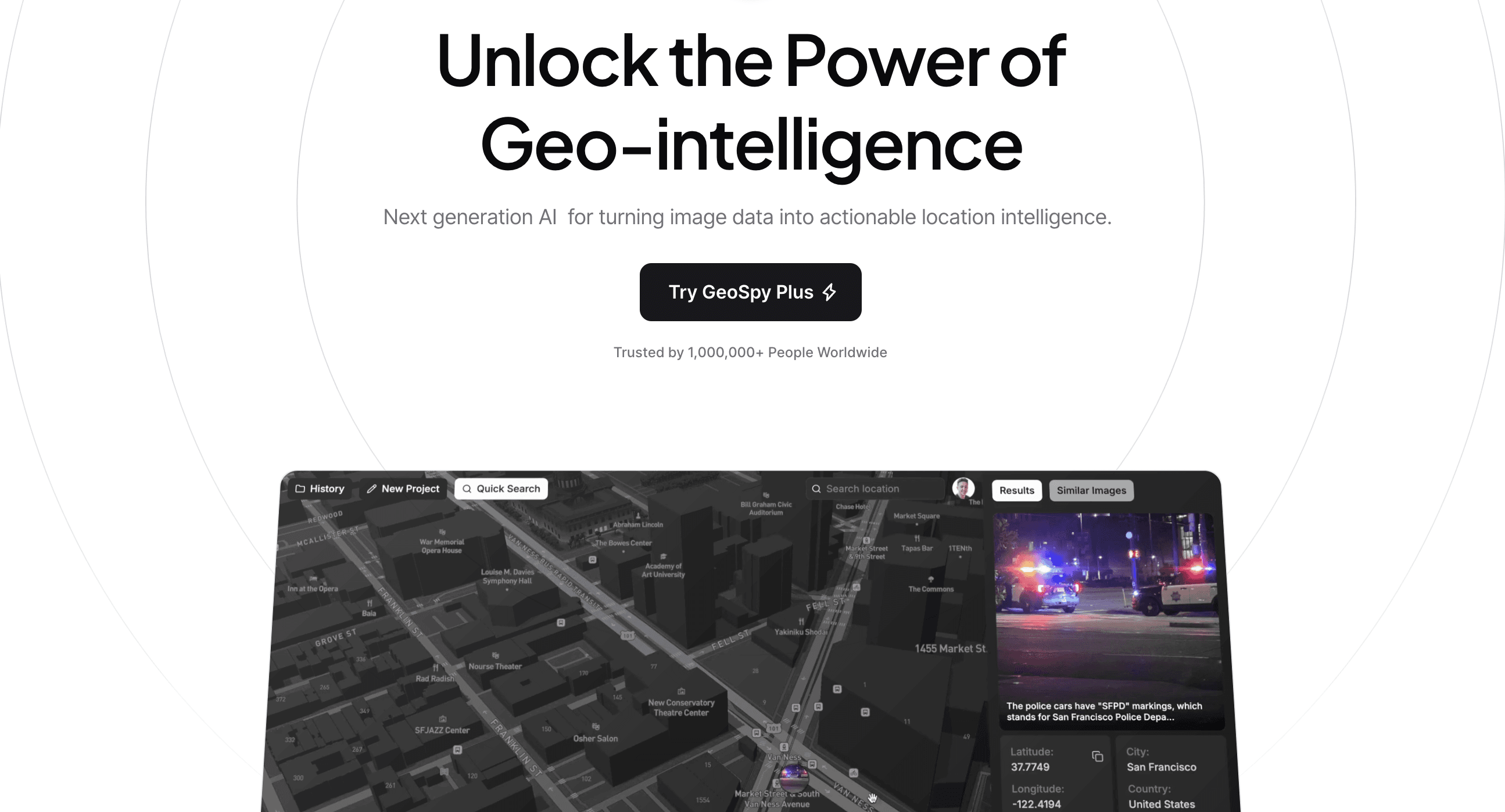
Geolocation AI tools are specialized platforms that leverage artificial intelligence to analyze, interpret, and predict patterns from spatial and temporal data. These tools utilize machine learning algorithms to process diverse location-based information, including GPS coordinates, satellite imagery, sensor data, and network signals. Their primary value lies in transforming raw geographical data into actionable insights, enabling businesses and organizations to make informed decisions across various domains. This advanced form of data analysis provides a deeper understanding of spatial relationships and trends.
Core Features
- Spatial Pattern Recognition: Identifies hidden trends, clusters, and anomalies within geographical datasets.
- Predictive Location Analytics: Forecasts future movements, traffic patterns, or demand hotspots based on historical data.
- Geofencing & Proximity Analysis: Creates virtual boundaries and analyzes interactions or events within specific geographical areas.
- Route Optimization: Dynamically calculates the most efficient paths considering real-time conditions and multiple constraints.
- Location-Based Personalization: Delivers tailored content or services based on a user's current or predicted location.
Use Cases
Geolocation AI tools are crucial for industries requiring precise spatial understanding. In urban planning, they analyze population density and traffic flow for infrastructure development. Retailers use them for site selection, identifying optimal store locations based on demographic data and competitor presence. Logistics companies leverage these tools for dynamic route planning, minimizing delivery times and fuel consumption.
How to Choose
When selecting a Geolocation AI tool, consider its data integration capabilities with existing systems (GIS, CRM). Evaluate the accuracy and granularity of its spatial analysis features, ensuring it meets specific project requirements. Assess the scalability to handle large datasets and the flexibility of its API for custom applications. Finally, review the pricing model and the level of technical support offered.