Ascn
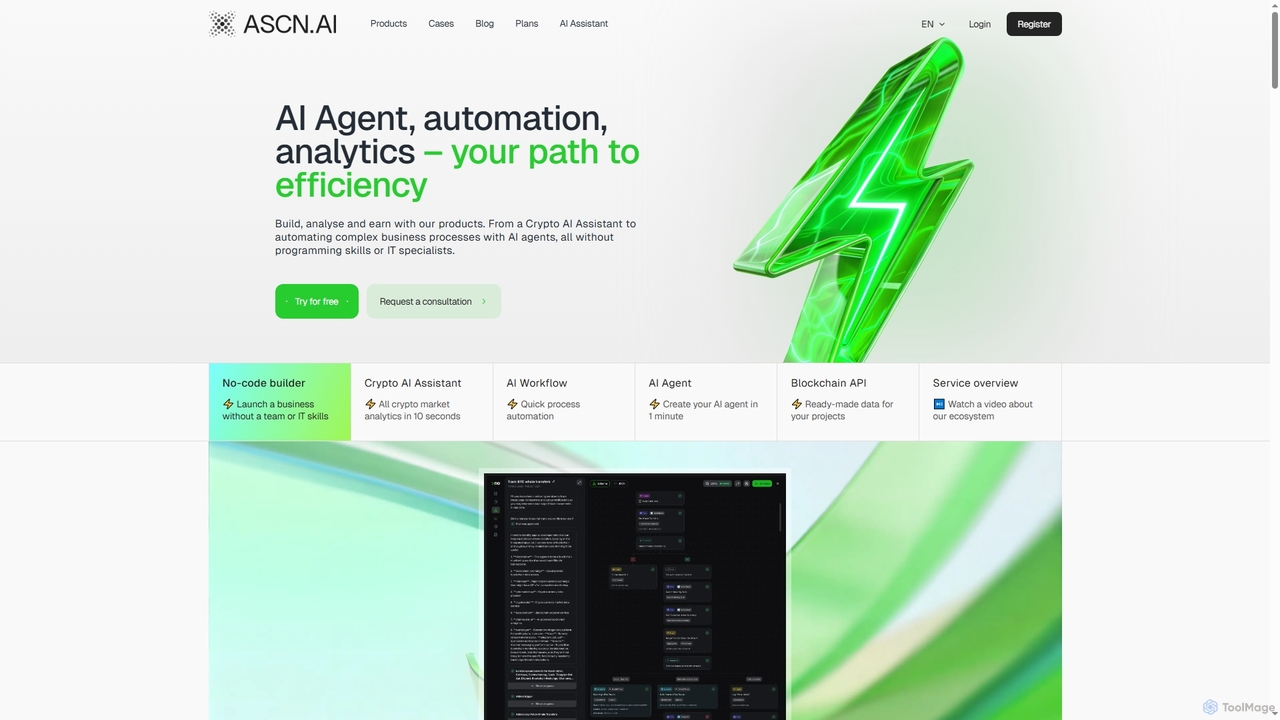
Ascn is an all-in-one AI ecosystem designed for crypto enthusiasts and businesses, offering powerful tools for market analysis, …
Ascn is an all-in-one AI ecosystem designed for crypto enthusiasts and businesses, offering powerful tools for market analysis, workflow automation, and AI agent creation without requiring programming skills. It provides a personal AI assistant for crypto, no-code builders, and robust APIs to streamline operations and enhance decision-making in the blockchain space.
About On Chain Analytics
On-Chain Analytics tools are a specialized category of data analysis software designed to interpret public blockchain ledger data. They process raw transactional information from networks like Bitcoin and Ethereum to generate actionable insights. By tracking metrics such as transaction volume, wallet activity, and fund flows, these tools reveal underlying market dynamics and network health. This provides investors, analysts, and researchers with a transparent, data-driven view of cryptocurrency markets that is unavailable through traditional financial analysis.
Core Features
- Transaction Flow Mapping: Visualize the movement of funds between wallets, exchanges, and smart contracts to identify patterns.
- Wallet Profiling: Analyze the behavior and holdings of specific addresses, including identifying "whale" activity.
- Smart Contract Interaction Analysis: Monitor data on how users are interacting with DeFi protocols, dApps, and NFT contracts.
- Market Indicators: Access aggregated metrics like exchange inflows/outflows, holder profitability (SOPR), and network value to transaction (NVT) ratios.
- Real-time Alerts: Set up notifications for significant on-chain events, such as large transfers or changes in smart contract liquidity.
Use Cases
These tools are primarily used by crypto investors, DeFi analysts, blockchain researchers, and financial institutions. For example, an investment fund might use on-chain data to validate a trading thesis, while a compliance officer could use it to trace the origin of funds for anti-money laundering (AML) checks.
How to Choose
When selecting an On-Chain Analytics tool, consider the scope of supported blockchains (e.g., Bitcoin, Ethereum, Solana). Evaluate the granularity and historical depth of the data provided. Also, assess the user interface's complexity, the availability of an API for custom analysis, and the pricing model, which often varies based on data access levels.

On Chain AnalyticsUse Cases
Tracking Whale Wallet Movements for Investment Signals
A crypto analyst or sophisticated investor monitors the wallets of large holders, known as "whales." By using an on-chain analytics tool, they can set alerts for significant inflows or outflows from these wallets to exchanges. A large transfer to an exchange might signal an intention to sell, creating downward pressure. Conversely, accumulation in private wallets could indicate a bullish outlook. This analysis provides leading indicators for potential market moves, allowing the investor to position their portfolio proactively rather than reacting to price changes alone.
Assessing DeFi Protocol Health and Risk
A DeFi researcher or risk manager uses on-chain tools to perform due diligence on a lending protocol. They analyze metrics like Total Value Locked (TVL) trends, the number of active daily users, transaction volume, and the distribution of governance tokens. A steady increase in TVL and users suggests growing adoption and trust. By examining smart contract interactions, they can also identify potential vulnerabilities or unusual activity, helping them assess the protocol's overall stability and security before committing capital.
Gauging Market Sentiment with Exchange Flow Data
A crypto trader aims to understand broader market sentiment beyond price charts. They use an on-chain analytics platform to track the net flow of assets like Bitcoin and Ethereum to and from centralized exchanges. A sustained period of net outflows (more coins leaving exchanges than entering) suggests investors are moving assets to long-term storage, indicating a holding sentiment and potentially reduced selling pressure. High net inflows, on the other hand, can signal panic selling or profit-taking.
Conducting Blockchain Forensics for Compliance
A compliance officer at a financial institution or a forensic investigator is tasked with tracing the source of funds involved in a suspicious transaction. Using an on-chain analysis tool with transaction mapping capabilities, they can visualize the path of the cryptocurrency across multiple wallets. The tool helps cluster addresses belonging to the same entity and flag interactions with known illicit services, such as darknet markets or mixers. This provides a clear, auditable trail for regulatory reporting and law enforcement investigations.
Identifying Emerging NFT Collection Trends
An NFT collector or investor wants to discover the next popular collection before it becomes mainstream. They utilize on-chain analytics to monitor minting activity across different NFT marketplaces. The tool allows them to track the number of unique minters, the velocity of sales, and the distribution of holders for new collections. A rapid increase in unique holders and a low percentage of listings on secondary markets can indicate strong community demand and holding intent, signaling a potentially valuable project.
Monitoring Blockchain Network Security and Adoption
A blockchain core developer or a venture capital analyst evaluates the fundamental health of a Layer-1 network. They use on-chain analytics to monitor key performance indicators (KPIs) such as the daily active address count, transaction fees (gas prices), and the network's hash rate or validator count. A rising hash rate indicates increased security, while growing active addresses and consistent transaction volume suggest rising user adoption. This data is crucial for assessing the long-term viability and competitive position of the blockchain.