ToolMage
Sign in

Best 2 Ai Agent Builder AI tools for Developer Tools

Popular Ai Agent Builder AI tools in Developer Tools include HEROZ and sai, helping you work more efficiently.

Freemium

sai

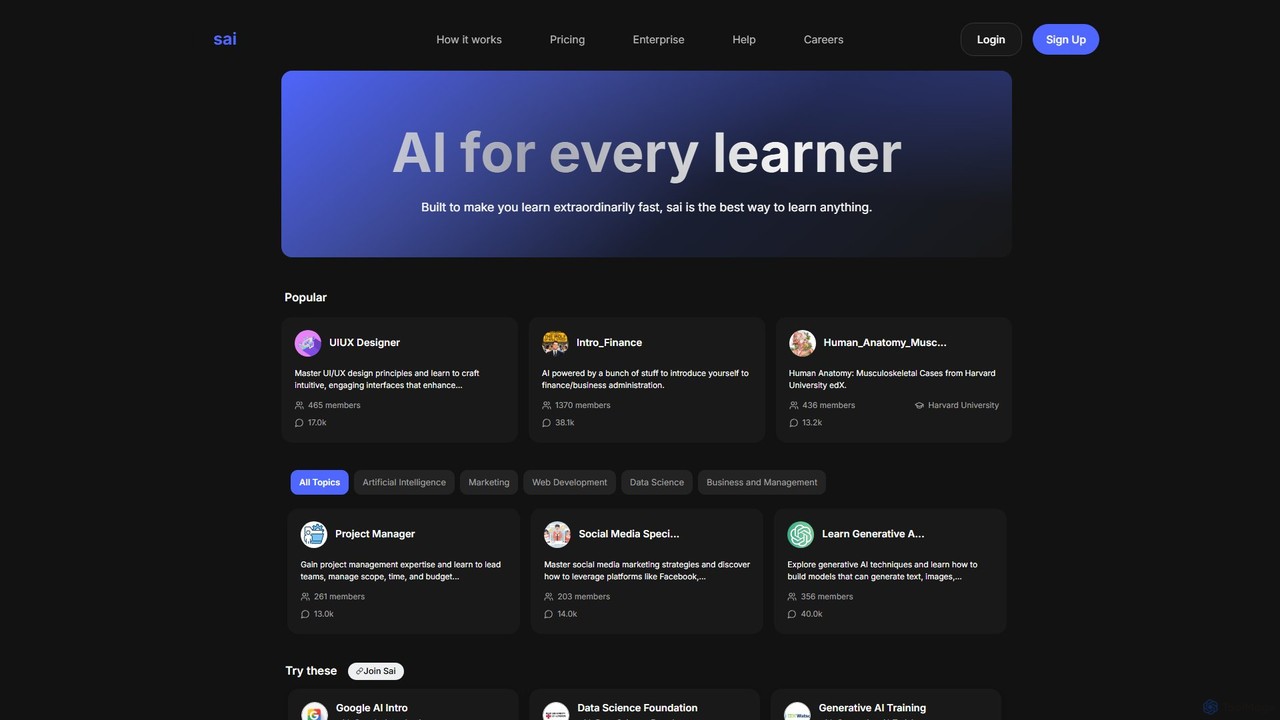
An AI learning platform for everyone. Create or use personalized AI tutors ('sais') based on specific courses, books, or topics like programming, data science, languages, and test prep. Sai helps you learn faster through interactive chats, quizzes, and flashcards.

Ai Agent Builder
Visits 3.8KFavorites 130Likes 126
Paid

HEROZ

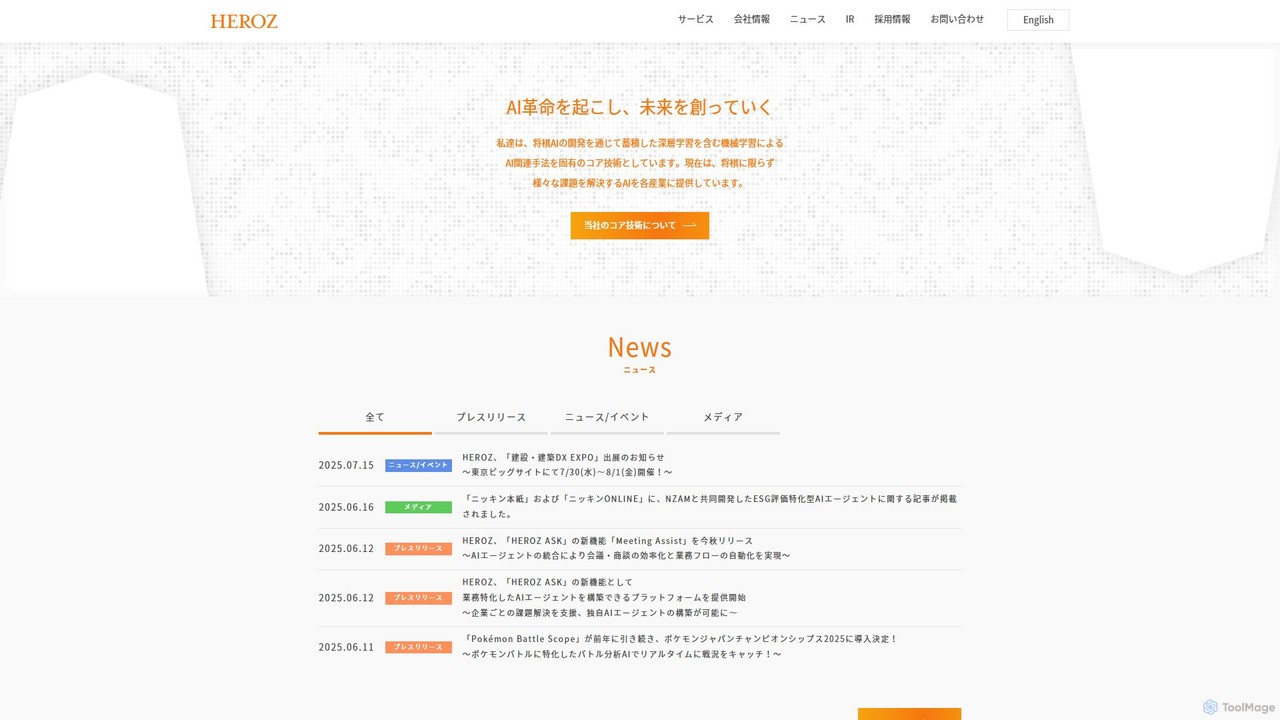
HEROZ is a Japanese AI technology company that leverages its deep learning expertise, originally developed for Shogi (Japanese chess) AI, to provide advanced enterprise AI solutions. It offers the 'HEROZ Kishin' AI brand for custom problem-solving and the 'HEROZ ASK' secure generative AI platform for various industries, including finance, construction, and entertainment.

Ai Solutions
Visits 20.2KFavorites 98Likes 119

About Ai Agent Builder

AI Agent Builders are platforms designed for creating, configuring, and deploying autonomous AI agents. These tools provide a framework for defining an agent's goals, granting it access to tools like APIs and web browsers, and managing its decision-making process. They are used to automate complex, multi-step tasks that traditionally require human reasoning, such as conducting market research or managing customer support workflows. Unlike simple automation tools, agent builders focus on creating systems that can plan, reason, and act independently to achieve a specified objective.

Core Features

  • Goal-Oriented Task Decomposition: Enables agents to break down high-level objectives into smaller, executable sub-tasks.
  • Tool Integration: Allows agents to connect to and utilize external APIs, databases, and web browsers to perform actions and gather information.
  • Memory and Context Management: Provides agents with short-term and long-term memory to maintain context throughout complex operations.
  • Visual Workflow Editors: Offers no-code or low-code interfaces for designing an agent's logic, decision paths, and tool usage.
  • Deployment and Monitoring: Includes functionalities for deploying agents and tracking their performance, actions, and resource consumption.

Applicable Scenarios

These tools are ideal for developers, business analysts, and operations managers. Common applications include creating proactive customer service agents that can resolve issues across multiple systems, building automated research assistants that gather and synthesize data from the web, and developing personal productivity agents that manage calendars and emails.

Selection Criteria

When choosing an AI Agent Builder, consider the required technical skill level (no-code, low-code, or code-intensive). Evaluate the platform's ecosystem of pre-built integrations for the tools you use. Assess the level of autonomy and control you have over the agent's reasoning process, and consider the hosting options (cloud vs. self-hosted) based on your security and data privacy needs.

Featured tool rankings

Ai Agent Builder use cases

1

Automated Market Research and Reporting

A marketing analyst configures an AI agent to monitor industry news, competitor websites, and social media for mentions of a new product. The agent is tasked with gathering articles, identifying sentiment (positive, negative, neutral), and summarizing key findings. Every Friday, it automatically compiles this information into a structured report with charts and delivers it to the marketing team's Slack channel, saving hours of manual research each week.

2

Proactive Customer Support Ticket Triage

A customer support manager builds an agent that integrates with their Zendesk and Jira systems. When a new high-priority ticket arrives, the agent analyzes its content, searches the internal knowledge base for relevant solutions, and checks Jira for any related known bugs. It then adds an internal note to the ticket with its findings and suggested next steps, allowing human agents to resolve complex issues up to 50% faster.

3

Automated Software Testing and Bug Reporting

A QA engineer designs an agent to perform regression testing on a web application. The agent follows a predefined script to navigate through key user journeys, such as user registration and checkout. If it encounters a JavaScript error or a broken page, it automatically captures a screenshot, collects browser console logs, and creates a detailed bug report in Jira, complete with steps to reproduce, environment details, and attached evidence.

4

Personalized Sales Outreach Automation

A sales development representative uses an agent builder to create a lead enrichment workflow. The agent takes a list of company domains, visits each website to identify the industry and key products, finds relevant contacts on LinkedIn, and then drafts a personalized email for each contact. The draft highlights how their product can specifically benefit the prospect's company based on the gathered information, significantly increasing response rates.

5

Dynamic Content Curation for Newsletters

A content creator sets up an AI agent to curate content for a weekly tech newsletter. The agent monitors a list of specified RSS feeds and tech blogs. It identifies articles matching predefined keywords, summarizes each article into a concise paragraph, finds a relevant image, and populates a draft in Mailchimp. The creator then only needs to review, edit, and schedule the newsletter, reducing curation time by over 80%.

6

Cross-System Data Synchronization

An operations manager at an e-commerce company creates an agent to keep customer data consistent across platforms. When a customer updates their shipping address in their Shopify account, the agent detects the change. It then automatically logs into the company's Salesforce CRM and internal shipping software via their APIs to update the address in both systems, eliminating manual data entry errors and ensuring order accuracy.

Ai Agent Builder FAQ

What is an AI Agent Builder?

An AI Agent Builder is a software platform or framework used to create autonomous AI agents. These agents are designed to understand high-level goals, break them down into steps, and execute those steps by interacting with various digital tools like websites, APIs, and databases. Unlike a simple script, an AI agent can reason, plan, and adapt its actions to achieve its objective, making it suitable for automating complex, dynamic tasks.

What is the difference between an AI Agent Builder and a Chatbot Builder?

The key difference lies in autonomy and scope. A Chatbot Builder creates conversational interfaces that react to user input within a defined scope, like answering FAQs. An AI Agent Builder creates systems that can proactively perform tasks across multiple applications to achieve a goal, often without direct, step-by-step user interaction. Agents are task-oriented and use tools, whereas chatbots are conversation-oriented and primarily serve as an interface to information.

How do I choose the right AI Agent Builder?

To choose the right tool, consider these factors:

  • Technical Skill: Do you need a no-code visual builder, a low-code platform, or a code-first framework like LangChain or AutoGen?
  • Integration Needs: Does the platform have pre-built connectors for the specific apps and APIs you need to automate (e.g., Salesforce, Slack, Google Workspace)?
  • Task Complexity: Assess whether the builder supports the level of reasoning, memory, and tool-use complexity your tasks require.
  • Deployment & Hosting: Determine if you need a managed cloud solution for ease of use or a self-hosted option for greater control and data privacy.
Do I need to be a developer to use an AI Agent Builder?

Not necessarily. The field of AI Agent Builders caters to a wide range of users. There are no-code platforms with drag-and-drop interfaces designed for business users, marketers, and analysts to automate their workflows without writing any code. For developers, there are more powerful low-code platforms and code-first frameworks that offer greater flexibility and customization for building highly complex and specialized agents.

What are some common use cases for AI agents?

AI agents excel at automating complex, multi-step processes. Common use cases include:

  • Automated Research: Gathering, analyzing, and summarizing information from various web sources.
  • Proactive Customer Support: Triaging tickets, finding solutions in knowledge bases, and drafting responses.
  • Sales & Marketing Automation: Enriching leads, personalizing outreach, and managing social media accounts.
  • Personal Productivity: Managing calendars, organizing emails, and automating personal workflows.
  • Software Development & QA: Automating testing, reporting bugs, and assisting with code generation.