MindpoolAI
MindpoolAI is an innovative platform that allows you to send a single prompt to multiple leading AI models …
MindpoolAI is an innovative platform that allows you to send a single prompt to multiple leading AI models simultaneously. Compare outputs from different models side-by-side to find the best response for your research, creative writing, or marketing needs, all while ensuring your data remains private.
ChatPlayground AI
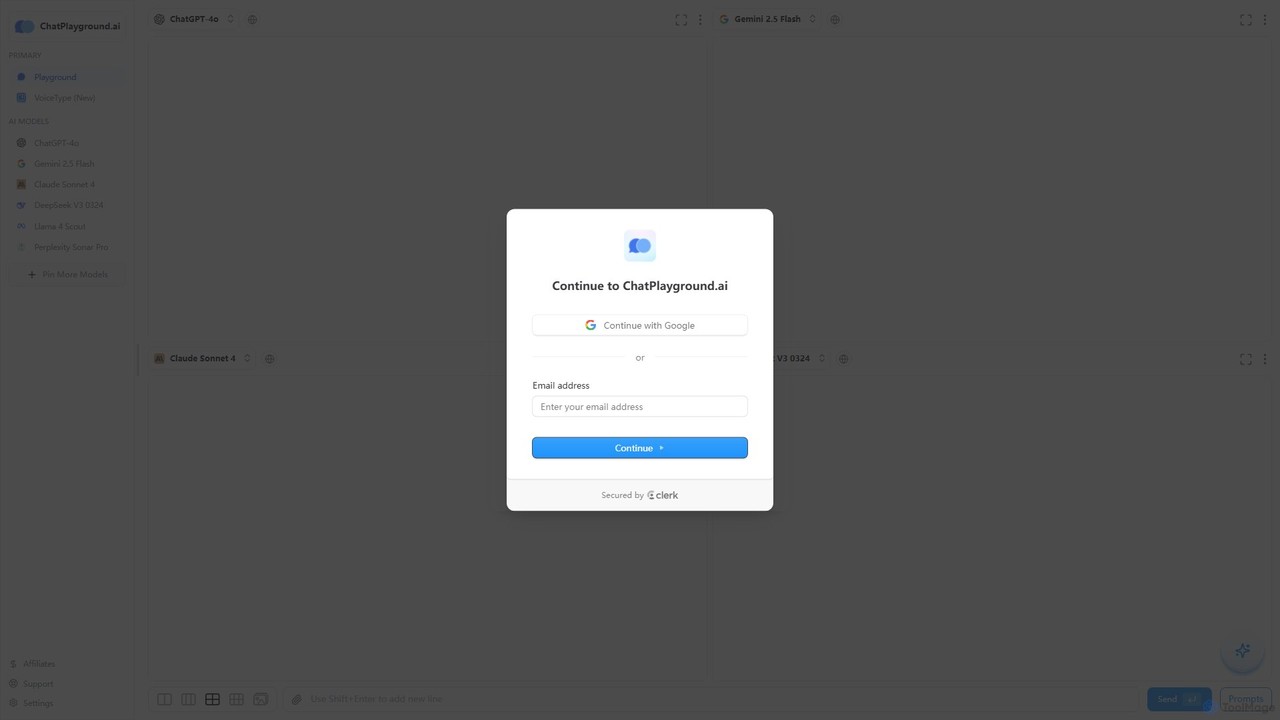
The ultimate platform for comparing leading AI language models side-by-side. Test prompts on GPT-4o, Gemini, Claude, Llama, and …
The ultimate platform for comparing leading AI language models side-by-side. Test prompts on GPT-4o, Gemini, Claude, Llama, and more in a single, intuitive interface to find the best model for your needs.
LunarLink AI
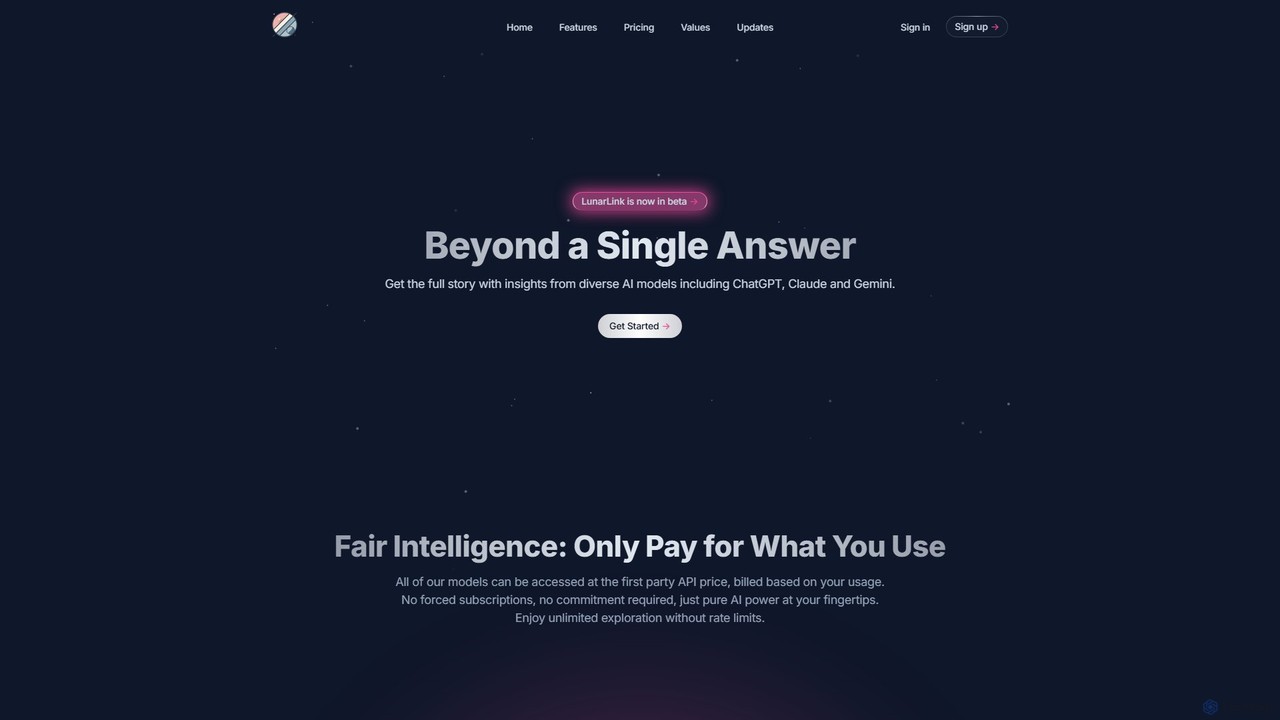
LunarLink AI is an all-in-one chat platform providing access to leading AI models like ChatGPT, Claude, and Gemini. …
LunarLink AI is an all-in-one chat platform providing access to leading AI models like ChatGPT, Claude, and Gemini. It features a flexible pay-as-you-go pricing model, eliminating subscriptions. Users can compare responses from multiple AIs side-by-side to gain diverse insights and reduce bias, all within a privacy-focused and user-friendly interface.
About Api Aggregator
API Aggregators are platforms that provide a single, unified API endpoint to access multiple AI models from various providers. These tools act as a middle layer, standardizing requests and responses, which allows developers to switch between models like GPT-4, Claude 3, or Gemini without rewriting code. Their primary value is simplifying integration, managing API keys centrally, and enabling robust features like automatic failover and load balancing. This approach significantly reduces development complexity and prevents vendor lock-in.
Core Features
- Unified API Interface: Access diverse AI models from different providers through a single, consistent API endpoint.
- Model Routing & Failover: Automatically route requests to the best-performing or most cost-effective model, with seamless failover to a backup if a primary model fails.
- Centralized Key Management: Securely store and manage all your API keys from various providers in one location.
- Standardized I/O: Send requests and receive responses in a uniform format, regardless of the underlying model's native structure.
- Cost & Usage Analytics: Monitor API spending and usage across all connected models and providers from a single dashboard.
Use Cases
API Aggregators are primarily used by developers and organizations building AI-powered applications. They are ideal for startups prototyping with different LLMs, enterprises requiring high-availability AI services, and teams looking to optimize API costs by dynamically selecting the most suitable model for each task.
How to Choose
When selecting an API Aggregator, consider the range of supported models and providers. Evaluate the platform's latency, reliability, and security features. Examine the pricing model—whether it's a subscription, a per-call fee, or a percentage of API costs. Finally, assess the quality of its analytics dashboard and logging capabilities for observability.
Api AggregatorUse Cases
Build a Multi-Provider AI Chatbot
A developer is tasked with creating a highly reliable chatbot for a customer service application. Instead of committing to a single AI provider, they use an API Aggregator. This allows them to configure the system to primarily use a high-performance model like GPT-4 for complex queries, but automatically failover to a more cost-effective model like Claude 3 Sonnet if the primary API is slow or unavailable. The aggregator handles all the routing logic, so the application code remains simple and only interacts with one endpoint, ensuring continuous service uptime.
A/B Testing Different AI Models for a Feature
A product manager wants to determine which text-to-image model generates the best visuals for their marketing platform. Using an API Aggregator, the development team can easily set up an A/B test. They configure the aggregator to route 50% of user requests to DALL-E 3 and the other 50% to Stable Diffusion. All requests are sent to the same API endpoint from the application. The aggregator's dashboard provides unified analytics on usage and performance, allowing the product manager to compare results and make a data-driven decision without requiring complex, separate integrations for each model.
Simplify API Key Management for a Development Team
A tech lead manages a team of five developers working on an AI-powered analytics tool. Instead of distributing and managing separate API keys for OpenAI, Anthropic, and Google for each developer, the lead uses an API Aggregator. They load all the company's provider keys into the aggregator's secure vault once. Then, they issue a single aggregator API key to each developer. This centralizes access control, simplifies key rotation, and allows the lead to monitor each developer's usage and associated costs from one dashboard, improving security and operational efficiency.
Optimize and Track AI API Costs Across an Organization
A startup is using multiple AI models for content generation, code completion, and data analysis, leading to complex and unpredictable bills from different vendors. By routing all their API traffic through an API Aggregator, the finance and operations teams gain a unified view of all AI-related expenditures. They can use the aggregator's analytics to identify which features or teams are incurring the highest costs. Furthermore, they can set up rules to automatically route certain non-critical tasks to cheaper models, actively managing and reducing their overall AI operational expenses without sacrificing core functionality.
Rapidly Prototype with Various LLMs
An AI researcher is exploring how different large language models (LLMs) respond to specific, nuanced prompts for a study on model alignment. Using an API Aggregator, they can write a single script that sends the same prompt to multiple models—such as Llama 3, Gemini Pro, and a fine-tuned open-source model—with just one API call. The aggregator handles the individual requests to each provider and returns the responses in a standardized format. This dramatically accelerates the research workflow, allowing the researcher to focus on analyzing outputs rather than managing disparate API integrations and data formats.
Standardize AI Responses for Consistent User Experience
An e-commerce platform uses AI to generate product descriptions. They leverage multiple models to handle different product categories. To ensure all descriptions have a consistent format (e.g., title, bullet points, paragraph), they use an API Aggregator's response standardization feature. Regardless of whether the description is generated by GPT-4 or a specialized fine-tuned model, the aggregator reformats the output into a predefined JSON structure before sending it back to the application. This decouples the application's front-end logic from the specifics of each AI model, simplifying development and guaranteeing a uniform look and feel for all product pages.