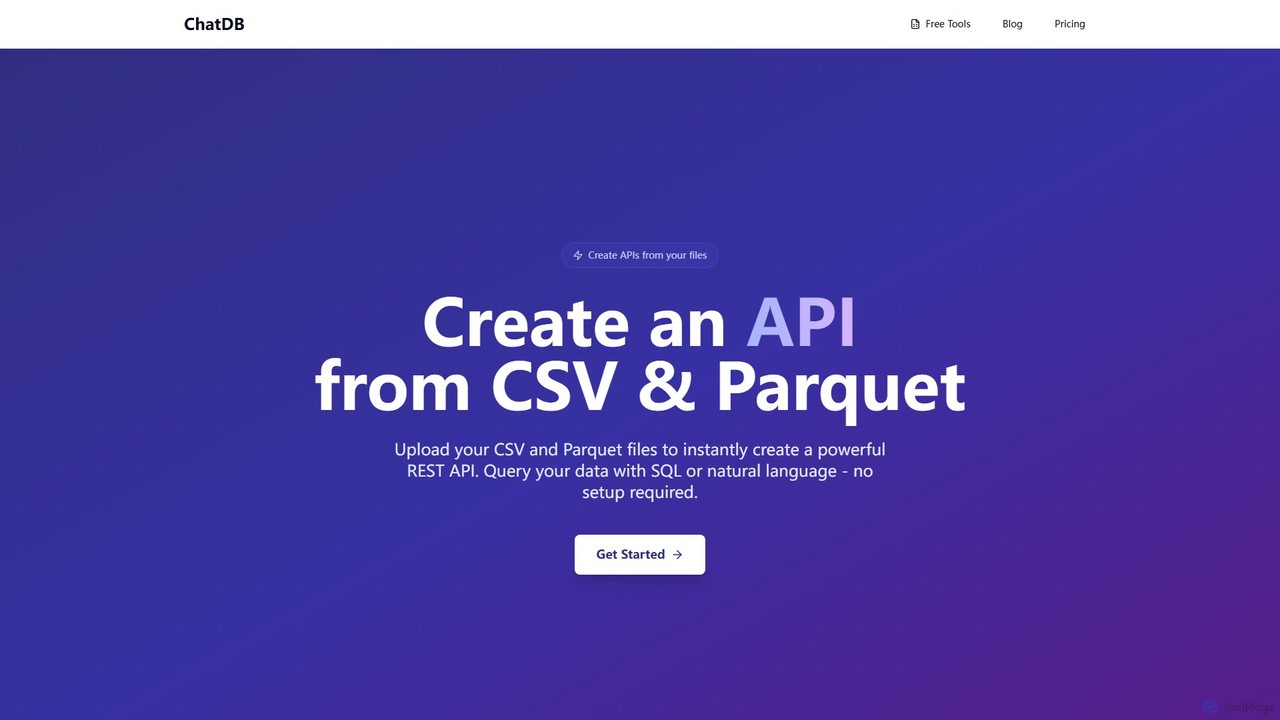
API & Backend tools are a category of AI-powered solutions designed to automate and optimize the development, deployment, and management of application programming interfaces (APIs) and server-side infrastructure. These tools leverage artificial intelligence to streamline complex backend processes, from code generation and data integration to intelligent API orchestration and robust security. They empower developers to build scalable, efficient, and secure applications with unprecedented speed and precision, forming the foundational logic and data handling for modern digital services.
Core Features
- AI-driven API Generation: Automatically design and generate API endpoints, schemas, and documentation from natural language descriptions or data models.
- Intelligent Backend Code Generation: Produce optimized, boilerplate-free server-side code in various languages and frameworks, reducing manual coding effort.
- Automated Data Integration & Orchestration: Seamlessly connect diverse data sources and services, intelligently mapping and transforming data flows for complex workflows.
- Predictive Performance Optimization: Analyze backend traffic and resource usage to suggest or automatically implement optimizations for scalability and efficiency.
- Enhanced API Security & Monitoring: Proactively identify vulnerabilities, detect anomalies, and enforce security policies across API endpoints using AI.
Applicable Scenarios
These tools are vital for organizations building microservices architectures, integrating disparate enterprise systems, or developing real-time data processing pipelines. They enable rapid prototyping of new services, efficient management of complex API ecosystems, and ensure the underlying infrastructure can scale to meet demand.
How to Choose
When selecting an AI-powered API & Backend tool, consider its integration capabilities with existing tech stacks, the range of supported programming languages and frameworks, and its scalability features. Evaluate the level of automation offered for code generation, data handling, and security, as well as the clarity of its documentation and community support. Cost-effectiveness and compliance with industry standards are also crucial factors.