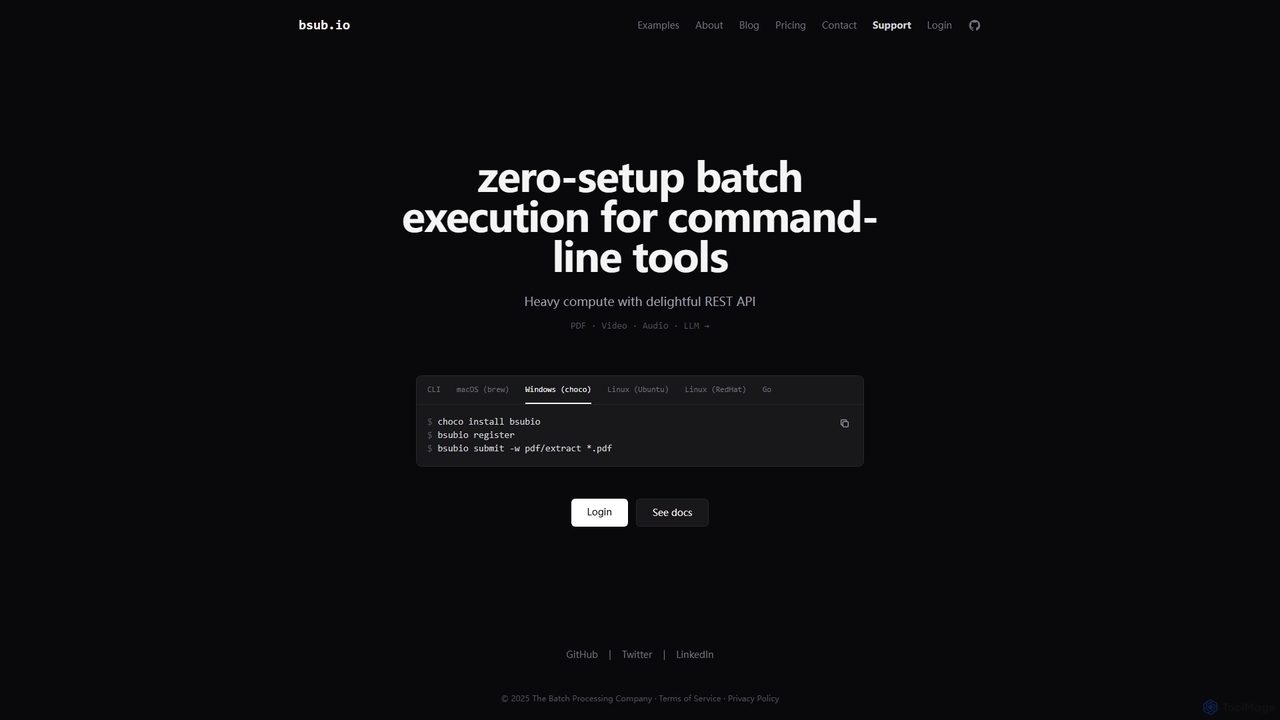
Batch Processing tools are a specialized category within developer tools that leverage AI to automate and optimize the execution of repetitive, high-volume tasks without continuous human intervention. These tools are designed to efficiently process large datasets, execute complex workflows, or perform multiple operations in a predefined sequence, significantly enhancing productivity and resource utilization. By integrating AI, they can adapt to varying data structures, learn from past operations, and even predict optimal processing strategies, making them indispensable for modern software development and data engineering.
Core Features
- Automated Task Scheduling: Automatically initiates and manages sequences of operations based on predefined triggers or schedules.
- Large-Scale Data Transformation: Efficiently processes, cleans, and transforms vast amounts of data for analytics, migration, or AI model training.
- Error Handling & Resilience: Incorporates mechanisms to detect, log, and often automatically recover from processing errors, ensuring workflow continuity.
- Parallel Processing & Scalability: Distributes tasks across multiple computational resources to accelerate execution and handle growing workloads.
- Integration with CI/CD Pipelines: Seamlessly connects with continuous integration and deployment systems for automated build, test, and deployment tasks.
Use Cases
Developers, data engineers, and DevOps teams frequently utilize AI batch processing for tasks requiring high throughput and minimal manual oversight. This includes automating nightly data backups, running extensive test suites after code commits, or performing large-scale content moderation on user-generated data. These tools are crucial for maintaining operational efficiency and ensuring data consistency across complex systems.
How to Choose
When selecting an AI batch processing tool, consider its scalability to handle future data volumes, integration capabilities with your existing tech stack (e.g., cloud platforms, databases, CI/CD tools), and the flexibility of its workflow definition and scheduling features. Evaluate its error handling robustness, monitoring capabilities, and the level of AI-driven optimization it offers, such as intelligent resource allocation or adaptive processing logic, to ensure it meets specific project requirements and budget constraints.