ToolMage
Sign in

Best 1 Blogging AI tools for Developer Tools

Popular Blogging AI tools in Developer Tools include Allpub, helping you work more efficiently.

Freemium

Allpub

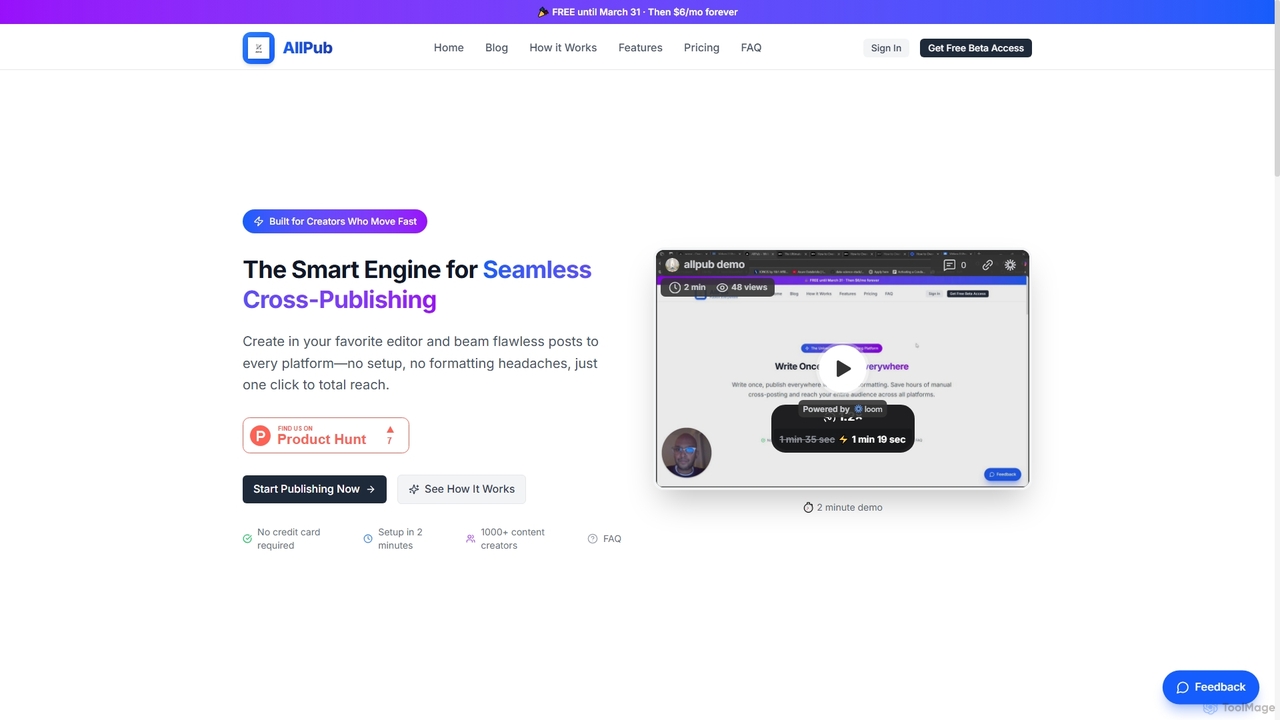
Allpub is an AI-powered cross-publishing platform designed for content creators. Write in your preferred editor like Notion, Google Docs, or Markdown, and seamlessly publish to multiple platforms such as Dev.to and Hashnode with a single click. It features smart formatting and AI enhancements for titles, summaries, and keywords to maximize your content's reach.

Blogging
Visits 3.5KFavorites 110Likes 120

About Blogging

Blogging AI tools are specialized artificial intelligence applications designed to streamline and enhance the entire blog content creation process. These tools leverage advanced natural language processing (NLP) and machine learning algorithms to assist with everything from topic generation and outline creation to drafting full articles and optimizing them for search engines. They empower content creators, marketers, and businesses to produce high-quality, engaging, and SEO-friendly blog posts more efficiently, significantly reducing the time and effort traditionally required for content production.

Core Features

  • AI Content Generation: Automatically generates blog post outlines, drafts, or full articles based on user prompts and keywords.
  • SEO Optimization: Provides keyword suggestions, analyzes content for SEO best practices, and offers recommendations for improved search engine visibility.
  • Topic & Idea Generation: Helps brainstorm fresh blog topics and content ideas relevant to target audiences and industry trends.
  • Content Repurposing: Transforms existing long-form content into shorter blog posts, social media snippets, or summaries.
  • Grammar & Style Enhancement: Checks for grammatical errors, improves readability, and suggests stylistic improvements to maintain a consistent brand voice.

Use Cases

Blogging AI tools are invaluable for content teams aiming to scale their output, individual bloggers seeking to overcome writer's block, and businesses needing to maintain a consistent online presence. They are particularly useful for generating initial drafts, optimizing existing content, and ensuring a steady stream of fresh, relevant articles for various platforms.

How to Choose

When selecting a Blogging AI tool, consider its content generation quality and originality, the depth of its SEO features (e.g., keyword research, on-page analysis), integration capabilities with your existing CMS (like WordPress or Ghost), and the flexibility to customize tone and style. Evaluate the pricing model and the range of supported languages to ensure it aligns with your content strategy and budget.

Featured tool rankings

Blogging use cases

1

Generate SEO-Optimized Blog Drafts

Content marketers and SEO specialists can use AI blogging tools to quickly generate initial drafts of blog posts that are pre-optimized for target keywords. By inputting a topic and a few keywords, the tool can produce a structured article outline and content, saving hours of research and writing time, and ensuring the content is aligned with SEO best practices from the start.

2

Overcome Writer's Block for Bloggers

Individual bloggers and freelance writers often face challenges in starting new articles or finding fresh angles. AI blogging tools can provide instant topic ideas, detailed outlines, and even introductory paragraphs, helping to kickstart the writing process and maintain a consistent publishing schedule without creative stagnation.

3

Scale Content Production for Agencies

Digital marketing agencies managing multiple client blogs need to produce a high volume of diverse content. AI blogging tools enable agencies to rapidly generate multiple blog post variations, adapt content for different client niches, and maintain a steady content pipeline, significantly increasing output efficiency and client satisfaction.

4

Create Product-Focused Blog Content for E-commerce

E-commerce businesses can leverage AI blogging tools to generate engaging blog posts that highlight product features, benefits, and use cases. This helps in driving organic traffic to product pages, improving customer engagement, and providing valuable information that aids in purchasing decisions, all while maintaining brand consistency.

5

Repurpose Long-Form Content into Blog Posts

Businesses with extensive whitepapers, reports, or webinars can use AI blogging tools to transform these long-form assets into digestible blog posts. The AI can extract key insights, summarize sections, and rephrase complex information into engaging articles, maximizing the reach and value of existing content across different platforms.

6

Assist Developers in Technical Documentation Blogs

Developers often need to write technical blogs to explain new features, tutorials, or project updates. AI blogging tools can assist by structuring complex technical information, suggesting clearer phrasing, and ensuring the content is accessible to a broader audience, thereby streamlining the documentation process and improving clarity.

Blogging FAQ

What are AI Blogging Tools?

AI blogging tools are software applications that utilize artificial intelligence, primarily natural language processing (NLP) and machine learning, to automate or assist in various aspects of blog content creation. They can generate ideas, write outlines, draft full articles, optimize content for SEO, and enhance readability, making the blogging process faster and more efficient for users.

How do AI Blogging Tools improve SEO?

AI blogging tools improve SEO by integrating keyword research, on-page optimization suggestions, and content analysis features. They can identify relevant keywords, ensure their natural inclusion, check for readability, suggest internal linking opportunities, and analyze competitor content, all of which contribute to higher search engine rankings and increased organic traffic.

Can AI Blogging Tools generate original content?

Yes, modern AI blogging tools are capable of generating original content by synthesizing information from vast datasets and applying complex algorithms to create unique text. While they don't "think" like humans, they can produce coherent, contextually relevant, and plagiarism-free drafts. However, human review and editing are always recommended to ensure accuracy, brand voice, and nuanced understanding.

What's the difference between AI Blogging Tools and general AI Writing Assistants?

While both use AI for writing, AI blogging tools are specifically tailored for the unique requirements of blog content. They often include features like SEO optimization, blog post structure templates, topic idea generation, and integration with CMS platforms. General AI writing assistants, on the other hand, are broader, assisting with various text formats like emails, reports, or creative writing, without the specialized blogging features.

Who benefits most from using AI Blogging Tools?

A wide range of users benefits from AI blogging tools, including content marketers, small business owners, freelance writers, digital marketing agencies, and even developers needing to document projects. Anyone looking to scale content production, improve SEO, overcome writer's block, or maintain a consistent online presence with high-quality blog posts will find these tools highly valuable.