AgentForge
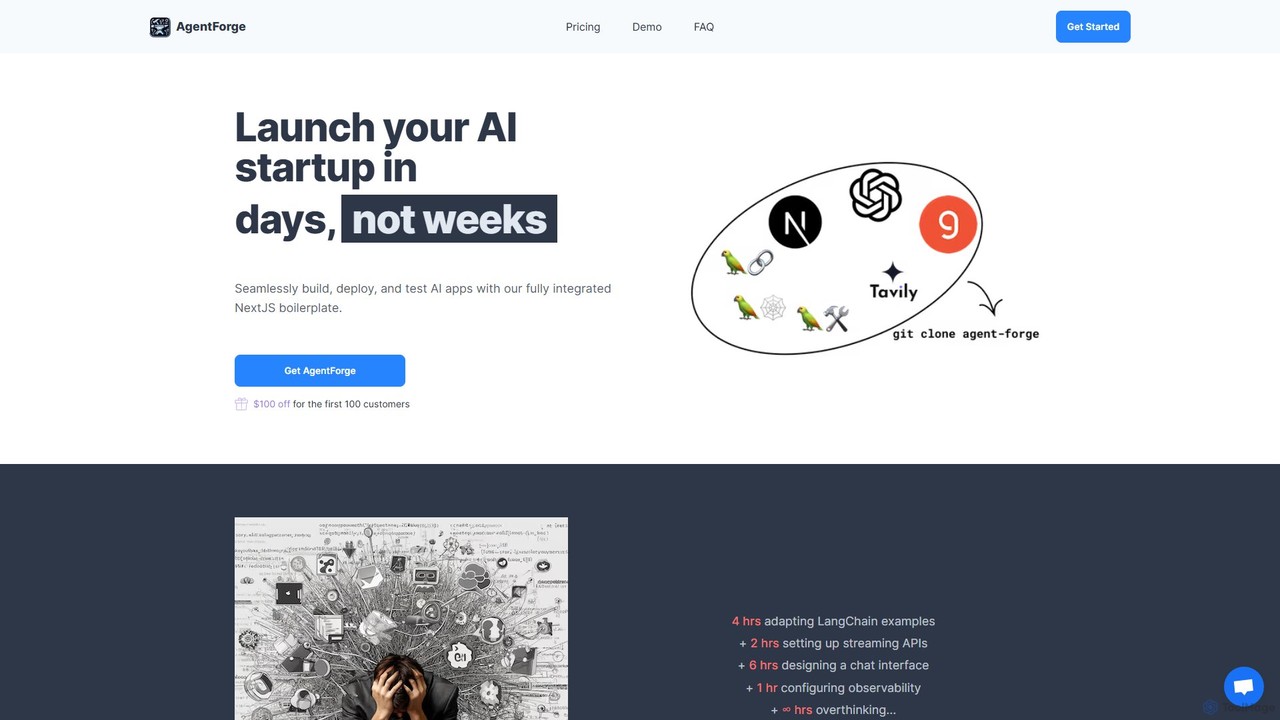
AgentForge is a fully integrated NextJS boilerplate designed to accelerate AI application development. It provides developers with pre-built …
AgentForge is a fully integrated NextJS boilerplate designed to accelerate AI application development. It provides developers with pre-built AI agents, customizable workflows using LangGraph, and reusable UI components. Seamlessly integrate with LangChain, OpenAI, Groq, and more to launch your AI startup in days, not weeks, saving significant development time and effort.
BotFast
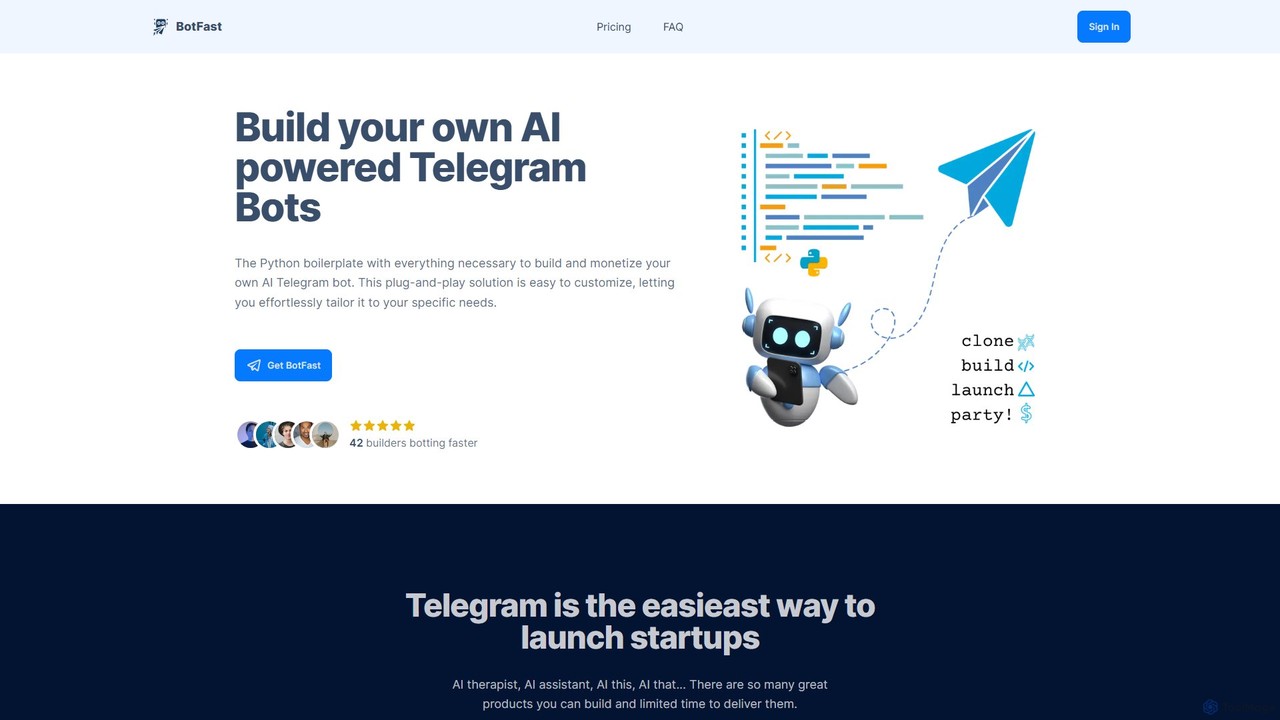
BotFast is a Python boilerplate for developers to rapidly build, deploy, and monetize AI-powered Telegram bots. It offers …
BotFast is a Python boilerplate for developers to rapidly build, deploy, and monetize AI-powered Telegram bots. It offers a plug-and-play solution with integrated payments, database management, multimodal support (text, voice, images), and access to models like GPT-4o and DALL-E 3. This framework significantly reduces development time, enabling you to launch a custom AI bot in minutes.
BigIdeasDB
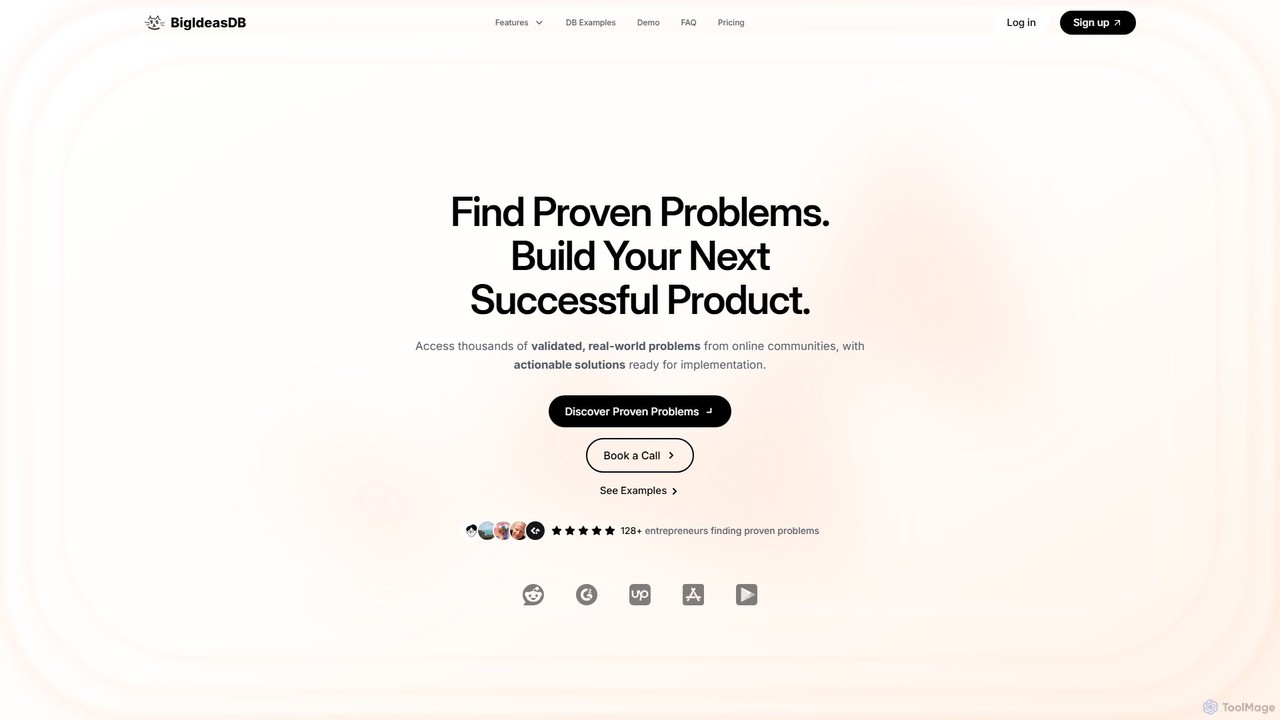
BigIdeasDB is an AI-powered market research platform that helps entrepreneurs discover and validate profitable business ideas. It analyzes …
BigIdeasDB is an AI-powered market research platform that helps entrepreneurs discover and validate profitable business ideas. It analyzes online communities, app reviews, and market data to uncover real-world user pain points, providing a curated database of problems, solutions, and successful product strategies to reduce the risk of building a new product.
BuilderKit
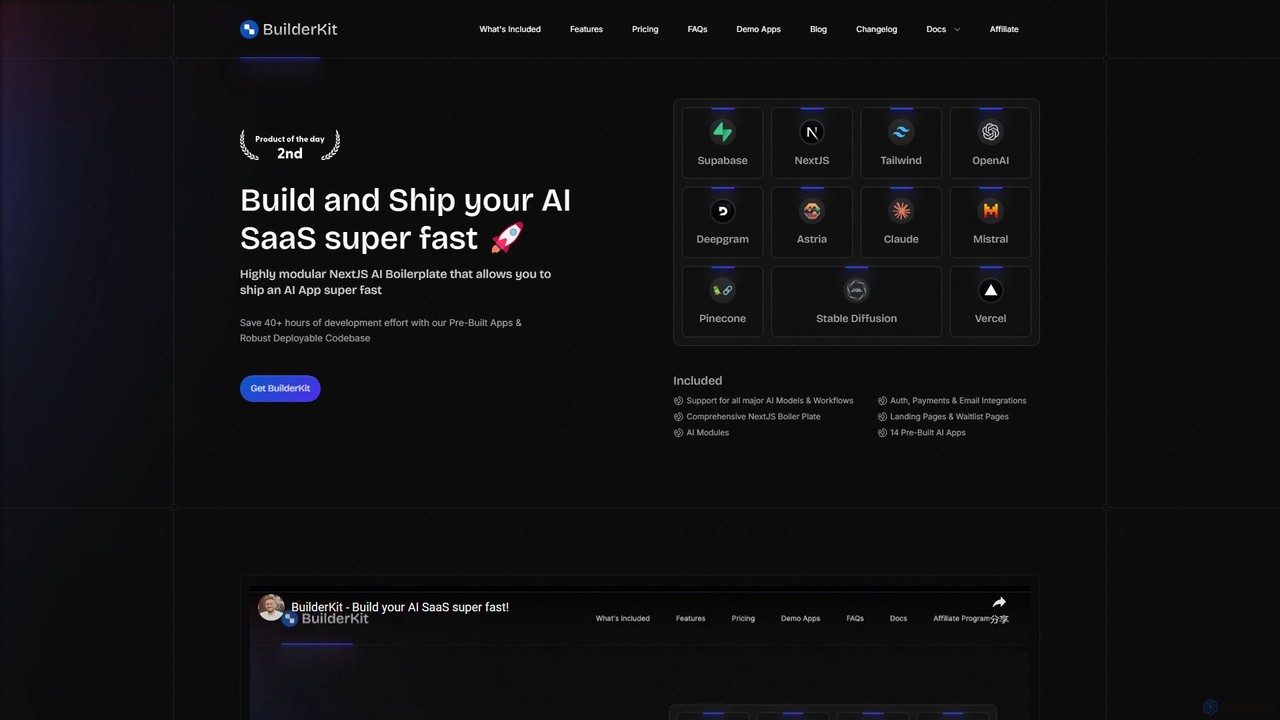
BuilderKit is a modular NextJS AI boilerplate designed for developers and entrepreneurs to build and ship AI-powered SaaS …
BuilderKit is a modular NextJS AI boilerplate designed for developers and entrepreneurs to build and ship AI-powered SaaS applications at high speed. It includes pre-built components, AI module integrations, authentication, payment systems, and over 17 demo apps, saving 40+ hours of development time.
next_forge
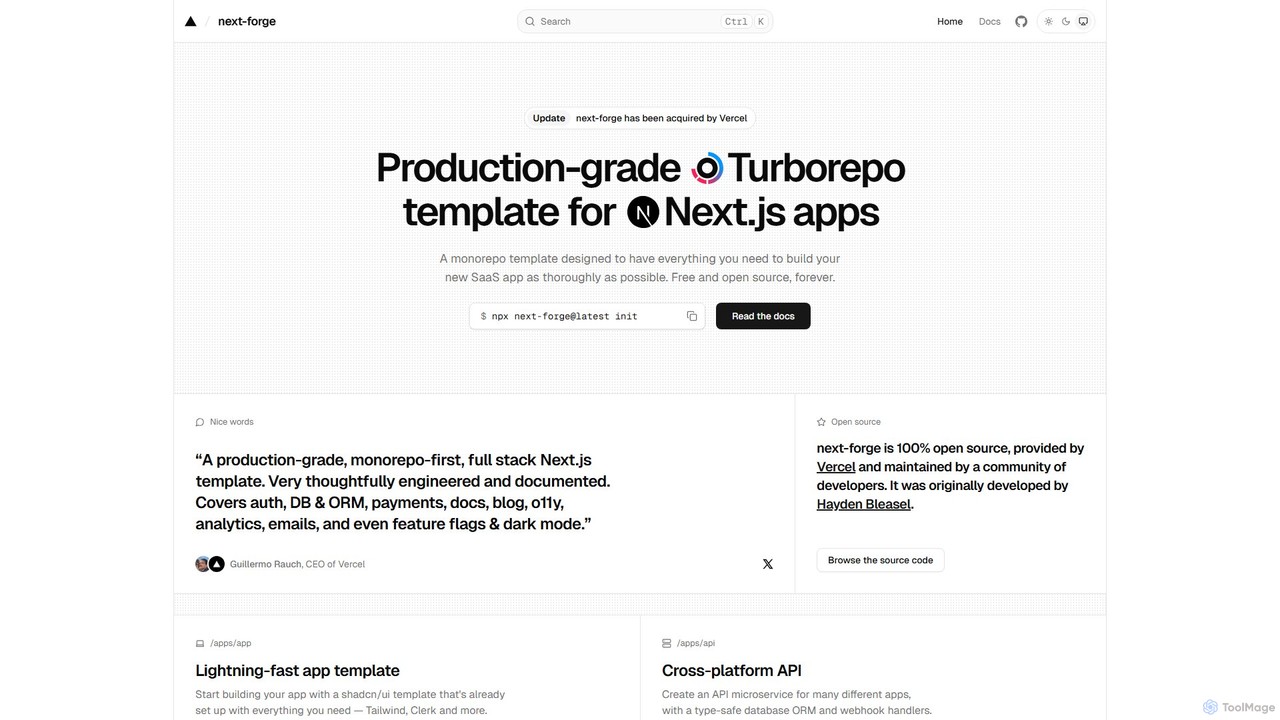
A production-grade, open-source Turborepo template for Next.js applications. Designed to accelerate SaaS development with pre-configured features like authentication, …
A production-grade, open-source Turborepo template for Next.js applications. Designed to accelerate SaaS development with pre-configured features like authentication, payments, database, analytics, and more. Backed by Vercel.
Webdone
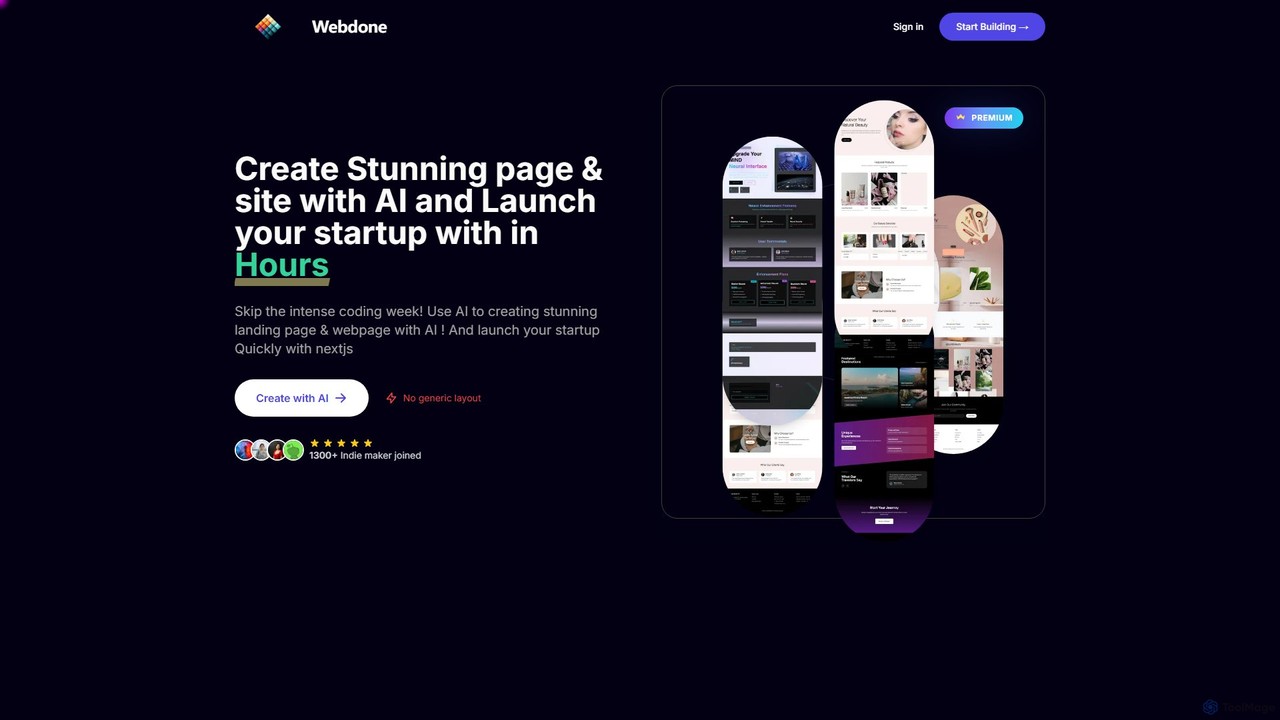
Webdone is an AI-powered platform for rapidly creating unique, high-performance landing pages and websites. It generates custom designs …
Webdone is an AI-powered platform for rapidly creating unique, high-performance landing pages and websites. It generates custom designs from text prompts, avoiding generic templates. It also offers a Next.js boilerplate with pre-configured authentication, payments, and database, enabling startups and developers to launch full-stack applications in hours.
About Boilerplate
AI Boilerplate tools are a specialized category of developer tools that automatically generate foundational code for new software projects. Using AI, these platforms interpret user requirements—such as technology stack, desired features, and architectural patterns—to produce a complete, ready-to-use starting point. This significantly accelerates the initial development phase, allowing developers to bypass repetitive setup tasks and focus directly on building unique application logic. They often incorporate best practices for security, scalability, and project structure from the outset.
Core Features
- Custom Stack Generation: Specify frameworks, languages, and databases to create a tailored codebase.
- Feature Scaffolding: Automatically add common modules like user authentication, payments, and API endpoints.
- Architectural Pattern Implementation: Choose and implement standard architectures like MVC, Microservices, or serverless.
- Deployment & CI/CD Configuration: Generate configuration files for Docker, Kubernetes, and popular CI/CD pipelines.
- Best Practice Integration: Embed security headers, testing frameworks, and code linters by default.
Applicable Scenarios
These tools are invaluable for startups launching new products, freelance developers building client projects, and large enterprises aiming to standardize their microservice architecture. They are particularly effective for rapidly creating prototypes, MVPs (Minimum Viable Products), and internal tools where speed and consistency are critical.
Selection Criteria
When selecting an AI Boilerplate tool, evaluate the range of supported technologies and frameworks to ensure it matches your team's expertise. Consider the level of customization available, its ability to integrate with your existing DevOps toolchain, and the quality of the generated code, including its adherence to security and performance standards.
BoilerplateUse Cases
Rapid SaaS MVP Development
A startup founder with a limited budget needs to launch a Minimum Viable Product (MVP) for their SaaS application within weeks. Using an AI Boilerplate tool, they specify their stack (e.g., Next.js, Supabase, Stripe). The tool generates a complete project with user authentication, subscription billing integration, a database schema, and RESTful API endpoints already implemented. This saves over 100 hours of manual setup, allowing the team to focus entirely on developing the core business logic and unique features that will attract early adopters.
Standardizing Microservice Architecture
A tech lead at a large enterprise is tasked with ensuring all new microservices adhere to a consistent architectural pattern and security standard. They configure an AI Boilerplate generator with the company's preferred setup: a Go-based API, Docker containerization, Kubernetes deployment files, and pre-configured logging and monitoring hooks. Now, any developer starting a new service can generate a compliant foundation in minutes, eliminating configuration drift and significantly reducing the review time for new projects.
Accelerating Hackathon Prototyping
A team of developers participating in a 48-hour hackathon needs to build a functional mobile app backend quickly. Instead of wasting precious hours setting up a server, database, and user authentication from scratch, they use an AI Boilerplate tool. They select a Node.js server with a PostgreSQL database and JWT authentication. The tool generates the entire backend structure in under five minutes, providing them with a working API they can immediately start building their app's features on top of.
Building Internal Admin Dashboards
A data analyst needs to create a custom internal dashboard to visualize key business metrics but has limited frontend experience. They use an AI Boilerplate tool to generate a React-based application with a pre-configured component library (like Material-UI) and charting libraries (like Chart.js). The tool also scaffolds the necessary API calls to fetch data from the company's internal database, allowing the analyst to quickly assemble a professional-looking and functional dashboard without deep web development knowledge.
Creating a Headless CMS Backend
A content creator or small agency wants to set up a flexible Headless CMS for a new website. They use an AI Boilerplate tool to generate a backend with a GraphQL API, database models for content types (like posts, authors, and tags), and a secure admin interface for content management. This approach provides a custom, self-hosted alternative to third-party CMS platforms, offering greater control and avoiding vendor lock-in, all without writing extensive backend code from the ground up.
Jumpstarting an Open-Source Project
An open-source contributor wants to start a new library but wants to ensure high quality from day one. They use a boilerplate generator to create a project structure that includes a testing framework (like Jest or Pytest), a linter (like ESLint or Black), pre-commit hooks, and a CI/CD pipeline configuration for GitHub Actions. This establishes best practices from the beginning, making it easier for other developers to contribute and ensuring code quality is maintained as the project grows.