Similarix
Similarix is an AI-powered semantic search engine that adds a thin intelligence layer to your S3 storage. It …
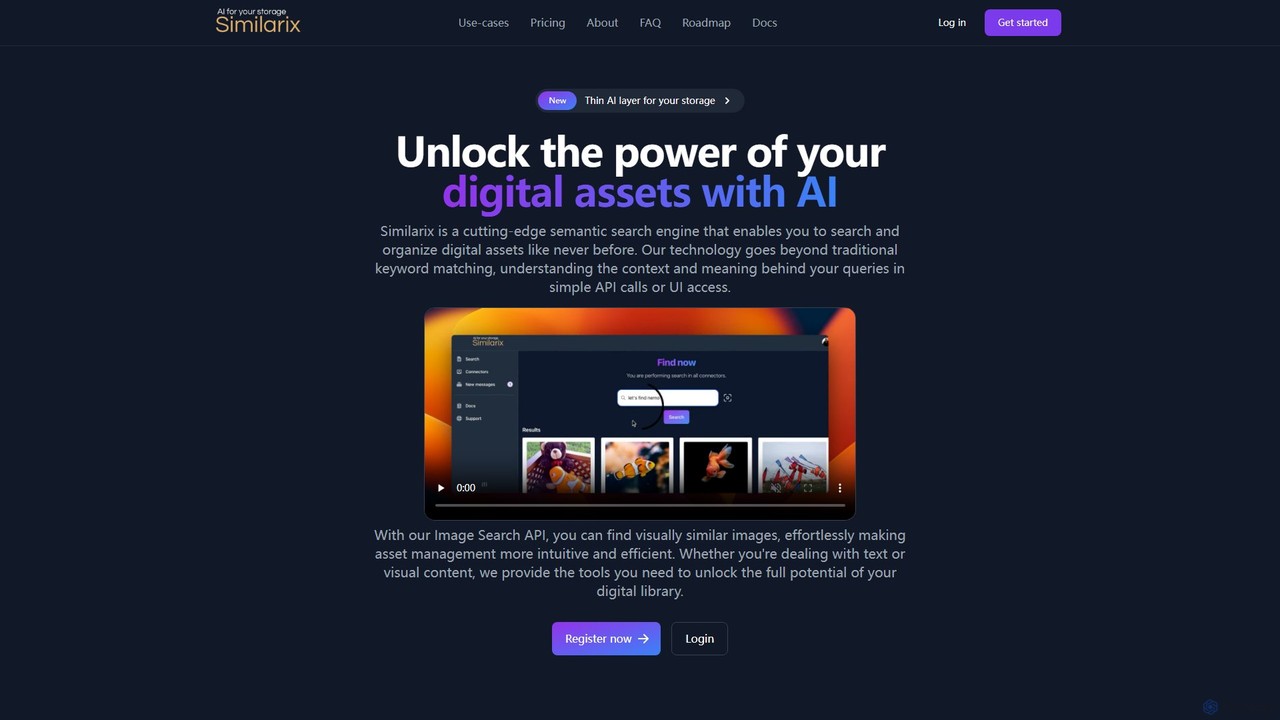
Similarix is an AI-powered semantic search engine that adds a thin intelligence layer to your S3 storage. It enables you to search and organize digital assets by text or image, understanding context beyond keywords. It features deduplication, multilingual support, and a robust API for seamless integration.
About Cloud Storage
Cloud Storage is a service that provides scalable and accessible data storage over the internet, eliminating the need for on-premise infrastructure. For developers, it offers a robust foundation for storing application data, user-generated content, backups, and large datasets crucial for AI and machine learning projects. These solutions ensure high availability, durability, and cost-efficiency, seamlessly integrating with various cloud computing services and developer workflows.
Core Features
- Scalability & Elasticity: Automatically adjusts storage capacity to meet fluctuating data demands without manual intervention.
- Data Durability & Availability: Ensures data is redundantly stored across multiple locations, providing high reliability and constant access.
- API & SDK Access: Offers programmatic interfaces for seamless integration with applications, scripts, and developer tools.
- Security & Compliance: Provides robust encryption, access controls, and compliance certifications to protect sensitive data.
- Cost-Efficiency: Often employs a pay-as-you-go model, optimizing costs based on actual usage and storage tiers.
Use Cases
Cloud storage is essential for modern application development, supporting everything from web applications to complex data analytics. Developers leverage it for persistent storage of user files, media assets, and application logs. It's also fundamental for building data lakes and repositories for machine learning models, enabling efficient data ingestion, processing, and training.
How to Choose
When selecting a cloud storage solution, consider data access patterns (hot, cold, archive), required performance (IOPS, throughput), security and compliance needs, integration with existing cloud services, and pricing models. Evaluate the ease of use of APIs and SDKs, and the level of support for your specific development stack.

Cloud StorageUse Cases
Storing AI/ML Training Data
Data scientists and machine learning engineers utilize cloud storage to host massive datasets required for training AI models. This allows for scalable data ingestion, versioning, and secure access for distributed training jobs, ensuring data availability for compute instances without local storage constraints.
Hosting User-Generated Content (UGC)
Web and mobile application developers use cloud storage to reliably store user uploads like photos, videos, and documents. This offloads storage management from application servers, provides global accessibility, and ensures data durability for dynamic content platforms.
Application Backup and Disaster Recovery
DevOps teams implement cloud storage for automated backups of application databases, configurations, and server images. This strategy provides a cost-effective and highly available solution for disaster recovery, minimizing downtime and data loss in critical scenarios.
Building Data Lakes for Analytics
Data engineers establish cloud-based data lakes using object storage to consolidate raw, unstructured, and semi-structured data from various sources. This forms a central repository for big data analytics, business intelligence, and future AI/ML initiatives, enabling flexible schema-on-read approaches.
Archiving Regulatory & Compliance Data
Enterprise developers and IT managers leverage low-cost, long-term cloud archival storage for data that needs to be retained for regulatory compliance (e.g., financial records, medical data). This ensures data integrity and availability for audits while significantly reducing on-premise storage costs.
Delivering Static Website Assets
Front-end developers host static website files, images, CSS, and JavaScript directly on cloud object storage, often integrated with Content Delivery Networks (CDNs). This provides high performance, global distribution, and cost-effective serving of static content, improving website load times and user experience.