Webiny
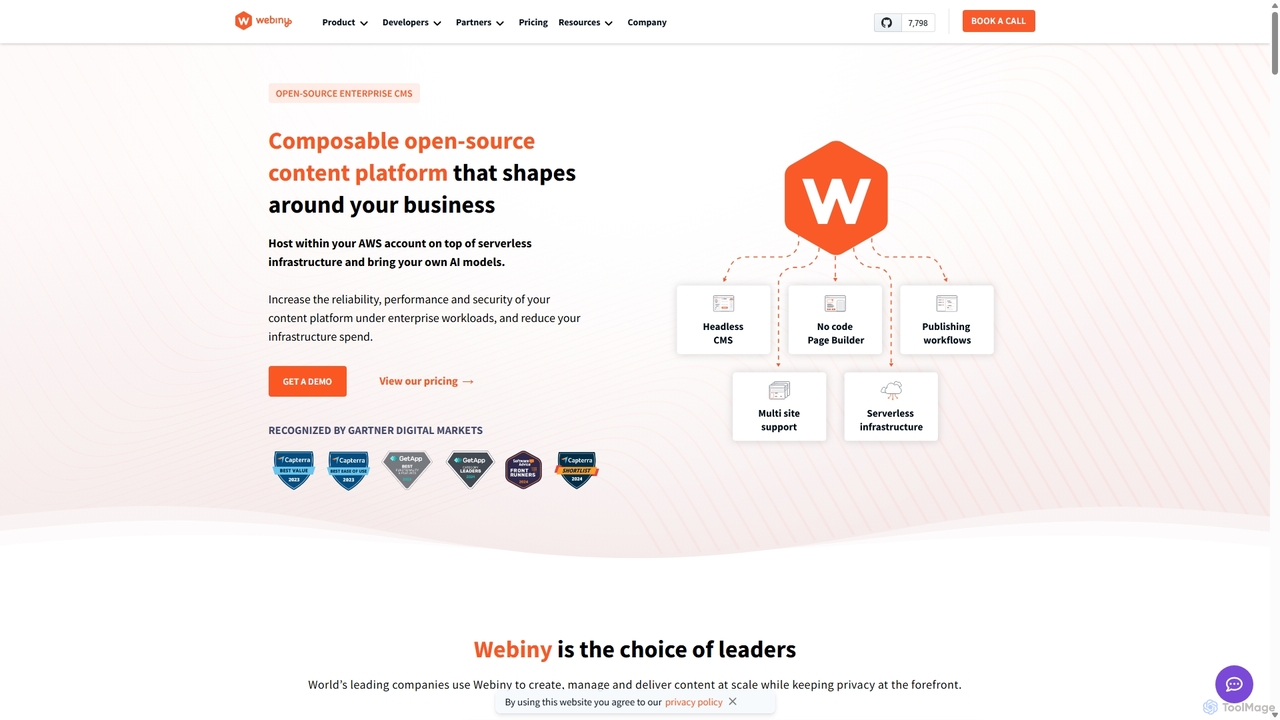
Webiny is an open-source, self-hosted serverless CMS platform designed for enterprises. It provides a suite of tools including …
Webiny is an open-source, self-hosted serverless CMS platform designed for enterprises. It provides a suite of tools including a Headless CMS, Page Builder, and multi-tenancy, all deployed within your own AWS account. This gives you complete data ownership, unparalleled scalability, and deep customization capabilities, making it ideal for complex, high-traffic digital projects.
About Cms
AI Content Management Systems (CMS) are platforms for creating, managing, and delivering digital content, enhanced with artificial intelligence. These systems leverage AI to automate tasks like content generation, SEO optimization, and personalization. This allows developers and content teams to build dynamic, scalable, and intelligent content experiences across any channel, from websites to mobile apps. AI-powered CMS tools streamline the entire content lifecycle, significantly reducing manual effort and improving content performance.
Core Features
- AI-Assisted Content Creation: Automatically generates text drafts, summaries, headlines, and translations based on prompts or existing data.
- Intelligent Asset Management: Uses AI to automatically tag images, suggest relevant media, and optimize assets for different devices.
- Personalized Content Delivery: Dynamically serves tailored content to individual users based on their behavior, location, or profile.
- Automated SEO Analysis: Provides real-time suggestions for keywords, meta descriptions, and readability to improve search engine rankings.
- Headless (API-first) Architecture: Decouples the content backend from the presentation layer, giving developers the freedom to deliver content to any frontend framework or device.
Applicable Scenarios
These tools are ideal for marketing teams managing large-scale content strategies, e-commerce businesses needing personalized product experiences, and developers building modern, multi-channel applications. They are particularly effective for organizations aiming to scale content production without proportionally increasing their team size, such as global enterprises managing multilingual websites or media companies with vast digital libraries.
Selection Criteria
When choosing an AI CMS, evaluate the quality and scope of its AI features, such as content generation and personalization capabilities. Assess the robustness of its API and developer documentation for seamless integration. Consider its scalability to handle growing content volumes and traffic, as well as the user-friendliness of the interface for non-technical content editors. Finally, analyze the pricing model to ensure it aligns with your usage patterns.
CmsUse Cases
Automate Blog Post Generation for Marketing
A content marketing manager needs to maintain a consistent publishing schedule but faces writer's block and time constraints. Using an AI CMS, they input a target keyword and a brief outline. The AI generates a well-structured first draft of a blog post, including an introduction, main body paragraphs, and a conclusion. The manager then spends a fraction of the time editing and refining the content instead of writing from scratch, allowing them to increase publishing frequency by 50%.
Create Dynamic E-commerce Product Descriptions
An e-commerce manager for a large online store needs to write unique, SEO-friendly descriptions for thousands of products. Manually, this is a monumental task. By integrating an AI CMS, they can automatically generate compelling product descriptions based on product attributes like material, color, and features. The AI can also create multiple variations for A/B testing, helping to identify the copy that converts best and improving product page SEO at scale.
Personalize Website Content for User Segments
A developer for a SaaS company wants to increase user engagement by showing relevant content to different user roles (e.g., admins vs. regular users). Using a headless AI CMS, they can define user segments and create content variations for each. The CMS's API then delivers the appropriate content to the web application based on the logged-in user's role. This results in a more personalized experience, leading to higher feature adoption rates and lower churn.
Streamline Multilingual Content Localization
A global corporation needs to manage its website in 15 different languages. The traditional translation process is slow and costly. By adopting an AI CMS, the content team can create content in their primary language, and the system's AI automatically generates high-quality initial translations for all other languages. Human translators then only need to review and refine the output, reducing the localization timeline from weeks to days and cutting translation costs significantly.
Intelligently Tag and Organize a Media Library
A media company has a library of millions of images and videos, making it difficult for editors to find specific assets. With an AI CMS, every new asset uploaded is automatically analyzed. The AI generates descriptive tags (e.g., 'sunset', 'cityscape', 'business meeting'), identifies objects, and can even transcribe spoken words in videos. This creates a rich, searchable metadata layer, allowing editors to find the exact asset they need in seconds instead of hours of manual searching.
Optimize Content for SEO at Scale
An SEO specialist is responsible for optimizing hundreds of existing web pages. Instead of manually reviewing each page, they use the AI CMS's built-in SEO analysis feature. The tool scans each piece of content and provides actionable recommendations, such as adding specific keywords, improving meta descriptions, or enhancing readability. This allows the specialist to systematically improve the SEO performance of the entire website, leading to increased organic traffic without a proportional increase in workload.