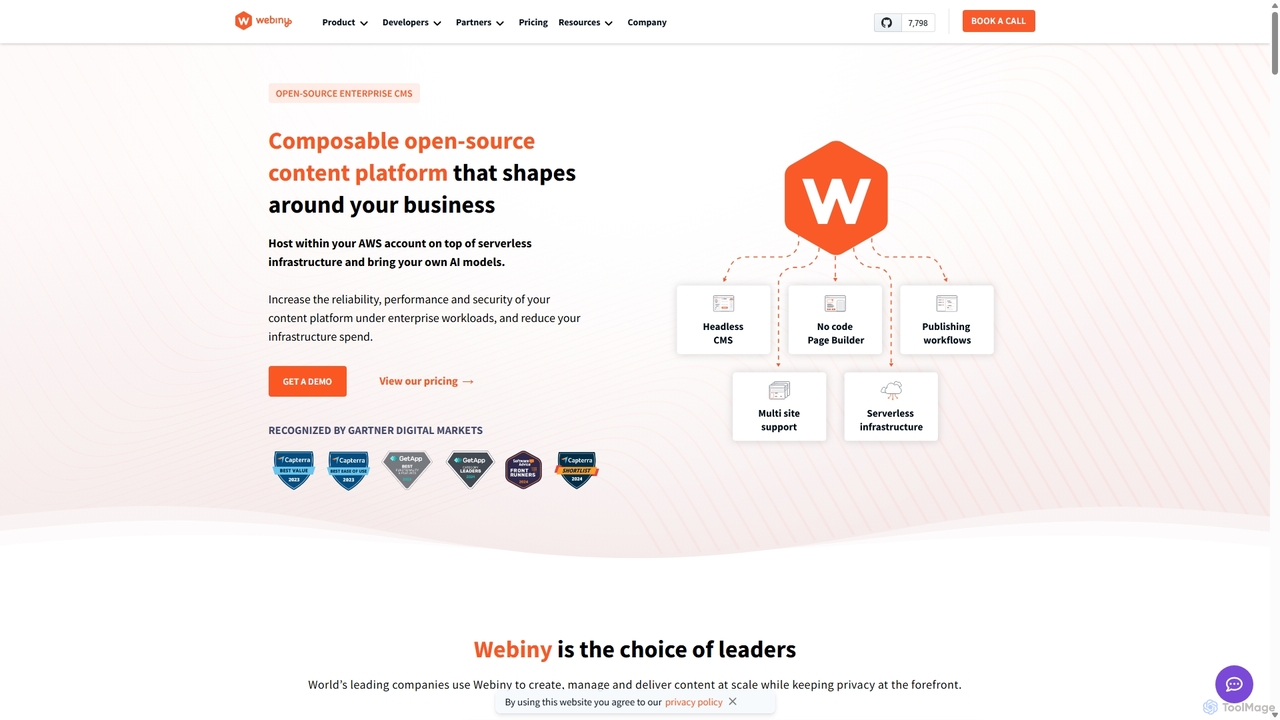
AI Content Management Systems (CMS) are platforms for creating, managing, and delivering digital content, enhanced with artificial intelligence. These systems leverage AI to automate tasks like content generation, SEO optimization, and personalization. This allows developers and content teams to build dynamic, scalable, and intelligent content experiences across any channel, from websites to mobile apps. AI-powered CMS tools streamline the entire content lifecycle, significantly reducing manual effort and improving content performance.
Core Features
- AI-Assisted Content Creation: Automatically generates text drafts, summaries, headlines, and translations based on prompts or existing data.
- Intelligent Asset Management: Uses AI to automatically tag images, suggest relevant media, and optimize assets for different devices.
- Personalized Content Delivery: Dynamically serves tailored content to individual users based on their behavior, location, or profile.
- Automated SEO Analysis: Provides real-time suggestions for keywords, meta descriptions, and readability to improve search engine rankings.
- Headless (API-first) Architecture: Decouples the content backend from the presentation layer, giving developers the freedom to deliver content to any frontend framework or device.
Applicable Scenarios
These tools are ideal for marketing teams managing large-scale content strategies, e-commerce businesses needing personalized product experiences, and developers building modern, multi-channel applications. They are particularly effective for organizations aiming to scale content production without proportionally increasing their team size, such as global enterprises managing multilingual websites or media companies with vast digital libraries.
Selection Criteria
When choosing an AI CMS, evaluate the quality and scope of its AI features, such as content generation and personalization capabilities. Assess the robustness of its API and developer documentation for seamless integration. Consider its scalability to handle growing content volumes and traffic, as well as the user-friendliness of the interface for non-technical content editors. Finally, analyze the pricing model to ensure it aligns with your usage patterns.