
ToolMage
Sign in

Best 1 Coding Assessment AI tools for Developer Tools

Popular Coding Assessment AI tools in Developer Tools include HireNorm, helping you work more efficiently.

HireNorm
Freemium

HireNorm

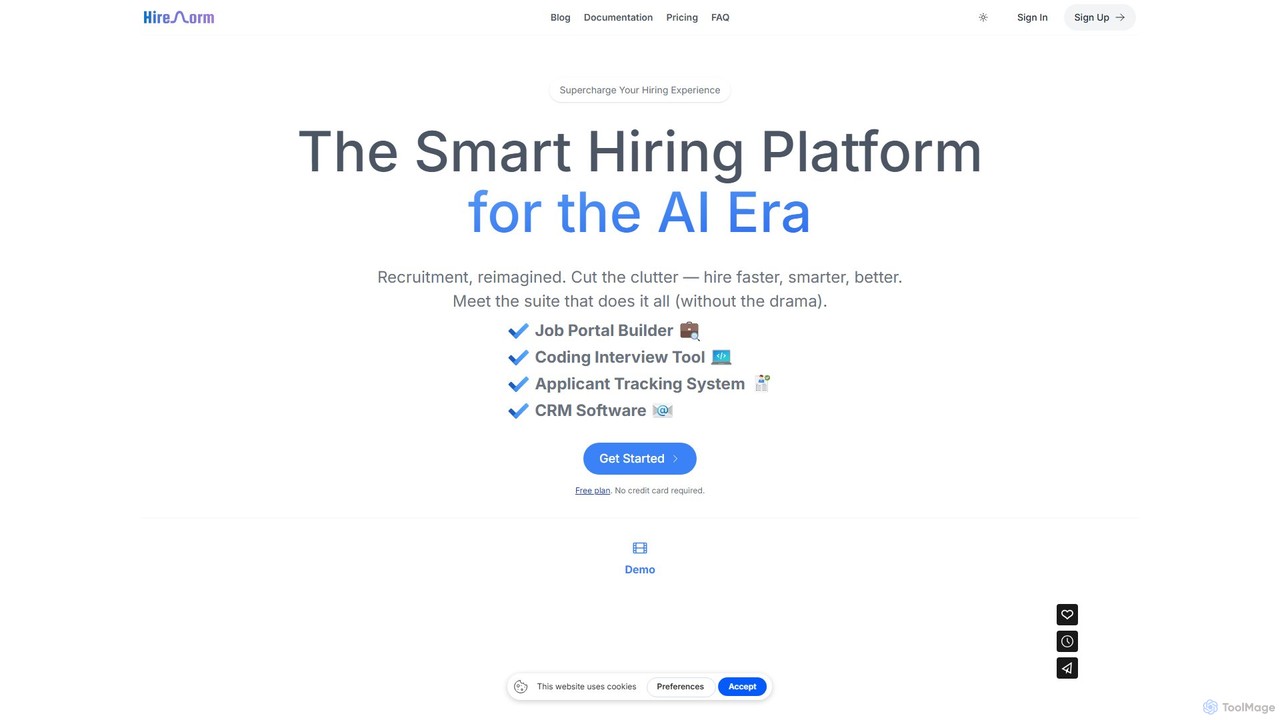
HireNorm is an AI-powered, all-in-one technical recruitment platform designed for the modern era. It streamlines the entire hiring process, from creating job portals and sourcing candidates to conducting coding interviews and managing applicants. It's built to help tech companies hire faster, smarter, and more efficiently with features like semantic resume search, AI-assisted scoring, and an integrated coding environment.

Coding Assessment
Visits 4.5KFavorites 134Likes 121

About Coding Assessment

Coding Assessment tools are AI-powered platforms designed to evaluate the programming skills and technical proficiency of individuals. These tools leverage artificial intelligence to automate the process of creating, administering, and grading coding challenges, providing objective insights into a candidate's abilities. They are crucial for streamlining technical recruitment, identifying skill gaps, and fostering continuous learning within development teams. By offering standardized and scalable evaluations, they help organizations make data-driven decisions about talent acquisition and development.

Core Features

  • Automated Challenge Generation: AI creates diverse coding problems tailored to specific skill levels and job roles.
  • Real-time Code Execution & Testing: Tools run submitted code against test cases, providing instant feedback and performance metrics.
  • Plagiarism Detection: AI algorithms identify similarities in code submissions to ensure originality and fairness.
  • Performance Analytics: Detailed reports on code quality, efficiency, problem-solving approach, and time complexity.
  • Customizable Assessments: Ability to tailor question types, difficulty levels, and programming languages to specific needs.

Applicable Scenarios

These tools are primarily used by HR departments and hiring managers for technical recruitment, efficiently assessing candidates' practical coding skills. Development team leads utilize them for internal skill audits and identifying areas for team training. Educational institutions also employ them for grading programming assignments and tracking student progress in computer science courses.

How to Choose

When selecting a coding assessment tool, consider the range of supported programming languages and frameworks, the depth of analytics provided, and the ease of customizing assessment content. Evaluate its integration capabilities with existing ATS (Applicant Tracking Systems) and HR platforms, as well as its scalability to handle varying volumes of candidates. Finally, assess the fairness and transparency of its grading algorithms and the quality of its plagiarism detection features.

Featured tool rankings

Coding Assessment use cases

1

Streamlining Technical Interview Screening

HR teams and hiring managers use AI coding assessment tools to efficiently screen a large volume of technical candidates. By automating initial coding challenges, they can quickly identify top performers with relevant skills, reducing manual review time and focusing on qualified individuals for subsequent interview stages. This ensures a fair and objective first-round evaluation, accelerating the hiring pipeline.

2

Identifying Skill Gaps in Development Teams

Engineering leads deploy coding assessment platforms to conduct internal skill audits for their existing development teams. These assessments help pinpoint specific areas where team members might lack proficiency or require further training in new technologies or languages. The insights gained inform targeted professional development plans and upskilling initiatives, ensuring the team remains competitive.

3

Automating Grading for Programming Courses

University professors and coding bootcamp instructors leverage these tools to automate the grading of student programming assignments and exams. The platforms provide instant feedback to students on their code correctness and efficiency, while significantly reducing the manual workload for educators, allowing them to focus more on teaching and mentorship rather than repetitive grading tasks.

4

Benchmarking Developer Proficiency for Promotions

Companies utilize coding assessment tools to objectively benchmark the technical proficiency of developers for promotion considerations or internal role changes. Standardized assessments ensure a fair evaluation process, helping management identify individuals ready for more complex responsibilities based on their demonstrated coding abilities and problem-solving skills, fostering internal career growth.

5

Pre-employment Skill Verification for Freelancers

Businesses hiring freelance developers or contractors use coding assessment tools to verify their claimed technical skills before engagement. This helps mitigate risks associated with hiring unknown talent by providing a reliable, independent assessment of their actual coding capabilities, ensuring they meet project requirements from the outset and deliver quality work.

6

Customizing Onboarding for New Engineering Hires

Organizations employ coding assessment tools to tailor the onboarding experience for new engineering hires. By assessing their initial skill levels, companies can assign appropriate first projects, provide targeted learning resources, and integrate them into teams where their existing strengths are best utilized, accelerating their productivity and integration into the company culture.

Coding Assessment FAQ

What are AI Coding Assessment tools?

AI Coding Assessment tools are software platforms that use artificial intelligence to automate the evaluation of programming skills. They generate coding challenges, execute submitted code against test cases, detect plagiarism, and provide detailed performance analytics. Their primary goal is to offer an objective, scalable, and efficient method for assessing technical proficiency in various contexts, from recruitment to internal skill development.

How do AI Coding Assessment tools differ from traditional technical interviews?

AI Coding Assessment tools offer a standardized, objective, and scalable approach compared to traditional, often subjective, technical interviews. While traditional interviews rely on human judgment and can be time-consuming, AI tools automate grading, provide consistent feedback, and can screen a large number of candidates simultaneously. They focus on practical coding ability rather than just theoretical knowledge or whiteboard coding, providing a more consistent and fair evaluation.

What are the key benefits of using AI for coding assessments?

The key benefits include enhanced objectivity and fairness in evaluations, significant time savings for recruiters and educators through automation, and improved scalability to handle many candidates. AI tools also provide detailed, data-driven insights into candidate performance, help identify specific skill gaps, and reduce the potential for human bias in the assessment process, leading to better hiring and development decisions.

What programming languages and technologies do these tools typically support?

Most AI Coding Assessment tools offer broad support for a wide range of popular programming languages, including Python, Java, C++, JavaScript, Ruby, Go, and C. Many also support various frameworks, databases, and even specific development environments, allowing for comprehensive assessments that mirror real-world project requirements. Users can often customize the supported technologies based on their specific needs for a role or course.

Who primarily uses AI Coding Assessment tools?

AI Coding Assessment tools are primarily used by organizations for technical recruitment, including HR departments, hiring managers, and engineering teams, to screen candidates efficiently. Additionally, educational institutions, such as universities and coding bootcamps, use them for automating assignment grading and tracking student progress. Companies also leverage them for internal skill development, upskilling, and benchmarking existing employees for career growth.