Developer Tools Best in category 1 results Coding Practice AI Tool

Popular AI tools in the Coding Practice field of Developer Tools include QSet.io, etc., helping you quickly improve efficiency.

QSet.io

QSet.io

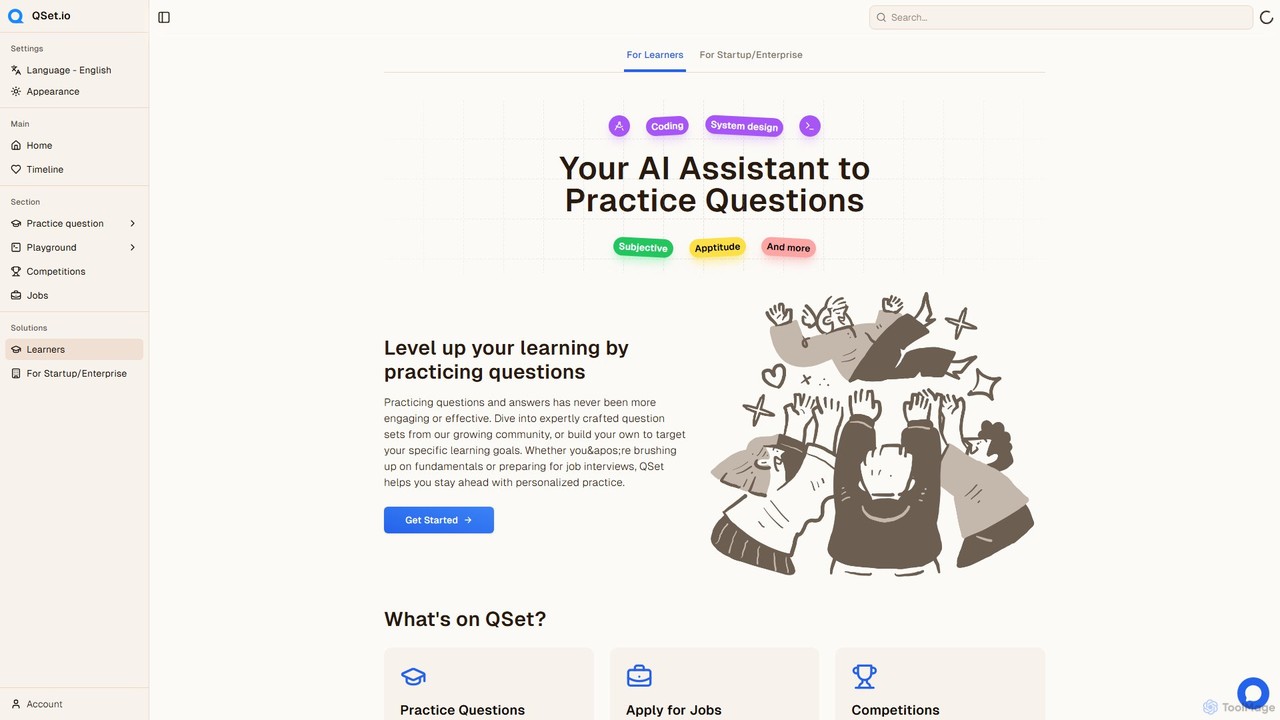
QSet.io is an AI-powered platform for interactive learning and interview preparation. It allows users to practice with a …

4.0K

About Coding Practice

Coding Practice tools are specialized platforms that leverage artificial intelligence to create dynamic and personalized programming exercises. They analyze user code in real-time to provide instant feedback on logic, style, and efficiency, going beyond simple syntax checks. These tools help developers of all levels master new languages, prepare for technical interviews, and reinforce complex concepts through adaptive learning paths. Their key advantage lies in offering a tailored practice environment that identifies and targets individual weaknesses, making them a powerful component within the broader Developer Tools ecosystem.

Core Features

  • AI-Powered Problem Generation: Creates unique coding challenges tailored to specific skills and difficulty levels.
  • Real-time Code Analysis: Offers instant, detailed feedback on correctness, performance, and code quality.
  • Personalized Learning Paths: Adapts the sequence and difficulty of exercises based on user performance.
  • Conceptual Explanations: Breaks down complex algorithms and data structures with AI-generated examples.
  • Mock Interview Simulation: Simulates realistic technical interviews with AI-driven questions and performance feedback.

Use Cases

These tools are widely used by computer science students for mastering coursework, job seekers preparing for interviews at tech companies, and experienced developers looking to learn a new programming language or framework efficiently. Educational institutions and coding bootcamps also integrate them to provide scalable, personalized practice for their students, ensuring a consistent and effective learning experience.

How to Choose

When selecting a tool, consider the breadth of supported programming languages and frameworks. Evaluate the depth and quality of the AI feedback—does it go beyond syntax to cover algorithmic efficiency and best practices? Also, assess the platform's focus, whether it's geared more towards interview preparation, general skill-building, or specific domains like data science. Finally, check for integration capabilities with popular IDEs to streamline your workflow.

Coding PracticeUse Cases

1

Preparing for Technical Interviews

A software engineer preparing for interviews at top tech companies uses an AI coding practice tool to tackle realistic problems. The platform simulates an interview environment, providing algorithm and data structure challenges commonly asked by specific companies. The AI offers real-time feedback on code efficiency (Big O notation), identifies edge cases the user missed, and suggests alternative, more optimal solutions. This targeted practice helps the engineer build confidence and systematically address weaknesses before the actual interviews.

2

Learning a New Programming Language

A developer experienced in Python wants to learn Rust. They use an AI practice tool that generates a personalized learning path. It starts with basic syntax exercises and gradually introduces more complex concepts like ownership and borrowing. When the developer makes a mistake common for Python programmers (e.g., assuming garbage collection), the AI not only corrects the code but also explains the underlying Rust-specific paradigm. This contextual feedback accelerates the learning process significantly compared to static tutorials.

3

Mastering Data Structures & Algorithms

A computer science student uses an AI tool to deepen their understanding of complex algorithms like Dijkstra's or A*. Instead of just solving a static problem, the AI generates variations of the problem with different constraints. It visualizes the algorithm's execution step-by-step and provides AI-generated explanations for each decision. If the student's implementation is inefficient, the AI suggests specific optimizations and explains why they improve performance, solidifying theoretical knowledge with practical application.

4

Onboarding Junior Developers

A tech lead uses an AI coding practice platform to create a custom onboarding curriculum for new junior developers. They select modules focused on the company's tech stack and coding standards. The platform provides a structured environment for juniors to practice and receive immediate, consistent feedback, freeing up senior developers' time. The lead can track progress through a dashboard, identifying areas where a new hire might need additional mentorship, ensuring a smoother and more standardized onboarding process for the entire team.

5

Assessing Candidates in Hiring Process

A hiring manager uses an AI coding practice tool for technical screening. Instead of a simple take-home test, candidates are given access to the platform for a timed session. The AI not only grades the correctness of the solution but also analyzes the candidate's problem-solving process, code quality, and efficiency. The manager receives a detailed report that provides deeper insights than a simple pass/fail score, helping them make more informed decisions about which candidates to advance to the next interview stage.

6

Supplementing University Coursework

A university professor incorporates an AI coding practice tool into their 'Data Structures' course. The tool is configured to align with the weekly syllabus. After each lecture, students are assigned AI-generated practice problems that reinforce the concepts taught. The AI provides instant, personalized feedback, allowing students to learn from their mistakes immediately without waiting for a teaching assistant. This creates a scalable, interactive lab environment that complements traditional lectures and improves overall student comprehension and retention.

Coding PracticeFrequently Asked Questions