Alaya AI
Alaya AI is a decentralized AI data platform that connects a global community with AI training tasks. It …
Alaya AI is a decentralized AI data platform that connects a global community with AI training tasks. It provides high-quality, scalable data solutions for developers through a gamified, 'train-to-earn' model, empowering users worldwide to contribute to AI development and earn rewards.
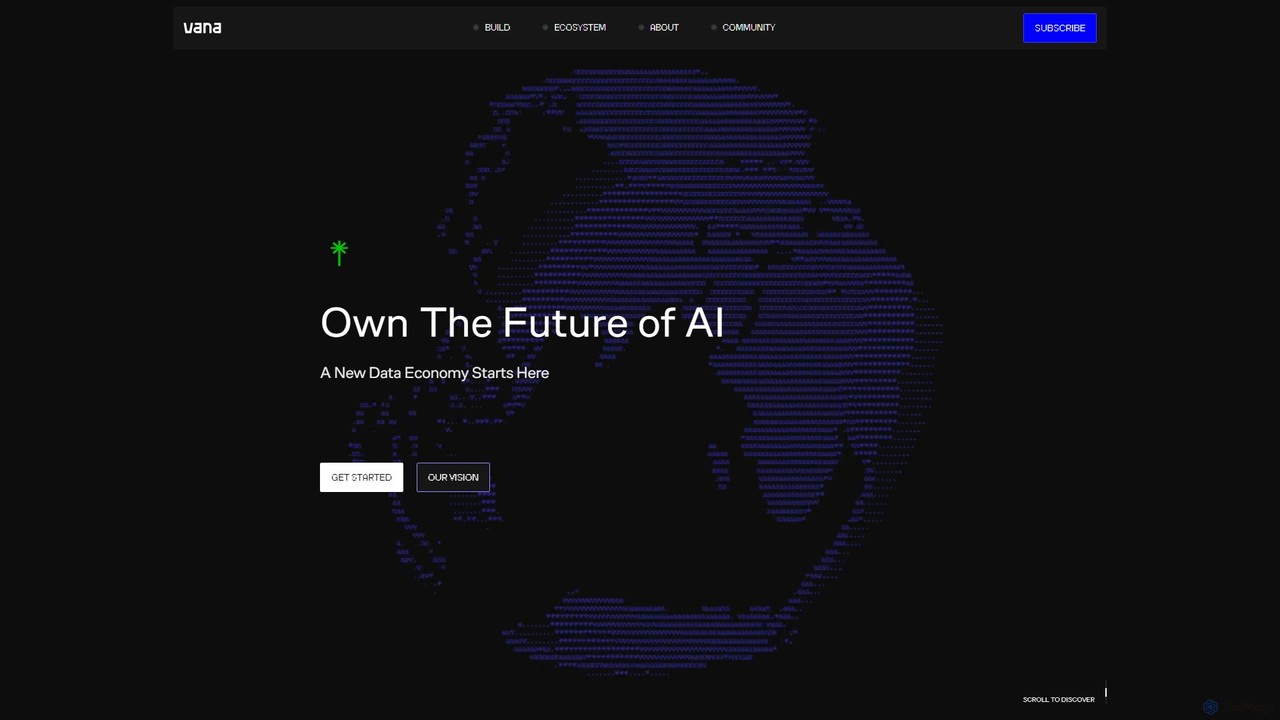
Vana
Vana is a decentralized network for user-owned data. It empowers individuals to contribute their personal data to "Data …
Vana is a decentralized network for user-owned data. It empowers individuals to contribute their personal data to "Data Collectives," tokenize it, and earn rewards. This protocol enables the creation of high-quality, human-sourced datasets for training AI models while ensuring users maintain control and sovereignty over their information.
About Data Platform
A Data Platform is an integrated environment designed for developers to manage the entire lifecycle of data, from ingestion and storage to processing, analysis, and governance. These platforms leverage advanced technologies, often including AI and machine learning capabilities, to provide robust infrastructure for building data-intensive applications. They empower development teams to efficiently handle large volumes of diverse data, accelerate insights, and deploy intelligent features within their software solutions.
Core Features
- Unified Data Ingestion: Tools for collecting and integrating data from various sources, supporting batch and real-time streams.
- Scalable Data Storage: Flexible storage solutions like data lakes and warehouses, optimized for performance and cost-efficiency.
- Advanced Data Processing: Engines for transforming, cleaning, and enriching data, including support for complex analytical workloads and machine learning pipelines.
- Data Governance & Security: Features for managing data access, compliance, lineage, and ensuring data quality and privacy.
- Developer APIs & SDKs: Comprehensive interfaces for programmatic interaction, enabling seamless integration into existing development workflows.
Applicable Scenarios
Data Platforms are crucial for organizations building data-driven products, such as AI startups developing recommendation engines, e-commerce companies needing real-time inventory and customer analytics, or IoT firms processing sensor data at scale. They serve as the backbone for modern analytics, machine learning operations (MLOps), and intelligent application development.
How to Choose
When selecting a Data Platform, consider its scalability to handle future data growth, the breadth of its integration capabilities with existing tools and services, its support for various data types and processing paradigms (batch vs. streaming), and the level of developer tooling and API documentation provided. Evaluate also the total cost of ownership, including infrastructure, licensing, and operational overhead.

Data PlatformUse Cases
Building Real-time Recommendation Engines
E-commerce developers utilize a Data Platform to ingest customer browsing history, purchase data, and product interactions in real-time. The platform processes this stream, feeds it into machine learning models for personalized recommendations, and serves predictions via APIs, enhancing user experience and driving sales.
Automating ETL for Business Intelligence
Data engineers leverage the platform's ETL capabilities to extract data from operational databases, transform it into a structured format, and load it into a data warehouse. This automated pipeline ensures up-to-date datasets for business analysts to generate reports and dashboards, supporting strategic decision-making.
Developing AI-powered Fraud Detection Systems
Financial institutions use Data Platforms to collect and analyze vast amounts of transaction data, user behavior, and network logs. Developers build and deploy machine learning models on the platform to identify anomalous patterns indicative of fraud, enabling real-time alerts and preventing financial losses.
Managing IoT Sensor Data at Scale
IoT solution architects employ a Data Platform to ingest, store, and process high-velocity, high-volume data streams from connected devices. The platform's scalable infrastructure allows for real-time monitoring, anomaly detection, and predictive maintenance, optimizing device performance and operational efficiency.
Facilitating MLOps for AI Model Deployment
Machine learning engineers use the Data Platform to manage the entire MLOps lifecycle, from feature engineering and model training to deployment, monitoring, and retraining. The platform provides version control for data and models, automated pipelines, and performance tracking, ensuring reliable and scalable AI solutions.
Creating Unified Customer Data Views
Marketing and sales teams, supported by data developers, use a Data Platform to consolidate customer data from CRM, marketing automation, and support systems. This unified view enables comprehensive customer segmentation, personalized campaigns, and improved customer relationship management.