Developer Tools Best in category 2 results Data Scraping AI Tool

Popular AI tools in the Data Scraping field of Developer Tools include Thordata、GetOData, etc., helping you quickly improve efficiency.

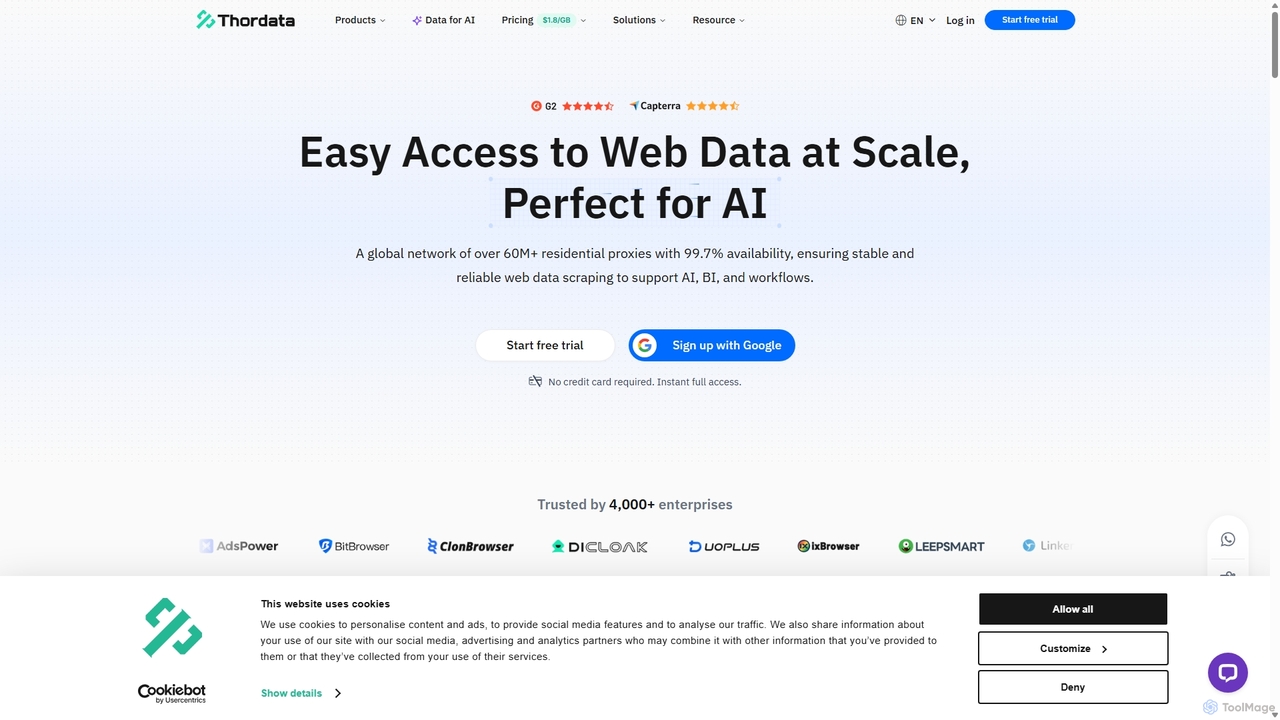
Thordata

Thordata

Thordata is a high-performance proxy service provider designed for large-scale web data scraping and AI applications. It offers …

307.6K
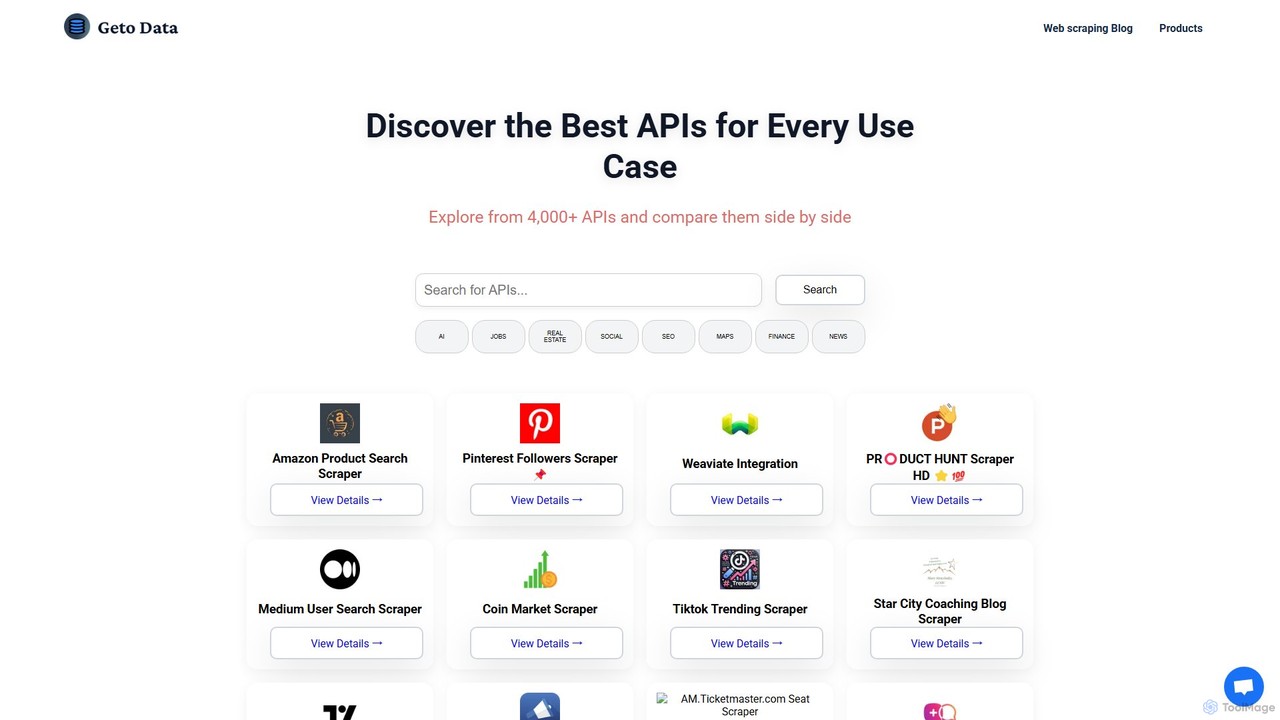
GetOData

GetOData

A comprehensive directory to discover, compare, and utilize over 4,000 pre-built APIs and no-code web scrapers. Extract structured …

2.4K

About Data Scraping

Data Scraping tools are a class of software designed to automatically extract large amounts of data from websites. They function by parsing the HTML structure of web pages to identify and collect specific information, such as text, images, prices, or contact details. This enables businesses and developers to gather market intelligence, monitor competitors, and conduct research without tedious manual data entry. Modern AI-powered scrapers can handle complex JavaScript-heavy sites, manage proxies, and bypass many anti-bot measures, making data collection more reliable and efficient.

Core Features

  • Automated Data Extraction: Automatically crawls websites and extracts predefined data points from the page structure.
  • Anti-Blocking Mechanisms: Utilizes rotating proxies, user-agent simulation, and CAPTCHA solving to avoid detection and IP bans.
  • Data Structuring and Export: Converts unstructured web data into structured formats like JSON, CSV, or Excel for analysis.
  • Scheduled Scraping: Allows users to set up recurring scraping tasks to monitor data changes over time.
  • Visual Selection Tools: Provides a no-code interface for users to click and select the data they want to extract directly from a webpage.

Use Cases

Data Scraping tools are widely used across various industries. In e-commerce, they are essential for price monitoring and competitor analysis. Sales and marketing teams use them for lead generation by extracting contact information from directories. Market researchers and data analysts rely on them to collect large datasets for trend analysis, sentiment analysis, and academic studies.

How to Choose

When selecting a Data Scraping tool, consider your technical skill level; no-code visual scrapers are ideal for non-developers, while libraries and APIs offer more flexibility for programmers. Evaluate the tool's scalability and its ability to handle complex, dynamic websites. Also, check its anti-blocking capabilities, the available data export formats, and its pricing model, which is often based on the volume of data extracted.

Data ScrapingUse Cases

1

E-commerce Price Monitoring

An e-commerce manager needs to maintain competitive pricing. They use a data scraping tool to automatically track the prices, stock levels, and promotions of key products across dozens of competitor websites daily. The tool is scheduled to run every few hours, and the extracted data is exported to a CSV file. This data is then imported into a dashboard, allowing the pricing team to make informed, dynamic adjustments to their own prices, maximizing sales and profit margins without manual checks.

2

Lead Generation for Sales Teams

A B2B sales team needs to build a targeted list of potential clients. They use a data scraping tool to extract company names, job titles, and contact information from online business directories and professional networking sites based on specific criteria like industry, company size, and location. The scraper runs overnight and compiles the information into a structured spreadsheet. This automated process provides the sales team with a fresh, relevant list of leads each morning, saving hundreds of hours of manual research.

3

Market Research and Trend Analysis

A market analyst is tasked with understanding public sentiment about a new consumer electronics category. They configure a data scraper to collect thousands of customer reviews and ratings from major retail and review websites. The tool extracts the review text, star rating, and date. This raw data is then fed into a sentiment analysis tool to identify common praises, complaints, and feature requests, providing the analyst with quantitative insights into market trends and consumer needs.

4

Real Estate Market Data Aggregation

A real estate agency wants to create a comprehensive internal database of local property listings. Instead of manually visiting multiple real estate portals, they deploy a data scraping tool. The scraper is configured to extract key details from each listing, including price, address, number of bedrooms/bathrooms, square footage, and agent contact information. This aggregated data allows their agents to quickly search and compare properties from across the market, providing better service to their clients.

5

Academic Research Data Collection

A sociologist is studying online discourse patterns. They need a large dataset of public comments from news article comment sections and public forums. Using a data scraping tool, the researcher specifies the target websites and the HTML elements containing the comments. The tool then systematically crawls thousands of pages, extracting the text of each comment, its timestamp, and any associated metadata. This automated collection process provides a rich dataset for qualitative and quantitative analysis, which would be impossible to gather manually.

6

News and Content Aggregation

A media startup wants to build a news aggregation platform. They use a data scraping tool to monitor hundreds of news sources in real-time. The scraper is configured to extract the headline, author, publication date, and a summary snippet from each new article as it's published. This data is then automatically categorized and displayed on their platform, providing users with a comprehensive and up-to-the-minute view of news across various topics without needing to build individual API integrations for each source.

Data ScrapingFrequently Asked Questions