ToolMage
Sign in

Best 1 Data Services AI tools for Developer Tools

Popular Data Services AI tools in Developer Tools include Sapien, helping you work more efficiently.

Sapien
Paid

Sapien

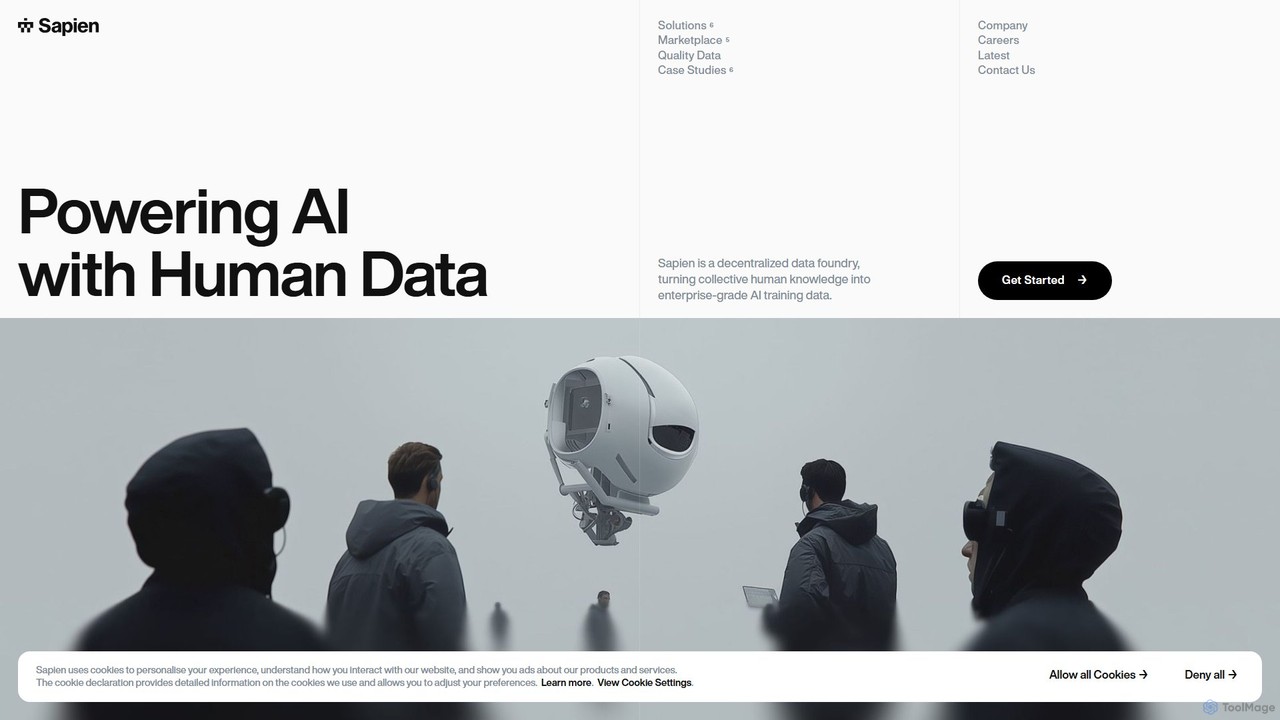
Sapien is a decentralized data foundry that provides enterprise-grade AI training data. It leverages a global network of human contributors to deliver high-quality, specialized data for complex AI systems, including 3D/4D annotation, expert reasoning, and large-scale data collection.

Training Data
Visits 69.4KFavorites 148Likes 146

About Data Services

Data Services are AI-powered tools designed to automate, optimize, and enhance various stages of data lifecycle management for developers and data professionals. These services leverage advanced machine learning algorithms to streamline tasks such as data collection, cleaning, transformation, storage, and analysis, making data more accessible and valuable for application development and intelligent systems. They integrate seamlessly into developer workflows, providing robust infrastructure and intelligent capabilities for handling large, complex datasets efficiently and securely.

Core Features

  • Automated Data Ingestion: Intelligently collects and processes data from diverse sources, ensuring real-time availability.
  • Intelligent Data Cleaning & Transformation: Automatically identifies and corrects errors, standardizes formats, and prepares data for analysis or model training.
  • Advanced Data Labeling: Utilizes AI to accelerate the annotation of datasets, crucial for supervised machine learning model development.
  • Secure Data Anonymization: Applies AI techniques to protect sensitive information while preserving data utility for analytics and testing.
  • Predictive Analytics Integration: Provides tools to build and deploy predictive models directly on processed data, enhancing application intelligence.

Applicable Scenarios

Data Services are indispensable for developers building AI applications, data scientists preparing datasets for machine learning, and businesses requiring efficient, scalable data pipelines. They are used in scenarios like developing recommendation engines, automating fraud detection systems, or creating personalized user experiences where clean, well-managed data is paramount.

How to Choose

When selecting AI Data Services, consider the breadth of data source integrations, the sophistication of AI-driven automation for cleaning and labeling, scalability to handle growing data volumes, and robust security and compliance features. Evaluate the ease of API integration with existing developer tools and the pricing model based on usage or data volume.

Data Services use cases

1

Automating Data Preparation for Machine Learning Models

Data scientists and machine learning engineers frequently spend significant time on data cleaning and preprocessing. AI Data Services automate tasks like missing value imputation, outlier detection, and feature engineering, drastically reducing preparation time. This allows engineers to focus on model development and iteration, accelerating the deployment of robust AI solutions by ensuring high-quality input data.

2

Real-time Data Ingestion for Analytics Dashboards

Business intelligence teams and developers building real-time analytics platforms require continuous, clean data streams. Data Services facilitate automated ingestion and transformation of streaming data from various sources (e.g., IoT devices, web logs) into a unified format. This enables up-to-the-minute dashboards and immediate insights, supporting agile business decision-making and operational monitoring.

3

Intelligent Data Labeling for Computer Vision Projects

For computer vision applications, accurately labeled image or video datasets are critical for training. AI Data Services offer intelligent labeling tools that can pre-annotate objects, segments, or actions, significantly speeding up the manual review process. This empowers AI developers to build and refine models for tasks like object recognition, autonomous driving, or medical image analysis more efficiently.

4

Ensuring Data Privacy and Compliance with Anonymization

Organizations handling sensitive customer data must comply with regulations like GDPR or HIPAA. Data Services provide AI-driven anonymization and pseudonymization techniques to mask personally identifiable information (PII) while retaining data's analytical value. This allows developers to use production data for testing, development, and analytics without compromising user privacy or regulatory adherence.

5

Building Scalable Data Pipelines for Cloud Applications

Cloud application developers need robust and scalable data infrastructure to support dynamic workloads. AI Data Services offer managed solutions for building and orchestrating data pipelines that can automatically scale with demand. This includes automated data warehousing, ETL processes, and integration with cloud-native services, ensuring applications have reliable access to processed data without manual intervention.

6

Enhancing Data Quality for Business Intelligence Reporting

Business analysts and reporting specialists rely on accurate and consistent data for generating reliable reports. Data Services employ AI to continuously monitor data quality, identify inconsistencies across disparate systems, and apply automated cleansing rules. This ensures that all business intelligence reports, from sales forecasts to operational efficiency metrics, are based on trustworthy and unified data.

Data Services FAQ

What are AI Data Services?

AI Data Services are specialized tools that use artificial intelligence and machine learning to automate and optimize various data management tasks. They are designed to help developers and data professionals efficiently collect, clean, transform, label, and analyze data, making it ready for use in applications, analytics, and AI model training. These services streamline complex data workflows, enhancing data quality and accessibility.

How do AI Data Services differ from traditional data management tools?

While traditional data management tools focus on storage, retrieval, and basic processing, AI Data Services introduce intelligent automation and predictive capabilities. They leverage AI for tasks like automated data cleaning, intelligent anomaly detection, and advanced data labeling, which typically require significant manual effort in traditional systems. This allows for greater efficiency, scalability, and the ability to handle more complex, unstructured data types.

Who benefits most from using AI Data Services?

Developers building AI-powered applications, data scientists, machine learning engineers, and business intelligence analysts are the primary beneficiaries. Organizations that deal with large volumes of diverse data, require high data quality for critical operations, or need to accelerate their AI development cycles will find AI Data Services particularly valuable. They are crucial for teams looking to operationalize data effectively and securely.

What are the key features to look for in AI Data Services?

Key features include robust data ingestion capabilities from various sources, advanced AI-driven data cleaning and transformation, intelligent data labeling tools, strong data security and anonymization features, and seamless integration with existing developer ecosystems (APIs, SDKs). Scalability, performance, and compliance certifications are also critical considerations to ensure the service meets enterprise-level requirements.

How do AI Data Services contribute to the "Developer Tools" category?

Within the "Developer Tools" category, AI Data Services provide the essential data infrastructure and intelligence layer that developers need to build sophisticated applications. They abstract away the complexities of data handling, allowing developers to focus on core application logic. By offering automated data preparation, secure access, and integration with AI models, these services empower developers to create more intelligent, data-driven solutions efficiently and at scale.