Developer Tools Best in category 1 results Databases AI Tool

Popular AI tools in the Databases field of Developer Tools include SheetQuery, etc., helping you quickly improve efficiency.

SheetQuery

SheetQuery

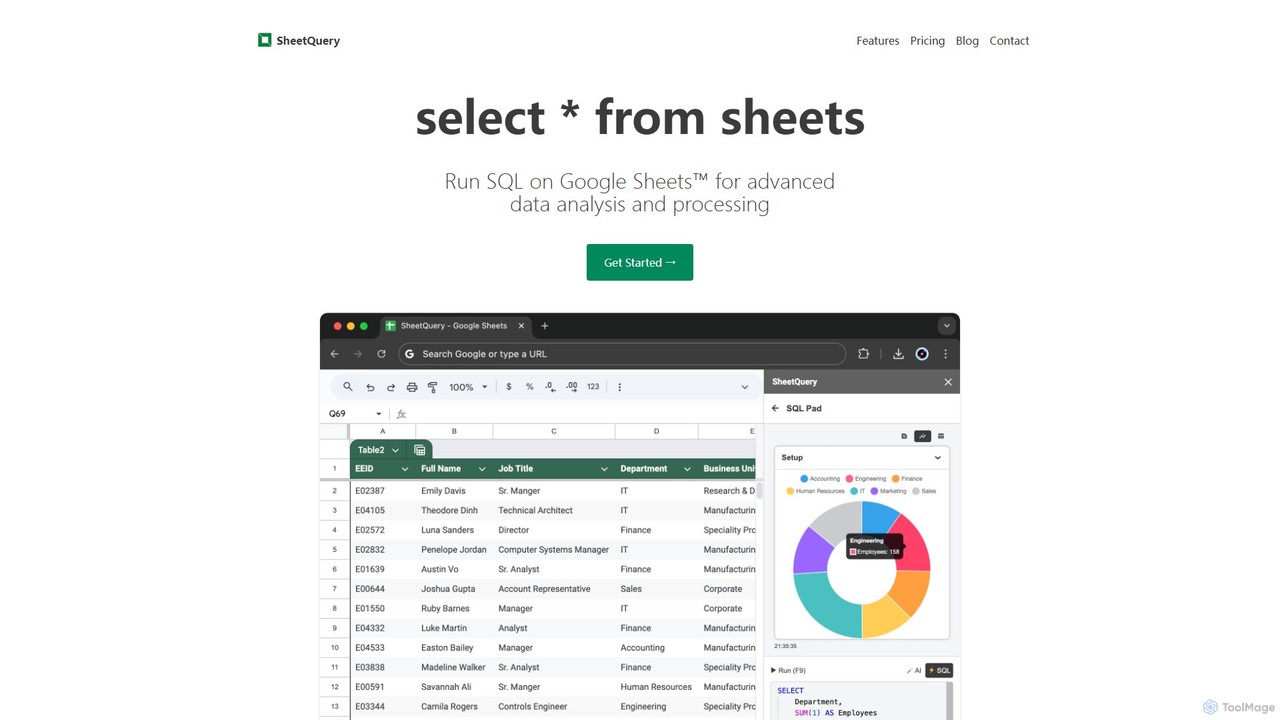
A powerful tool that enables you to run advanced SQL queries directly on Google Sheets for sophisticated data …

2.3K

About Databases

AI-powered Databases are specialized data management systems designed to store, manage, and retrieve vast amounts of structured and unstructured data, often optimized for machine learning workloads. As a crucial component within developer tools, they enable efficient data handling for AI model training, inference, and real-time analytics, supporting the development of intelligent applications. These databases often incorporate features like vector indexing and real-time processing to meet the unique demands of AI.

Core Features

  • Vector Indexing & Search: Efficiently stores and queries high-dimensional vector embeddings, crucial for similarity search in AI applications like RAG and recommendation systems.
  • Real-time Data Ingestion: Supports high-throughput data streams for immediate processing and analysis, essential for dynamic AI models and real-time decision-making.
  • Scalable Storage & Performance: Provides flexible, scalable architectures to handle growing datasets and demanding query loads, ensuring AI applications remain responsive.
  • Integrated Analytics & ML: Offers built-in capabilities or seamless integrations for data analysis, feature engineering, and direct serving of data to machine learning models.
  • Data Security & Governance: Implements robust security measures and compliance features to protect sensitive AI training data and model outputs.

Use Cases

AI-powered databases are indispensable for developers and data scientists building advanced AI applications. They are used in scenarios requiring rapid data access for AI model inference, managing large volumes of training data, or enabling complex similarity searches for generative AI. Their specialized capabilities streamline data pipelines for intelligent systems.

How to Choose

When selecting an AI-powered database, consider its data model flexibility (e.g., vector, graph, document), scalability for future data growth, query performance for specific AI workloads, and native integration with AI/ML frameworks. Evaluate cost-effectiveness, managed service options, and robust security features to ensure it aligns with your project's technical and operational requirements.

DatabasesUse Cases

1

Building Retrieval-Augmented Generation (RAG) Systems

AI developers leverage vector databases to store and retrieve contextual information for large language models (LLMs). By embedding documents and user queries into high-dimensional vectors, the database quickly finds relevant passages. This enhances the LLM's ability to generate accurate and informed responses, significantly reducing hallucination rates and providing up-to-date information from proprietary knowledge bases.

2

Powering Real-time AI Analytics Dashboards

Data analysts and business intelligence teams use AI-optimized databases to feed real-time data into interactive dashboards. These databases handle high-velocity data streams from various sources, enabling immediate aggregation and analysis. This allows businesses to monitor key performance indicators, detect anomalies, and make data-driven decisions instantly, significantly improving operational responsiveness and market adaptability.

3

Managing Feature Stores for Machine Learning Models

Machine learning engineers utilize specialized databases to serve features to AI models in real-time or batch. These databases act as centralized feature stores, ensuring low-latency access to pre-processed data points for training and inference. This consistency and efficiency in feature delivery improve model accuracy, reduce data inconsistencies, and accelerate the MLOps lifecycle, especially in complex production environments.

4

Storing and Querying Large-Scale AI Training Data

Data scientists and ML researchers rely on robust AI-powered databases to store and efficiently query massive datasets required for training complex AI models. These databases offer optimized indexing and distributed storage capabilities, allowing for rapid data retrieval and transformation. This significantly accelerates the iterative process of model development, enabling faster experimentation and more effective hyperparameter tuning.

5

Enabling Personalized AI Recommendations

E-commerce platforms and content providers utilize AI-powered databases to store user interaction data, product attributes, and content metadata. These databases facilitate real-time analysis of user behavior and similarity searches to generate highly personalized recommendations. By quickly matching user preferences with relevant items, businesses can significantly improve engagement, conversion rates, and overall customer satisfaction.

6

Supporting AI-driven Fraud Detection Systems

Financial institutions and cybersecurity firms deploy AI-powered databases to manage and analyze vast streams of transactional and behavioral data for fraud detection. These databases enable rapid ingestion and complex pattern matching across diverse data points, allowing AI models to identify suspicious activities in real-time. This proactive approach significantly reduces financial losses and enhances security by flagging fraudulent transactions before they are completed.

DatabasesFrequently Asked Questions