ToolMage
Sign in

Best 1 Deployment & Hosting AI tools for Developer Tools

Popular Deployment & Hosting AI tools in Developer Tools include Defang, helping you work more efficiently.

Defang
Freemium

Defang

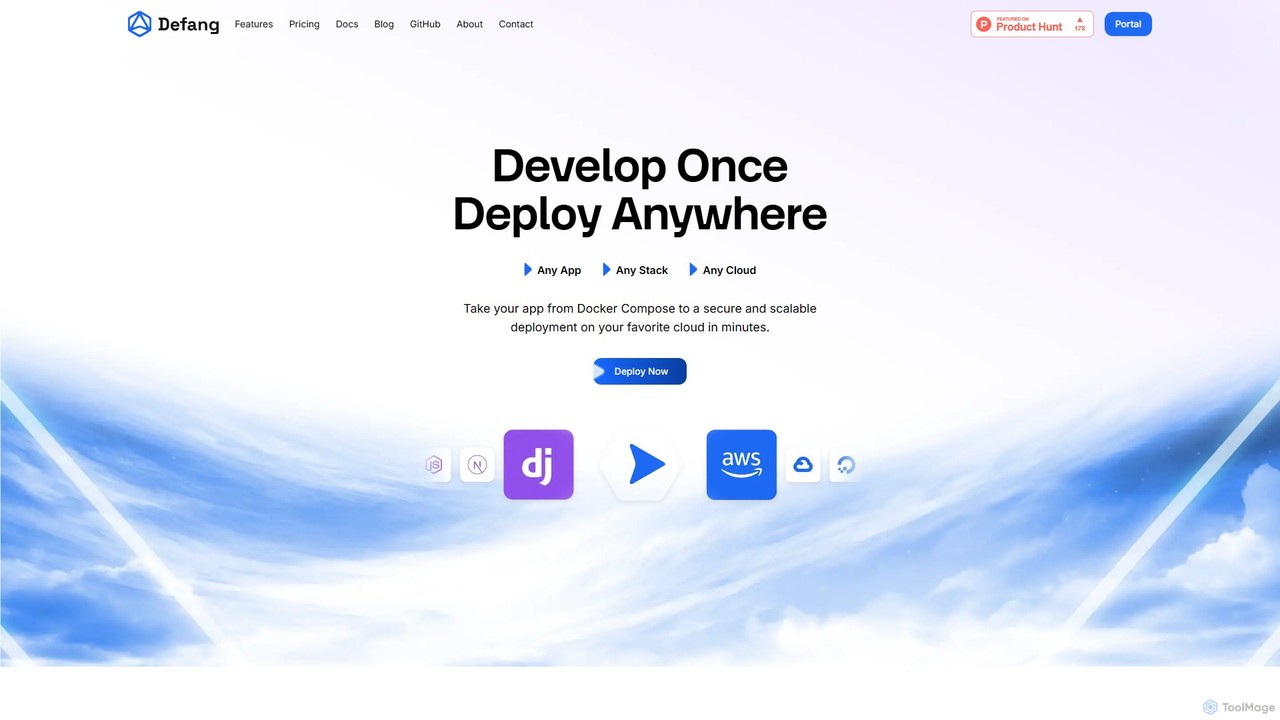
Defang is an AI-powered platform that simplifies cloud deployment. It enables developers to take any Docker Compose project and deploy it to major cloud providers like AWS and GCP with a single command, automating complex infrastructure setup, security, and scaling.

Platform As A Service (Paas)
Visits 24.5KFavorites 117Likes 109

About Deployment & Hosting

Deployment & Hosting tools are specialized platforms designed to make trained AI and machine learning models operational and accessible in a production environment. As a key part of the Developer Tools ecosystem, these services provide the necessary infrastructure and APIs to serve model predictions at scale. They handle complex backend tasks like server management, auto-scaling, and performance monitoring, allowing developers to focus on the model itself. This ensures that AI applications are reliable, performant, and capable of handling real-world user demand.

Core Features

  • Model Serving Infrastructure: Provides optimized environments for running inference requests with low latency and high throughput.
  • Automatic API Generation: Instantly creates REST API endpoints for a model, simplifying integration with other applications.
  • Auto-Scaling & Load Balancing: Automatically adjusts computing resources to handle traffic spikes and ensure high availability.
  • Performance Monitoring & Logging: Offers dashboards to track model latency, throughput, error rates, and resource consumption.
  • MLOps & CI/CD Integration: Facilitates automated workflows for versioning, testing, and deploying new model updates seamlessly.

Use Cases

These tools are essential for data science teams, ML engineers, and developers putting AI into production. They are used by SaaS companies embedding AI features into their products, e-commerce platforms hosting real-time recommendation engines, and fintech companies deploying fraud detection models. Any application that relies on live AI predictions benefits from a dedicated deployment and hosting solution.

How to Choose

When selecting a tool, consider its compatibility with your ML frameworks (e.g., TensorFlow, PyTorch). Evaluate its scaling capabilities and pricing model (pay-per-use vs. subscription). Assess the ease of use—whether you need a fully managed platform for simplicity or more granular control for complex setups. Finally, review the available monitoring, security, and compliance features to ensure they meet your operational requirements.

Featured tool rankings

Deployment & Hosting use cases

1

Launching a Production-Ready AI Chatbot

A customer support team develops a chatbot model to answer common queries. Using a deployment platform, they upload the model and instantly get a secure API endpoint. They integrate this API with their website's chat widget. The platform automatically scales to handle thousands of concurrent conversations during peak hours, ensuring a responsive user experience without the need to manage servers.

2

Serving a Real-Time Product Recommendation Engine

An e-commerce company needs to provide personalized product suggestions to millions of users. They deploy their recommendation model on a specialized hosting service optimized for low latency. The service handles the high volume of requests, processing user data in real-time to deliver relevant recommendations, which helps increase user engagement and sales.

3

Creating a Public API for a Computer Vision Model

A startup has created a unique image background removal model. They use a deployment tool to wrap their model in a public-facing REST API. This allows other developers to integrate the background removal feature into their own applications on a pay-per-use basis. The hosting platform manages authentication, rate limiting, and billing integration for their new API service.

4

Automating Fraud Detection Model Updates

A financial institution's data science team uses an MLOps-focused deployment platform to manage their fraud detection model. The platform is integrated with their code repository. Whenever a new model version is pushed, it automatically triggers a deployment pipeline that tests the model and rolls it out to production with zero downtime, ensuring the system is always using the most up-to-date logic.

5

Cost-Effective Deployment of Specialized AI Functions

A developer creates several small, single-purpose AI models, such as a sentiment analyzer and a language translator. Instead of renting a full server, they deploy each model as a serverless function. They only pay for the exact compute time used for each API call, making it an extremely cost-effective solution for applications with intermittent or unpredictable traffic.

6

Secure Deployment for Healthcare AI Diagnostics

A medical research institute develops an AI model to analyze medical images for early disease detection. Due to strict patient data privacy regulations (like HIPAA), they use a hosting solution that allows deployment within a private virtual cloud. This ensures all data is processed in a secure, compliant environment, isolated from the public internet, while still providing a scalable service to clinicians.

Deployment & Hosting FAQ

What are AI Deployment & Hosting tools?

AI Deployment & Hosting tools are platforms that make machine learning models available for use in applications. They provide the server infrastructure, APIs, and management features needed to run a model in a production environment, handling tasks like scaling, monitoring, and maintenance so developers don't have to.

How do I choose the right AI deployment platform?

To choose the right platform, consider these factors:

  • Framework Support: Ensure it supports your model's framework (e.g., PyTorch, TensorFlow).
  • Scalability: Evaluate its ability to handle your expected traffic and offer auto-scaling.
  • Cost: Compare pricing models like pay-per-inference, resource-based, or subscription fees.
  • Ease of Use: Decide if you need a simple, fully managed service or more granular control.
  • MLOps Features: Check for tools for versioning, monitoring, and automated retraining.

What is the difference between deploying a model and running it locally?

Running a model locally on your computer is for development and testing. Deploying a model makes it accessible 24/7 to potentially millions of users over the internet. Deployment platforms provide the necessary reliability, scalability, and security for production use, which a local machine cannot offer. They handle traffic, ensure uptime, and manage resources efficiently.

What is 'model serving' in AI deployment?

Model serving is the core process of taking a trained model and making it available to receive input data and return predictions, typically via an API. An effective model serving system is optimized for low latency (fast responses) and high throughput (handling many requests at once), and it is a key function of any deployment and hosting platform.

Who typically uses AI Deployment & Hosting tools?

These tools are primarily used by machine learning engineers, data scientists, and software developers who need to integrate AI models into live applications. They are essential for any organization, from startups to large enterprises, that is moving from the experimental phase of AI development to creating real-world, production-grade AI services and products.