ToolMage
Sign in

Best 2 Developer Relations AI tools for Developer Tools

Popular Developer Relations AI tools in Developer Tools include Prog.AI and Talkbase, helping you work more efficiently.

Prog.AI
Paid

Prog.AI

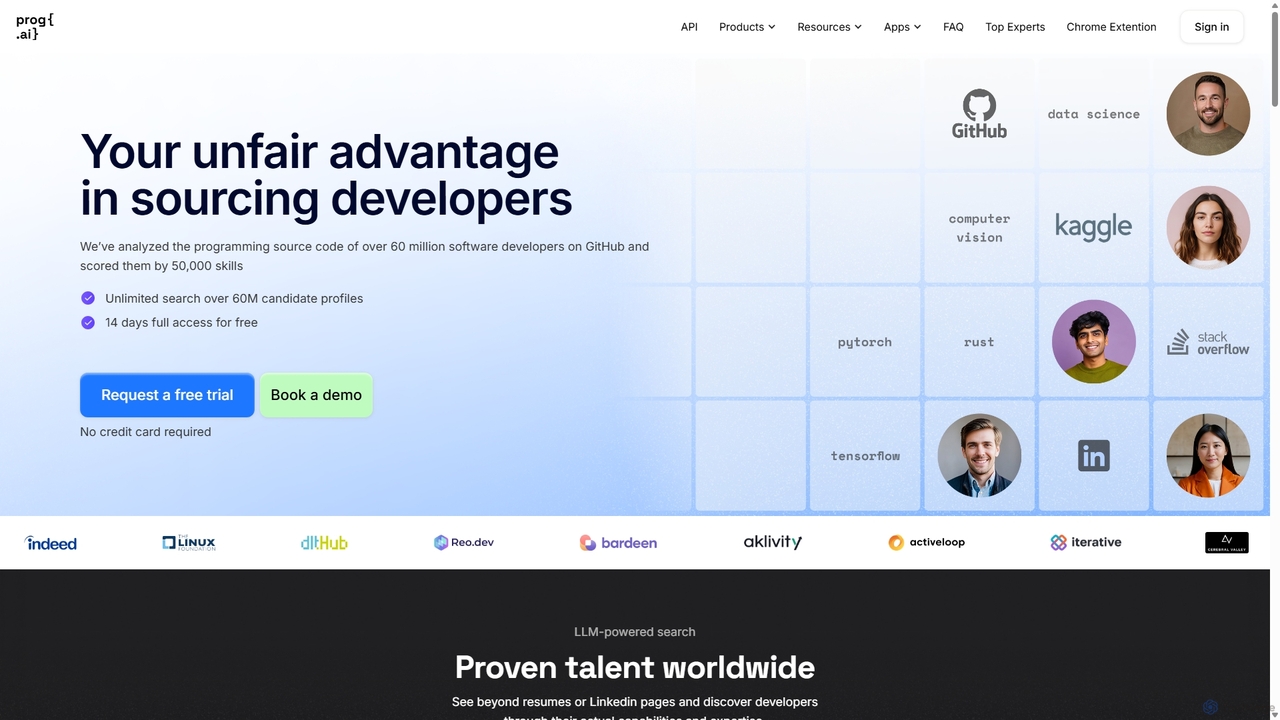
Prog.AI is an AI-powered platform for tech recruiting and developer relations. It analyzes developers' open-source contributions on GitHub, Stack Overflow, and Kaggle to identify and profile top technical talent, providing deep, verifiable insights into their real-world skills.

Developer Relations
Visits 65.9KFavorites 157Likes 153
Talkbase
Freemium

Talkbase

Talkbase is a community-led growth platform that acts as a central CRM for all your community activities. It integrates with platforms like Slack, Discord, and GitHub to unify member data, track engagement, and provide actionable analytics to help you build and scale your community effectively.

Analytics
Visits 6.4KFavorites 136Likes 158

About Developer Relations

AI Developer Relations tools are specialized platforms designed to build, manage, and scale relationships with developer communities. They leverage AI to analyze community interactions, automate workflows, and enhance the overall developer experience (DX). These tools help organizations understand developer needs, streamline support, and foster a vibrant ecosystem around their products, such as APIs and SDKs. By providing data-driven insights, they transform DevRel from a reactive function to a strategic, proactive one.

Core Features

  • Community Analytics: Automatically track engagement metrics across platforms like Discord, GitHub, and forums to identify key contributors and trends.
  • Developer Journey Automation: Create automated onboarding sequences, tutorials, and follow-ups to guide new developers.
  • Unified Feedback Hub: Aggregate developer feedback, bug reports, and feature requests from multiple channels into a single, searchable database.
  • Documentation Insights: Analyze documentation usage to identify popular pages, confusing sections, and areas for improvement.
  • Advocate Program Management: Streamline the management of developer advocate or champion programs, including tracking contributions and rewards.

Use Cases

These tools are essential for technology companies with APIs, SDKs, or open-source projects. DevRel managers, community managers, product managers, and technical writers use them to monitor community health, improve developer onboarding, centralize feedback, and measure the impact of their programs.

How to Choose

When selecting a tool, consider its integration capabilities with your existing platforms (e.g., GitHub, Slack, Discord). Evaluate the depth of its analytics and reporting features. Assess its automation capabilities for tasks like onboarding and feedback routing. Finally, consider the platform's scalability and pricing model as your community grows.

Developer Relations use cases

1

Analyze Developer Community Health

A DevRel manager for an open-source project needs to report on community growth and engagement. They use an AI Developer Relations tool to connect to their GitHub, Discord, and forum. The tool automatically generates dashboards showing active members, response times, sentiment analysis, and identifies top contributors. This allows the manager to present data-backed reports to leadership and identify community members to invite into an advocate program, saving hours of manual data collection each week.

2

Streamline New Developer Onboarding

A SaaS company launches a new API and wants to provide a smooth onboarding experience. They use a DevRel tool to create an automated workflow. When a developer signs up for an API key, the tool triggers a series of welcome emails, links to 'getting started' guides, and invites them to a dedicated Slack channel. The AI monitors their initial API calls and can flag users who seem stuck, allowing the support team to proactively offer help. This reduces initial support tickets by a significant margin.

3

Centralize Product Feedback from Developers

A product manager for a developer platform struggles to track feedback scattered across GitHub issues, community forums, and social media. They implement a DevRel tool that acts as a unified feedback hub. The AI categorizes incoming messages, tags them by feature area, and detects duplicate requests. This provides the PM with a clear, prioritized view of what developers are asking for, enabling them to build a more informed product roadmap and close the feedback loop with users efficiently.

4

Manage a Global Developer Advocate Program

A community manager is responsible for a 'Champions' program with developers worldwide. They use a DevRel platform to manage applications, track contributions (like blog posts, talks, and pull requests), and automate reward distribution. The tool provides a leaderboard to foster friendly competition and a central place for advocates to connect. This simplifies the administrative overhead, allowing the manager to focus on building relationships rather than managing spreadsheets.

5

Enhance Technical Documentation with User Insights

A technical writing team wants to improve their documentation based on actual user behavior. They integrate a DevRel analytics tool with their documentation site. The tool tracks which pages are most visited, where users spend the most time, and what search terms lead to no results. This data highlights confusing sections and content gaps, allowing the team to prioritize updates and create documentation that directly addresses developer pain points.

6

Scale Developer Support Across Channels

A support team for a popular SDK is overwhelmed with questions from Discord, Stack Overflow, and email. They use an AI-powered DevRel tool to create a unified support queue. The tool can automatically answer common questions by referencing the documentation and identify complex issues that require human intervention. It routes tickets to the right expert and tracks resolution times, helping the team provide faster, more consistent support as the community grows.

Developer Relations FAQ

What are AI Developer Relations tools?

AI Developer Relations (DevRel) tools are platforms that help companies manage and grow their developer communities using artificial intelligence. They automate tasks like onboarding, analyze community engagement across platforms like GitHub and Discord, and centralize developer feedback. Their primary goal is to improve the developer experience (DX) and provide data-driven insights for DevRel strategy.

How do I choose the right Developer Relations tool?

To choose the right tool, first assess your primary need: is it community analytics, onboarding automation, or feedback management? Then, check for integrations with your existing stack (e.g., Slack, GitHub, CRM). Evaluate the quality of its analytics and reporting. Finally, consider the user interface's ease of use for your team and a pricing model that can scale with your community's growth.

What's the difference between DevRel tools and general community management tools?

DevRel tools are specifically designed for technical communities, while general community management tools are for broader consumer audiences. DevRel platforms integrate deeply with developer-centric platforms like GitHub, Stack Overflow, and technical forums. They focus on metrics like API usage, documentation effectiveness, and code contributions, rather than just social media likes or shares.

What key features should I look for in a Developer Relations platform?

Look for a platform with strong core features. Key capabilities include:

  • Multi-platform Analytics: The ability to pull data from GitHub, Discord, Slack, forums, etc.
  • Workflow Automation: Tools to automate onboarding, welcome messages, and feedback routing.
  • Unified Member Profiles: A single view of a developer's activity across all community channels.
  • Feedback & Issue Aggregation: A central hub to collect and prioritize feedback and bug reports.
Who typically uses Developer Relations tools?

These tools are primarily used by professionals in developer-facing roles. This includes Developer Advocates, DevRel Managers, Community Managers, Product Managers for developer products, and Technical Writers. They use these platforms to engage with their community more effectively, measure the impact of their work, and advocate for developers' needs within their organization.