Developer Tools Best in category 4 results Discovery AI Tool

Popular AI tools in the Discovery field of Developer Tools include gpt3demo、AI SDK Directory、Toolbox AI、indiefindr, etc., helping you quickly improve efficiency.

Free
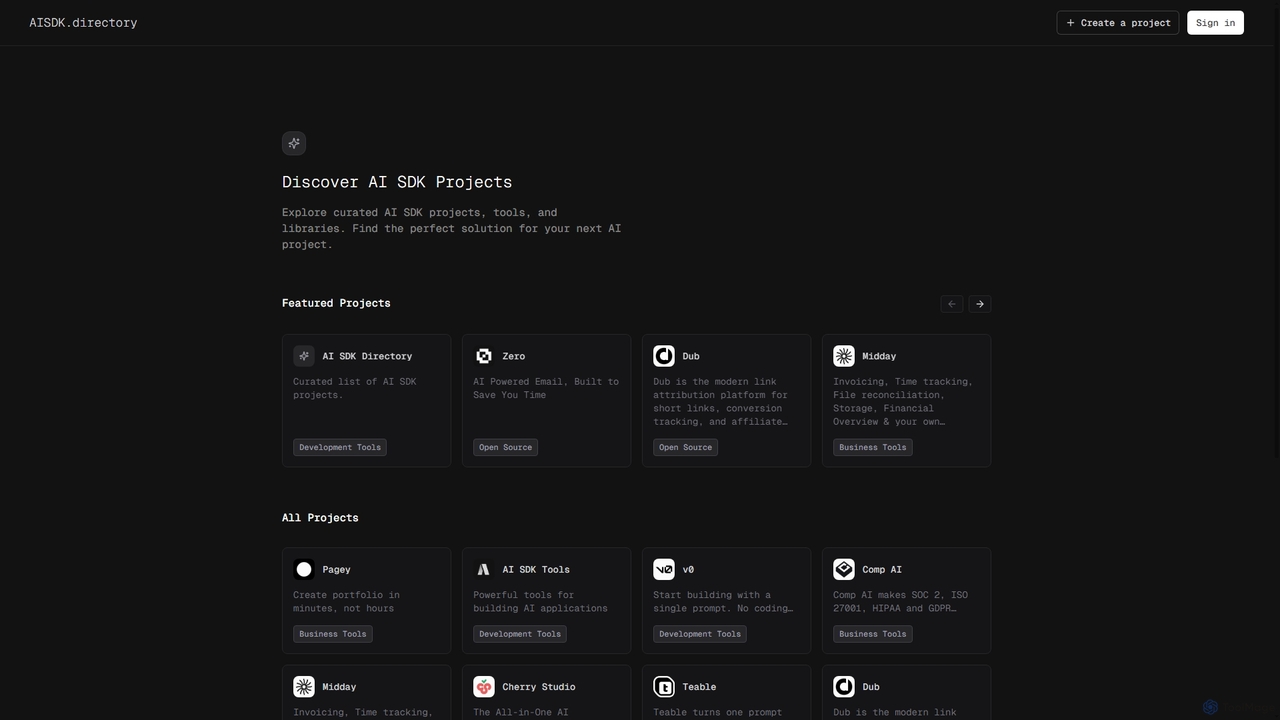
AI SDK Directory

AI SDK Directory

A curated discovery platform for developers and businesses to find the best AI SDK projects, tools, and libraries. …

2.4K
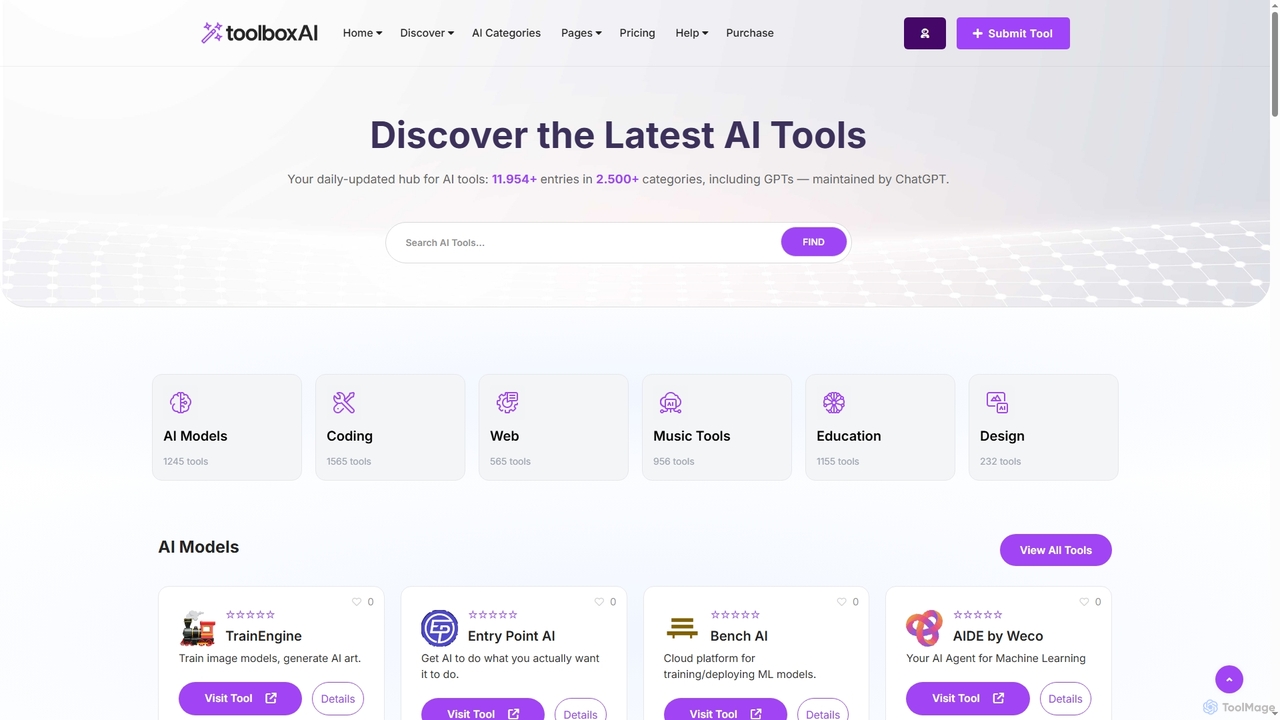
Toolbox AI

Toolbox AI

A comprehensive, daily-updated directory for discovering and comparing over 11,954 AI tools across 2,500+ categories. It offers expert …

2.1K
Free
indiefindr

indiefindr

indiefindr is a visual discovery platform that maps the global indie hacker community onto an interactive cosmic star …

2.0K
Free
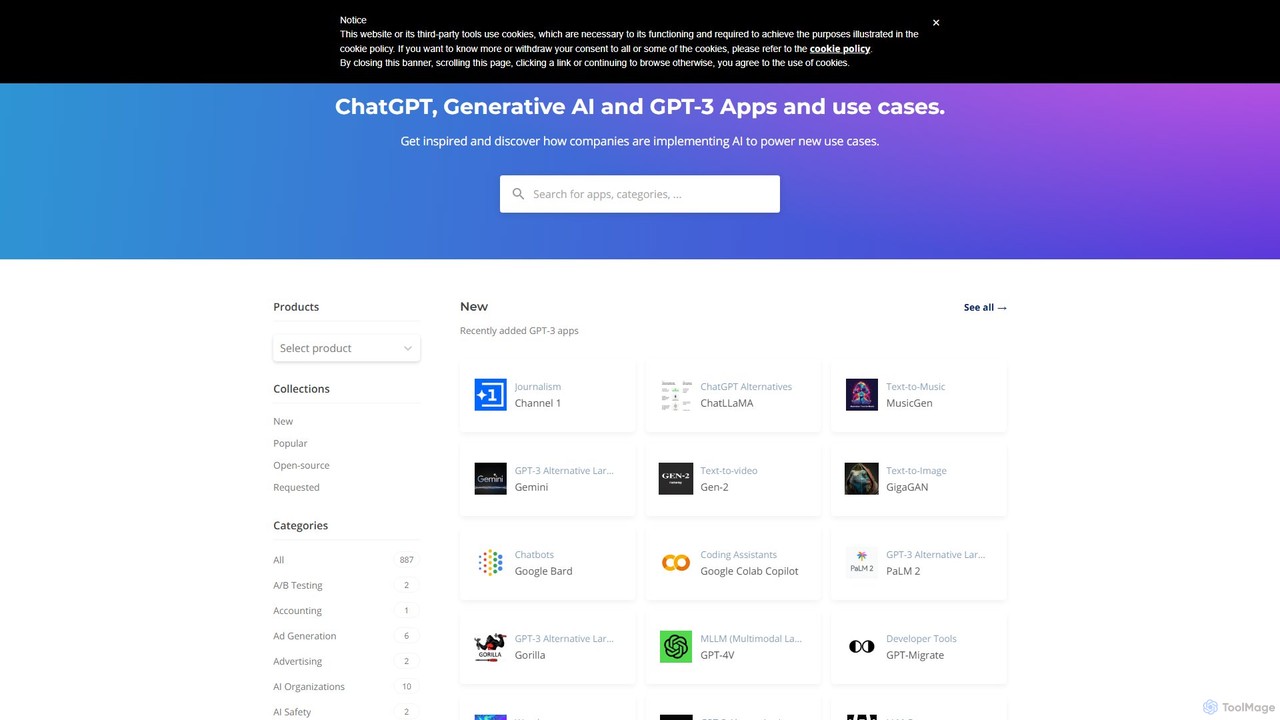
gpt3demo

gpt3demo

A comprehensive directory showcasing over 800 real-world applications, demos, and use cases of ChatGPT, GPT-3, and other generative …

56.0K

About Discovery

AI Discovery tools are a specialized category of developer utilities designed to help find, evaluate, and integrate the most suitable AI models and APIs for a project. These platforms use AI-driven semantic search and analysis to go beyond simple keyword matching, allowing developers to describe their needs in natural language. They streamline the complex process of technology selection by providing comprehensive comparisons, performance benchmarks, and pricing data. This enables development teams to make informed decisions quickly, reducing research time and accelerating the integration of AI capabilities into applications.

Core Features

  • Semantic Model & API Search: Find relevant AI services by describing functional needs, not just keywords.
  • Performance Benchmarking: Access standardized tests and real-world performance data for various models.
  • Side-by-Side Comparison: Evaluate APIs and models based on features, pricing, latency, and accuracy.
  • Integration Support: Generate code snippets and provide documentation to simplify the integration process.
  • Usage & Trend Analysis: Discover popular, emerging, or niche AI models and understand their common applications.

Use Cases

These tools are primarily used by software developers, AI engineers, and product managers during the planning and prototyping phases of a project. For instance, a mobile app developer can quickly find the most cost-effective text-to-speech API, or a data scientist can compare different computer vision models for a specific image classification task. They are essential for any team looking to leverage third-party AI without extensive in-house research.

How to Choose

When selecting an AI Discovery tool, consider the breadth and depth of its model and API catalog. Evaluate the quality of its benchmarking data and the clarity of its comparison metrics. Look for robust integration support, such as SDKs and auto-generated code. Finally, consider the platform's community features, user reviews, and update frequency to ensure the information is current and reliable.

DiscoveryUse Cases

1

Accelerating AI Feature Prototyping

A startup developer is tasked with adding a sentiment analysis feature to their new social media monitoring app. Instead of spending days researching various NLP APIs, they use an AI Discovery tool. They input their requirements: 'real-time sentiment analysis for short texts with high accuracy and a free tier.' The tool returns a comparison of three top APIs, showing latency benchmarks, pricing per 1,000 calls, and code snippets in Python. The developer can test all three integrations in a single afternoon, selecting the best-performing one and accelerating their prototype development by over 70%.

2

Optimizing AI Infrastructure Costs

A data science team at a mid-sized e-commerce company notices their monthly bill for an image recognition API is steadily increasing. The tech lead uses an AI Discovery platform to find more cost-effective alternatives. They filter models based on their specific task (product categorization) and upload a sample dataset for benchmarking. The platform provides a detailed report comparing their current API with two alternatives, highlighting one that offers 15% better accuracy at a 40% lower cost. Based on this data-driven insight, the team migrates to the new API, saving thousands of dollars monthly without sacrificing performance.

3

Technology Due Diligence for Project Planning

A product manager is planning a new feature that requires natural language understanding (NLU) to parse customer emails. Before committing development resources, they need to validate the technical feasibility and budget. Using an AI Discovery tool, they compare several NLU providers on key metrics like entity recognition accuracy, intent classification performance, and language support. The tool generates a shareable report that the product manager presents to stakeholders, providing a clear justification for selecting a specific provider and a reliable cost estimate. This due diligence process de-risks the project and ensures alignment between technical and business teams from the start.

4

Empowering Non-AI Developers with AI Capabilities

A front-end web developer wants to add an AI-powered chatbot to a client's website but has no experience with machine learning. They use an AI Discovery platform to search for 'easy-to-integrate chatbots for websites.' The platform highlights several low-code/no-code solutions, providing video tutorials, user reviews, and direct comparisons of their setup complexity. The developer chooses a service that offers a simple JavaScript snippet for integration. Within a few hours, they successfully deploy a functional chatbot, delivering advanced AI functionality to the client without needing specialized AI expertise, thus expanding their service offerings.

5

Academic Research and Model Exploration

A university researcher is working on a comparative study of different generative adversarial network (GAN) architectures for image synthesis. They use an AI Discovery platform to find and catalog various pre-trained GAN models available via APIs or open-source repositories. The platform allows them to filter models by architecture type (e.g., StyleGAN, CycleGAN), training dataset, and publication date. It also links directly to the original research papers and code repositories, creating a centralized hub for their literature review and experimental setup. This significantly streamlines the initial phase of their research, allowing them to focus more on experimentation and analysis.

6

Staying Current with Emerging AI Technologies

An AI enthusiast and developer wants to keep up with the fast-paced world of AI models. They regularly browse the 'Trending' or 'New' sections of an AI Discovery platform. This allows them to quickly learn about novel architectures, see demos of new capabilities (like advanced video generation or specialized code completion models), and understand their potential use cases. For example, they discover a new, highly efficient language model optimized for edge devices. This inspires them to start a new personal project, building a smart home assistant that runs locally, a project they wouldn't have conceived without the discovery tool's curated insights.

DiscoveryFrequently Asked Questions