ToolMage
Sign in

Best 5 Incident Management AI tools for Developer Tools

Popular Incident Management AI tools in Developer Tools include PagerDuty, Rootly, Resolve.ai, Parny, and Cirroe, helping you work more efficiently.

Rootly
Paid

Rootly

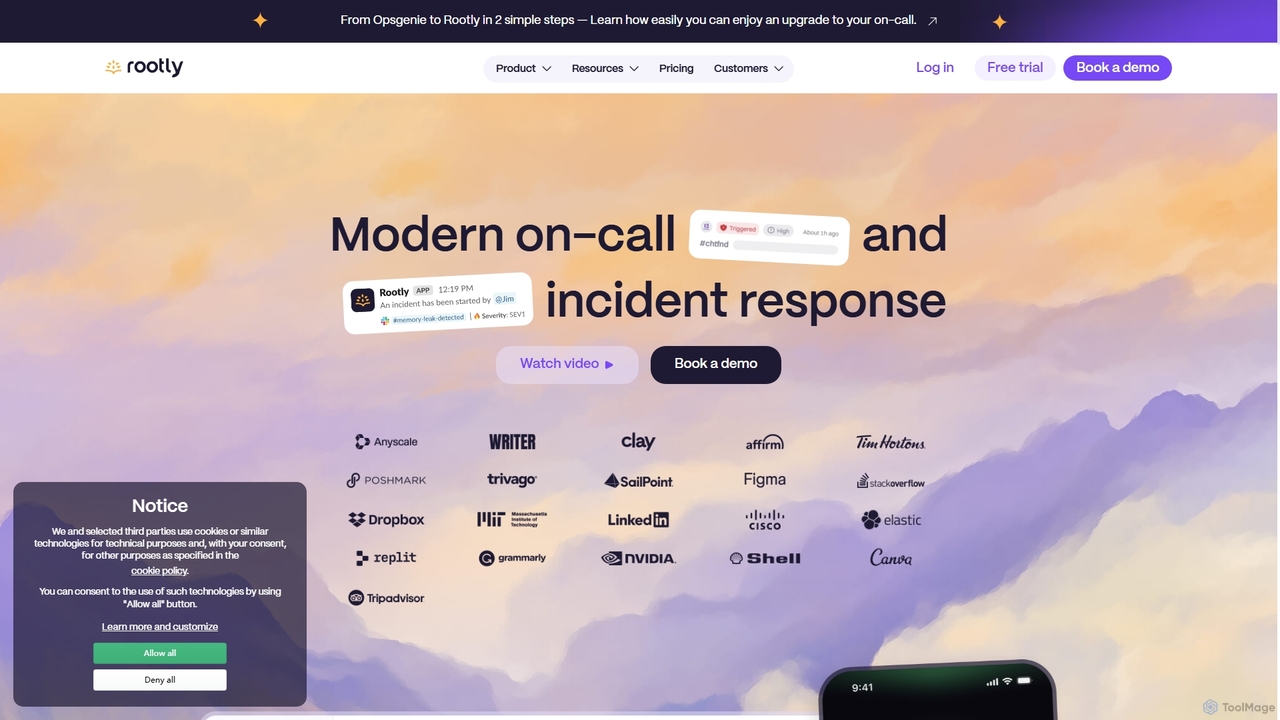
Rootly is an AI-powered, end-to-end incident management platform designed for engineering and SRE teams. It automates the entire incident lifecycle, from on-call scheduling and alert response to resolution and post-incident analysis. By integrating seamlessly with tools like Slack, Jira, and Datadog, Rootly streamlines workflows, reduces manual tasks, and helps teams resolve issues faster, ultimately improving system reliability and operational efficiency.

Incident Management
Visits 222.3KFavorites 138Likes 138
Parny
Freemium

Parny

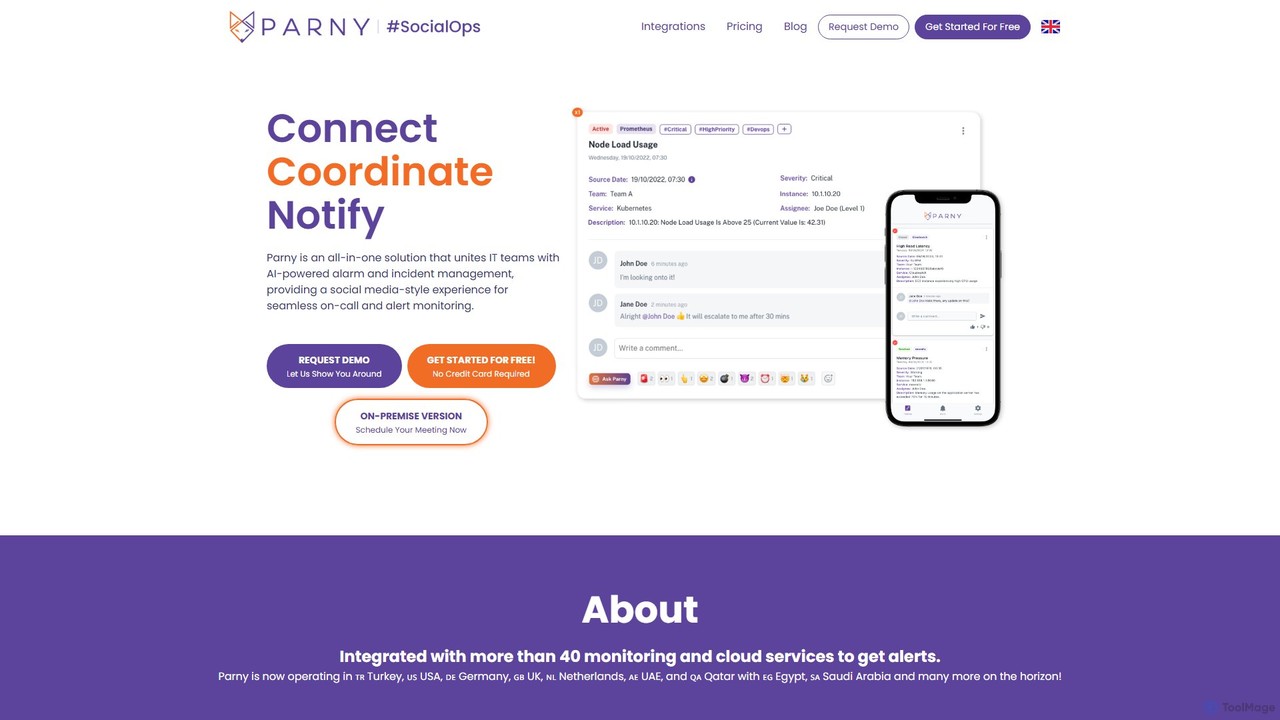
Parny is an all-in-one, AI-powered incident and on-call management platform. It unifies IT teams with a social media-style experience for seamless alert monitoring, smart scheduling, and insightful analytics, including DORA metrics. Parny serves as a powerful alternative to Opsgenie, offering advanced features like AI-driven recommendations and infrastructure mapping.

Incident Management
Visits 7.6KFavorites 140Likes 127
Resolve.ai
Paid

Resolve.ai

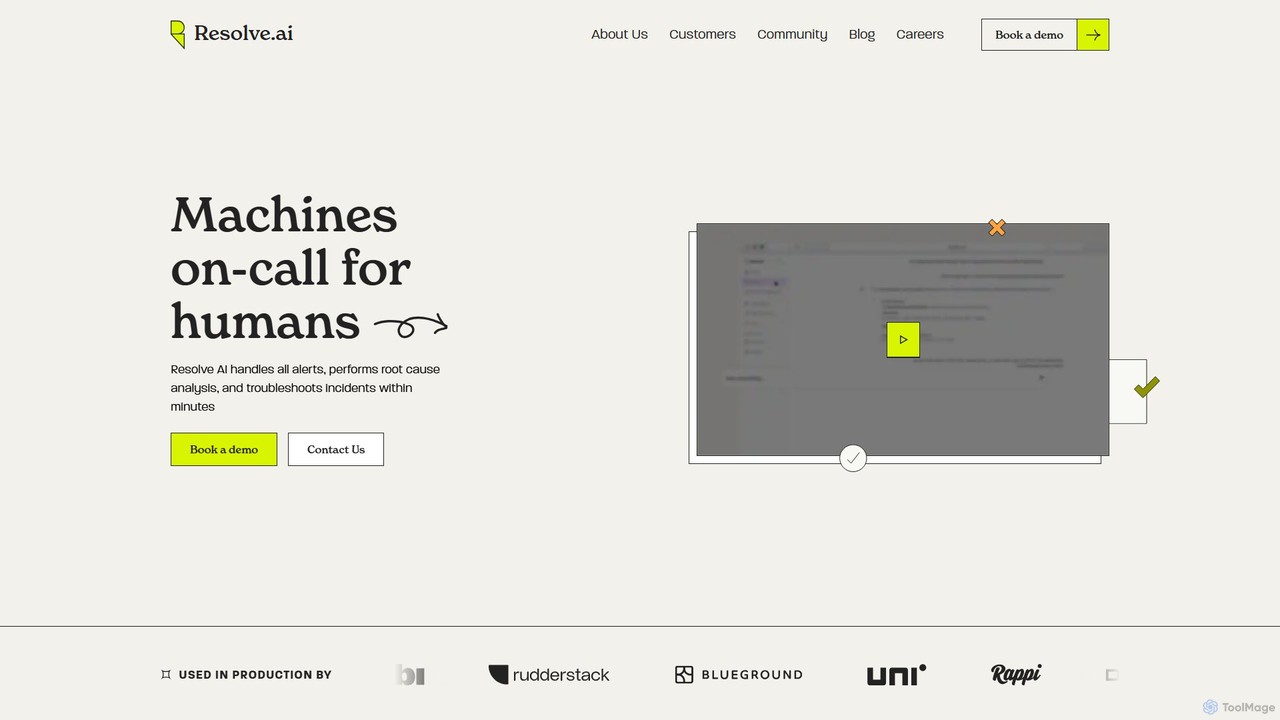
Resolve.ai is an Agentic AI SRE platform that automates incident response and root cause analysis. It acts as a virtual team member on-call, investigating alerts, testing hypotheses, and identifying issues in minutes to reduce MTTR, decrease engineer burnout, and increase system uptime.

Incident Management
Visits 89KFavorites 179Likes 159
Cirroe
Paid

Cirroe

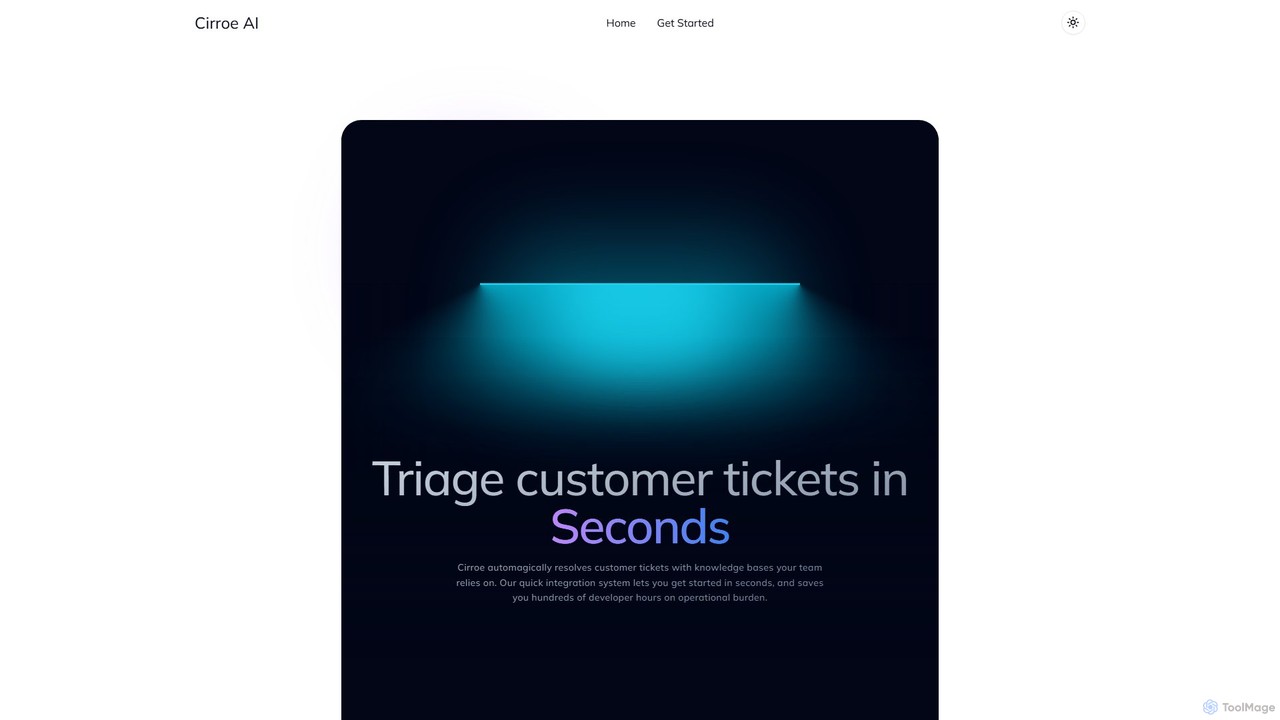
Cirroe is an AI-powered platform that automates customer support by triaging and resolving tickets in seconds. It integrates with your existing knowledge bases and helpdesks to reduce manual workload, save developer hours, and provide structured insights from operational issues.

Knowledge Management
Visits 5KFavorites 158Likes 167
PagerDuty
Freemium

PagerDuty

PagerDuty is an AI-first operations platform designed for real-time incident management and automation. It empowers DevOps, IT, and security teams to detect, triage, and resolve critical incidents faster. By leveraging AIOps and automation, PagerDuty helps reduce downtime, increase team productivity, and protect customer experiences, acting as a central hub for modern digital operations.

Incident Management
Visits 1.4MFavorites 141Likes 123

About Incident Management

AI Incident Management tools are specialized platforms within developer tools that use machine learning to automate the detection, diagnosis, and resolution of software system incidents. These tools analyze vast amounts of telemetry data—logs, metrics, and traces—to identify anomalies and predict potential issues before they impact users. Their primary value lies in drastically reducing Mean Time To Resolution (MTTR) and minimizing manual toil for on-call teams. By providing context-rich alerts and actionable insights, they empower engineers to resolve complex problems faster.

Core Features

  • Intelligent Alerting & Triage: Uses AI to group related alerts, suppress noise, and prioritize critical incidents, reducing alert fatigue.
  • Automated Root Cause Analysis (RCA): Analyzes system data to automatically pinpoint the likely cause of an incident, such as a specific code deployment or configuration change.
  • Automated Remediation Workflows: Suggests or automatically executes predefined actions (runbooks) to resolve common incidents.
  • Incident Timeline & Postmortem Generation: Automatically constructs a chronological record of events and drafts post-incident reports to facilitate learning.

Use Cases

These tools are essential for Site Reliability Engineering (SRE), DevOps, and platform engineering teams responsible for maintaining the uptime and performance of critical applications. They are widely used in tech companies, e-commerce platforms, and financial services where system reliability is paramount. For example, an on-call engineer can use it to instantly understand the blast radius of a database failure.

How to Choose

When selecting an AI Incident Management tool, consider its integration capabilities with your existing monitoring stack (e.g., Datadog, Prometheus). Evaluate the sophistication of its AI models for anomaly detection and RCA. Also, assess the flexibility of its automation and workflow features, and ensure it supports your team's collaboration channels like Slack or Microsoft Teams.

Incident Management use cases

1

Automating On-Call Alert Triage

For a Site Reliability Engineering (SRE) team managing a microservices architecture, alert fatigue is a constant challenge. An AI Incident Management tool integrates with their monitoring systems and ingests thousands of raw alerts. Instead of paging the on-call engineer for every minor fluctuation, the AI correlates related events, groups them into a single actionable incident, and suppresses low-priority noise. This means the engineer is only woken up for genuine, high-impact issues, allowing them to focus their cognitive energy on solving real problems and significantly improving their work-life balance.

2

Accelerating Root Cause Analysis

A DevOps engineer is investigating a sudden spike in API latency. Manually sifting through logs, metrics, and deployment histories from dozens of services could take hours. By using an AI Incident Management tool, the engineer sees a consolidated view where the AI has already analyzed all relevant data. The tool highlights a recent code deployment in the authentication service as the most probable cause, pointing to a specific function with increased error rates. This reduces the investigation time from hours to minutes, enabling a faster rollback and resolution.

3

Streamlining Incident Communication

During a major outage, an Incident Commander needs to coordinate efforts across multiple teams and keep stakeholders informed. An AI Incident Management tool automates this process. Upon incident declaration, it automatically creates a dedicated Slack channel, invites the on-call engineers from relevant services, and sets up a video conference bridge. It also posts real-time updates to a status page and summarizes key developments for executive stakeholders. This automation frees the Incident Commander from logistical tasks, allowing them to focus entirely on strategy and resolution.

4

Generating Actionable Postmortems

After an incident is resolved, a product team needs to conduct a postmortem to learn from the failure. Manually compiling a timeline of events, gathering chat logs, and identifying key decisions is tedious and error-prone. The AI Incident Management tool automatically generates a draft postmortem report. This report includes a precise timeline of alerts, actions taken, and key metrics during the incident. It can even suggest contributing factors and action items based on patterns from past incidents. This saves the team hours of manual work and ensures a more accurate and insightful review process.

5

Proactive Anomaly Detection

A platform engineering team wants to prevent incidents before they happen. They configure their AI Incident Management tool to monitor key performance indicators (KPIs) like database query times and memory usage. The tool's machine learning model learns the normal baseline behavior of the system. When it detects a subtle, slow-building memory leak that deviates from this baseline, it creates a low-priority ticket for the team to investigate during business hours. This proactive alert allows them to fix the underlying issue before it consumes all available memory and causes a critical outage.

6

Automating Remediation Workflows

A cloud operations team frequently deals with a known issue where a specific service needs to be restarted to clear its cache. Instead of manually performing this task each time an alert fires, they create an automated runbook in their AI Incident Management tool. Now, when the tool detects the specific alert pattern associated with this issue, it automatically triggers the runbook. The runbook securely connects to the production environment and executes the restart command. This not only resolves the issue in seconds without human intervention but also documents the action in the incident timeline for full auditability.

Incident Management FAQ

What are AI Incident Management tools?

AI Incident Management tools are advanced software platforms that use artificial intelligence and machine learning to streamline the entire lifecycle of a technical incident. They go beyond simple alerting by automatically correlating events, identifying root causes, and suggesting or automating remediation steps. Their main goal is to help DevOps and SRE teams reduce downtime and resolve issues faster by minimizing manual investigation and coordination efforts.

How to choose the right AI Incident Management tool?

Choosing the right tool depends on your specific needs. Consider these factors:

  • Integrations: Ensure it seamlessly connects with your existing monitoring, logging, and communication tools (e.g., Prometheus, Slack, Jira).
  • AI Capabilities: Evaluate the effectiveness of its alert correlation, noise reduction, and root cause analysis features. Ask for a proof of concept with your own data.
  • Automation Flexibility: Check how easily you can build and customize automated workflows (runbooks) to fit your operational processes.
  • Collaboration Features: The tool should facilitate clear communication during an incident, with features like dedicated channels, role assignments, and stakeholder updates.
What's the difference between AI Incident Management and traditional monitoring tools?

Traditional monitoring tools (like Prometheus or Nagios) are excellent at collecting data and telling you *what* is happening (e.g., 'CPU usage is at 95%'). AI Incident Management tools sit on top of this data and tell you *why* it's happening and *what to do* about it. They provide context by correlating data from multiple sources, identifying the root cause, and automating the response. In short, monitoring tools provide data, while AI Incident Management tools provide actionable intelligence.

What are the key features of AI Incident Management platforms?

Most AI Incident Management platforms share a set of core features designed to automate and accelerate incident response. Key features typically include:

  • Event Correlation: Grouping thousands of raw alerts from various systems into a single, context-rich incident.
  • Root Cause Analysis (RCA): Using machine learning to analyze changes and anomalies to pinpoint the likely source of the problem.
  • Runbook Automation: Allowing teams to define and automatically execute diagnostic or remediation steps.
  • Collaboration Hub: Integrating with tools like Slack to create dedicated incident channels and manage communication.
  • Post-Incident Reporting: Automatically generating timelines and reports to facilitate blameless postmortems.
Who benefits most from AI Incident Management tools?

While the entire organization benefits from improved reliability, certain roles see the most direct impact. These include:

  • Site Reliability Engineers (SREs): These tools are fundamental to the SRE practice of automating toil and managing reliability through service-level objectives (SLOs).
  • DevOps Teams: They help bridge the gap between development and operations by providing a shared context for troubleshooting and resolving production issues.
  • On-Call Engineers: They benefit from reduced alert fatigue, faster diagnosis, and less stress during incident response, leading to better work-life balance.
  • Engineering Managers: They gain insights into system health, team response effectiveness, and areas for reliability improvement.