Developer Tools Best in category 2 results Llm Platform AI Tool

Popular AI tools in the Llm Platform field of Developer Tools include Chai、iFlytek Spark, etc., helping you quickly improve efficiency.

iFlytek Spark

iFlytek Spark

iFlytek Spark is a comprehensive AI assistant and large language model platform by iFlytek. It excels in deep …

357.2K
Chai

Chai

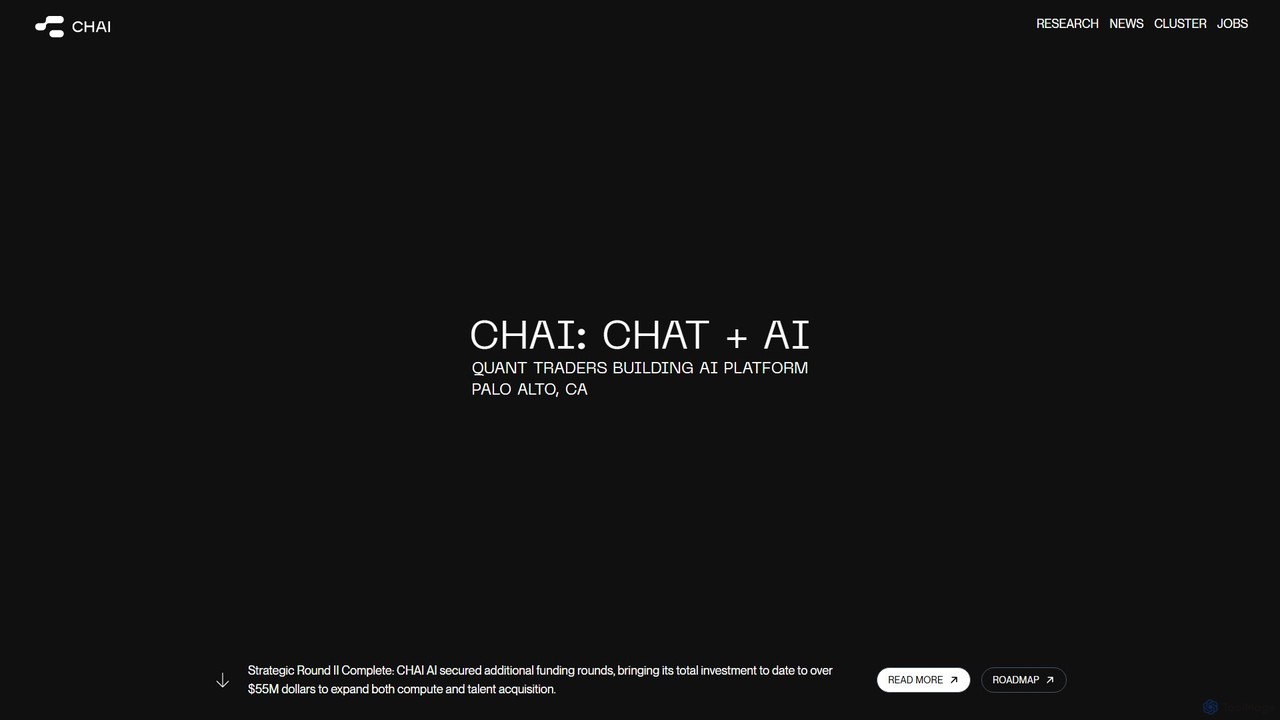
Chai is a leading conversational AI platform focused on social and entertainment-driven chatbots. It offers a vast ecosystem …

1.6M

About Llm Platform

LLM Platforms are integrated development environments designed to build, deploy, and manage applications powered by Large Language Models. They go beyond simple model APIs by providing a comprehensive suite of tools that cover the entire application lifecycle. These platforms streamline complex processes like prompt engineering, model fine-tuning, and performance evaluation, enabling developers to create robust and scalable AI solutions more efficiently. They abstract away underlying infrastructure, allowing teams to focus on application logic and user experience.

Core Features

  • Model Hub & Fine-Tuning: Access a variety of pre-trained models and tools to fine-tune them on custom datasets for specialized tasks.
  • Advanced Prompt Management: Create, test, version, and collaborate on complex prompts and prompt chains in a structured environment.
  • RAG & Vector Store Integration: Seamlessly connect with vector databases to build powerful Retrieval-Augmented Generation applications.
  • Evaluation & Observability: Monitor application performance, track token usage and costs, log interactions, and evaluate output quality.
  • Managed Deployment: Deploy LLM applications as scalable, production-ready API endpoints with minimal infrastructure management.

Use Cases

LLM Platforms are ideal for developers, AI engineers, and enterprises building sophisticated AI applications. Common use cases include creating advanced customer support chatbots with access to internal knowledge bases, developing complex content generation workflows, and building specialized internal tools for data analysis or code generation.

How to Choose

When selecting an LLM Platform, consider the range of available models (both proprietary and open-source), the ease of fine-tuning and RAG implementation, the robustness of evaluation and monitoring tools, the pricing model (e.g., pay-per-use vs. subscription), and its integration capabilities with your existing technology stack.


Llm PlatformUse Cases

1

Build a RAG-based Knowledge Base Bot

A support team lead uses an LLM Platform to create an internal support bot. They connect the platform to their company's knowledge base (e.g., Confluence or Notion) via a vector store integration. Using the platform's tools, they build a system where the bot can retrieve relevant document snippets and use an LLM to generate accurate, context-aware answers to employee questions about HR policies or IT issues. This reduces the manual workload on the support team and provides instant answers 24/7.

2

A/B Test Prompts for a Marketing Campaign

A marketing operations specialist needs to generate high-converting ad copy. Using an LLM Platform, they create two different prompt variations for the same campaign. The platform's evaluation module allows them to run both prompts against a test dataset and compare the outputs based on metrics like clarity, brand voice adherence, and predicted engagement. This data-driven approach helps them select the most effective prompt before launching the full campaign, optimizing marketing spend and performance.

3

Fine-tune a Model for Legal Document Analysis

A legal tech firm needs an AI tool to summarize complex legal contracts. A standard LLM often misses industry-specific nuances. Using an LLM Platform, their AI engineers upload a curated dataset of legal documents and their summaries. They then use the platform's guided fine-tuning workflow to train a base model (like Llama 3) to better understand legal jargon. The resulting specialized model provides significantly more accurate and relevant summaries than a generic one.

4

Deploy and Scale a Production AI Feature

A software developer has built a new AI-powered feature for their application. Instead of building and managing their own server infrastructure, they use an LLM Platform to deploy it. With a few clicks, they package their logic into a managed API endpoint. The platform automatically handles scaling based on traffic, provides a dashboard for monitoring latency and error rates, and manages API keys for secure access. This accelerates the time-to-market from weeks to just a few hours.

5

Manage Costs and Performance of Multiple LLMs

An enterprise AI team uses several different LLMs (e.g., from OpenAI, Anthropic, and Google) across various applications. An LLM Platform provides a centralized dashboard for observability. They can monitor the token consumption, cost, and latency for each model and application in real-time. This allows them to identify costly or inefficient queries, set budgets, and make informed decisions about which model is best suited for each task, optimizing both performance and cost.

6

Develop Complex, Multi-Step AI Agents

An AI engineer is tasked with creating an autonomous agent that can research a topic, write a draft report, and then create a presentation. This requires chaining multiple LLM calls and integrating with external tools (like web search). An LLM Platform provides a visual or code-based environment for building these complex agentic workflows. They can define each step, handle logic branching, and debug the entire process, making the development of sophisticated agents far more manageable and reliable.

Llm PlatformFrequently Asked Questions