Developer Tools Best in category 1 results Model Aggregator AI Tool

Popular AI tools in the Model Aggregator field of Developer Tools include FreedomGPT, etc., helping you quickly improve efficiency.

FreedomGPT

FreedomGPT

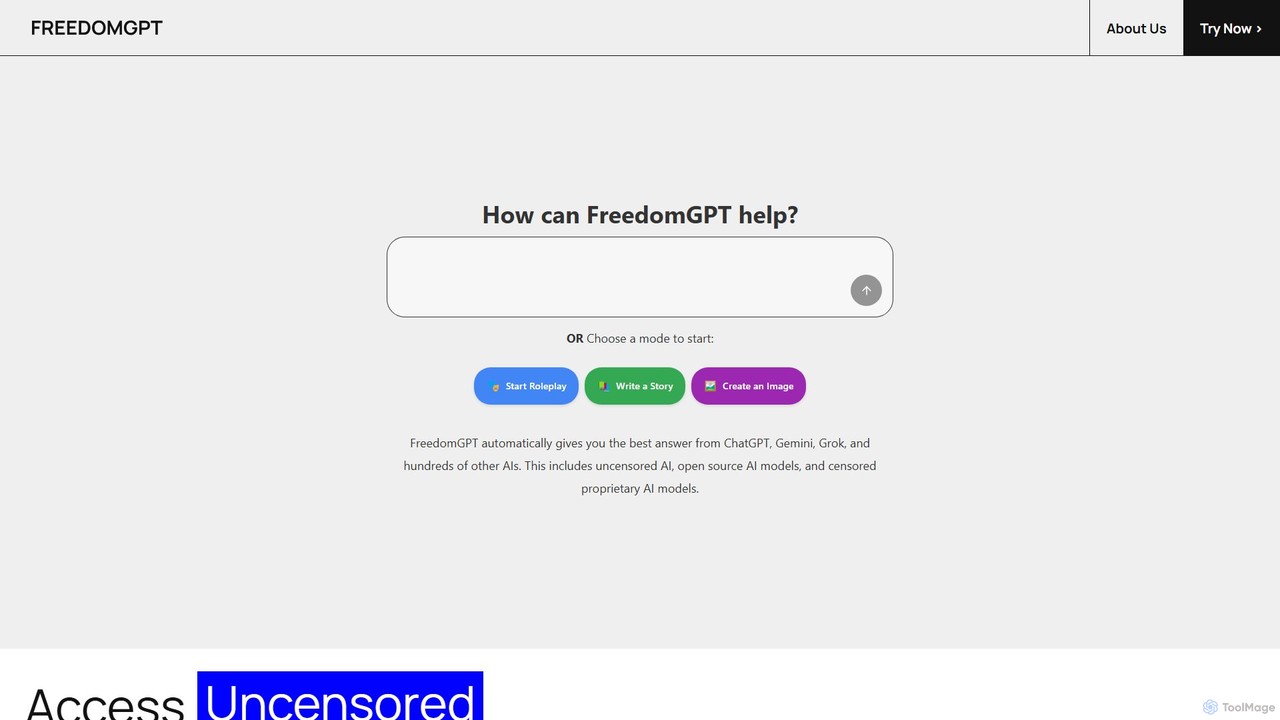
FreedomGPT is an AI App Store that provides private and uncensored access to over 400 of the world's …

396.0K

About Model Aggregator

Model Aggregators are specialized developer tools that integrate, manage, and orchestrate multiple artificial intelligence models, often from diverse providers or for different tasks, through a single, unified interface or API. These platforms act as an intelligent routing layer, enabling dynamic selection, chaining, and optimization of AI models based on specific application needs. By abstracting away the complexities of individual model APIs, Model Aggregators empower developers to build more flexible, resilient, and cost-effective AI-powered applications. They are essential for leveraging the best-of-breed models without vendor lock-in, streamlining the development workflow for complex AI solutions.

Core Features

  • Unified API Access: Provides a single endpoint to interact with various AI models, simplifying integration.
  • Dynamic Model Routing: Automatically selects the most suitable model based on criteria like cost, performance, or input type.
  • Model Chaining & Orchestration: Enables sequential execution of multiple models to achieve complex multi-step tasks.
  • Fallback & Redundancy: Configures backup models to ensure continuous service even if a primary model fails.
  • Cost & Performance Optimization: Helps manage inference costs and latency by intelligently choosing models.

Use Cases

Model Aggregators are primarily used by MLOps engineers, AI solution architects, and developers building advanced AI applications. They are ideal for scenarios requiring the combination of different AI capabilities, such as integrating a large language model with a specialized image analysis model, or dynamically switching between translation models based on language pair and cost. This allows for the creation of sophisticated AI agents and services that are robust and adaptable to varying demands.

How to Choose

When selecting a Model Aggregator, consider the range of supported AI models and providers, the ease of integration with your existing infrastructure, and the flexibility of its routing and orchestration capabilities. Evaluate its performance overhead, cost management features, and scalability to handle anticipated workloads. Additionally, assess the availability of monitoring tools, logging, and fallback mechanisms to ensure reliability and maintainability of your AI applications.

Model AggregatorUse Cases

1

Dynamic AI Agent Development

An AI solution architect needs to build a conversational agent that can understand natural language, generate text, and perform image analysis. Using a Model Aggregator, they can combine a large language model (LLM) for conversation, a specialized image recognition model for visual queries, and a text-to-speech model for voice output. The aggregator dynamically routes user inputs to the appropriate model, creating a seamless multi-modal experience and reducing integration complexity.

2

Cost-Optimized Inference Routing

A startup offers an AI-powered content generation service and wants to minimize operational costs while maintaining quality. They use a Model Aggregator to route text generation requests to different LLM providers. For high-volume, less critical tasks, the aggregator selects a more affordable model, while premium or complex requests are directed to a higher-cost, higher-quality model. This strategy allows for significant cost savings without compromising service quality for key clients.

3

Enhanced AI Application Resilience

An MLOps team manages a critical AI-driven fraud detection system that relies on multiple specialized models. To ensure continuous operation, they implement a Model Aggregator with robust fallback mechanisms. If the primary fraud detection model from one provider experiences downtime or performance degradation, the aggregator automatically switches to a backup model from another provider. This ensures uninterrupted service and maintains the integrity of their financial transactions.

4

Multi-Modal Content Analysis

A media monitoring company needs to analyze news articles, social media posts, and video content for sentiment and key topics. They leverage a Model Aggregator to combine an NLP model for text sentiment analysis, a computer vision model for object detection in images/videos, and a speech-to-text model for transcribing audio. The aggregator orchestrates these models to provide a comprehensive, multi-modal understanding of media trends, offering deeper insights to clients.

5

A/B Testing & Model Experimentation

A product development team wants to evaluate the performance of different recommendation algorithms or sentiment analysis models in a live environment without disrupting user experience. They use a Model Aggregator to split incoming requests, routing a percentage to a new experimental model and the rest to the current production model. This enables controlled A/B testing, allowing the team to gather real-world data and make informed decisions about model deployment and optimization.

6

Streamlined AI Model Lifecycle Management

An enterprise AI team frequently updates and deploys new versions of their machine learning models. A Model Aggregator simplifies this process by providing a centralized control plane. Developers can easily swap out old model versions for new ones, manage different model endpoints, and roll back changes if issues arise, all without modifying the core application code. This accelerates deployment cycles and reduces the risk associated with model updates.

Model AggregatorFrequently Asked Questions