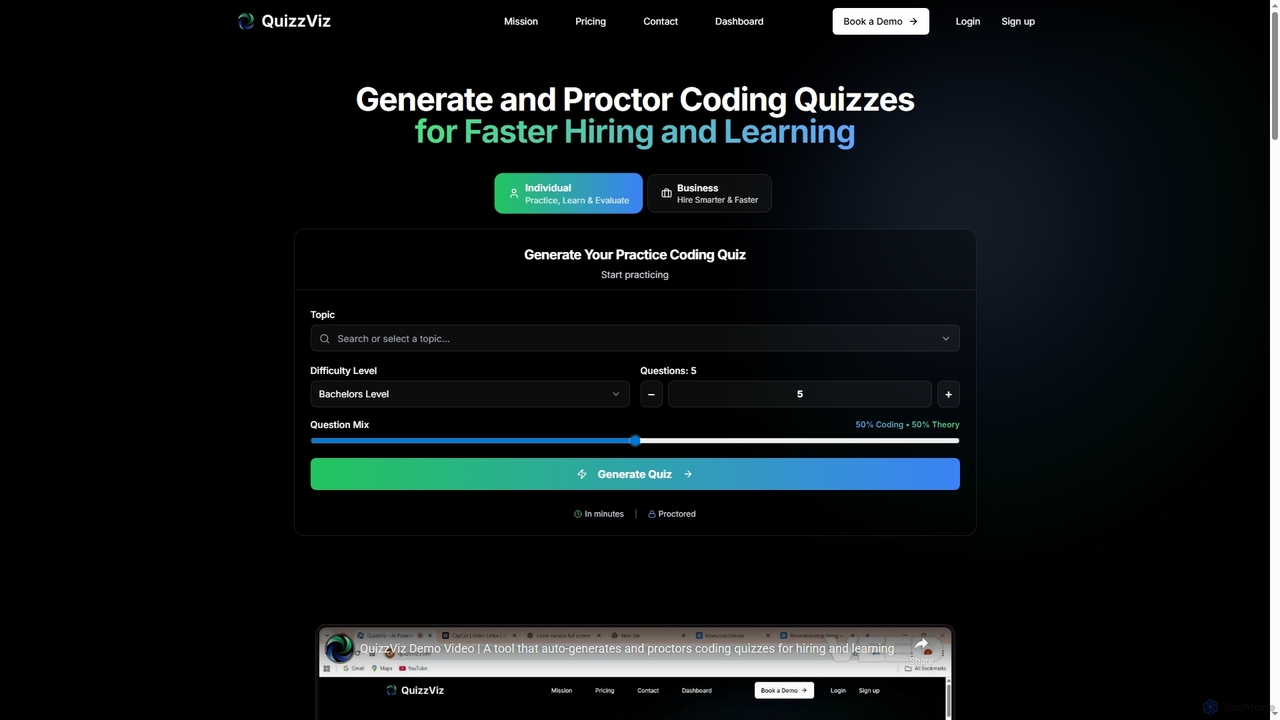
Quiz Generation tools are AI-powered platforms designed to automatically create quizzes, tests, and assessments from various forms of input, such as text, documents, or specified topics. Leveraging advanced natural language processing (NLP) and machine learning algorithms, these tools analyze content to identify key information, formulate relevant questions, and generate diverse answer formats. They significantly streamline the process of content creation for educators, trainers, and developers building learning applications, enabling rapid development of engaging and effective knowledge checks.
Core Features
- Automated Question Generation: Instantly creates multiple-choice, true/false, fill-in-the-blank, or open-ended questions from provided text or topics.
- Content Analysis & Summarization: Processes large volumes of information to extract key concepts and summarize content for quiz creation.
- Difficulty Level Adjustment: Allows users to specify the desired complexity of questions, catering to different learning levels.
- Customizable Quiz Formats: Offers flexibility in quiz structure, question types, and scoring mechanisms to suit specific assessment needs.
- Multilingual Support: Generates quizzes in various languages, expanding reach for global learning initiatives.
Applicable Scenarios
These tools are invaluable for educators creating course materials, corporate trainers developing employee assessments, and content creators needing interactive elements. Developers integrate quiz generation APIs into e-learning platforms or custom training modules to automate content delivery. They are also used by marketers for interactive campaigns and by HR for pre-employment testing, ensuring efficient and scalable knowledge assessment across diverse fields.
How to Choose
When selecting an AI quiz generator, consider the range of supported input formats (text, URL, document), the variety of question types it can produce, and its accuracy in content interpretation. Evaluate customization options for quiz structure and branding, integration capabilities with existing learning management systems (LMS) or development environments, and the availability of multilingual support. Finally, assess pricing models and the tool's ability to handle specific difficulty levels or subject matter complexity.