
RecoFeed
RecoFeed is a developer-focused tool for creating personalized recommendation feeds. It utilizes an on-device vector database, CloseVector, to …
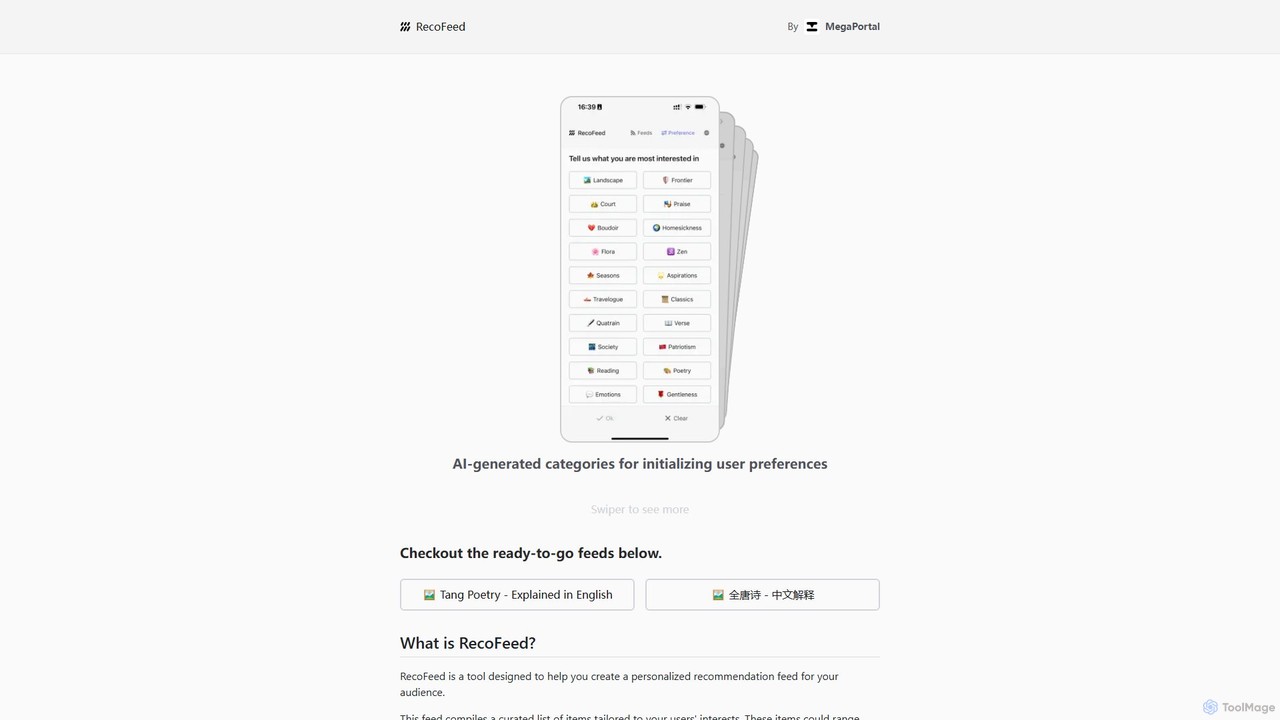
RecoFeed is a developer-focused tool for creating personalized recommendation feeds. It utilizes an on-device vector database, CloseVector, to generate real-time suggestions locally on the user's device, ensuring maximum data privacy and low latency. It's designed for apps and websites across various sectors like e-commerce, content platforms, and social media.
About Recommendation Engine
A Recommendation Engine is a developer tool that uses algorithms and data analysis to predict and suggest items a user might find interesting. These systems analyze user behavior, item attributes, and interactions through techniques like collaborative filtering and content-based filtering. Their primary purpose is to deliver personalized content, products, or services, significantly enhancing user experience, increasing engagement, and driving conversions. As part of the developer toolset, they typically offer APIs or SDKs for seamless integration into applications like e-commerce sites, streaming platforms, and news portals.
Core Features
- Personalization Algorithms: Utilizes models like collaborative filtering, content-based filtering, and hybrid approaches to tailor suggestions.
- Real-time Processing: Adapts recommendations instantly based on a user's current actions and session data.
- Item & User Data Integration: Ingests and processes various data types, including user profiles, item metadata, and interaction logs (clicks, purchases).
- A/B Testing & Analytics: Provides dashboards to measure the performance of different recommendation strategies and their impact on key metrics.
- Scalable API: Offers a robust API that can handle high volumes of requests for integration into large-scale applications.
Use Cases
Recommendation Engines are crucial for businesses that rely on user engagement and discovery. They are widely implemented in e-commerce to suggest products, in media streaming services to recommend movies or music, and in content platforms to surface relevant articles or videos. Online learning platforms also use them to suggest courses tailored to a student's learning path.
How to Choose
When selecting a Recommendation Engine, evaluate the types of algorithms offered and their suitability for your data. Consider its scalability to handle your user base and traffic. Assess the ease of integration by reviewing API documentation and available SDKs. Also, examine the analytics capabilities for performance tracking and the pricing model's alignment with your usage patterns.
Recommendation EngineUse Cases
Personalize E-commerce Product Feeds
An e-commerce manager for an online fashion retailer needs to increase average order value and customer retention. By integrating a recommendation engine API, they can automatically display personalized product carousels on the homepage, product pages, and in the shopping cart. The engine analyzes a user's browsing history, past purchases, and items added to their cart to generate relevant suggestions like 'You might also like' or 'Frequently bought together'. This leads to improved product discovery, a more engaging shopping experience, and a measurable uplift in cross-sells and upsells.
Enhance Content Discovery on Streaming Platforms
A product manager at a video streaming service aims to reduce churn by keeping users engaged. They use a recommendation engine to power the 'Recommended for You' and 'Similar Titles' sections. The system processes viewing history, user ratings, genre preferences, and even time of day to suggest relevant movies and TV shows. By continuously surfacing content that aligns with a user's taste, the platform increases session duration and the likelihood of subscription renewal. The engine can also be used to promote new or original content to the most receptive audience segments.
Suggest Relevant Articles for News Portals
A digital editor for an online news publication wants to increase page views per session. They implement a recommendation engine at the bottom of each article to suggest other relevant stories. The engine uses content-based filtering, analyzing the keywords, topics, and categories of the current article to find similar ones in their database. It can also use collaborative filtering to show 'Trending stories' or articles popular among readers with similar interests. This strategy effectively creates a continuous reading journey, keeping visitors on the site longer and exposing them to more content and ad impressions.
Automate Music Playlist Curation
A developer building a music streaming app wants to offer a hyper-personalized listening experience. They integrate a recommendation engine to create dynamic playlists like 'Discover Weekly' or 'Your Daily Mix'. The engine analyzes listening history, skipped tracks, liked songs, and genre preferences. It uses collaborative filtering to find new music enjoyed by users with similar tastes and content-based filtering to find songs with similar acoustic features. This automation saves users the effort of manual playlist creation and introduces them to new artists, fostering loyalty and daily active use.
Guide Learning Paths on EdTech Platforms
An instructional designer for an online learning platform wants to improve course completion rates. They use a recommendation engine to suggest the next logical course or module for a student. The system considers the student's completed courses, performance on quizzes, stated career goals, and the learning paths of other successful students. By providing a clear, personalized roadmap, the platform helps learners stay motivated and on track. This not only improves student outcomes but also increases the lifetime value of each user by encouraging enrollment in further courses.
Suggest Connections on Social & Professional Networks
A product team at a professional networking site wants to accelerate network growth and user interaction. They employ a recommendation engine to power the 'People You May Know' feature. The engine analyzes a user's profile data, existing connections, company, industry, and group memberships. It then identifies second or third-degree connections with high relevance, such as former colleagues, alumni, or professionals in similar roles. By facilitating relevant new connections, the platform becomes more valuable to the user, encouraging them to engage more frequently with the network.