ToolMage
Sign in

Best 2 Resources AI tools for Developer Tools

Popular Resources AI tools in Developer Tools include AI Valley and SaaS Library, helping you work more efficiently.

SaaS Library
Paid

SaaS Library

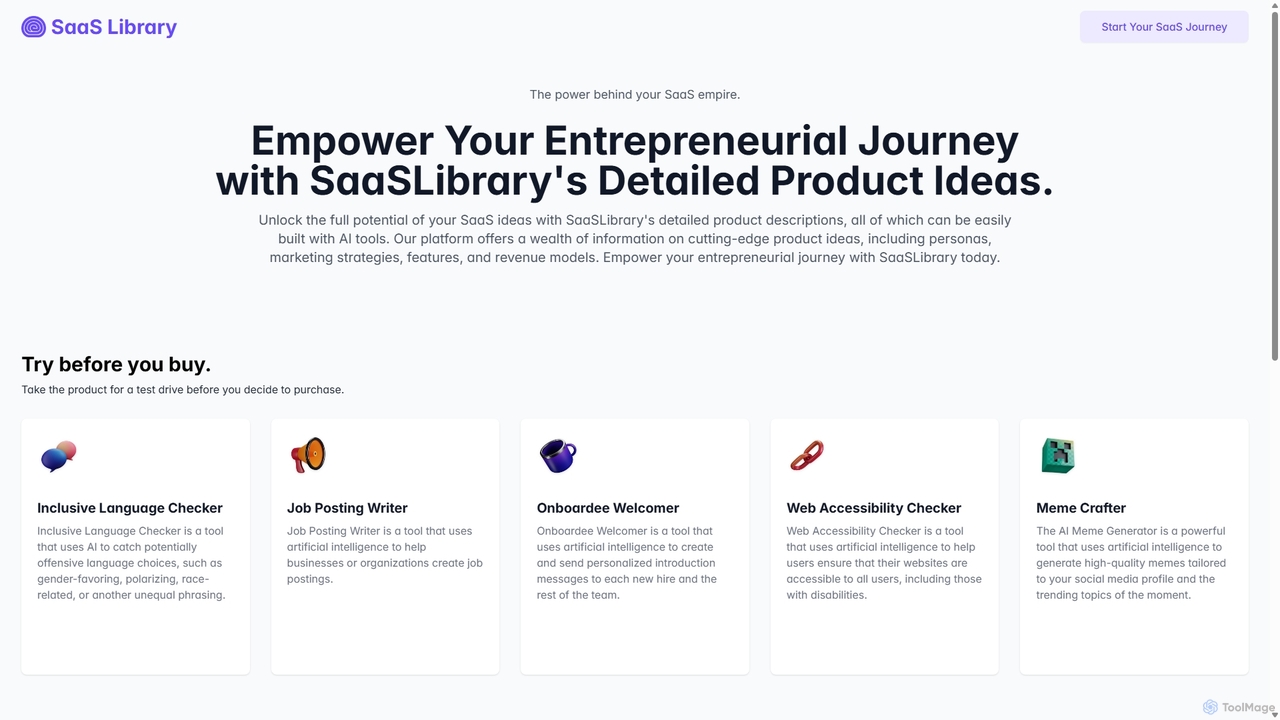
SaaS Library is a comprehensive database for entrepreneurs and product managers, offering over 100 detailed SaaS product ideas. Each idea includes target personas, feature recommendations, market analysis, and revenue models. It also features a suite of AI-powered micro-tools to accelerate your SaaS journey from concept to launch.

Startup Ideas
Visits 3.7KFavorites 97Likes 97
AI Valley
Free

AI Valley

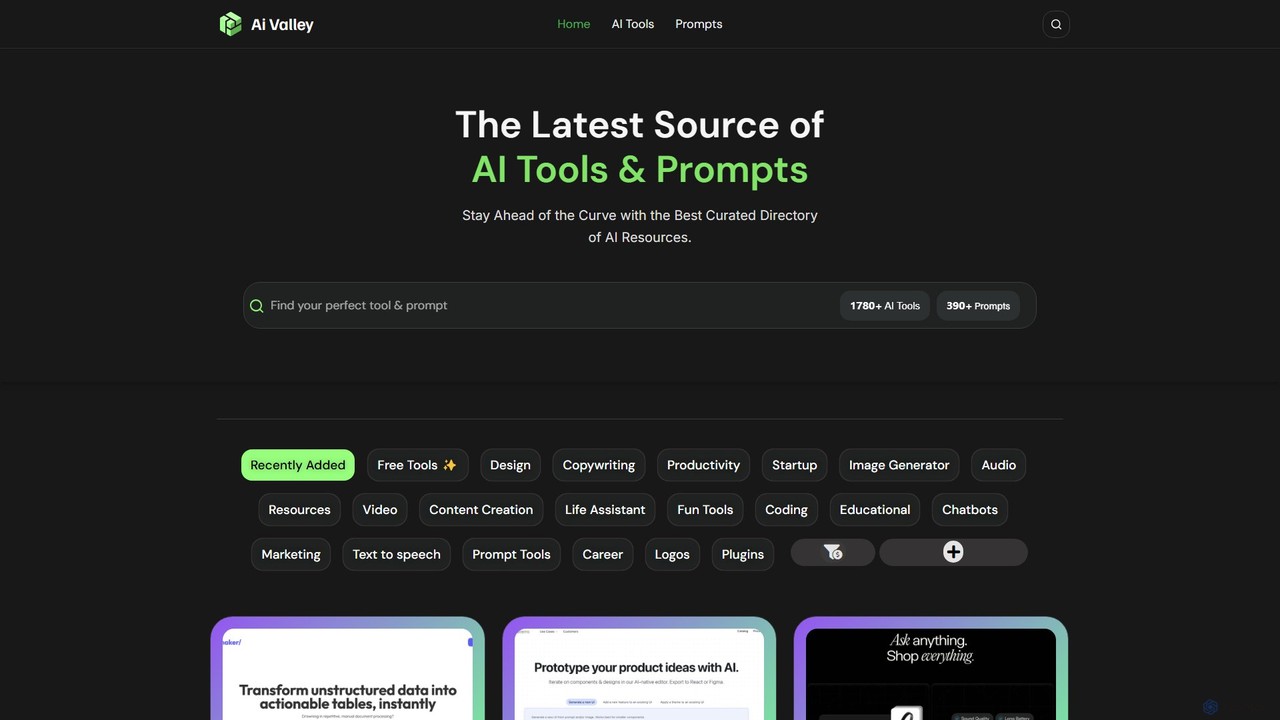
AI Valley is a comprehensive directory and discovery platform for AI tools and prompts. It offers a curated collection of over 1,700 AI tools and 390+ prompts across various categories like design, productivity, and content creation. The platform aims to help users stay ahead of the curve by providing a centralized, easy-to-navigate resource for finding the best AI solutions for any use case, complete with user reviews and detailed information.

Resources
Visits 226.1KFavorites 108Likes 126

About Resources

AI Resources are curated collections of pre-built components, data, and documentation designed to accelerate the development and integration of artificial intelligence functionalities. These resources provide developers with essential building blocks, from powerful APIs and SDKs to specialized datasets and pre-trained models, enabling them to efficiently implement complex AI features without starting from scratch. They significantly reduce development time and effort, fostering innovation across various applications.

Core Features

  • APIs & SDKs: Offer programmatic access to AI models and services, simplifying integration into applications.
  • Pre-trained Models: Provide ready-to-use AI models for common tasks like image recognition or natural language processing.
  • Specialized Datasets: Curated collections of data essential for training, validating, and testing custom AI models.
  • Code Libraries & Snippets: Reusable code modules and examples that streamline the implementation of AI algorithms and features.
  • Comprehensive Documentation: Detailed guides, tutorials, and reference materials for understanding and utilizing AI tools and services effectively.

Applicable Scenarios

Developers leverage AI Resources across various stages of their projects. For instance, a startup might use pre-trained models and APIs for rapid prototyping of an intelligent chatbot, while an enterprise data science team could utilize specialized datasets to fine-tune a custom recommendation engine. These resources are also crucial for integrating advanced AI capabilities like sentiment analysis or object detection into existing software platforms, significantly enhancing their functionality and user experience.

How to Choose

When selecting AI Resources, consider several key factors. Evaluate the resource's compatibility with your existing tech stack and development environment to ensure seamless integration. Assess the performance and scalability of APIs or models to meet your application's demands. Review the licensing terms and cost structure, especially for commercial use. Finally, check for comprehensive documentation and community support, which are vital for troubleshooting and long-term maintenance.

Featured tool rankings

Resources use cases

1

Rapid Prototyping with AI APIs

A startup developer needs to quickly build a proof-of-concept for an intelligent customer support chatbot. By leveraging pre-built AI APIs for natural language understanding and generation, they can integrate core conversational capabilities within days, significantly reducing the initial development time and allowing for faster iteration and validation of their product idea with minimal coding effort.

2

Training Custom AI Models with Datasets

A data scientist in an e-commerce company aims to build a highly accurate product recommendation engine tailored to their unique customer base. They utilize specialized AI datasets, often curated from industry-specific sources or public repositories, to train a custom machine learning model. This approach allows for fine-tuning the model with relevant data, leading to more precise recommendations and improved customer engagement compared to generic models.

3

Integrating Computer Vision Features

A software engineer developing a smart security camera system needs to add object detection capabilities. Instead of building a computer vision model from scratch, they leverage pre-trained AI models and SDKs available as resources. This allows them to quickly integrate features like human detection or vehicle identification into their application, reducing development complexity and time while ensuring robust performance.

4

Leveraging Code Libraries for AI Algorithms

A developer working on a new recommendation system wants to implement a specific machine learning algorithm but lacks the time to code it from scratch. By utilizing open-source AI code libraries, they can quickly integrate optimized implementations of algorithms like collaborative filtering or deep learning models. This significantly accelerates the development process, allowing them to focus on application logic rather than low-level algorithm implementation.

5

Enhancing Existing Applications with AI

An enterprise software team wants to add predictive analytics capabilities to their existing CRM system. Instead of building a complex machine learning pipeline, they integrate an AI resource that provides a pre-trained model for customer churn prediction via an API. This allows them to enhance their application with intelligent features, providing valuable insights to sales and marketing teams without extensive internal AI development.

6

Staying Updated with AI Documentation

An AI developer needs to implement the latest best practices for deploying machine learning models securely and efficiently. They regularly consult comprehensive AI documentation and tutorials provided by leading platforms and open-source communities. This ensures they stay updated with new techniques, optimize their deployment strategies, and adhere to industry standards, ultimately leading to more robust and maintainable AI solutions.

Resources FAQ

What are AI Resources for developers?

AI Resources for developers are collections of pre-built tools, data, and documentation that streamline the integration and development of AI functionalities. They typically include APIs, SDKs, pre-trained models, specialized datasets, and code libraries. These resources empower developers to add complex AI features like natural language processing or computer vision to their applications more efficiently, reducing the need to build everything from scratch.

How do AI Resources differ from general Developer Tools?

While both AI Resources and general Developer Tools aid in software creation, AI Resources specifically focus on components and data tailored for artificial intelligence applications. General developer tools might include IDEs, version control systems, or testing frameworks. AI Resources, however, provide specialized elements like pre-trained neural networks, large language model APIs, or domain-specific datasets, directly enabling AI-driven features, whereas general tools offer broader development support.

What types of AI Resources are most commonly used?

The most commonly used AI Resources include APIs and SDKs from major cloud providers (e.g., Google Cloud AI, AWS AI/ML), offering services like vision, speech, and natural language processing. Pre-trained models for common tasks are also highly popular, as are specialized datasets for training custom models. Additionally, open-source AI frameworks (like TensorFlow or PyTorch) and their associated code libraries are fundamental resources for many developers.

How can AI Resources accelerate my development process?

AI Resources significantly accelerate development by providing ready-to-use components, eliminating the need to build complex AI models or gather vast datasets from scratch. Developers can integrate pre-trained models or APIs for common tasks, saving months of research and development. This allows teams to focus on unique application logic and user experience, bringing AI-powered features to market much faster and with less specialized expertise required.

What should I consider when choosing AI Resources?

When selecting AI Resources, prioritize compatibility with your existing tech stack and development environment to ensure smooth integration. Evaluate the performance, scalability, and reliability of the resource, especially for production-level applications. Consider the licensing terms, cost implications, and data privacy policies. Finally, assess the quality of documentation, the availability of community support, and the vendor's reputation for long-term viability and assistance.