ToolMage
Sign in

Best 1 Roadmapping AI tools for Developer Tools

Popular Roadmapping AI tools in Developer Tools include Eververse, helping you work more efficiently.

Eververse
Freemium

Eververse

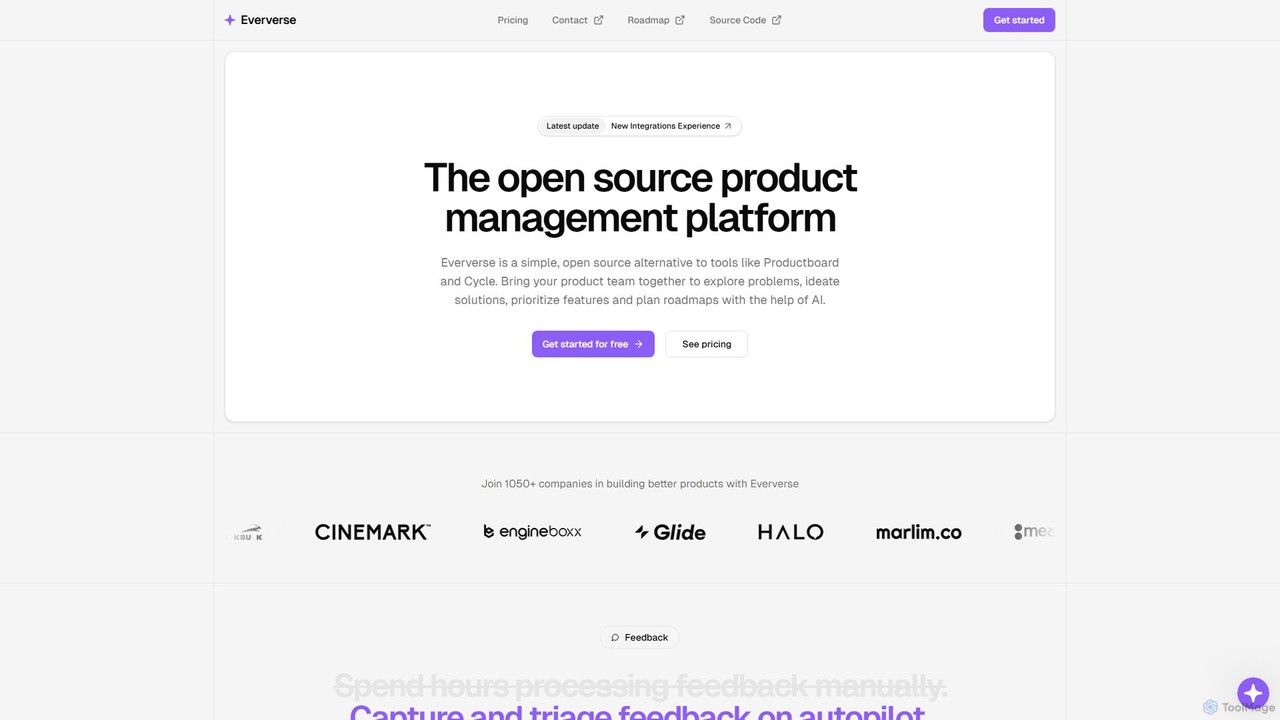
Eververse is an AI-powered, open-source product management platform designed to streamline your workflow. It helps teams analyze user feedback, prioritize features with AI-driven scoring, and build collaborative roadmaps at lightspeed. A powerful alternative to tools like Productboard and Cycle.

Product Management
Visits 3.5KFavorites 88Likes 87

About Roadmapping

Roadmapping AI tools are specialized platforms that leverage artificial intelligence to streamline the creation, management, and communication of product and project development strategies. These tools analyze data to assist with feature prioritization, dynamic timeline generation, and resource allocation, enabling teams to build clear, adaptable visual roadmaps. They empower product managers and development teams to align stakeholders, anticipate challenges, and maintain a strategic focus on long-term goals within the broader developer ecosystem.

Core Features

  • AI-driven Prioritization: Automatically ranks features or initiatives based on predefined criteria, user feedback, and business impact.
  • Dynamic Timeline Generation: Creates and adjusts project timelines in real-time, considering dependencies, resource availability, and potential risks.
  • Scenario Planning & Simulation: Models different development paths and their potential outcomes, helping teams make informed strategic decisions.
  • Automated Reporting & Communication: Generates clear, concise roadmap summaries and updates for various stakeholders, improving transparency.
  • Feedback Integration & Analysis: Gathers and analyzes user feedback or market data to inform roadmap decisions and identify emerging trends.

Use Cases

Product managers utilize these tools to define and communicate their product vision, prioritizing features based on market demand and business value. Development leads employ them to visualize project dependencies and allocate engineering resources effectively. Strategic planners leverage AI roadmapping to align company-wide initiatives with overarching business objectives, ensuring a cohesive long-term strategy.

How to Choose

When selecting an AI roadmapping tool, consider its integration capabilities with existing project management and development platforms. Evaluate the depth of its AI features, such as automated prioritization algorithms and predictive analytics. Assess its visualization options for clarity and customizability, and ensure it supports collaborative features for effective stakeholder communication. Finally, review its scalability to accommodate future team and project growth.

Featured tool rankings

Roadmapping use cases

1

Automating Product Feature Prioritization

Product managers use AI roadmapping to analyze user feedback, market trends, and business goals, automatically ranking potential features for development. This ensures resources are focused on high-impact initiatives, accelerating product-market fit and reducing manual prioritization effort.

2

Dynamic Project Timeline Adjustment

Development teams leverage these tools to create flexible project timelines that automatically adapt to unforeseen delays or scope changes. The AI predicts potential impacts on delivery dates and suggests adjustments, helping maintain realistic expectations and efficient resource allocation.

3

Strategic Portfolio Planning for Enterprises

Enterprise strategists employ AI roadmapping to visualize and align multiple product lines or departmental initiatives with overarching company objectives. The tools help identify interdependencies, resource conflicts, and strategic gaps, ensuring a cohesive and optimized business portfolio.

4

Communicating Development Vision to Stakeholders

Project leads utilize AI roadmapping to generate clear, interactive visual roadmaps tailored for different audiences, from engineering teams to executive leadership. This fosters transparency, secures buy-in, and ensures everyone understands the strategic direction and progress.

5

Resource Allocation Optimization for Engineering Teams

Engineering managers use AI-powered roadmaps to model resource requirements for upcoming features and projects. The tools help identify potential bottlenecks, optimize team assignments, and forecast hiring needs, ensuring efficient utilization of developer talent.

6

Predictive Risk Assessment in Software Development

Software development teams integrate AI roadmapping to identify potential risks and dependencies early in the planning phase. The AI analyzes historical project data and current variables to flag areas of concern, allowing proactive mitigation strategies to be put in place, minimizing disruptions.

Roadmapping FAQ

What are AI Roadmapping tools?

AI Roadmapping tools are software platforms that use artificial intelligence to assist in the strategic planning, visualization, and management of product or project development. They go beyond traditional roadmapping by offering features like automated prioritization, dynamic timeline adjustments, and predictive analytics to optimize planning processes.

How do AI Roadmapping tools differ from standard project management software?

While standard project management software focuses on task tracking and execution, AI Roadmapping tools emphasize strategic planning and future vision. They leverage AI for data-driven prioritization, scenario modeling, and predictive insights, whereas traditional tools primarily manage current tasks and schedules without advanced strategic intelligence.

What are the key benefits of using AI for roadmapping?

Key benefits include enhanced decision-making through data-driven insights, improved resource allocation, dynamic adaptation to changes, and clearer communication with stakeholders. AI helps teams prioritize effectively, anticipate challenges, and maintain strategic alignment, leading to more successful product and project outcomes.

Who typically uses AI Roadmapping tools?

AI Roadmapping tools are primarily used by product managers, project managers, development leads, engineering managers, and executive leadership. They are valuable for anyone involved in defining, planning, or overseeing the strategic direction and execution of product development or large-scale projects.

What should I look for when choosing an AI Roadmapping solution?

When choosing, consider the tool's AI capabilities (e.g., prioritization algorithms, predictive analytics), integration with your existing tech stack (e.g., Jira, GitHub), visualization options, collaboration features, and scalability. Also, evaluate its user interface for ease of use and its reporting functionalities for stakeholder communication.