ToolMage
Sign in

Best 2 Robotics AI tools for Developer Tools

Popular Robotics AI tools in Developer Tools include phospho and Polymath Robotics, helping you work more efficiently.

Polymath Robotics

Polymath Robotics

Polymath Robotics provides a modular software platform to accelerate the development of autonomy for off-highway industrial vehicles. Its software-first, vehicle-agnostic approach simplifies automation for sectors like agriculture, mining, logistics, and defense, making it faster and more cost-effective to deploy autonomous fleets.

Industrial Automation
Visits 8.5KFavorites 140Likes 135
phospho
Paid

phospho

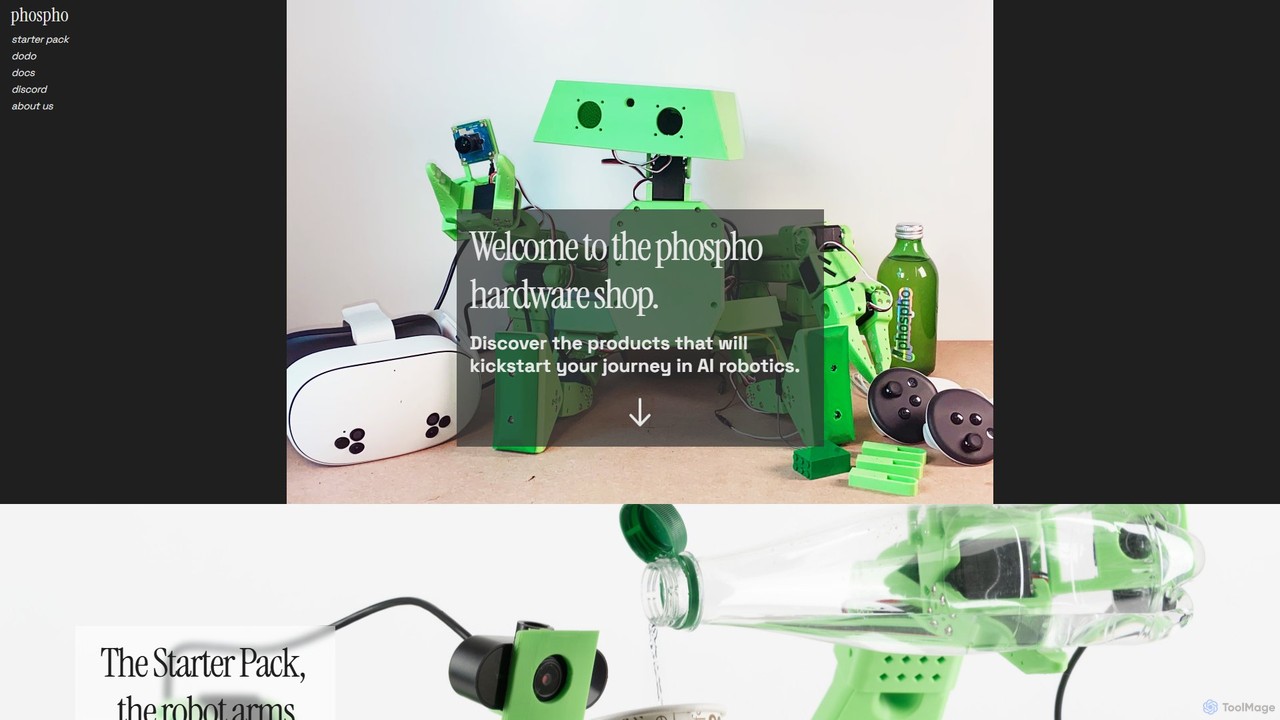
phospho is an AI robotics company providing an integrated ecosystem of open-source hardware and software. It offers starter kits like robotic arms and walking robots, powered by the phosphobot platform, to make advanced physical AI accessible for developers, researchers, and hobbyists.

Machine Learning
Visits 22.7KFavorites 105Likes 121

About Robotics

Robotics AI tools are specialized platforms and software designed to integrate artificial intelligence capabilities into robotic systems. These tools leverage machine learning, computer vision, and advanced algorithms to enable robots to perceive, learn, reason, and adapt to complex environments. They are crucial for developing intelligent automation solutions, enhancing robot autonomy, and expanding the scope of robotic applications beyond traditional pre-programmed tasks.

Core Features

  • AI-driven Motion Planning: Enables robots to generate optimal, collision-free paths and manipulate objects efficiently in dynamic environments.
  • Perception & Object Recognition: Utilizes computer vision and sensor fusion to allow robots to accurately identify, locate, and understand objects and their surroundings.
  • Human-Robot Interaction (HRI): Facilitates natural communication and collaboration between humans and robots through voice, gesture, and intent recognition.
  • Reinforcement Learning for Control: Allows robots to learn optimal control policies through trial and error, adapting to new tasks and unpredictable situations.
  • Robotics Simulation & Digital Twins: Provides virtual environments for designing, testing, and optimizing AI-powered robotic systems before physical deployment.

Use Cases

These tools are indispensable for engineers, researchers, and developers building the next generation of intelligent robots. They are applied in industrial automation for flexible manufacturing, in logistics for autonomous mobile robots (AMRs) and automated guided vehicles (AGVs), and in service robotics for enhanced human interaction and task execution.

How to Choose

When selecting Robotics AI tools, consider the compatibility with existing hardware and software, the robustness of simulation environments, the ease of integrating machine learning models, the availability of pre-trained AI components, and the support for various programming languages and robotic operating systems (ROS).


Featured tool rankings

Robotics use cases

1

Optimizing Industrial Robot Assembly Paths

A manufacturing engineer uses AI-driven motion planning tools to analyze production data and automatically generate the most efficient, collision-free paths for robotic arms on an assembly line. This reduces cycle times, minimizes wear and tear, and adapts quickly to product variations, significantly boosting factory throughput and operational efficiency.

2

Developing Autonomous Navigation for Logistics Robots

Robotics developers integrate AI perception and navigation algorithms into autonomous mobile robots (AMRs) for warehouse logistics. The AI enables robots to dynamically map their environment, detect and avoid obstacles (including moving humans), and plan optimal routes for material transport, ensuring safe and efficient operation in complex, changing environments.

3

Enhancing Human-Robot Collaboration in Healthcare

A healthcare robotics team employs AI tools to develop service robots capable of natural human-robot interaction. Using natural language processing and gesture recognition, these robots can understand patient requests, assist with tasks like fetching supplies, and provide companionship, improving patient care and staff efficiency in hospitals and elder care facilities.

4

Simulating Complex Robotic Systems for Research

Researchers utilize advanced AI robotics simulation platforms to design and test novel robot architectures and control strategies in a virtual environment. This allows for rapid prototyping, experimentation with reinforcement learning algorithms for complex tasks, and validation of safety protocols without the need for expensive physical prototypes, accelerating innovation in robotics.

5

Implementing Predictive Maintenance for Robotic Arms

Factory maintenance managers deploy AI-powered analytics tools that monitor sensor data from industrial robotic arms, such as vibration, temperature, and motor current. The AI identifies subtle anomalies and predicts potential component failures before they occur, enabling proactive maintenance scheduling, minimizing downtime, and extending the lifespan of critical robotic assets.

6

AI-driven Robotic Grasping and Manipulation

Logistics and e-commerce companies use AI computer vision and deep learning models to train robotic arms for precise grasping and manipulation of diverse, irregularly shaped items. The AI allows robots to adapt to new objects without explicit programming, improving efficiency in order-fulfillment centers by automating tasks like picking, packing, and sorting.

Robotics FAQ

What are Robotics AI tools?

Robotics AI tools are software and platforms that infuse artificial intelligence capabilities into robotic systems. They enable robots to perform tasks with greater autonomy, adaptability, and intelligence by leveraging technologies like machine learning, computer vision, and natural language processing. These tools move robots beyond simple pre-programmed actions to dynamic, learning-based behaviors.

How do AI Robotics tools differ from traditional robotics software?

Traditional robotics software primarily relies on explicit programming and rule-based logic for predefined tasks in structured environments. In contrast, AI Robotics tools empower robots with the ability to learn from data, perceive their surroundings intelligently, make autonomous decisions, and adapt to unstructured or changing conditions. This shift allows for more flexible, robust, and intelligent robotic applications.

What are the key functions of AI in robotics?

AI provides several core functions in robotics. These include enhanced perception (e.g., object recognition, scene understanding via computer vision), intelligent decision-making (e.g., path planning, task allocation), learning capabilities (e.g., reinforcement learning for new skills), natural human-robot interaction (e.g., voice commands, gesture interpretation), and predictive analytics for maintenance.

How can I choose the right AI Robotics platform for my project?

When selecting an AI Robotics platform, consider its compatibility with your existing robotic hardware and operating system (like ROS). Evaluate its simulation capabilities for testing, the ease of integrating custom AI models, the availability of pre-built AI components (e.g., for vision or NLP), and the level of community or vendor support. Scalability and safety features are also crucial.

What are the main benefits of integrating AI into robotics?

Integrating AI into robotics offers significant benefits, including increased autonomy, allowing robots to operate with minimal human intervention. It enhances adaptability, enabling robots to handle variations and unexpected situations. AI improves efficiency through optimized task execution and predictive maintenance, and it unlocks new applications in complex, dynamic environments that were previously impossible for traditional robots.