ToolMage
Sign in

Best 1 Talent Platform for Developer Tools

Popular Talent Platform in Developer Tools include Bolto, helping you work more efficiently.

Bolto
Paid

Bolto

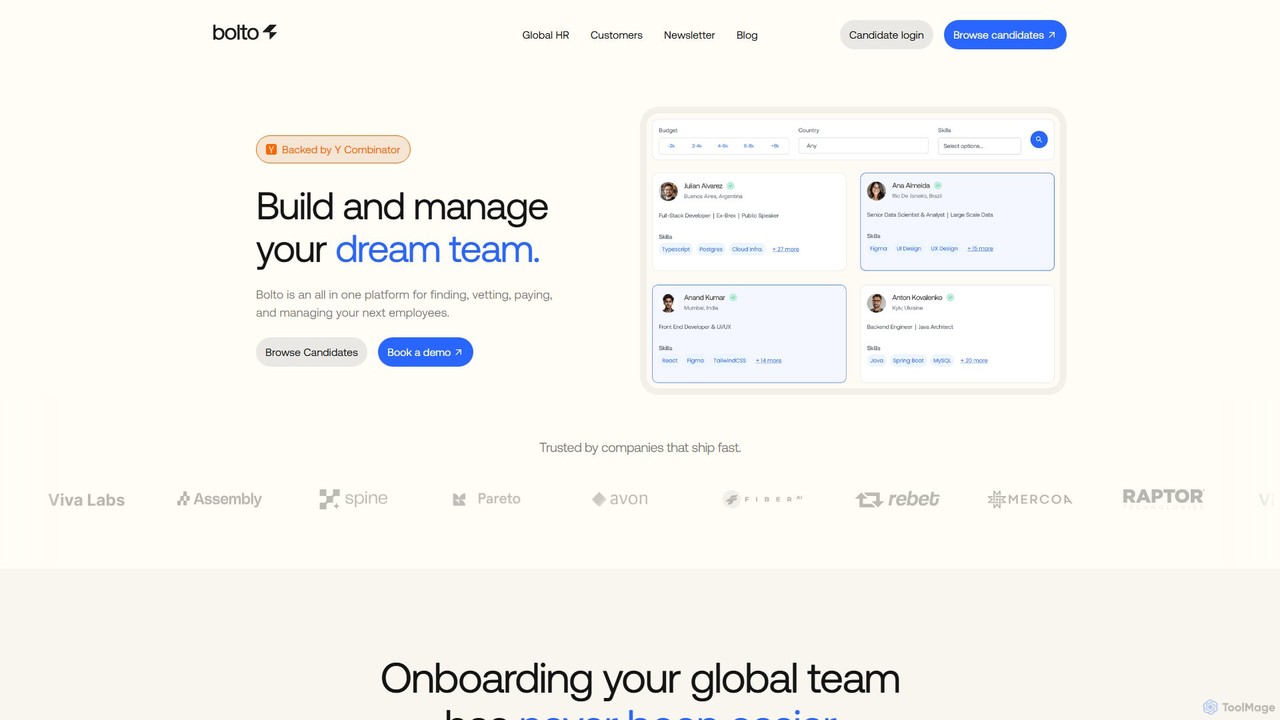
Bolto is an AI-powered, all-in-one platform designed to simplify and accelerate the process of hiring, onboarding, and managing global software developers. It uses AI to source, vet, and match candidates, handling everything from interviews and contracts to payroll and compliance.

Talent Platform
Visits 25.1KFavorites 97Likes 85

About Talent Platform

AI Talent Platforms are specialized developer tools that use artificial intelligence to connect companies with vetted technical professionals. These platforms leverage machine learning algorithms to analyze candidate skills, experience, and code repositories, going beyond simple keyword matching. They streamline the entire technical hiring lifecycle, from sourcing and screening to assessment and matching, enabling organizations to build high-performing engineering teams more efficiently. The primary value lies in improving hiring accuracy, reducing time-to-hire, and accessing a global pool of qualified talent.

Core Features

  • AI-Powered Matching: Utilizes algorithms to match candidates to roles based on deep analysis of technical skills, project experience, and cultural fit.
  • Automated Skill Assessment: Provides integrated coding challenges, technical tests, and project simulations to objectively verify candidate abilities.
  • Intelligent Talent Sourcing: Proactively identifies and engages passive and active candidates from diverse sources like GitHub, Stack Overflow, and professional networks.
  • Vetted Talent Pools: Offers access to curated communities of pre-screened developers, engineers, and data scientists with verified expertise.
  • Hiring Process Automation: Streamlines administrative tasks such as interview scheduling, communication, and feedback collection.

Use Cases

These platforms are essential for technology companies, from startups scaling their engineering teams to large enterprises seeking specialized contractors. HR departments and hiring managers use them to automate the top of the hiring funnel, ensuring only qualified candidates proceed. They are also valuable for companies building remote or distributed teams by providing a standardized method for assessing global talent.

How to Choose

When selecting an AI Talent Platform, evaluate the quality and specialization of its talent pool—does it align with your tech stack? Examine the depth and relevance of its skill assessment methods. Consider its integration capabilities with your existing Applicant Tracking System (ATS) and HR software. Finally, analyze the pricing model, whether it's a subscription fee, a percentage of salary per hire, or a platform usage fee, to ensure it aligns with your budget and hiring volume.

Featured tool rankings

Talent Platform use cases

1

Scale a Startup Engineering Team

A Chief Technology Officer (CTO) at a fast-growing startup needs to hire five senior backend engineers with specific expertise in Go and Kubernetes within one quarter. Instead of relying on manual sourcing, the CTO uses an AI Talent Platform. The platform's AI analyzes the job requirements and scans its vetted talent pool, shortlisting 20 highly relevant candidates in days. Integrated coding assessments automatically screen for technical proficiency, allowing the hiring team to focus their interview time on the top 8 candidates, successfully filling all roles in under six weeks.

2

Find Niche Freelance Expertise for a Project

A project manager at a digital agency needs a freelance Web3 developer for a three-month contract to build a decentralized application (dApp). Finding verified talent in this niche is challenging. The manager uses an AI Talent Platform specializing in emerging technologies. They post the project, and the platform's AI matches it with pre-vetted freelancers who have a portfolio of successful dApp projects. The platform facilitates contract negotiation and payment, ensuring a secure and efficient process to onboard the right expert within a week.

3

Automate Technical Screening for High-Volume Roles

A large tech corporation receives hundreds of applications for its junior software engineer positions. The HR team is overwhelmed with manually screening resumes and conducting initial technical calls. They integrate an AI Talent Platform with their ATS. The platform automatically sends a standardized coding challenge to every applicant who meets the basic criteria. It then scores the submissions based on correctness, efficiency, and code quality, providing the hiring team with a ranked list of candidates. This automates over 80% of the initial screening effort, freeing up recruiters to focus on engaging with top-tier talent.

4

Build a Diverse and Global Remote Team

A company committed to diversity and inclusion wants to build a remote-first engineering team by hiring from a global talent pool. Using a traditional approach could introduce unconscious bias. They adopt an AI Talent Platform that offers anonymized profiles and objective, skills-based assessments. The platform sources candidates worldwide and presents them to hiring managers based solely on their technical test scores and project portfolio, with personal identifiers removed. This approach helps the company reduce bias, access a wider range of talent, and build a more diverse and innovative team.

5

Execute a Short-Term Machine Learning Project

A data science team needs to quickly onboard two Machine Learning engineers for a six-month project on natural language processing (NLP). The permanent hiring process is too slow. The team lead turns to an AI Talent Platform that has a dedicated pool of AI/ML specialists. They filter for engineers with proven experience in PyTorch and transformer models. The platform provides access to candidates' public code repositories and project case studies, allowing the lead to quickly assess the quality of their work. They identify, interview, and contract two highly qualified engineers within two weeks, accelerating the project timeline significantly.

6

Provide Career Opportunities for Vetted Developers

A senior software developer is looking for new contract opportunities that match her skills in cloud architecture and DevOps. Instead of browsing generic job boards, she joins a specialized AI Talent Platform. She completes a rigorous vetting process, including a technical interview and a coding challenge, which verifies her expertise. The platform's AI then proactively matches her profile with high-quality, long-term projects from top tech companies that are specifically looking for her skill set. This saves her time and connects her directly with relevant, well-paid opportunities.

Talent Platform FAQ

What is an AI Talent Platform?

An AI Talent Platform is a type of developer tool that uses artificial intelligence to streamline the process of hiring technical talent. Unlike traditional job boards, these platforms actively match candidates to roles using algorithms that analyze skills, experience, and even code quality. They often include features like automated technical assessments, candidate vetting, and intelligent sourcing to help companies find and hire qualified developers, engineers, and data scientists more efficiently and accurately.

How do AI Talent Platforms differ from traditional job boards like LinkedIn?

The key difference lies in their approach: proactive matching versus passive listing. Traditional job boards are like classified ads where companies post jobs and hope the right candidates apply. AI Talent Platforms are more like matchmaking services. They use AI to:

  • Actively match: They suggest candidates to companies (and vice-versa) based on deep skill analysis, not just keywords.
  • Verify skills: They often include built-in coding tests and technical assessments to prove a candidate's ability, whereas job boards rely on self-reported skills.
  • Curate talent: Many platforms have a vetted, exclusive pool of talent, ensuring a higher quality of candidates compared to the open-for-all nature of job boards.

Who should use an AI Talent Platform?

AI Talent Platforms are beneficial for several groups:

  • Tech Companies & Startups: Especially those needing to scale their engineering teams quickly with high-quality, vetted talent.
  • HR & Recruitment Teams: To automate the top of the hiring funnel, reduce manual screening, and improve the quality of candidates sent to hiring managers.
  • Hiring Managers: To gain direct access to a pool of technically proficient candidates and reduce the time spent on unqualified interviews.
  • Skilled Developers & Freelancers: To find high-quality, relevant job or project opportunities without sifting through countless irrelevant listings on generic boards.

How do I choose the right AI Talent Platform?

To choose the right platform, consider these factors:

  • Talent Pool Specialization: Does the platform specialize in the technologies you need (e.g., AI/ML, Web3, mobile development)? Check the quality and depth of their talent pool.
  • Vetting Process: Understand how they assess and verify talent. Look for platforms with rigorous technical tests, portfolio reviews, and interviews.
  • Integration: Ensure it can integrate with your existing tools, such as your Applicant Tracking System (ATS), for a seamless workflow.
  • Pricing Model: Compare costs. Models can range from monthly subscriptions to a percentage-based success fee for each hire. Choose one that aligns with your hiring frequency and budget.

Can these platforms help reduce hiring bias?

Yes, many AI Talent Platforms are designed specifically to help reduce unconscious bias in the hiring process. They achieve this through features like:

  • Anonymized Profiles: Hiding personal information such as name, gender, and age from initial profiles, allowing recruiters to focus solely on skills and experience.
  • Objective Assessments: Using standardized coding challenges and technical tests to evaluate all candidates on the same objective criteria.
  • Data-Driven Matching: Relying on algorithms to match candidates based on qualifications, which can mitigate the influence of human biases in sourcing and screening.
By standardizing evaluation, these platforms promote a more merit-based and equitable hiring process.