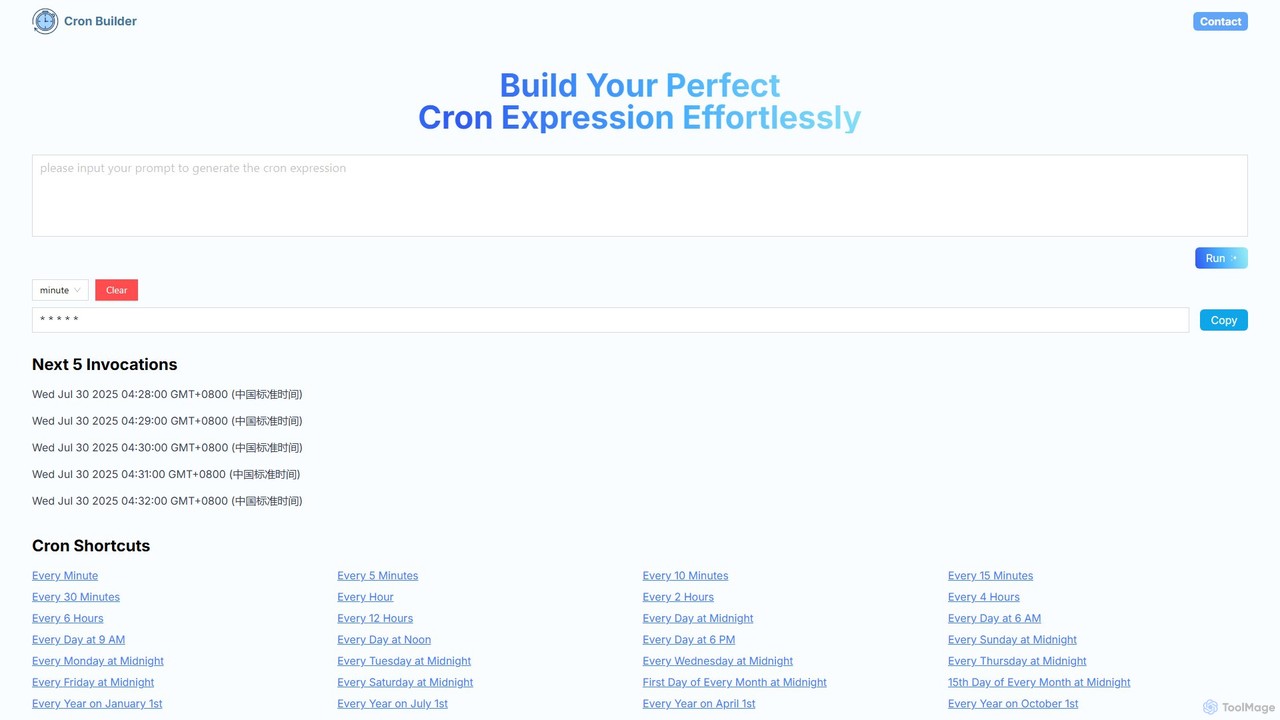
Task Scheduling tools are essential developer platforms designed to automate the execution of code, scripts, and processes at specified times or triggered by events. Many modern solutions integrate AI to optimize resource allocation, predict potential failures, and adapt schedules dynamically. These tools are crucial for maintaining operational efficiency, automating data pipelines, and streamlining complex development and MLOps workflows. By intelligently managing task sequences and retries, they significantly reduce manual intervention and potential errors.
Core Features
- Automated Execution: Automatically run scripts, jobs, or workflows based on time, events, or data changes.
- Dependency Management: Define and manage complex task dependencies, ensuring tasks run in the correct order.
- Error Handling & Retries: Implement robust mechanisms for detecting failures, logging errors, and automatically retrying failed tasks.
- Monitoring & Alerting: Provide real-time visibility into task status, performance, and send notifications on completion or failure.
- Scalability & Resource Optimization: Dynamically allocate resources and scale execution environments to handle varying workloads efficiently.
Applicable Scenarios
Task scheduling is vital for data engineers automating ETL pipelines, MLOps teams scheduling AI model retraining, and DevOps engineers orchestrating CI/CD workflows. It ensures timely data processing, continuous model improvement, and reliable software delivery across various environments.
How to Choose
When selecting a Task Scheduling tool, consider its integration capabilities with your existing tech stack (e.g., cloud platforms, databases, version control). Evaluate its scalability for handling increasing workloads and concurrent tasks, and the robustness of its monitoring and alerting features. Also, assess the ease of defining and managing workflows, whether through a code-based or GUI-based approach, to match your team's preferences and technical expertise.