Nango
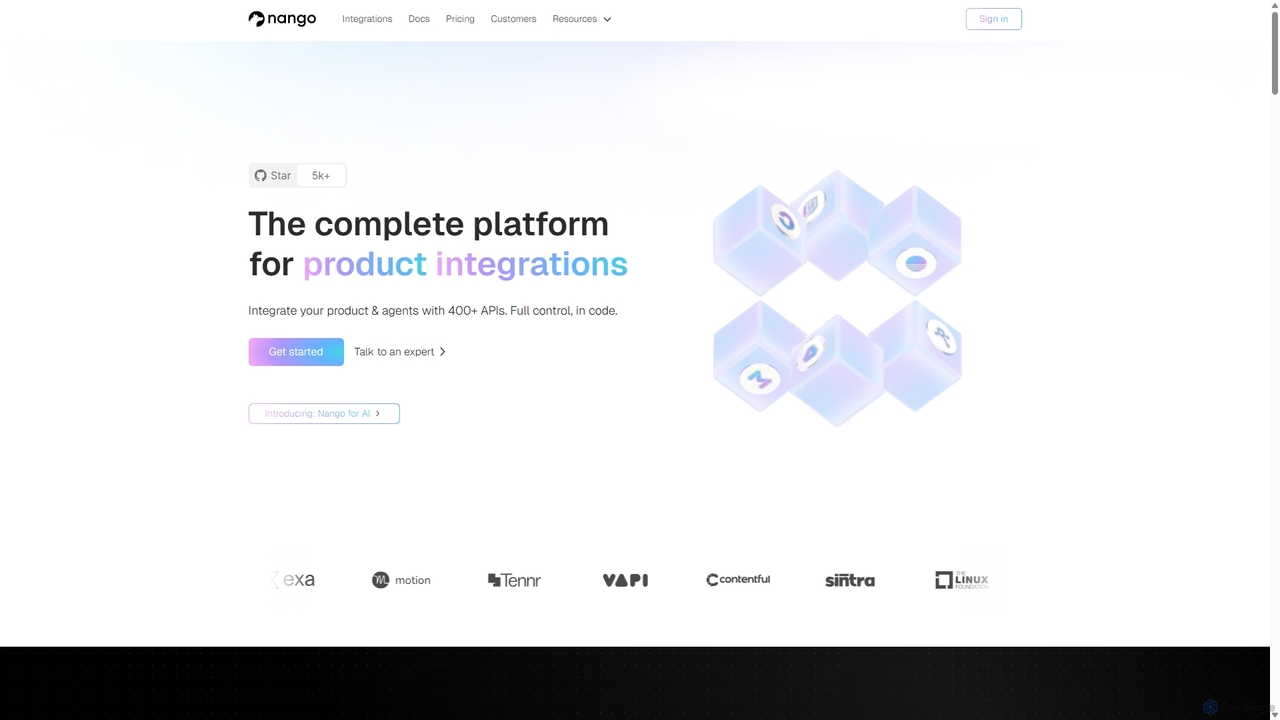
Nango is a comprehensive integration platform for developers, enabling B2B SaaS companies to rapidly build, deploy, and scale …
Nango is a comprehensive integration platform for developers, enabling B2B SaaS companies to rapidly build, deploy, and scale product integrations. It offers pre-built connectors for over 400 APIs, handles complex authorization flows, and provides a unified API, developer tooling, and scalable infrastructure. This developer-first, open-source platform ensures flexibility and control, allowing for custom, low-maintenance integrations.
Paragon
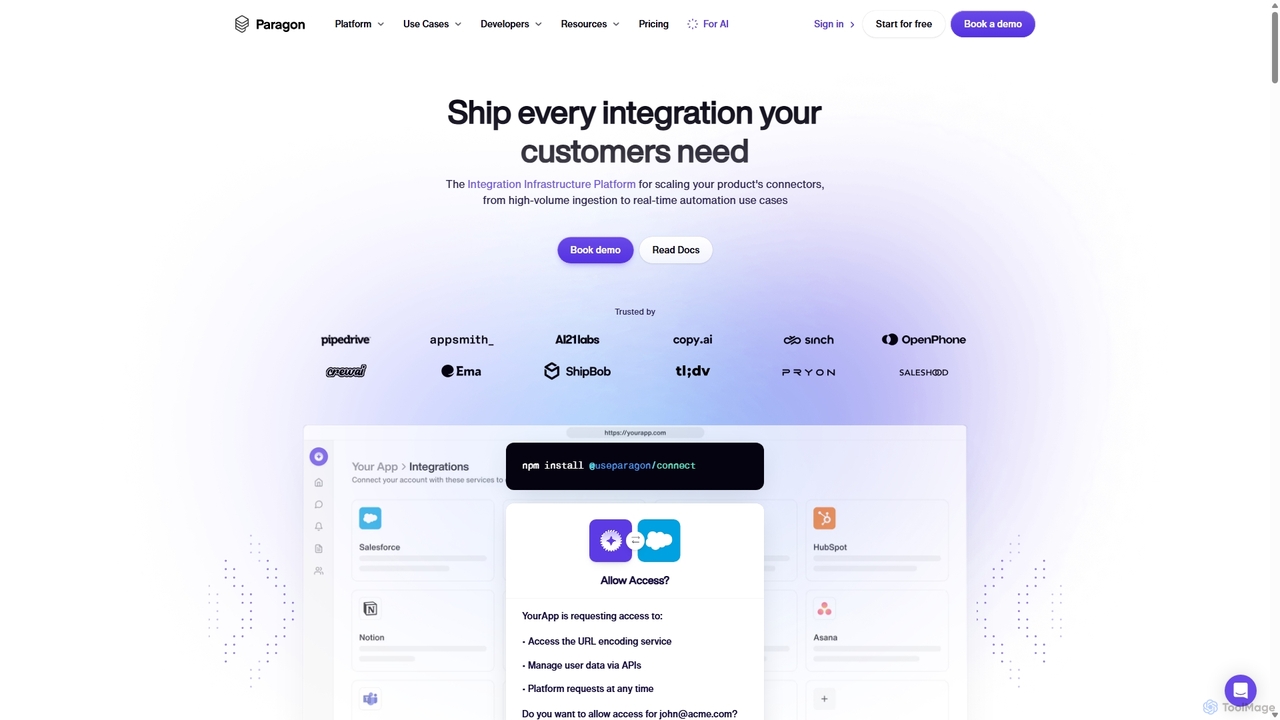
Paragon is an embedded integration platform for developers, designed to help SaaS and AI companies quickly build and …
Paragon is an embedded integration platform for developers, designed to help SaaS and AI companies quickly build and scale product integrations. It provides a unified infrastructure with pre-built connectors, managed authentication, and purpose-built tools for various use cases like high-volume data ingestion for RAG, real-time actions for AI agents, and event-driven workflows. This allows developers to ship any integration their customers need, 10x faster.
RapidAPI
RapidAPI is the world's largest API Hub where over 7 million developers find, test, and connect to tens …
RapidAPI is the world's largest API Hub where over 7 million developers find, test, and connect to tens of thousands of APIs. It provides a unified platform for discovering public APIs and managing private ones, simplifying the entire development lifecycle from integration to management and monetization.
Portkey
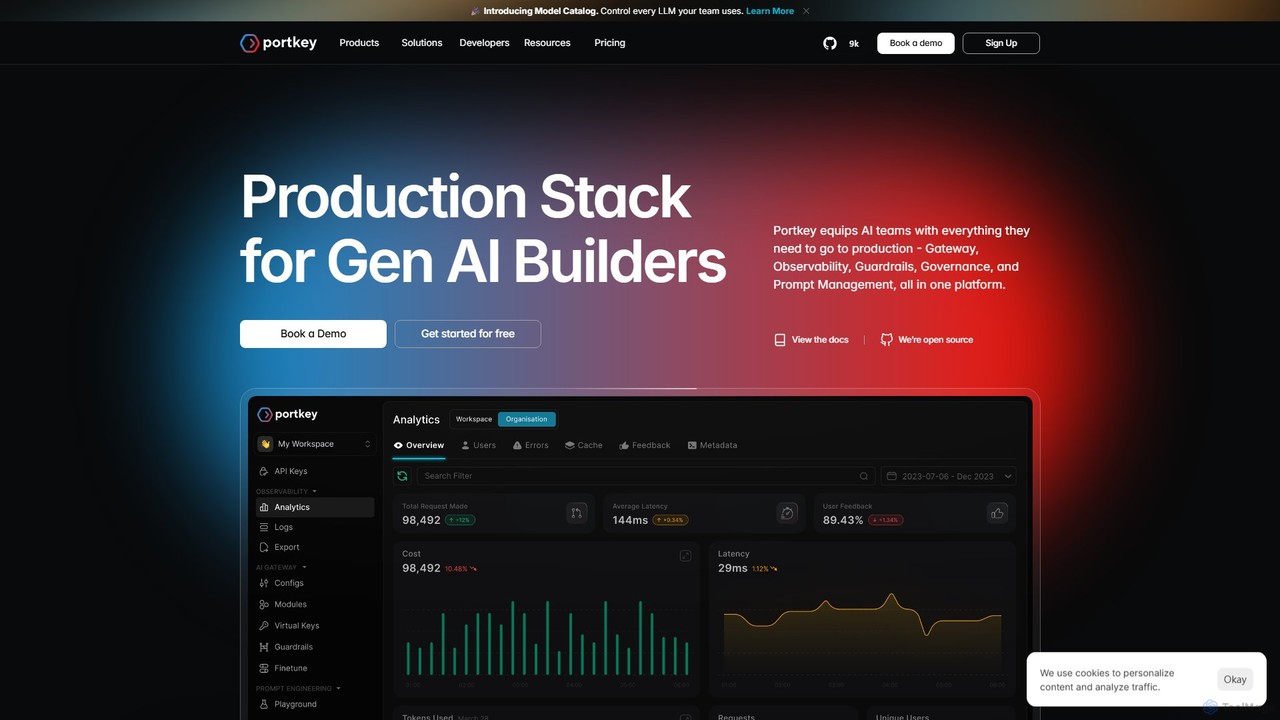
Portkey is a comprehensive LLMOps platform for GenAI developers. It provides a unified AI Gateway to access over …
Portkey is a comprehensive LLMOps platform for GenAI developers. It provides a unified AI Gateway to access over 1600 models, along with tools for observability, prompt management, cost control, and security. Streamline your AI application development from prototype to production with enhanced reliability, scalability, and governance, all in one place.
apiversion.dev
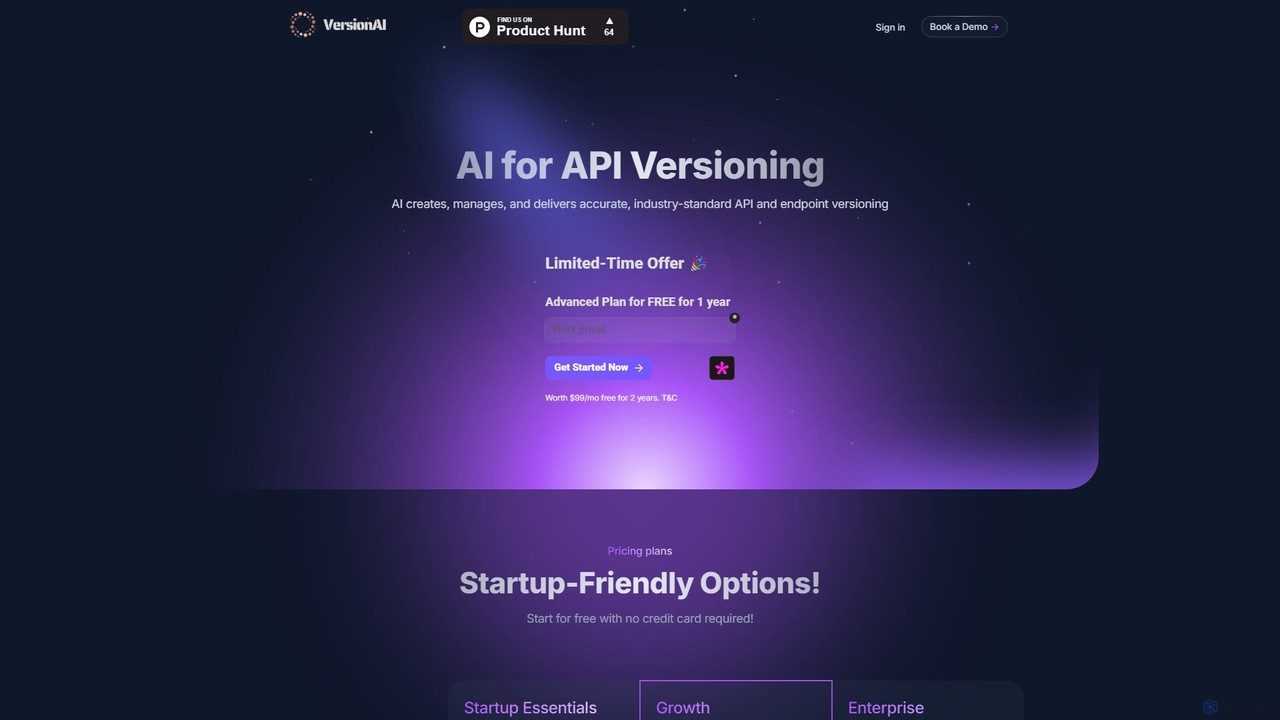
apiversion.dev is an AI-powered platform that automates API and endpoint versioning. It helps development teams create, manage, and …
apiversion.dev is an AI-powered platform that automates API and endpoint versioning. It helps development teams create, manage, and deliver accurate, industry-standard versions using Semantic or Calendar Versioning. By integrating with CI/CD pipelines, it reduces manual errors, improves communication, and accelerates development cycles, ensuring seamless updates for both internal teams and external customers.
About Api Management
API Management tools are comprehensive platforms for designing, publishing, securing, monitoring, and analyzing Application Programming Interfaces (APIs) throughout their lifecycle. These tools act as a central control plane within a development ecosystem, abstracting backend complexity and enforcing consistent policies for all API traffic. They enable organizations to treat APIs as products, fostering a robust ecosystem for internal developers, external partners, and customers. By providing features like an API gateway, developer portal, and advanced analytics, these platforms streamline integration, enhance security, and unlock new business models.
Core Features
- API Gateway: Acts as a single entry point to accept all API calls, route them to appropriate backend services, and enforce security policies.
- Developer Portal: Offers a self-service hub for developers to discover APIs, view interactive documentation, and manage access credentials.
- Security and Policy Enforcement: Implements authentication (OAuth, API Keys), authorization, rate limiting, and threat protection to secure backend services.
- Analytics and Monitoring: Provides dashboards and reports on API usage, performance metrics, latency, and error rates for operational insight.
- Lifecycle Management: Manages the entire API lifecycle from creation and versioning to controlled deployment and retirement.
Use Cases
API Management is crucial for organizations implementing a microservices architecture, enabling secure and managed communication between services. It is also essential for building partner ecosystems where external developers consume company data and services. Other common scenarios include providing a stable backend for mobile and web applications and modernizing legacy IT systems by exposing their functionality through managed APIs.
How to Choose
When selecting an API Management tool, consider its deployment model (cloud, on-premise, or hybrid) to match your infrastructure. Evaluate the depth of its security features, including support for standards like OAuth 2.0. Assess its scalability and performance under load, the quality of its developer portal for user experience, and its integration capabilities with your existing CI/CD and monitoring tools.

Api ManagementUse Cases
Securing and Publishing a Public SaaS API
A software-as-a-service (SaaS) company wants to allow third-party developers to integrate with its platform. They use an API Management tool to create a public-facing API gateway. This gateway enforces API key authentication and sets rate limits to prevent abuse. The platform's developer portal provides interactive documentation, code samples, and a self-service dashboard for developers to obtain keys and track their usage, significantly reducing the support overhead for the SaaS provider.
Managing Internal Microservices Communication
An enterprise is transitioning from a monolithic architecture to hundreds of microservices. To manage the complexity, they deploy an API Management platform. An API gateway acts as the single entry point for all internal service-to-service communication. This centralizes logging, monitoring, and security. Developers can apply consistent authentication policies and circuit breaker patterns across all services, improving system resilience and observability without embedding this logic in every microservice.
Building a Financial Services Partner Ecosystem
A bank aims to foster innovation by creating a partner ecosystem with fintech startups. They use an API Management solution to securely expose account data and payment initiation services. The platform enforces strict Open Banking security standards and manages OAuth 2.0 consent flows. The developer portal allows partners to onboard quickly, test APIs in a sandbox environment, and understand usage terms, accelerating the development of new financial products.
Monetizing Data via Tiered API Products
A market data company wants to sell its valuable datasets through an API. Using an API Management tool, they package their APIs into different products with distinct pricing tiers: a free tier with limited calls, a standard tier for small businesses, and an enterprise tier with high throughput. The platform automates user registration, key provisioning, and usage-based billing by integrating with a payment gateway, creating a new, scalable revenue stream.
Unifying Backend for Mobile and Web Applications
A large e-commerce retailer needs to provide a consistent user experience across its website, iOS app, and Android app. They use an API gateway to create a unified 'Backend For Frontend' (BFF) layer. This gateway aggregates data from multiple backend services (product catalog, inventory, user profiles) into a single, optimized API endpoint for each client. This simplifies frontend development, reduces the number of network requests from mobile devices, and allows backend teams to evolve services independently.
Enforcing Governance and Compliance for APIs
A healthcare organization needs to share patient data with authorized clinics while adhering to strict HIPAA regulations. They implement an API Management platform to enforce governance. All API traffic is routed through the gateway, which logs every request and response for auditing purposes. The platform applies fine-grained access control policies to ensure that users can only access the specific data they are authorized to see, providing a complete audit trail to demonstrate compliance.