ToolMage
Sign in

Best 3 Frontend Frameworks AI tools for Development

Popular Frontend Frameworks AI tools in Development include AI SDK Agents, Thefrontkit, and AtomicComponents, helping you work more efficiently.

Thefrontkit
Paid

Thefrontkit

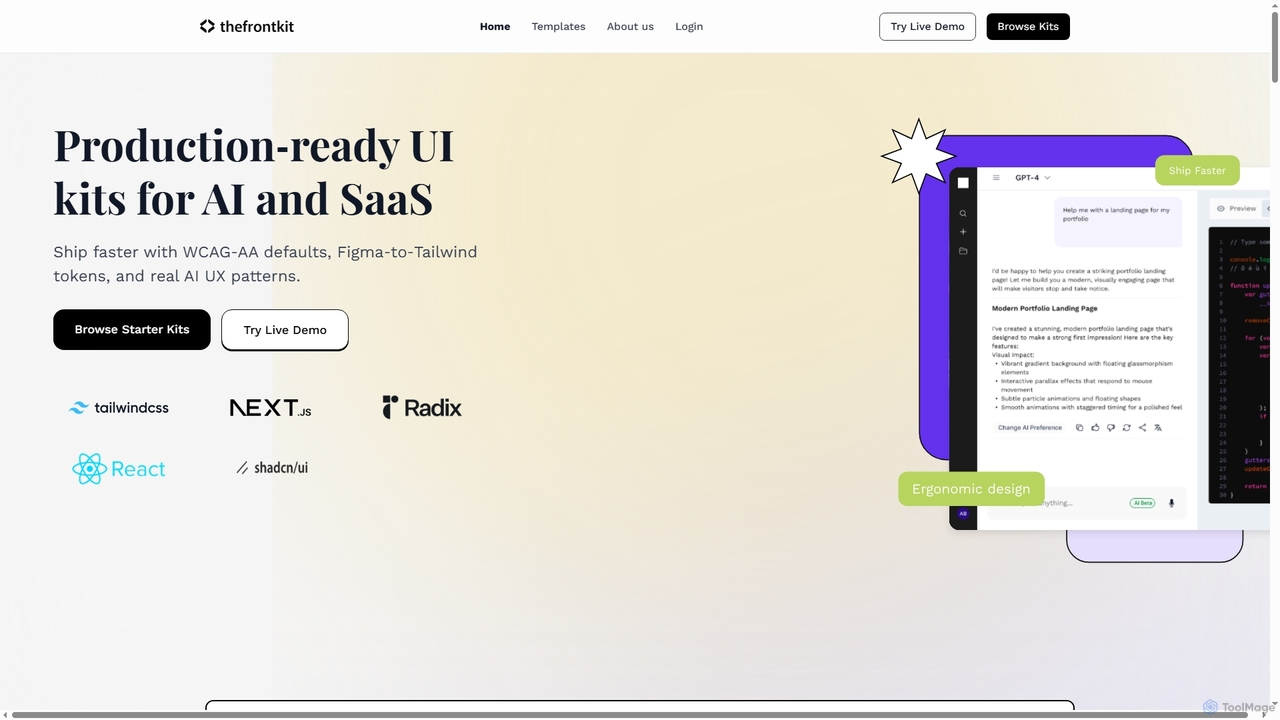
Thefrontkit provides production-ready UI kits for AI and SaaS applications, designed to accelerate development with WCAG-AA defaults, Figma-to-Tailwind token synchronization, and essential AI UX patterns. It offers structured, accessible UI components built with React and TailwindCSS, complete with Figma files and comprehensive documentation, enabling teams to ship faster and focus on product innovation.

Web Development
Visits 14.1KFavorites 69Likes 63
AtomicComponents
Freemium

AtomicComponents

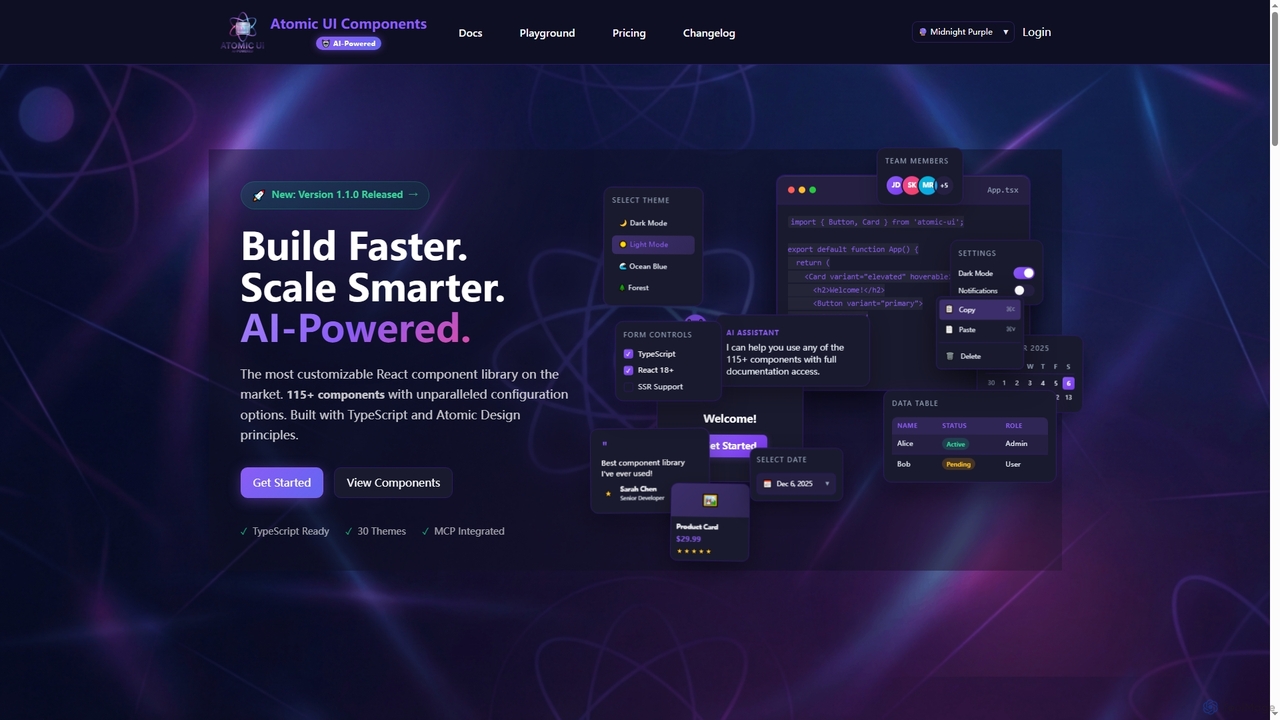
AtomicComponents is an AI-powered React component library designed for building modern, scalable, and accessible user interfaces faster. It offers over 115 highly customizable components, 30 built-in themes, and seamless integration with AI assistants like Claude and GitHub Copilot via its Model Context Protocol (MCP) server.

Design Systems
Visits 7.3KFavorites 85Likes 119
AI SDK Agents
Paid

AI SDK Agents

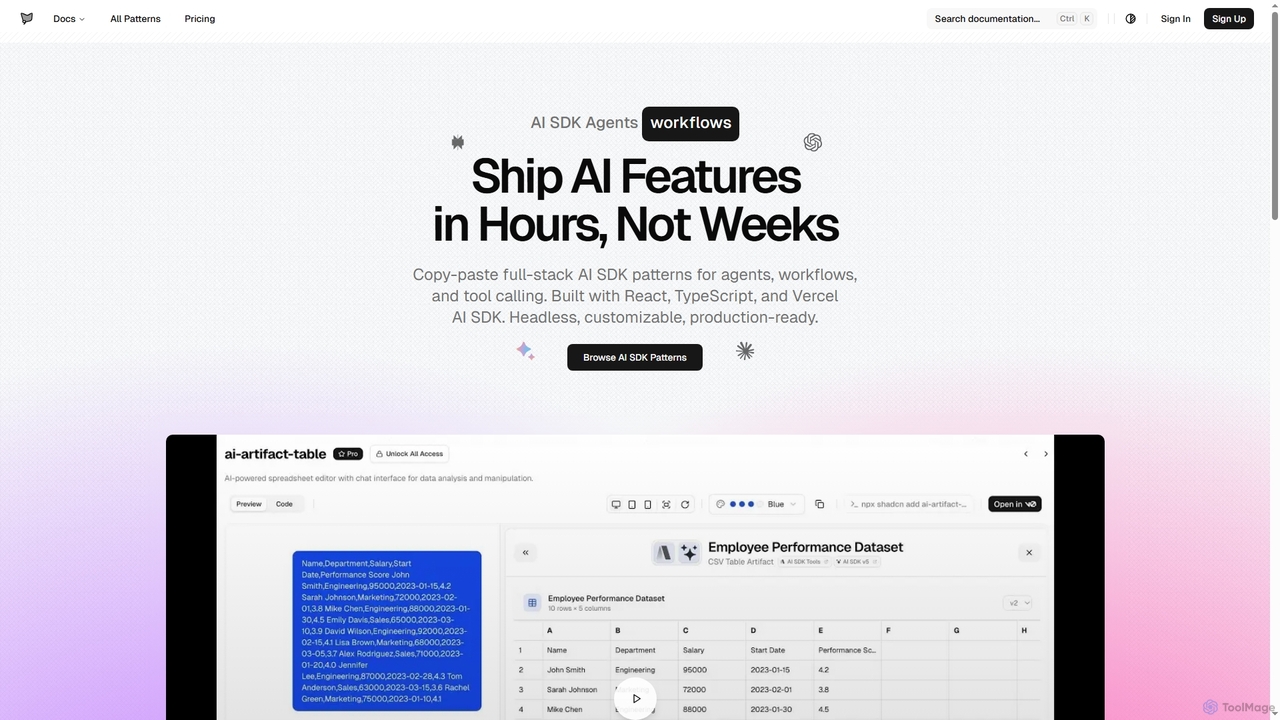
AI SDK Agents provides production-ready React components for rapidly building AI applications. Leverage copy-paste patterns for agents, workflows, tool calling, and streaming responses, built with React, TypeScript, and Vercel AI SDK. Accelerate your AI feature development from weeks to hours, ensuring customizable and headless integration into your projects.

Ui Components
Visits 65.8KFavorites 142Likes 166

About Frontend Frameworks

Frontend Frameworks are structured toolsets that provide developers with a foundation for building modern, interactive user interfaces (UIs). They utilize principles like component-based architecture and state management to organize code and handle data flow efficiently. This approach enables the creation of complex, scalable, and maintainable single-page applications (SPAs) and dynamic websites. By offering pre-written code and established patterns, these frameworks significantly accelerate the development process and ensure a consistent user experience.

Core Features

  • Component-Based Architecture: Build UIs from isolated, reusable pieces of code, improving modularity and maintainability.
  • State Management: Provides a centralized and predictable way to manage application data that changes over time.
  • Declarative UI Rendering: Describe what the UI should look like for any given state, and the framework automatically updates the DOM.
  • Virtual DOM: Enhances performance by minimizing direct manipulations of the browser's DOM, updating only what has changed.
  • Rich Ecosystem & Tooling: Offers extensive libraries for routing, testing, and animations, along with powerful command-line interface (CLI) tools.

Use Cases

Frontend Frameworks are essential for projects requiring high levels of interactivity and complex state. They are widely used by frontend and full-stack developers to build enterprise-level dashboards, e-commerce platforms, social media applications, and Progressive Web Apps (PWAs). Any application that benefits from a dynamic, app-like user experience is a prime candidate for a frontend framework.

How to Choose

Selecting a framework depends on several factors. Consider the project's complexity and scalability needs. Evaluate the learning curve and your team's existing skills. Assess the size and activity of the community for support and long-term viability. Finally, compare performance benchmarks and the richness of the available ecosystem, including third-party libraries and tools.

Frontend Frameworks use cases

1

Building a Single-Page Application (SPA)

A development team is tasked with creating a modern project management tool. They use a frontend framework like React or Vue to build a highly responsive SPA. The component-based architecture allows them to create reusable elements like tasks, calendars, and user avatars. State management libraries handle the complex data flow, ensuring that when a user updates a task in one view, it is instantly reflected across the entire application without needing a page reload. This results in a fluid, desktop-like user experience that improves productivity.

2

Developing an Enterprise Data Dashboard

A data analyst team needs a custom dashboard to visualize real-time business metrics. A developer uses a framework like Angular, known for its robust structure, to build the application. They create various components for charts, data tables, and filters. The framework's data binding capabilities make it simple to connect the UI to live data streams. As new data arrives, the charts and tables update automatically, providing the team with up-to-the-minute insights for critical decision-making without performance degradation.

3

Creating a Progressive Web App (PWA)

An e-commerce company wants to improve its mobile user experience without building separate native apps. They use a frontend framework with PWA support, like SvelteKit or Next.js (for React). Developers can implement features such as offline access to previously viewed products, push notifications for promotions, and an 'Add to Home Screen' prompt. The framework's tooling simplifies the configuration of service workers and manifests, resulting in a fast, reliable, and engaging web app that functions like a native app, boosting user retention and conversion rates.

4

Building a Corporate Design System

A large enterprise needs to ensure brand consistency across its dozens of web properties. A dedicated UI/UX engineering team uses a frontend framework to build a central design system. They create a library of standardized, reusable components like buttons, forms, and navigation bars. Each component is self-contained, tested, and documented. Other development teams across the company can then easily import and use these components in their projects, drastically reducing redundant work, accelerating development, and ensuring a unified visual identity and user experience.

5

Developing an Interactive E-commerce Configurator

An online furniture store wants to allow customers to customize products in real-time. A developer uses a frontend framework to build a product configurator. As a customer selects different fabrics, colors, or leg styles, the framework's reactive state management instantly updates the product image and price without any delay. This creates a highly engaging and interactive shopping experience, helping customers visualize their final product and increasing the likelihood of a purchase. The component structure also makes it easy to add new products or customization options in the future.

6

Building Cross-Platform Mobile Applications

A startup aims to launch its service on both iOS and Android but has a limited budget and a small development team. They choose a framework like React Native or NativeScript, which allows them to write code primarily in JavaScript and share it across both platforms. The framework compiles the shared codebase into native UI components, providing a genuine native look and feel. This approach significantly reduces development time and cost compared to maintaining two separate codebases, enabling the startup to reach a wider market faster.

Frontend Frameworks FAQ

What is a frontend framework?

A frontend framework is a pre-written, standardized collection of code, tools, and conventions that provides a structure for developing user interfaces. Instead of starting from scratch, developers use a framework's architecture to handle common tasks like managing application state, rendering UI components, and handling user interactions. Key features often include a component-based model, a virtual DOM for performance, and a rich ecosystem of supporting libraries. They are designed to streamline the development of complex and interactive web applications.

How do I choose the right frontend framework?

Choosing the right framework involves evaluating several key factors based on your project's needs:

  • Learning Curve: Consider your team's familiarity with the framework's concepts and syntax. Some, like Vue, are often considered easier to learn than others, like Angular.
  • Ecosystem & Community: A large, active community means better documentation, more third-party libraries, and easier troubleshooting.
  • Performance: Research benchmarks and understand how the framework handles rendering and updates, especially for data-intensive applications.
  • Scalability & Structure: For large, long-term projects, a more opinionated framework like Angular might provide better structure, while a more flexible one like React might be suitable for smaller projects.
What's the difference between a frontend framework and a library?

The main difference lies in 'inversion of control'. With a library (like jQuery), you are in control; you call the library's functions when you need them. With a framework (like Angular or Vue), the framework is in control; it provides a structure and calls your code at appropriate times. A framework dictates the overall architecture of your application, while a library is a tool you use to perform specific tasks. Some tools, like React, are technically libraries but are often used with other tools in a way that forms a framework-like ecosystem.

What are the main benefits of using a frontend framework?

Using a frontend framework offers several significant advantages for development. It promotes faster development by providing reusable components and pre-built functionalities. It leads to better code organization and maintainability, which is crucial for large projects and team collaboration. Frameworks often include performance optimizations, such as the virtual DOM, which result in faster and more responsive user interfaces. Finally, they enforce best practices and a structured approach, leading to more robust and scalable applications.

Is a frontend framework necessary for every web project?

No, a frontend framework is not necessary for every project. For simple, static websites with limited interactivity, such as a basic blog or a portfolio page, using plain HTML, CSS, and a small amount of JavaScript can be more efficient and result in a faster-loading site. Frameworks introduce a certain level of overhead. They are most beneficial for complex, data-driven applications like single-page applications (SPAs), dashboards, or large-scale platforms where managing state and UI complexity is a primary challenge.