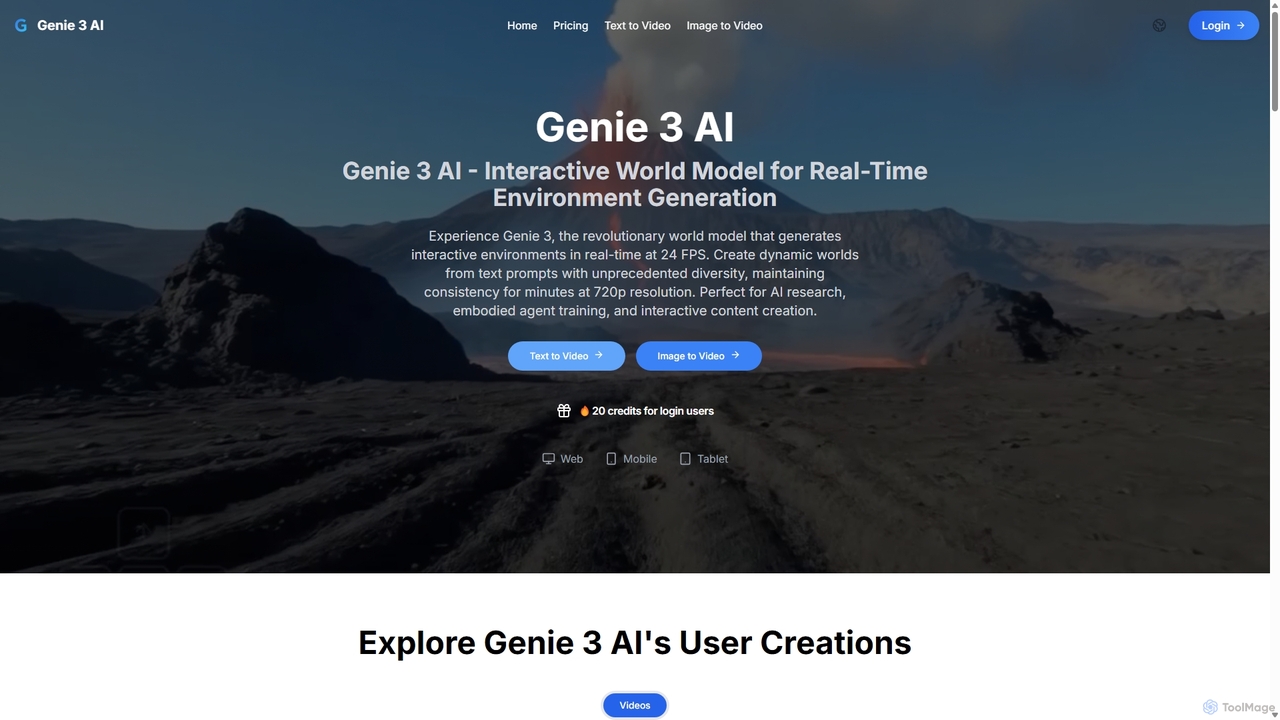
Genie 3 AI
Genie 3 AI is a revolutionary interactive world model that generates dynamic, navigable environments from text or image …
Genie 3 AI is a revolutionary interactive world model that generates dynamic, navigable environments from text or image prompts in real-time. Operating at 24 FPS and 720p resolution, it allows users to interact with AI-created worlds, making it ideal for AI research, embodied agent training, and advanced content creation.
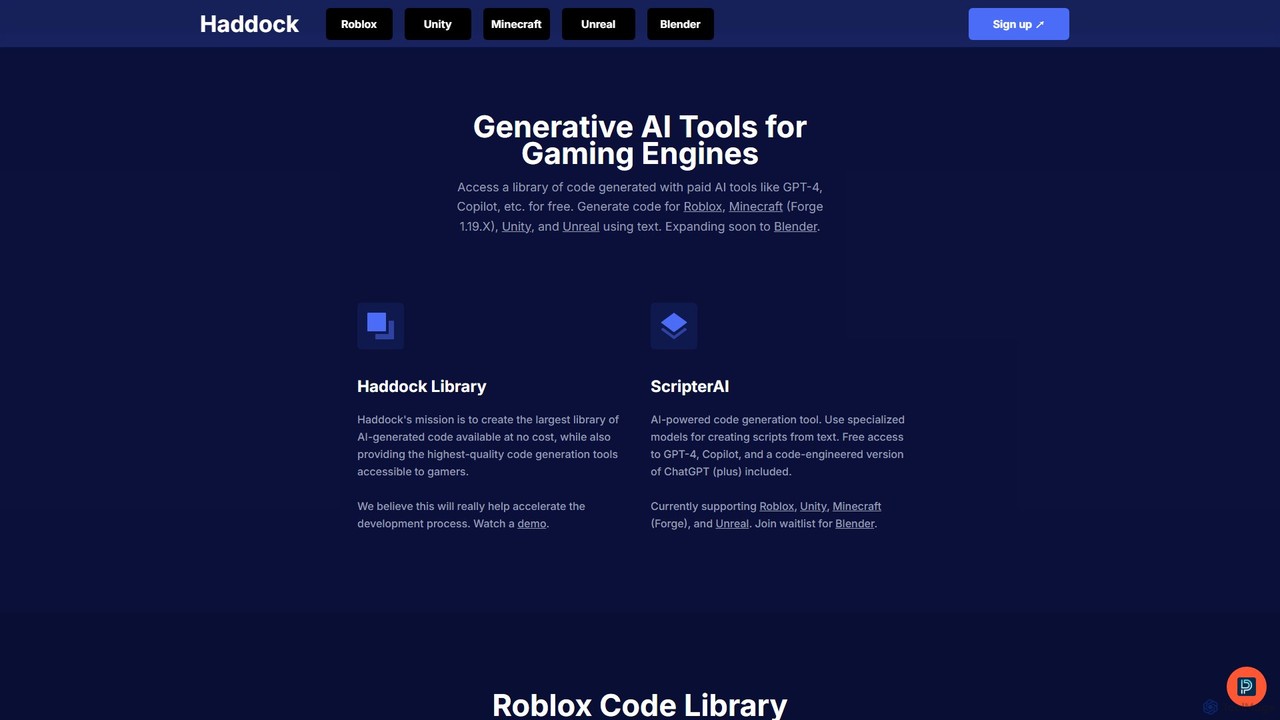
haddock
Haddock is a generative AI platform designed to accelerate game development. It offers a vast, free library of …
Haddock is a generative AI platform designed to accelerate game development. It offers a vast, free library of AI-generated code for engines like Roblox, Unity, Unreal, and Minecraft. With its ScripterAI tool, developers can generate high-quality, engine-specific scripts from simple text prompts, leveraging models like GPT-4 and Copilot to streamline prototyping, learning, and overall development workflows.
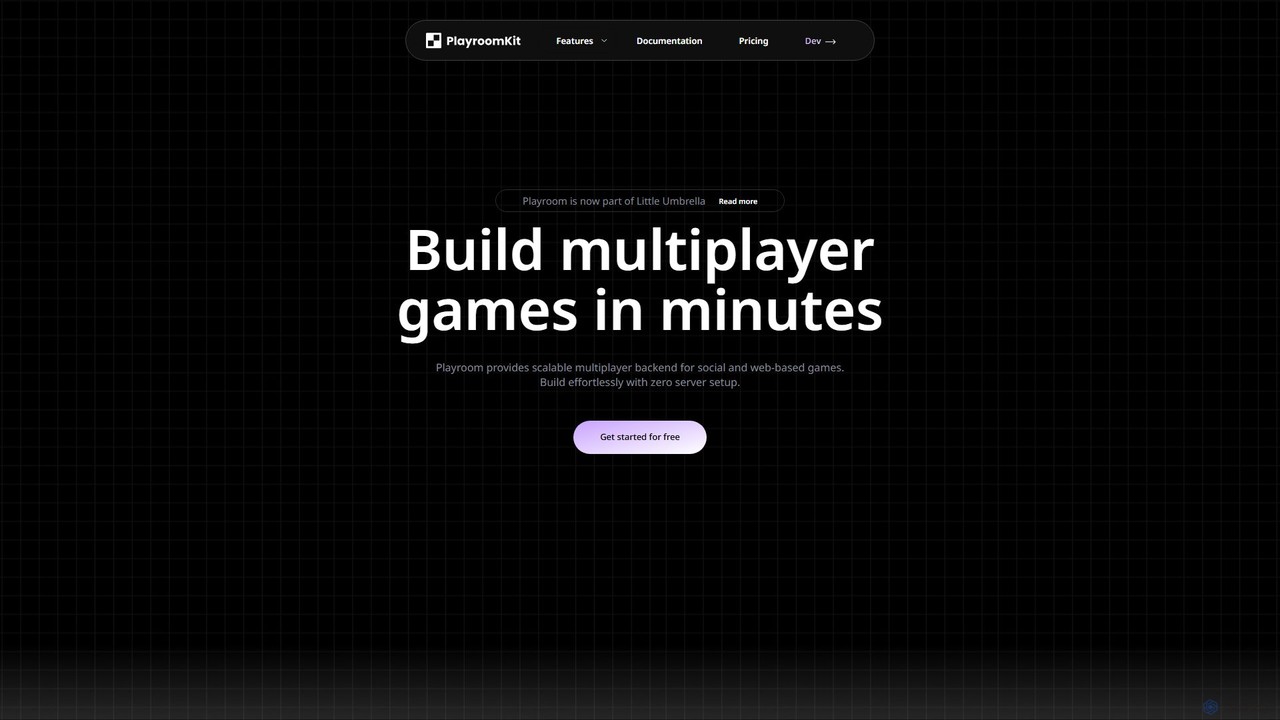
Playroom
Playroom is a serverless backend platform designed for developers to build and scale multiplayer web and social games …
Playroom is a serverless backend platform designed for developers to build and scale multiplayer web and social games in minutes. It eliminates the need for complex server setup and management by providing a low-latency, auto-scaling infrastructure, a simple SDK, and pre-built modules for features like lobbies, chat, and AI-powered content generation.
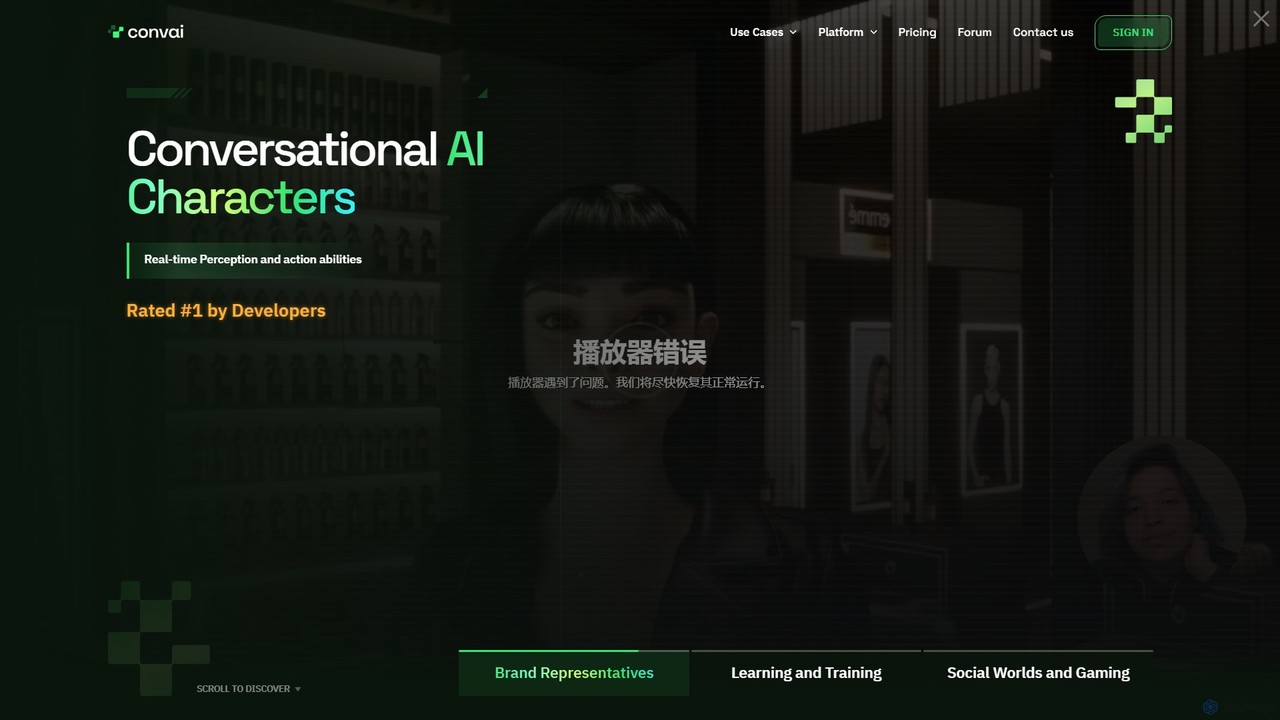
Convai
Convai is a developer platform for creating intelligent, conversational AI characters (NPCs) for games and virtual worlds. It …
Convai is a developer platform for creating intelligent, conversational AI characters (NPCs) for games and virtual worlds. It features real-time perception, multimodal interaction (vision, sound, text), and seamless integration with major game engines like Unreal and Unity, enabling lifelike and dynamic virtual experiences.
RoleBot
RoleBot is an AI-powered persona chatbot that lets you create and interact with custom characters. Define a role, …
RoleBot is an AI-powered persona chatbot that lets you create and interact with custom characters. Define a role, personality traits, and background, and engage in dynamic conversations. Ideal for writers, game developers, and anyone looking to explore creative role-playing scenarios or simulate interactions.
SteerCode
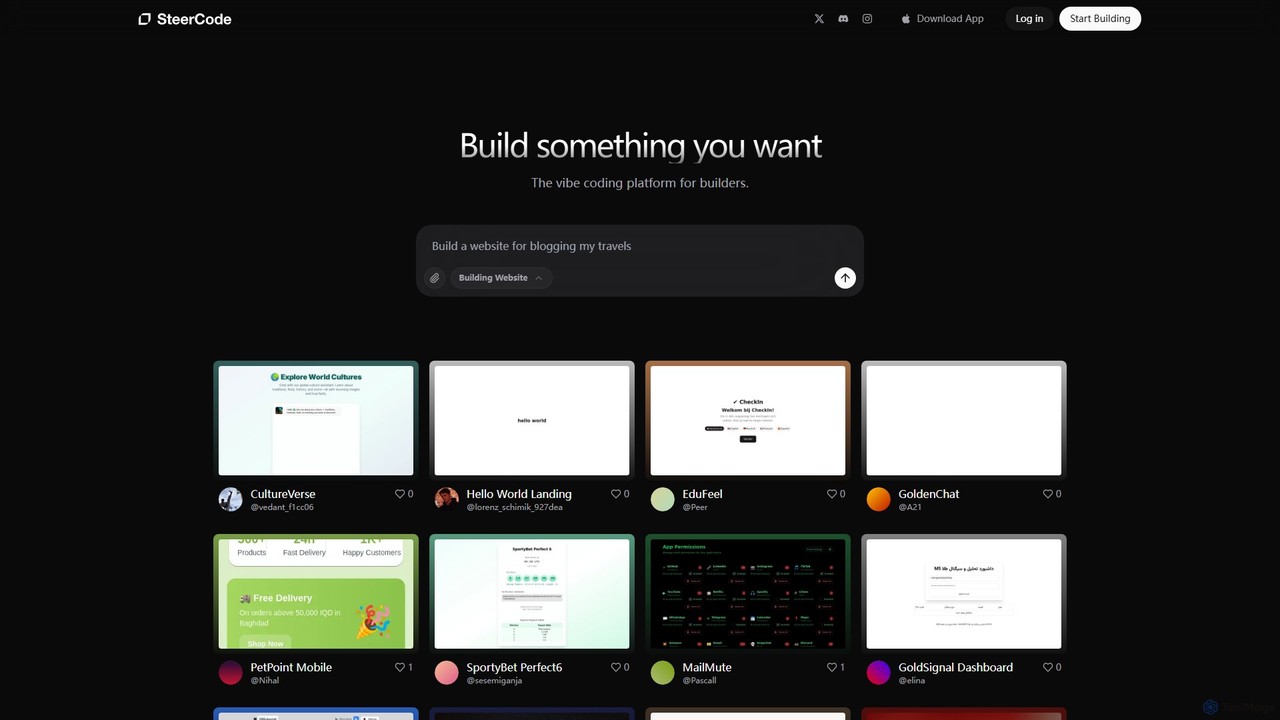
SteerCode is an AI-powered development platform that transforms your ideas into functional websites, apps, and games using simple …
SteerCode is an AI-powered development platform that transforms your ideas into functional websites, apps, and games using simple text prompts. Designed for builders of all skill levels, it eliminates the need for traditional coding. Just describe what you want to create, and watch the AI build it in real-time, right from your browser, even on your phone.
About Game Development
AI Game Development tools are a specialized class of software that leverages artificial intelligence to automate and enhance the creation of interactive experiences. These tools utilize machine learning models, particularly generative AI, to produce game assets like textures, models, and audio, as well as to design complex systems such as dynamic NPC behaviors and procedural level generation. Their primary value lies in accelerating development cycles, reducing manual labor, and empowering creators of all sizes to build more complex and engaging game worlds. This allows developers to focus more on core gameplay and creative vision rather than repetitive production tasks.
Core Features
- Procedural Content Generation (PCG): Automatically creates vast and unique game levels, terrains, and environments based on defined rules.
- AI-Powered NPC Behavior: Develops non-player characters with dynamic, non-scripted actions and decision-making abilities.
- Generative Asset Creation: Produces 2D/3D models, textures, sound effects, and music from text prompts or style inputs.
- Automated Game Testing: Deploys AI agents to play through the game, identifying bugs, exploits, and gameplay balance issues.
- Dynamic Narrative & Dialogue: Generates branching storylines and character conversations that adapt to player choices.
Use Cases
These tools are used by a wide range of creators, from solo indie developers rapidly prototyping ideas to large AAA studios scaling up asset production. Game artists, level designers, narrative writers, and QA testers all integrate these tools into their workflows to improve efficiency and creative output.
How to Choose
When selecting an AI Game Development tool, consider its integration with your chosen game engine (e.g., Unity, Unreal Engine). Evaluate its specific function—whether you need asset generation, NPC logic, or testing. Also, assess the learning curve, API documentation, and the pricing model, which may be based on subscriptions, credits, or API calls.

Game DevelopmentUse Cases
Rapid Prototyping of Game Worlds
An indie developer or small team needs to validate a new game concept quickly without investing months in level design. Using an AI-powered procedural content generation (PCG) tool, they can define core parameters like terrain type, obstacle density, and key landmarks. The AI then generates dozens of playable level variations in minutes. This allows the team to test core mechanics, player flow, and overall fun factor on diverse maps, accelerating the iteration process and helping to secure funding or greenlight the project with confidence.
Creating Unique Game Assets at Scale
A 3D artist working on a large open-world RPG is tasked with creating thousands of environmental assets. To avoid repetition and save time, they use a generative AI tool. By providing a few base models or style prompts (e.g., "mossy elven stone texture," "sci-fi metal panel with rust"), the AI generates hundreds of high-resolution, seamless texture variations and 3D model alternatives. This populates the game world with unique, stylistically consistent assets, reducing manual creation time from weeks to days.
Developing Realistic NPC Behavior
A game designer wants to create a living, breathing city where non-player characters (NPCs) feel like real inhabitants, not robots walking on a set path. They integrate an AI behavior tool that allows them to define high-level goals and traits for NPCs (e.g., "shopkeeper," "guard," "hungry"). The AI then generates emergent behavior, where NPCs dynamically decide to go to work, visit a tavern, react to weather, or flee from danger based on their internal state and perception of the world, creating a more immersive player experience.
Automating Quality Assurance (QA) Testing
A QA team for a complex multiplayer game needs to test for bugs, exploits, and server stability under heavy load. They deploy AI agents that are trained to play the game with different strategies. These bots can run 24/7, exploring every corner of the map, stress-testing game mechanics, and attempting to "break" the system in ways human testers might not consider. The AI logs every crash, bug, and performance drop with precise data, allowing developers to fix critical issues before launch.
Generating Dynamic Dialogue for RPGs
A narrative writer for a role-playing game aims to create a story that truly reacts to player actions. Instead of writing thousands of static dialogue lines, they use an AI narrative tool. The system tracks the player's reputation, past choices, and character relationships. It then generates or selects appropriate dialogue for NPCs in real-time, making conversations feel personal and consequential. An NPC might greet a heroic player with respect but show suspicion if the player has a history of theft, making the narrative deeply adaptive.
Composing Adaptive Game Soundtracks
A sound designer or composer needs a music score that perfectly matches the on-screen action. They use an AI music generation tool that integrates with the game engine. The tool analyzes real-time game events—such as the player entering combat, discovering a new area, or solving a puzzle. It then seamlessly transitions the music's tempo, instrumentation, and mood to fit the context. This creates a highly immersive and dynamic audio experience without requiring the composer to write dozens of separate, static music tracks.