ToolMage
Sign in

Best 1 Content Generation AI tools for Ecommerce

Popular Content Generation AI tools in Ecommerce include Synterrix, helping you work more efficiently.

Synterrix
Freemium

Synterrix

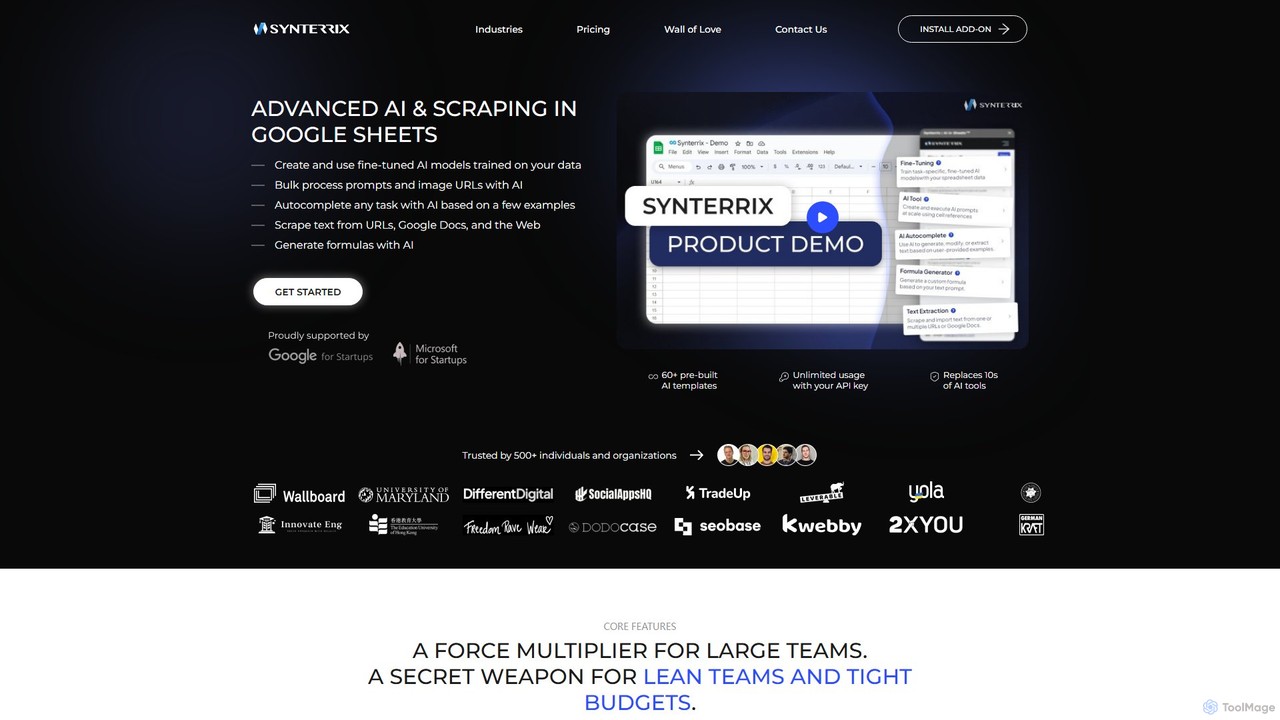
Synterrix is a powerful AI add-on for Google Sheets, designed to automate tasks, generate content, and scrape data at scale. It integrates advanced AI models like GPT-4 directly into your spreadsheets, allowing you to bulk-process prompts, train custom AI models on your data, and replace dozens of other tools. It's an ideal solution for SEO, e-commerce, marketing, and data operations teams looking to boost productivity and reduce costs.

Scraping
Visits 12.8KFavorites 158Likes 135

About Content Generation

Content Generation tools are AI-powered platforms that automate the creation of various digital content, particularly valuable for ecommerce businesses. Leveraging advanced natural language processing and machine learning, these tools can produce high-quality text, images, and even video scripts. They significantly streamline content workflows, enabling businesses to scale their marketing efforts and maintain a consistent online presence.

Core Features

  • Text Generation: Automatically drafts articles, product descriptions, ad copy, and social media posts.
  • Image & Video Scripting: Creates concepts, outlines, or full scripts for visual content, often integrating with other AI media tools.
  • SEO Optimization: Generates content optimized with relevant keywords to improve search engine visibility.
  • Multilingual Content: Produces content in multiple languages, facilitating global market reach for ecommerce.
  • Content Repurposing: Transforms existing content into new formats, such as turning a blog post into social media snippets.

Use Cases

Ecommerce marketers use content generation tools to rapidly produce compelling product descriptions for new inventory, ensuring consistency and SEO optimization across thousands of listings. Content teams leverage these tools to draft blog posts and articles related to product categories or industry trends, providing a strong foundation for human editors to refine and publish. Social media managers can automate the creation of engaging posts and captions for daily updates and promotional campaigns.

How to Choose

When selecting a Content Generation tool, consider the specific content types you need (e.g., product descriptions, blog posts, ad copy), the quality and originality of the AI output, and the level of customization offered. Evaluate its integration capabilities with your existing ecommerce platforms, CMS, or marketing automation tools. Also, assess the pricing model, ease of use, and the tool's ability to handle multilingual content if you operate in global markets.

Content Generation use cases

1

Generate High-Converting Product Descriptions

Ecommerce product managers can input key features, target audience, and tone, and the AI generates multiple compelling product descriptions optimized for SEO and conversion. This saves hours of manual writing for large product catalogs, ensuring consistent quality and messaging across all listings, which is crucial for online stores.

2

Automate Social Media Content for Product Launches

Social media managers in ecommerce use content generation tools to quickly create a series of engaging posts, captions, and hashtags for new product announcements across various platforms. This ensures consistent messaging and timely campaign execution, significantly reducing the time spent on daily content creation and allowing for more strategic planning.

3

Scale Blog Content for SEO in E-commerce

Content marketers can leverage these tools to draft blog posts related to product categories, industry trends, or customer pain points. The AI provides a strong foundation for human editors to refine, add unique insights, and publish, thereby increasing organic traffic to their online stores and establishing thought leadership in their niche.

4

Create Personalized Email Marketing Campaigns

Ecommerce marketing teams utilize AI to generate personalized email subject lines and body content for segmented customer groups. By analyzing customer data, the tool can craft highly relevant messages for promotional offers, abandoned cart reminders, or loyalty programs, improving open rates and conversion for targeted campaigns.

5

Develop Video Scripts for Product Demos

Brands can use content generation tools to outline and draft scripts for short product demonstration videos or explainer content. By inputting product features and target audience, the AI ensures key selling points are covered concisely and engagingly, streamlining the video production process from concept to final script.

6

Produce Multilingual Marketing Copy

Global ecommerce businesses employ content generation tools to translate and localize marketing copy, product descriptions, and ad creatives into multiple languages. This ensures cultural relevance and expands market reach efficiently, allowing businesses to connect with diverse customer bases without extensive manual translation efforts.

Content Generation FAQ

What are AI Content Generation tools?

AI Content Generation tools are software applications that use artificial intelligence, primarily natural language processing (NLP) and machine learning, to automatically create various forms of digital content. This includes text (like articles, product descriptions, ad copy), image concepts, and video scripts. They are designed to streamline content creation workflows, enhance efficiency, and help businesses, especially in ecommerce, produce content at scale.

How do Content Generation tools benefit e-commerce businesses?

Content Generation tools offer significant benefits to e-commerce businesses by enabling rapid production of high-quality content. They help in quickly creating product descriptions for vast inventories, generating engaging marketing copy for campaigns, drafting blog posts for SEO, and personalizing email content. This saves time and resources, ensures brand consistency, improves SEO rankings, and ultimately drives more traffic and conversions to online stores.

What types of content can AI Content Generation tools create?

AI Content Generation tools are versatile and can create a wide array of content types. This includes various forms of text such as product descriptions, ad copy, social media captions, blog post drafts, email marketing content, and website copy. Beyond text, some advanced tools can also generate concepts, outlines, or full scripts for video content, and even assist in generating basic image ideas or variations, often integrating with other AI media creation platforms.

How do I choose the best Content Generation tool for my e-commerce store?

To choose the best Content Generation tool for your e-commerce store, consider several key factors. First, identify the specific content types you need most frequently (e.g., product descriptions, ad copy, blog posts). Evaluate the quality and originality of the AI's output, as well as its customization options to match your brand voice. Check for integration capabilities with your existing e-commerce platform, CMS, or marketing automation tools. Finally, compare pricing models, ease of use, and the tool's ability to handle multilingual content if you target global markets.

What is the difference between Content Generation and Content Editing AI tools?

Content Generation tools focus on creating new content from scratch based on user prompts, keywords, or data inputs. Their primary function is to produce original text, concepts, or scripts. In contrast, Content Editing AI tools are designed to refine, optimize, or modify existing content. This includes tasks like grammar and spelling checks, rephrasing sentences for clarity, summarizing long texts, or optimizing content for SEO. While both leverage AI, generation is about creation, and editing is about improvement and enhancement of pre-existing material.