Adinspiration
Adinspiration provides a library of over 500 high-converting Meta ad templates, curated from top-performing, million-dollar e-commerce brands. It …
Adinspiration provides a library of over 500 high-converting Meta ad templates, curated from top-performing, million-dollar e-commerce brands. It helps marketers and business owners save time, overcome creative fatigue, and significantly boost their Return on Ad Spend (ROAS). With a one-time payment, users get lifetime access to editable Canva templates across various niches, allowing them to launch proven ad creatives in minutes.
HookAds
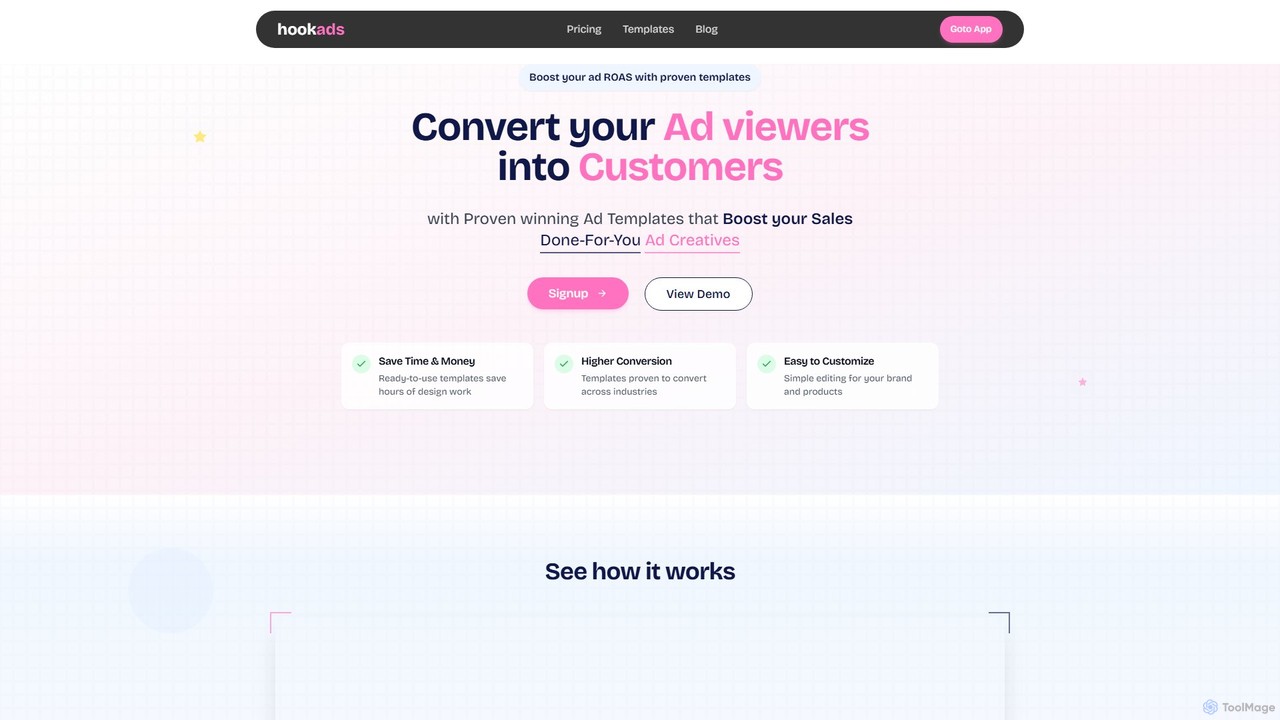
HookAds provides a massive library of over 1,500 proven, high-converting ad templates. Designed for marketers, solopreneurs, and e-commerce …
HookAds provides a massive library of over 1,500 proven, high-converting ad templates. Designed for marketers, solopreneurs, and e-commerce businesses, it helps boost ROAS and CTR by eliminating guesswork. All templates are easily customizable in Canva, saving you significant time and money on ad creative production.
About Marketing
AI Marketing tools are a category of software designed to automate, personalize, and optimize marketing efforts specifically for ecommerce businesses. These tools leverage machine learning algorithms to analyze customer data, predict purchasing behavior, and deliver targeted campaigns at scale. By integrating directly with online store platforms, they help increase conversion rates, boost customer lifetime value, and maximize return on ad spend. Unlike general marketing automation, these tools are built around product catalogs and transactional data to drive sales directly.
Core Features
- Predictive Personalization: Analyzes user behavior to display dynamic product recommendations and personalized content in real-time.
- Automated Customer Journeys: Creates and manages triggered email and SMS campaigns for events like cart abandonment or first purchase.
- AI-Powered Segmentation: Automatically groups customers into micro-segments based on purchasing habits, engagement, and predicted value.
- Ad Spend Optimization: Uses AI to manage and allocate budgets for digital advertising campaigns, maximizing return on investment (ROI).
- Churn Prediction: Identifies customers at risk of leaving and enables proactive retention campaigns.
Applicable Scenarios
These tools are essential for ecommerce managers, digital marketers, and online store owners across various sectors like fashion, electronics, and direct-to-consumer (DTC) brands. They are used to automate personalized up-sell and cross-sell recommendations on product pages, run hyper-targeted promotional campaigns for specific customer segments, and optimize pricing strategies based on demand forecasts.
How to Choose
When selecting an AI Marketing tool, prioritize its integration capabilities with your ecommerce platform (e.g., Shopify, WooCommerce, BigCommerce). Evaluate the depth of its analytics and segmentation features to ensure they meet your strategic needs. Consider the pricing model—whether it's based on contacts, traffic, or revenue share—and its scalability to support your business growth. Finally, assess the user interface and level of customer support provided.

MarketingUse Cases
Automate Abandoned Cart Recovery Emails
An ecommerce manager for a fashion brand uses an AI marketing tool to automatically send personalized email sequences to shoppers who leave items in their cart. The AI analyzes the user's browsing history to include relevant product recommendations and offers a time-sensitive, dynamic discount code. This strategy significantly increases the recovery rate and boosts revenue without requiring manual intervention from the marketing team.
Provide Dynamic Product Recommendations
An online electronics store integrates an AI marketing tool into its website. The tool's algorithm analyzes real-time user behavior, such as clicks and time spent on pages, to display 'You might also like' and 'Frequently bought together' sections. This enhances the shopping experience, increases the average order value (AOV) by encouraging up-sells and cross-sells, and improves product discovery for customers.
Optimize Social Media Ad Spend
A direct-to-consumer (DTC) startup uses an AI tool to manage its Facebook and Instagram ad campaigns. The AI automatically creates hundreds of ad variations, tests them on different audience segments, and reallocates the budget in real-time to the best-performing ads. This process maximizes the return on ad spend (ROAS) and identifies new, profitable customer segments more efficiently than a human marketer could.
Create Hyper-Targeted Customer Segments
A marketing team for a large online marketplace uses AI to segment its millions of customers. Instead of basic demographic segmentation, the AI identifies behavioral clusters like 'high-value bargain hunters,' 'brand-loyal repeat buyers,' or 'at-risk-of-churn customers.' This allows for highly personalized promotions and retention campaigns, improving customer lifetime value (CLV) and reducing marketing waste on irrelevant offers.
Forecast Sales and Inventory Needs
An operations manager for an ecommerce business uses an AI marketing platform's predictive analytics feature. By analyzing historical sales data, seasonality, and current marketing campaign performance, the tool forecasts demand for specific products. This helps optimize inventory levels, prevent stockouts during peak seasons like Black Friday, and inform future marketing budget allocation for promoting high-demand items.
Personalize On-Site Search Experience
A home goods retailer employs an AI tool to enhance its on-site search engine. When a user searches for 'chair,' the AI considers their past purchases and browsing history to show them modern Scandinavian-style chairs first, while showing another user with different tastes traditional wooden chairs. This personalized search experience leads to higher conversion rates from search, reduces bounce rates, and helps customers find what they want faster.