
Product Hero
Product Hero is an AI-powered platform that automates the creation of personalized, on-brand e-commerce banners at scale. It …
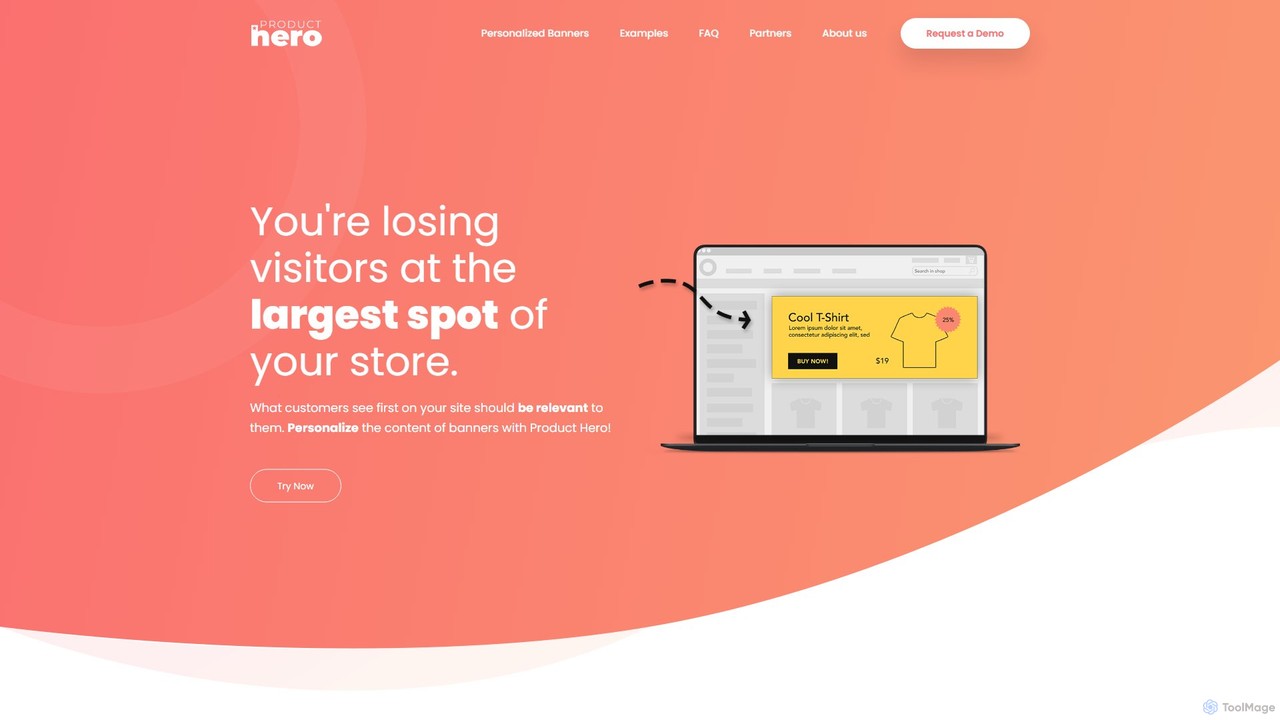
Product Hero is an AI-powered platform that automates the creation of personalized, on-brand e-commerce banners at scale. It integrates with your existing recommendation engine to deliver dynamic, high-performance product visuals for your website, newsletters, and mobile apps, boosting engagement and conversions with minimal effort.
About Product Display
AI Product Display tools are a specialized category of ecommerce solutions that use technologies like augmented reality (AR), 3D rendering, and generative AI to create interactive and immersive product visualizations. These tools transform static 2D images into dynamic, explorable models or virtual try-on experiences. This allows online shoppers to interact with products in a realistic way, helping to bridge the gap between digital and physical retail and increase purchase confidence. They are crucial for brands looking to enhance customer engagement and reduce return rates.
Core Features
- Virtual Try-On (VTO): Allows customers to use their camera to see how products like glasses, makeup, or clothing look on them in real-time.
- 3D Model Generation: Automatically creates interactive 3D models of products from a series of 2D images or design files.
- Augmented Reality (AR) Placement: Enables users to place a true-to-scale virtual model of a product, like furniture or electronics, in their own environment.
- AI-Powered Photoshoots: Generates high-quality, realistic lifestyle images and product scenes without the need for physical photoshoots.
- Interactive 360° Views: Provides a seamless, rotatable view of a product, allowing customers to inspect it from every angle.
Applicable Scenarios
These tools are particularly valuable in industries where visual detail and spatial context are critical. The furniture and home decor sector uses AR placement to help customers visualize items in their homes. Fashion and beauty brands leverage virtual try-on to personalize the shopping experience. Automotive companies use 3D configurators to showcase vehicle customizations, while electronics retailers provide 360° views for detailed product inspection.
Selection Criteria
When choosing an AI Product Display tool, consider its integration capabilities with your ecommerce platform (e.g., Shopify, Magento). Evaluate the quality and realism of the 3D/AR rendering, as this directly impacts user experience. Assess the range of supported product types and the ease of asset creation. Finally, consider the pricing model—whether it's per-view, subscription-based, or per-model—and ensure it aligns with your business scale.
Product DisplayUse Cases
Virtual Furniture Placement in a Room
An interior designer or a homeowner uses an ecommerce app equipped with an AI Product Display tool. Before purchasing a sofa, they select the product and activate the AR feature. By pointing their phone's camera at their living room, a true-to-scale 3D model of the sofa appears on their screen, allowing them to move it around, change its color, and see how it fits with existing decor. This eliminates guesswork, reduces the risk of returns due to size or style mismatches, and significantly improves the user's confidence in making a large purchase online.
AR Try-On for Cosmetics and Eyewear
A customer visiting a beauty or eyewear brand's website wants to find the perfect shade of lipstick or frame style. Using the virtual try-on feature, they grant camera access, and the AI accurately maps the product onto their face in real-time. They can swipe through different colors or styles, seeing the changes instantly. This interactive experience is more engaging than browsing static photos and helps customers make a confident choice, leading to higher conversion rates and greater customer satisfaction for the brand.
Automated 3D Model Creation for Products
An ecommerce manager for a footwear brand needs to create 3D models for their new collection to display on their website. Instead of hiring a 3D artist, they use an AI tool. They upload a series of high-resolution photos of a shoe taken from different angles. The AI processes these images, understands the shoe's geometry, texture, and details, and automatically generates a high-quality, web-optimized 3D model. This process reduces asset creation time from days to minutes and significantly lowers costs, allowing the brand to quickly launch new products with immersive 360° views.
AI-Generated Lifestyle Photoshoots
A small fashion startup with a limited budget needs compelling lifestyle images for their social media and product pages. Using an AI photoshoot tool, they upload clean, studio-shot images of their apparel on a mannequin or flat lay. They then select from a library of AI-generated models and diverse virtual environments (e.g., a city street, a beach, a cafe). The AI realistically drapes the clothing onto the chosen model and places them in the selected scene, generating hundreds of unique, professional-quality images. This avoids the high costs and logistical challenges of traditional photoshoots.
Interactive 360° View for Electronics
A consumer electronics brand is launching a new high-end pair of headphones. To showcase the intricate design and features, they embed an interactive 360° viewer on the product page. Potential buyers can click and drag to rotate the headphones, zoom in to see the texture of the materials, and click on hotspots to get more information about specific features like the charging port or noise-cancellation button. This level of detail and interactivity provides a much richer understanding of the product than static images, building trust and justifying a premium price point.
Customizable 3D Product Configurators
An automotive company allows customers to build their dream car on its website. Using a 3D configurator, a user can select a car model and then customize every detail in real-time, including exterior paint, wheel types, interior upholstery, and optional add-ons. The high-fidelity 3D model updates instantly with each selection, providing a realistic visualization of the final product from all angles. This empowers customers, makes the buying process engaging and personal, and can lead to higher-value sales as users add more premium features.