ToolMage
Sign in

Best 2 Plagiarism Detection AI tools for Education

Popular Plagiarism Detection AI tools in Education include AI Detector and AI Copy Scanner, helping you work more efficiently.

AI Detector
Freemium

AI Detector

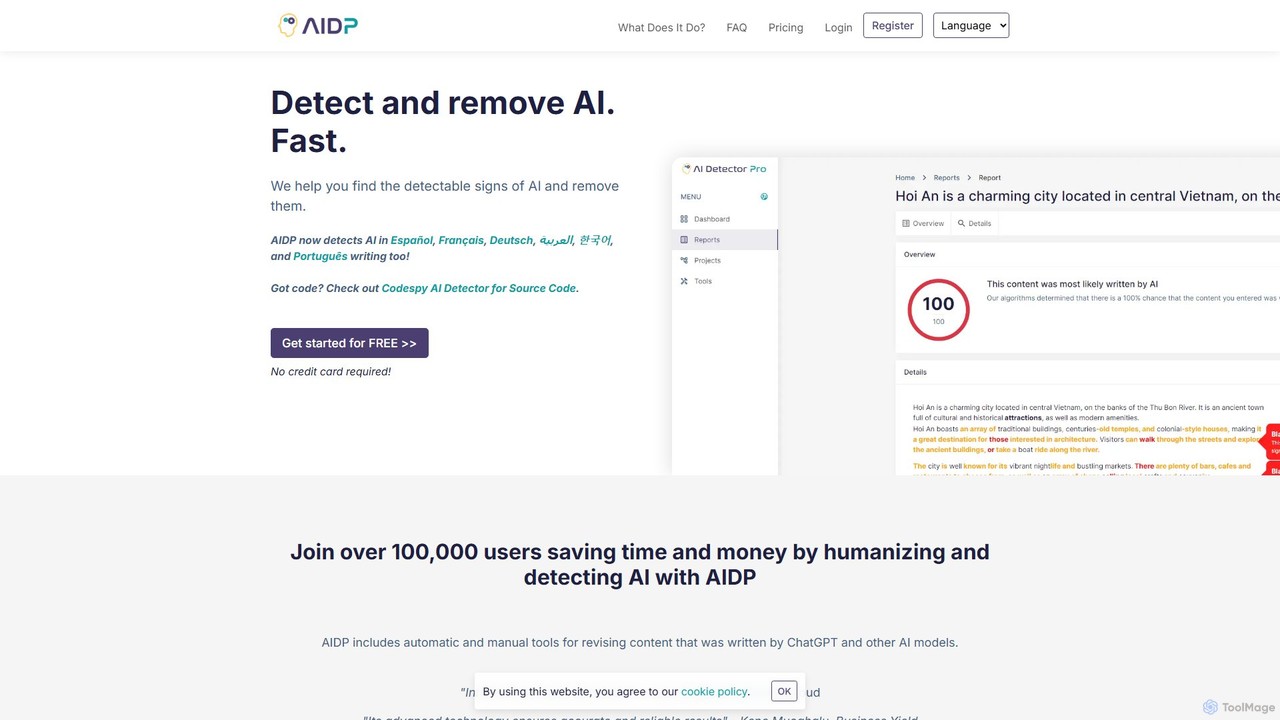
An advanced AI tool for detecting AI-generated text and images with high accuracy. It supports models like ChatGPT, GPT-4, and Midjourney, and includes a unique text humanizer to rewrite AI content, ensuring authenticity and originality for academic and professional use.

Content Verification
Visits 1.5MFavorites 112Likes 113
AI Copy Scanner
Paid

AI Copy Scanner

AI Copy Scanner is a premium AI content detection tool designed for professionals. It offers high-accuracy analysis to distinguish between human-written and AI-generated text, helping marketers, educators, and publishers maintain content authenticity and quality standards. It provides detailed, sentence-level feedback and robust features for teams.

Plagiarism Detection
Visits 5.4KFavorites 135Likes 142

About Plagiarism Detection

Plagiarism Detection tools are a class of software that identifies instances of copied content within a text by comparing it against vast databases of online and academic sources. These tools utilize advanced algorithms and natural language processing (NLP) to detect exact matches, paraphrased sentences, and improper citations. Their primary value lies in upholding academic integrity, protecting intellectual property, and ensuring the originality of written work for education, publishing, and content creation. Many modern AI-powered detectors can also identify subtle plagiarism forms, such as mosaic or translated plagiarism, providing comprehensive originality reports.

Core Features

  • Similarity Score: Provides a percentage indicating the proportion of non-original content detected in a document.
  • Source Comparison: Highlights matching text segments and provides direct links to the original online or academic sources.
  • Paraphrasing Detection: Uses AI to identify rewritten sentences and passages that retain the original meaning without proper attribution.
  • Citation Checking: Verifies the format and accuracy of citations and bibliographies to prevent unintentional plagiarism.
  • AI Content Detection: An emerging feature that analyzes text patterns to estimate the likelihood that content was generated by an AI model.

Applicable Scenarios

These tools are essential in the education sector for teachers and students to maintain academic honesty. They are also widely used by professional writers, content marketers, and SEO specialists to ensure content uniqueness. Publishers and academic journals rely on them to screen manuscripts for originality before publication, while legal professionals may use them to verify the authenticity of documents.

Selection Criteria

When choosing a Plagiarism Detection tool, consider the scope of its database—does it include web pages, academic journals, and books? Evaluate its detection accuracy, especially for paraphrased content. Check for integration capabilities with Learning Management Systems (LMS) or Content Management Systems (CMS). Finally, assess the clarity and detail of the originality reports provided, as well as the pricing model (per-word vs. subscription).

Plagiarism Detection use cases

1

Academic Integrity Checks for Educators

A university professor uses a plagiarism detection tool integrated into their Learning Management System (LMS). Before grading, every student essay is automatically scanned against a vast database of academic papers, websites, and previous submissions. The tool generates an originality report for each paper, highlighting any matching text and providing a similarity score. This allows the professor to quickly identify potential plagiarism, address issues with students directly, and ensure a fair and consistent grading process, thereby upholding the institution's academic integrity standards.

2

Pre-Submission Self-Check for Students

A graduate student preparing their thesis uses a plagiarism checker as a final self-review step. They upload their manuscript to check for any unintentional plagiarism, such as improperly cited sources or accidental paraphrasing that is too close to the original text. The tool provides a detailed report, allowing the student to correct citation errors, rephrase sentences for better originality, and add missing references. This proactive check helps them submit their work with confidence, knowing it meets the university's strict academic standards and is free from preventable errors.

3

Originality Verification for Content Marketers

A content marketing agency uses a plagiarism detection tool to vet all articles from freelance writers before publishing them on client blogs. Each article is scanned to ensure it is 100% unique and does not contain duplicate content from other websites. This process is crucial for maintaining high SEO rankings for their clients, as search engines penalize duplicate content. It also protects the agency and its clients from potential copyright infringement claims, ensuring all published material is original and properly attributed.

4

Manuscript Screening for Publishers

An editor at an academic journal uses a sophisticated plagiarism detector to screen all manuscript submissions. The software compares the submitted paper against a comprehensive database that includes published research, conference proceedings, and dissertations. This initial screening helps identify significant overlaps with existing work, flagging potential cases of plagiarism or self-plagiarism. The editor can then investigate these cases further, ensuring the journal only publishes novel, original research and maintains its scholarly reputation and credibility.

5

Legal Document Authentication

A paralegal at a law firm uses a plagiarism detection service to verify the originality of legal briefs and contracts. By comparing a draft document against a vast database of existing legal texts, case law, and public records, they can ensure that arguments are not improperly copied from other cases without citation. This process helps maintain the firm's professional standards, avoids potential ethical violations, and strengthens the integrity of their legal arguments in court or during negotiations.

6

SEO Content Audit for Websites

An SEO specialist performs a content audit on a client's website using a plagiarism checker that supports batch processing or URL scanning. They analyze the entire site to identify instances of duplicate content, both internally (pages with similar text) and externally (content copied from or to other sites). The detailed report helps them locate and resolve these issues by rewriting or consolidating pages. This action improves the website's search engine ranking, prevents penalties from search engines like Google, and ensures the site's content is perceived as valuable and original.

Plagiarism Detection FAQ

What is an AI Plagiarism Detection tool?

An AI Plagiarism Detection tool is software that uses artificial intelligence, particularly natural language processing (NLP), to check a document's originality. Unlike basic checkers that only find exact matches, AI-powered tools can identify more sophisticated forms of plagiarism. This includes detecting paraphrased content where sentence structure and words are changed but the core idea is copied. They work by comparing the submitted text against a massive database of web pages, academic articles, and books to provide a detailed similarity report, making them essential for academic, professional, and creative writing.

How do I choose the right Plagiarism Detection tool?

To choose the right tool, consider these factors:

  • Database Coverage: Ensure the tool scans against a comprehensive database, including the internet, academic journals, publications, and ideally, a private repository of past submissions.
  • Accuracy: Look for a tool known for its accuracy in detecting not just copy-paste plagiarism but also paraphrasing and mosaic plagiarism.
  • Integration: If you're in education or use a CMS, check if it integrates with systems like Canvas, Moodle, or WordPress for a seamless workflow.
  • Reporting: A good tool provides clear, easy-to-understand reports that highlight matching text and link to the original sources.
  • Privacy and Security: Verify that the service does not store or sell your submitted documents, protecting your intellectual property.
What's the difference between a free and a paid plagiarism checker?

The main differences lie in depth, features, and security. Free checkers often have limitations, such as a smaller comparison database, word count limits per check, and may be supported by ads. They are suitable for quick, informal checks. Paid plagiarism detectors typically offer a much more comprehensive database (including premium academic journals), advanced features like paraphrasing detection, integration with other software (like LMS), detailed reports, and dedicated customer support. Crucially, paid services usually provide stronger privacy and security guarantees, ensuring your documents are not stored or shared.

Can plagiarism detectors identify AI-generated content?

This is an evolving capability. Traditional plagiarism detectors are designed to find matches between a text and existing human-written sources in their database. They are not inherently built to identify the stylistic patterns of AI-generated text. However, many leading plagiarism detection tools are now integrating dedicated AI content detectors. These new modules analyze factors like text perplexity, burstiness, and linguistic patterns to estimate the probability that a text was written by an AI. While accuracy is improving, it's important to use these AI detection scores as an indicator for further review rather than a definitive judgment.

Who needs to use Plagiarism Detection tools?

A wide range of individuals and organizations benefit from using plagiarism detection tools. Key users include:

  • Students: To self-check their assignments for accidental plagiarism and proper citation before submission.
  • Educators and Institutions: To uphold academic integrity, ensure fair assessment, and teach students about proper sourcing.
  • Researchers and Academics: To verify the originality of their manuscripts before submitting them to journals.
  • Content Creators and Marketers: To ensure their blog posts, articles, and web copy are unique to maintain SEO rankings and brand authority.
  • Publishers and Editors: To screen submissions for originality and protect against copyright issues.
  • Businesses: To verify the originality of reports, marketing materials, and internal documents.