Veltos
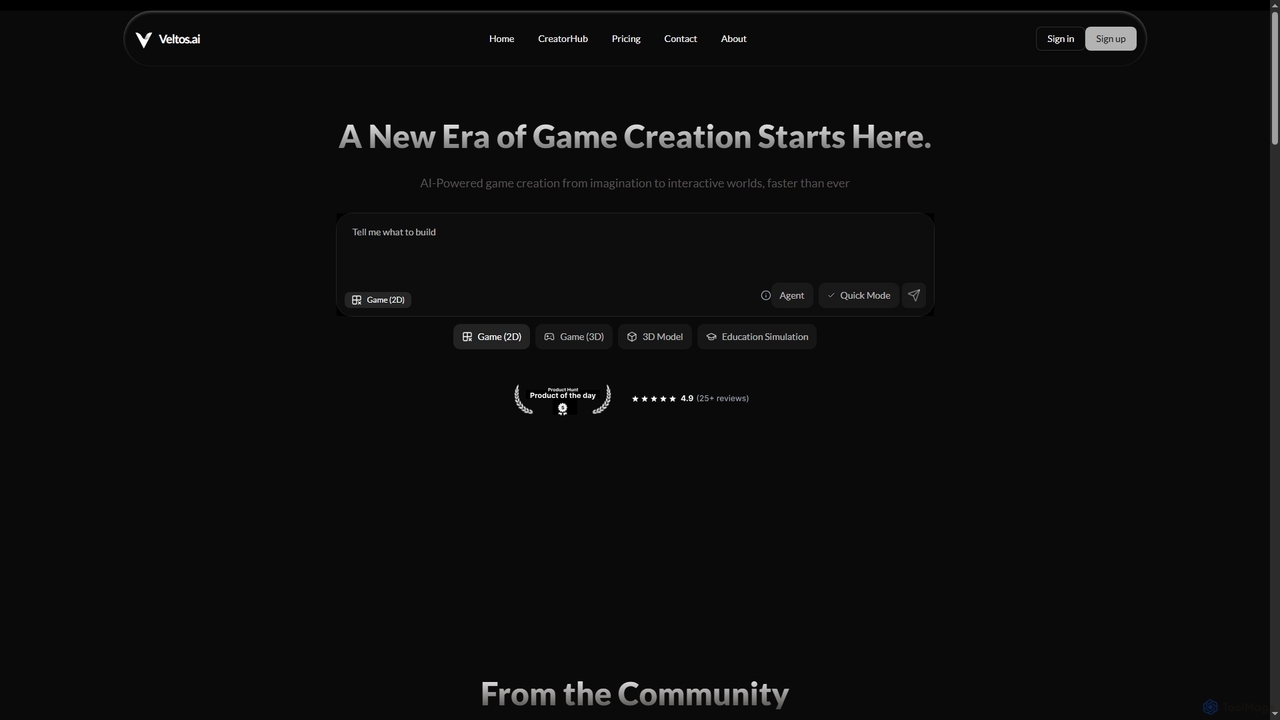
Veltos is an AI-powered platform that transforms simple text prompts into fully playable 2D and 3D games, as …
Veltos is an AI-powered platform that transforms simple text prompts into fully playable 2D and 3D games, as well as interactive 3D worlds and simulations. It empowers creators of all skill levels to design and publish games rapidly without writing a single line of code, democratizing game development and fostering a new era of creative play.
Camel AGI
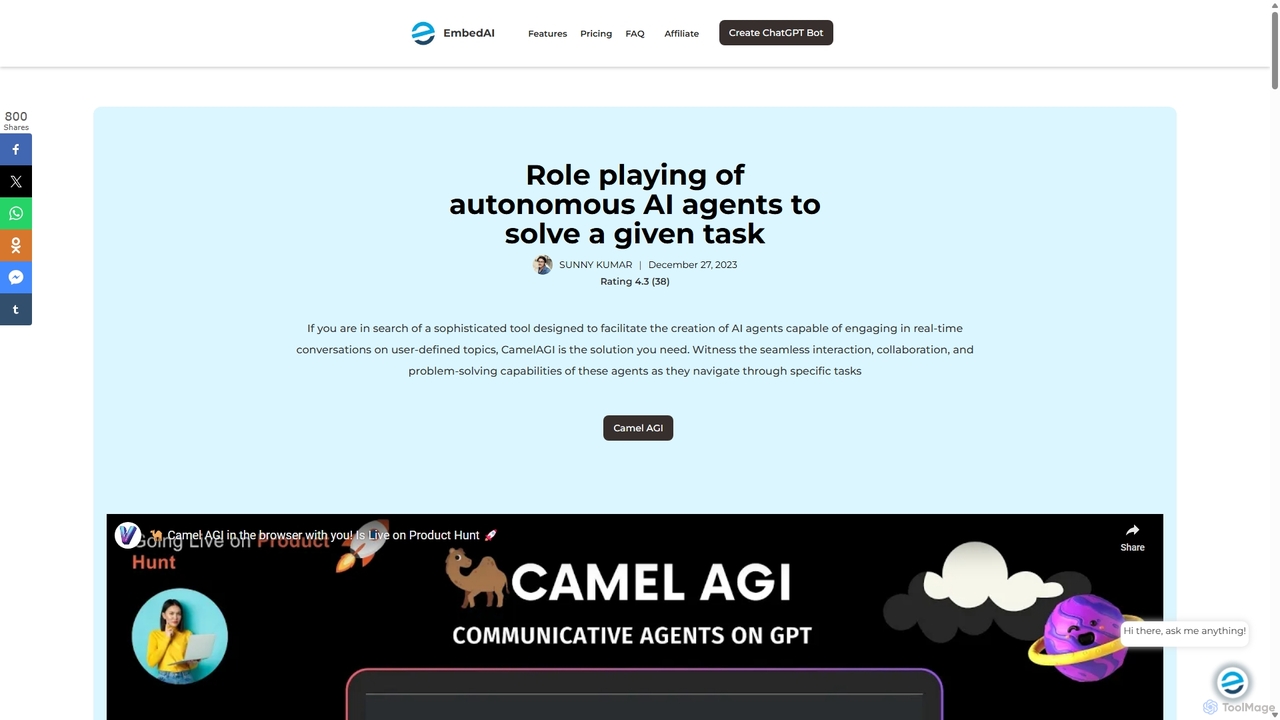
Camel AGI is an innovative platform for creating and observing autonomous AI agents that collaborate through role-playing to …
Camel AGI is an innovative platform for creating and observing autonomous AI agents that collaborate through role-playing to solve complex tasks. Leveraging the architectures of AutoGPT and BabyAGI, it provides a user-friendly interface to witness AI teamwork in action. Users define roles and goals, then watch as two AI agents communicate and strategize to achieve a solution, making it ideal for research, education, creative projects, and complex problem-solving.
TradesViz
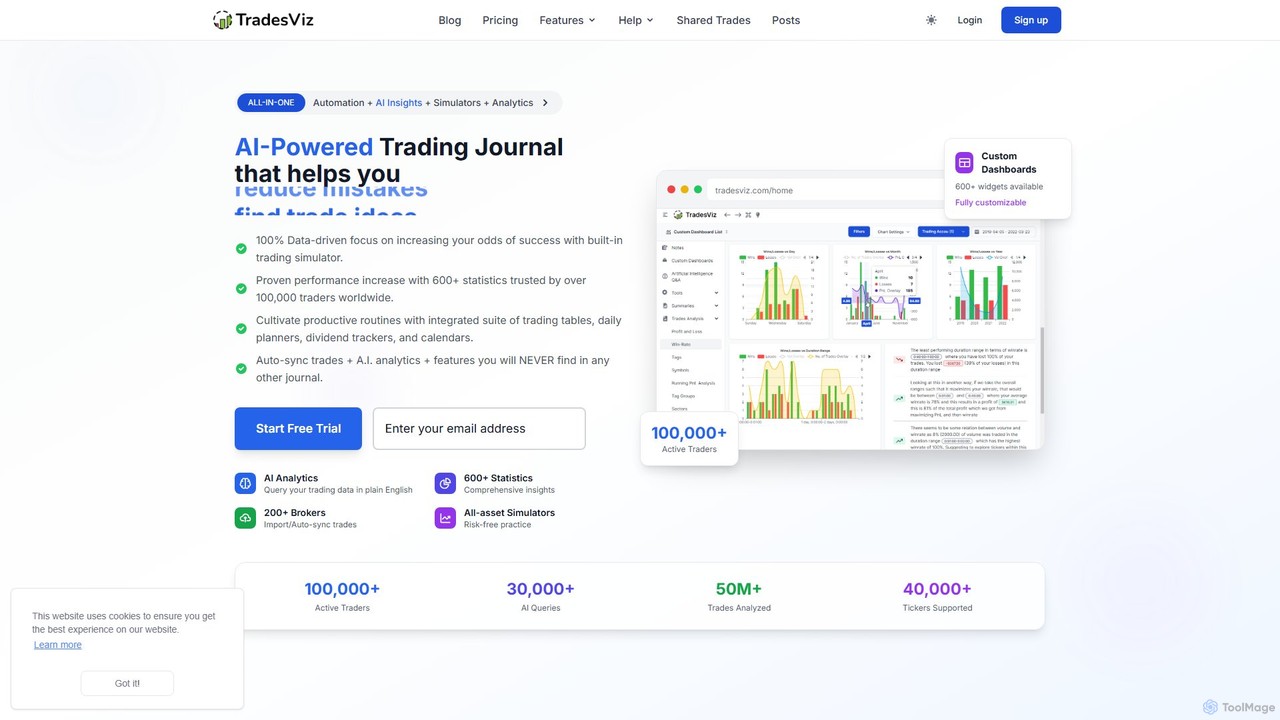
TradesViz is an all-in-one, AI-powered online trading journal for traders across all markets, including stocks, options, futures, forex, …
TradesViz is an all-in-one, AI-powered online trading journal for traders across all markets, including stocks, options, futures, forex, and crypto. It goes beyond simple journaling, offering advanced analytics, versatile trading simulators, a powerful backtesting engine, and detailed options flow analysis. It's designed to help traders of all levels improve their performance through data-driven insights and strategy refinement.
About Simulation
AI-powered simulation tools are a category of advanced software designed to create virtual models of real-world systems, processes, or environments. Leveraging artificial intelligence, these tools can dynamically mimic complex behaviors, predict outcomes, and provide interactive learning experiences. They are invaluable in fields like engineering, healthcare, and particularly within education, offering a safe and cost-effective platform for experimentation, training, and research without real-world risks.
Core Features
- Dynamic Modeling: Creates highly realistic and adaptable virtual environments that respond to inputs.
- Predictive Analytics: Utilizes AI to forecast potential outcomes based on various simulated scenarios and parameters.
- Interactive Learning: Enables users to engage directly with the simulation, making decisions and observing consequences.
- AI Agent Training: Provides controlled environments for developing and testing autonomous AI agents and algorithms.
- Scenario Generation: Automatically generates diverse and complex test cases to thoroughly evaluate systems.
Applicable Scenarios
These tools are widely used by educators, students, researchers, and professionals. In educational settings, they allow engineering students to design and test virtual prototypes, medical students to practice complex surgical procedures, and business students to run market strategy simulations, fostering practical skills and deeper understanding.
How to Choose
When selecting an AI simulation tool, consider its fidelity and realism in mimicking the target environment, the extent of parameter customization and flexibility it offers, and its integration capabilities with existing platforms. Evaluate the user interface for ease of use, especially for educational purposes, and assess its scalability to handle complex models or large datasets.

SimulationUse Cases
Virtual Lab Experiments for Science Education
Science educators and students utilize AI simulation tools to conduct complex laboratory experiments virtually. Students can manipulate variables, observe reactions, and collect data in a safe, repeatable environment, overcoming limitations of physical labs and enhancing understanding of scientific principles without the need for expensive equipment or hazardous materials.
Flight Training for Aviation Students
Aspiring pilots and aviation professionals use advanced flight simulators to gain hands-on experience in a risk-free setting. These AI-powered tools replicate various aircraft models, weather conditions, and emergency scenarios, allowing trainees to master controls, navigation, and critical decision-making skills before actual flight.
Medical Procedure Training for Healthcare Professionals
Medical students, surgeons, and nurses employ AI simulation platforms to practice intricate medical procedures, from diagnostic imaging interpretation to complex surgical operations. This allows them to refine techniques, understand anatomical variations, and manage complications in a realistic virtual patient environment, significantly improving patient safety.
Urban Planning and Environmental Impact Assessment
Urban planners and environmental science students leverage simulation tools to model the impact of new infrastructure projects or policy changes on city ecosystems. They can simulate traffic flow, pollution dispersion, resource consumption, and population growth, enabling data-driven decisions for sustainable urban development.
Robotics and Autonomous Vehicle Development
Engineers and computer science students use AI simulation to test and refine algorithms for robots and autonomous vehicles. These virtual environments allow for rapid iteration and evaluation of AI agents' navigation, perception, and decision-making capabilities under diverse and challenging conditions, accelerating development cycles.
Financial Market Strategy Testing
Business and finance students, along with professional analysts, utilize AI simulation to test various investment and trading strategies against historical or hypothetical market data. This enables them to understand market dynamics, evaluate risk, and optimize portfolio performance in a controlled environment without real financial exposure.