CyberSquare
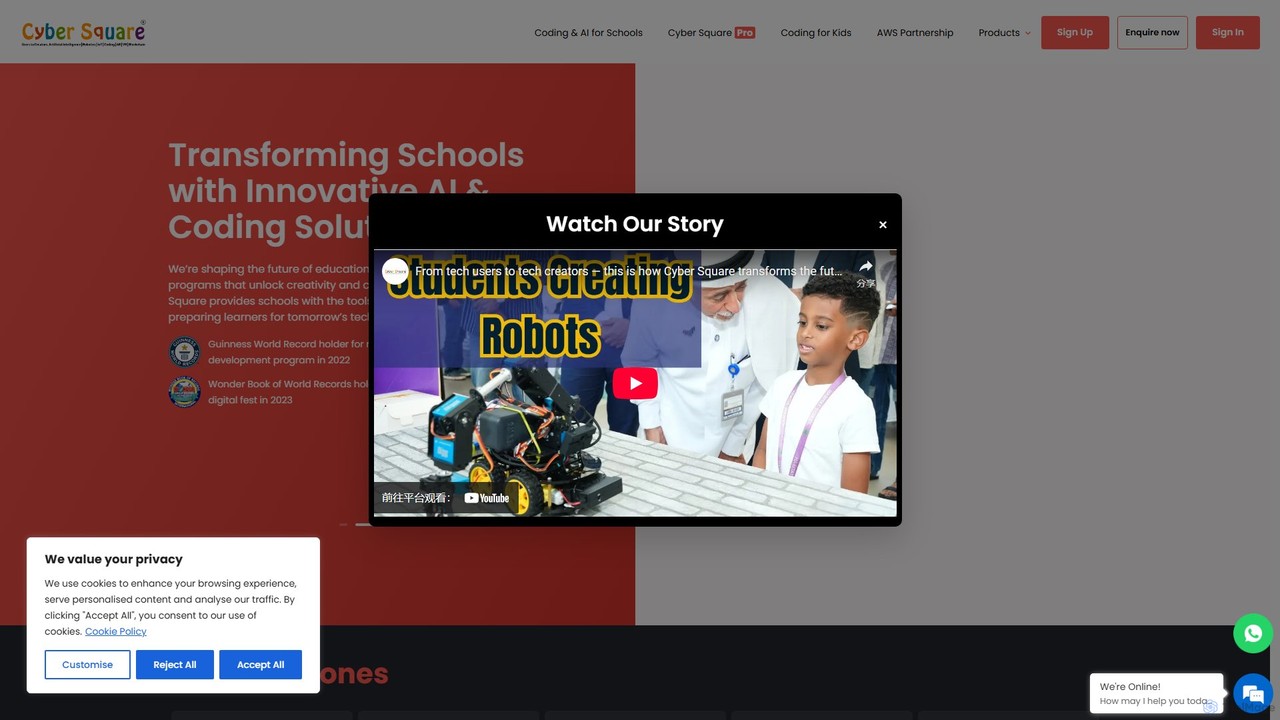
CyberSquare is a leading global EdTech platform offering comprehensive AI, coding, and robotics education for schools and children …
CyberSquare is a leading global EdTech platform offering comprehensive AI, coding, and robotics education for schools and children from K-12. It provides an AI-powered learning management system, project-based curriculum, teacher training, and hands-on kits to transform students from tech consumers into creators.
phospho
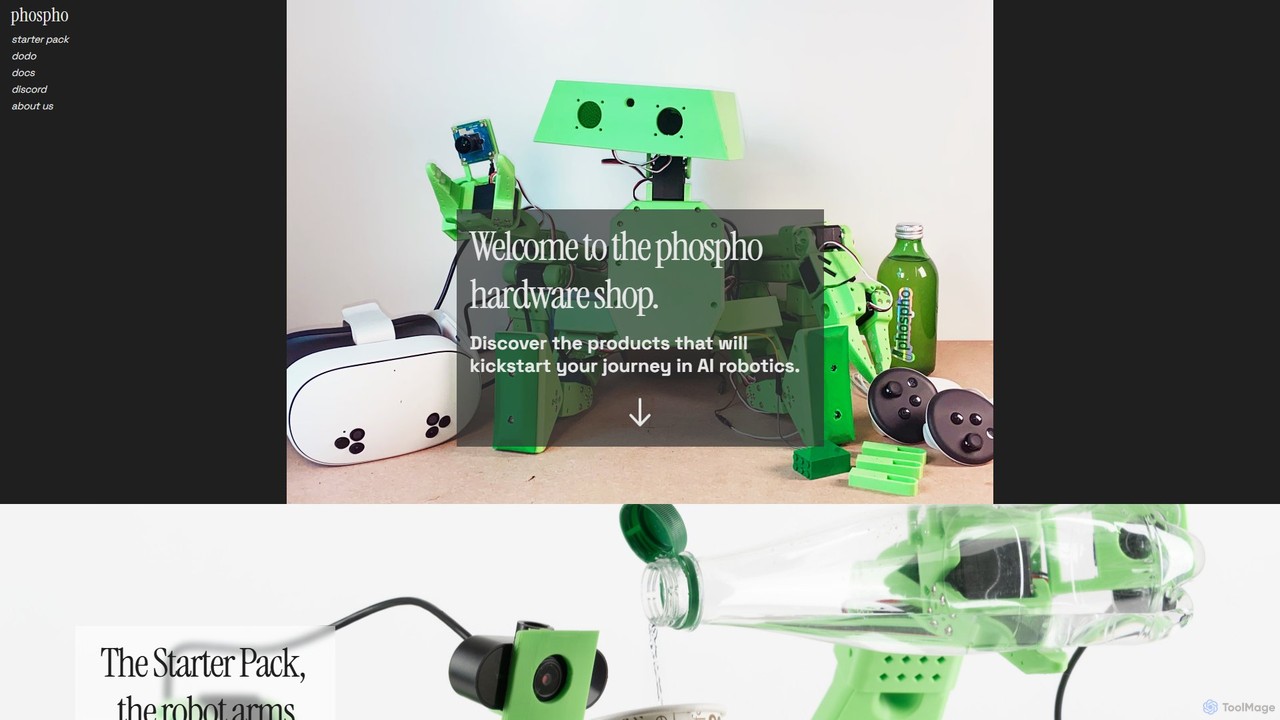
phospho is an AI robotics company providing an integrated ecosystem of open-source hardware and software. It offers starter …
phospho is an AI robotics company providing an integrated ecosystem of open-source hardware and software. It offers starter kits like robotic arms and walking robots, powered by the phosphobot platform, to make advanced physical AI accessible for developers, researchers, and hobbyists.
Lobe
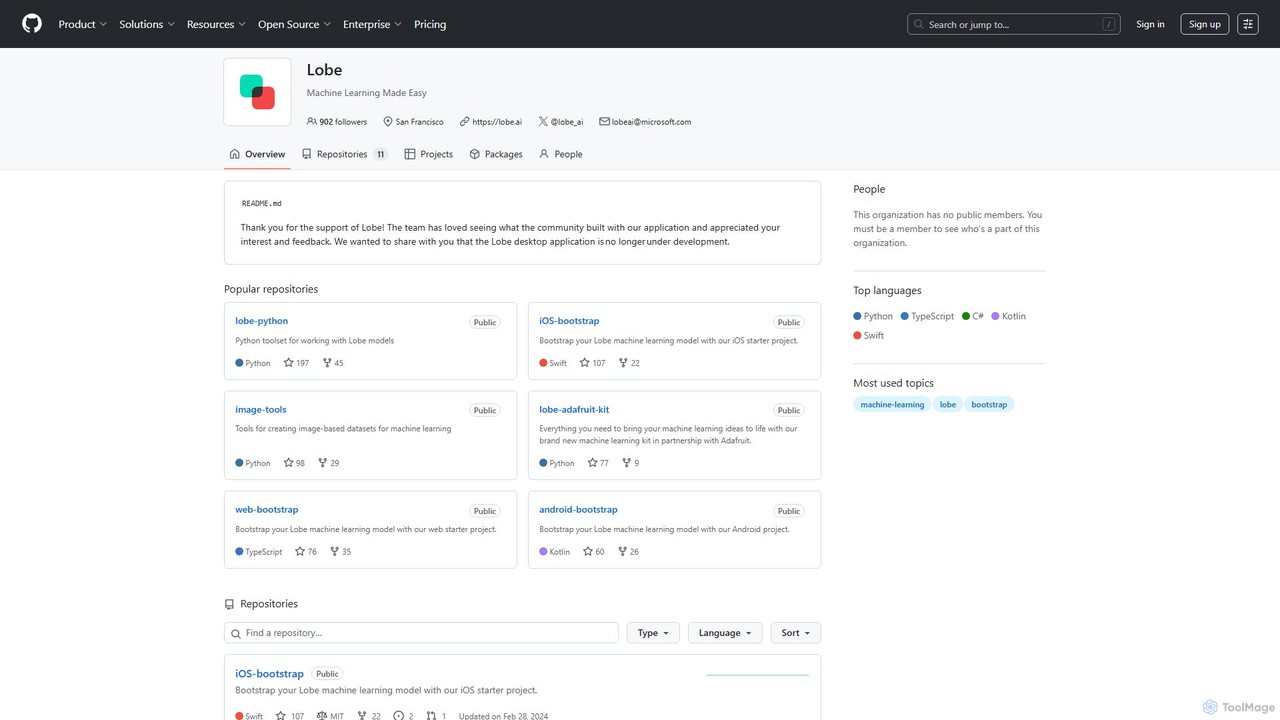
Lobe is a free, user-friendly desktop application for Mac and Windows that allows you to build, train, and …
Lobe is a free, user-friendly desktop application for Mac and Windows that allows you to build, train, and deploy custom machine learning models without writing any code. It simplifies the process of creating AI, focusing primarily on image classification.
About Stem
AI tools for Stem (Science, Technology, Engineering, Mathematics) are specialized applications designed to significantly enhance learning, research, and problem-solving across these critical disciplines. Leveraging advanced algorithms, machine learning, and natural language processing, these tools provide intelligent assistance, automate complex tasks, and offer highly personalized educational experiences. They empower students to grasp difficult concepts, enable educators to create engaging content, and assist researchers in analyzing vast datasets and innovating within their respective fields, ultimately accelerating discovery and understanding.
Core Features
- Automated Problem Solving: Provides detailed, step-by-step solutions and comprehensive explanations for complex mathematical equations, physics problems, or engineering challenges, aiding in deeper understanding.
- Interactive Simulations & Virtual Labs: Offers immersive virtual environments for hands-on experimentation in chemistry, biology, or physics, allowing users to explore concepts safely and without physical constraints.
- Advanced Data Analysis & Visualization: Processes and interprets large, complex datasets from scientific experiments or surveys, identifying patterns, correlations, and generating insightful, customizable visual representations.
- Personalized Learning & Tutoring: Adapts educational content, exercises, and feedback to individual student progress, learning styles, and knowledge gaps across various STEM subjects, acting as a dedicated AI tutor.
- Code Generation, Optimization & Debugging: Assists developers and engineering students in writing efficient code, suggesting optimizations, and identifying/correcting errors in programming languages like Python, Java, or C++.
Applicable Scenarios
These AI tools are invaluable for university students seeking personalized, on-demand tutoring in advanced calculus or quantum physics, helping them master challenging topics. High school teachers can utilize them to generate dynamic, interactive lesson plans for chemistry experiments or biology concepts, making learning more engaging. Researchers benefit from their ability to quickly process and visualize genomic data or complex climate models, accelerating scientific discovery. Furthermore, engineers can simulate intricate system behaviors for product design, and software developers can efficiently debug intricate codebases, streamlining project development.
How to Choose
When selecting AI tools for Stem, it's crucial to consider the specific discipline and the required level of accuracy and reliability, especially for scientific or engineering calculations. Evaluate the tool's ability to seamlessly integrate with existing educational platforms (LMS) or research software, its user-friendliness, and the depth of its explanatory capabilities for complex topics. Additionally, assess the customization options for learning paths or research parameters, data privacy policies, and the ethical guidelines for AI-generated content or solutions to ensure responsible use.

StemUse Cases
Personalized Math Tutoring for University Students
University students struggling with advanced mathematics concepts like differential equations or linear algebra can use AI STEM tools for personalized tutoring. The AI analyzes their performance, identifies weak areas, and provides targeted explanations, practice problems, and step-by-step solutions. This helps students grasp complex topics at their own pace, improving comprehension and exam readiness without needing constant human intervention.
Automated Code Debugging for Engineering Projects
Engineering students or junior developers working on complex coding projects often face challenges with debugging. AI STEM tools can automatically analyze code, identify syntax errors, logical flaws, and potential performance bottlenecks. They suggest precise fixes and explain the reasoning behind them, significantly reducing the time spent on debugging and helping users learn best coding practices more efficiently.
Scientific Data Analysis and Hypothesis Generation
Researchers in fields like biology, chemistry, or environmental science can leverage AI tools to process vast amounts of experimental data. These tools can identify subtle patterns, correlations, and anomalies that might be missed by manual analysis. Furthermore, some advanced AI can even assist in generating novel hypotheses based on existing literature and data, accelerating the scientific discovery process.
Interactive Virtual Labs for Chemistry Education
High school or college chemistry students can utilize AI-powered virtual lab simulations to conduct experiments safely and repeatedly. These tools allow users to mix chemicals, observe reactions, and measure outcomes in a simulated environment. This hands-on experience reinforces theoretical knowledge, helps visualize abstract concepts, and provides a safe space for trial and error without the cost or danger of real lab materials.
AI-powered Lesson Plan Generation for STEM Teachers
STEM educators often spend considerable time developing engaging lesson plans. AI tools can assist by generating customized lesson content, interactive quizzes, and project ideas tailored to specific curriculum standards and student learning levels. This frees up teachers' time, allowing them to focus more on direct student interaction and providing a diverse range of teaching materials.
Predictive Modeling for Environmental Science Projects
Environmental science students or researchers can use AI STEM tools to build predictive models for phenomena like climate change impacts, pollution spread, or resource management. By inputting historical data and various parameters, the AI can simulate future scenarios, helping to understand complex environmental systems and inform potential mitigation strategies. This provides valuable insights for research and policy recommendations.