ToolMage
Sign in

Best 3 Translation AI tools for Education

Popular Translation AI tools in Education include Zeli, LangGPT, and NeonLingo, helping you work more efficiently.

Zeli
Free

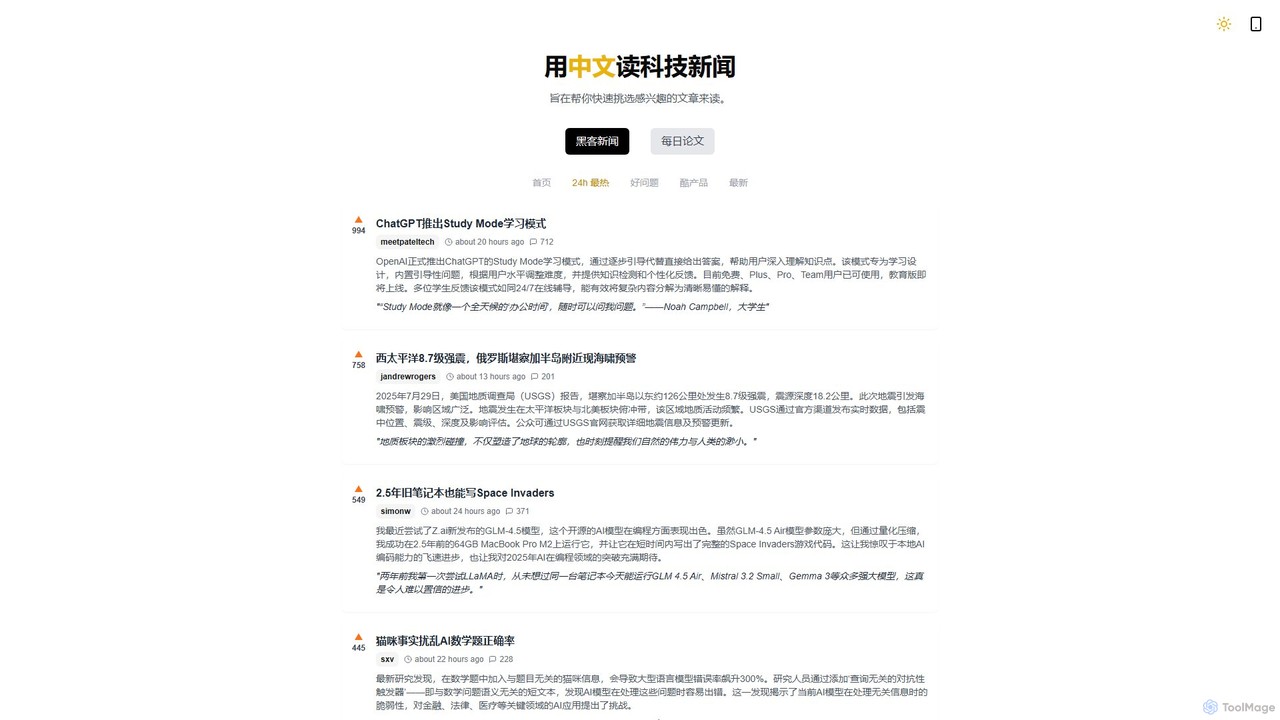
Zeli

Zeli is an AI-powered platform that translates and summarizes top tech news from Hacker News and academic papers into Chinese. It helps Chinese-speaking tech enthusiasts, developers, and researchers stay updated with the latest global trends and discussions without language barriers, providing curated content and concise summaries.

Information
Visits 40.8KFavorites 120Likes 115
LangGPT
Free

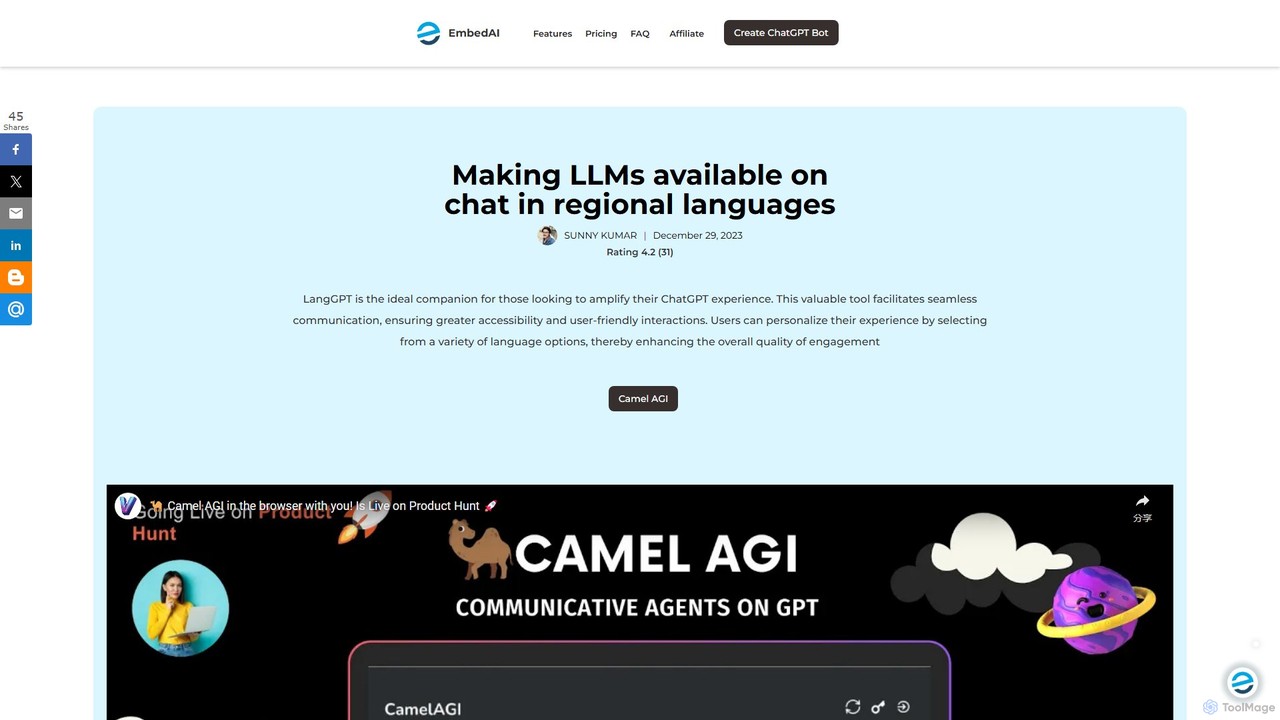
LangGPT

LangGPT is a free AI tool that enhances the ChatGPT experience by enabling seamless communication in over 10 regional languages. It breaks down language barriers, offering features like chat history search and a prompt library to provide a personalized, inclusive, and efficient interaction with advanced AI models.

Chatbot Interface
Visits 28.3KFavorites 134Likes 120
NeonLingo
Freemium

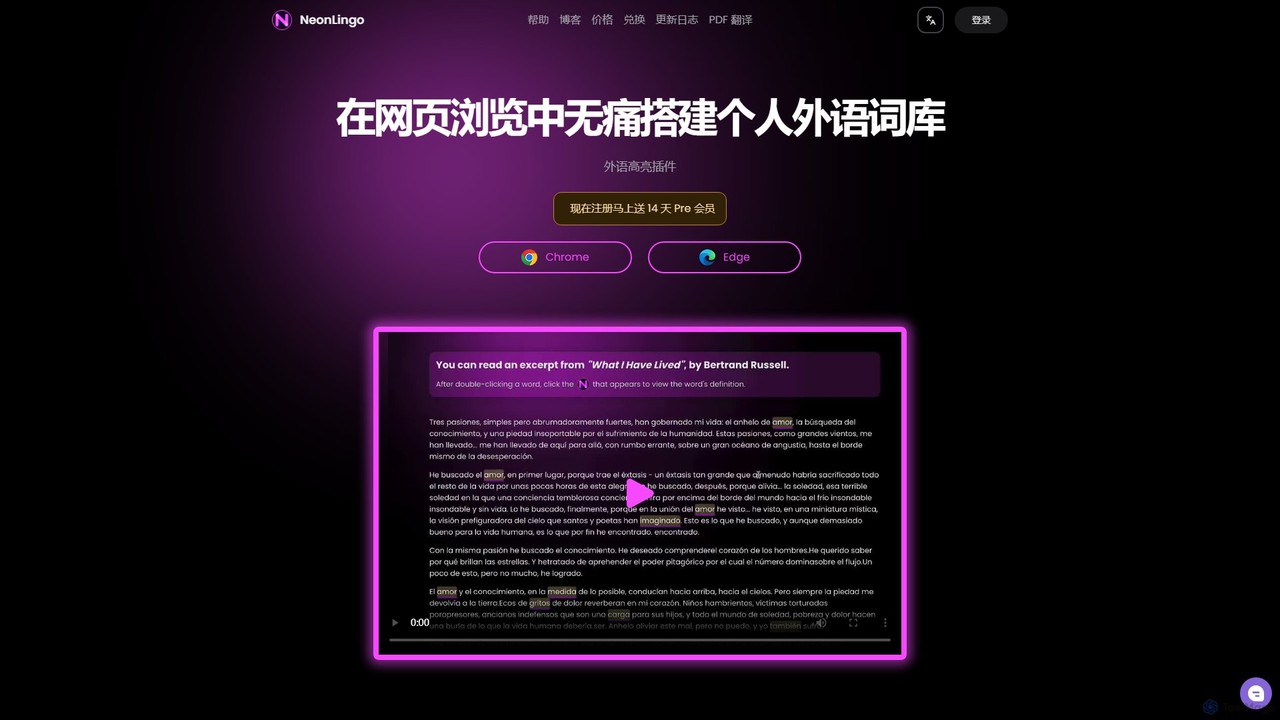
NeonLingo

NeonLingo is an AI-powered browser extension designed for seamless language learning while you browse. It intelligently translates and highlights foreign words, automatically building a personal vocabulary list. By using contextual AI and spaced repetition principles, it helps you learn new words effortlessly and retain them longer, transforming your web reading into an effective learning experience.

Chrome Extensions
Visits 5.4KFavorites 151Likes 130

About Translation

AI Translation tools are applications that use artificial intelligence, particularly neural networks, to automatically convert text or speech from one language to another. Unlike older rule-based systems, these tools analyze the context of entire sentences to produce more accurate, fluent, and natural-sounding translations. They are essential for breaking down language barriers in education, business, and personal communication, enabling access to global information and facilitating cross-cultural interaction. The technology often includes features like document format preservation and real-time voice translation.

Core Features

  • Neural Machine Translation (NMT): Delivers context-aware translations that are more accurate and human-like than previous technologies.
  • Document Translation: Translates entire files (like PDF, DOCX, PPTX) while preserving the original layout and formatting.
  • Real-time Voice Translation: Enables live, two-way conversation translation for meetings, travel, and language practice.
  • Terminology Management: Allows users to create custom glossaries to ensure specific terms are translated consistently.
  • Tone and Formality Control: Adjusts the translation output to match different communication styles, such as formal or informal.

Use Cases

In the educational sphere, students and researchers use these tools to access academic papers and resources from around the world. Beyond academia, businesses rely on them for multilingual customer support, website localization, and international contract review. Content creators and marketers use them to adapt their content for global audiences, while travelers use them for daily communication.

How to Choose

When selecting an AI Translation tool, consider the supported language pairs and their accuracy for your specific domain (e.g., technical, legal). Evaluate its integration capabilities, such as API access or browser extensions. For sensitive information, data privacy and security policies are critical. Also, compare pricing models, from free tiers with limitations to subscription plans for heavy usage and advanced features.

Translation use cases

1

Translating Academic Papers for Research

A postgraduate student researching quantum physics needs to review several key papers published only in German and Japanese. Instead of waiting weeks for a human translator, they use an AI document translation tool. They upload the PDF files and receive fully formatted English versions in minutes. This allows them to quickly extract critical data, understand complex methodologies, and incorporate international findings into their literature review, significantly accelerating their research process.

2

Real-time Multilingual Customer Support

A customer support agent for a global e-commerce company receives a support ticket in Portuguese. Using an integrated AI translation tool within their helpdesk software, the agent's English reply is instantly translated into Portuguese for the customer. The customer's responses are also translated back into English in real-time. This enables a smooth, efficient conversation, resolving the issue quickly without needing a dedicated Portuguese-speaking agent and improving customer satisfaction.

3

Localizing a Website for Market Expansion

A marketing manager is tasked with launching their company's software product in Spain and France. They use an AI translation platform with glossary features to translate their entire website and marketing materials. By pre-defining how their brand name and technical terms should be handled, they ensure consistency. The tool's API is also used to automate the translation of new blog posts, reducing the time-to-market from months to days and making the content feel native to local users.

4

Language Learning and Immersion

A student learning Spanish uses an AI translation app as a daily companion. When reading a Spanish news article, they use the browser extension to instantly translate unfamiliar words or phrases. For speaking practice, they use the app's conversation mode to talk into their phone and hear the Spanish translation, helping them practice pronunciation and sentence structure. This provides immediate feedback and contextual learning that supplements formal lessons.

5

Facilitating International Business Negotiations

An executive is in a video conference with potential partners from South Korea. They use a real-time meeting translation tool that provides live captions in English. As the Korean team speaks, the AI generates English subtitles on the screen, allowing the executive to follow the nuances of the discussion without interruption. This ensures clear communication, prevents misunderstandings, and helps build trust in a high-stakes negotiation environment.

6

Preliminary Review of Foreign Legal Documents

A paralegal at a law firm receives a contract written in Vietnamese from an international partner. To get a quick understanding of the document's main clauses and obligations before engaging a certified translator, they use a secure AI translation tool designed for sensitive documents. The tool provides a rapid English translation, highlighting key terms and potential areas of concern. This initial analysis helps the legal team prepare for a more detailed review, saving time and resources.

Translation FAQ

What are AI Translation tools?

AI Translation tools are software applications that use artificial intelligence, primarily neural machine translation (NMT), to translate text, speech, and documents between languages. Unlike older systems, they analyze sentence context to provide more accurate and natural-sounding results. Key features often include real-time conversation translation, document format preservation, and the ability to customize terminology for specific industries.

How do I choose the right AI Translation tool?

To choose the right tool, first assess your primary need. Consider these factors:

  • Accuracy & Domain: Does the tool perform well for your specific content (e.g., legal, creative, technical)?
  • Supported Languages: Ensure it covers all the language pairs you require.
  • Features: Do you need document translation, API access, real-time voice translation, or glossary management?
  • Security: For confidential information, choose a tool with strong data privacy policies and on-device options.
  • Cost: Compare free versions with the features and volume offered in paid subscription plans.

What is the difference between AI Translation (NMT) and older machine translation?

The key difference lies in the approach. Older machine translation (like Statistical or Rule-Based) translated phrases or words in segments, often resulting in grammatically awkward and out-of-context output. AI Translation, based on Neural Machine Translation (NMT), processes entire sentences at once. This allows the AI to understand context, grammar, and nuances, producing translations that are significantly more fluent, accurate, and human-like.

Can AI Translation tools handle specialized terminology?

Yes, many advanced AI Translation tools are designed to handle specialized terminology. They often achieve this through custom glossary features, where users can define how specific terms (like brand names, technical jargon, or legal phrases) should be translated to ensure consistency. Some platforms also offer pre-trained models that are optimized for specific industries like medicine, law, or finance, providing higher accuracy for domain-specific language.

Are AI translations accurate enough for professional use?

The accuracy of AI translation has improved dramatically and is often sufficient for many professional tasks, such as internal communications, preliminary document reviews, and customer support. However, for high-stakes content like legal contracts, official documents, or polished marketing campaigns, it is still best practice to have the AI-generated translation reviewed by a professional human translator. AI serves as a powerful tool to accelerate the process, not always as a complete replacement.