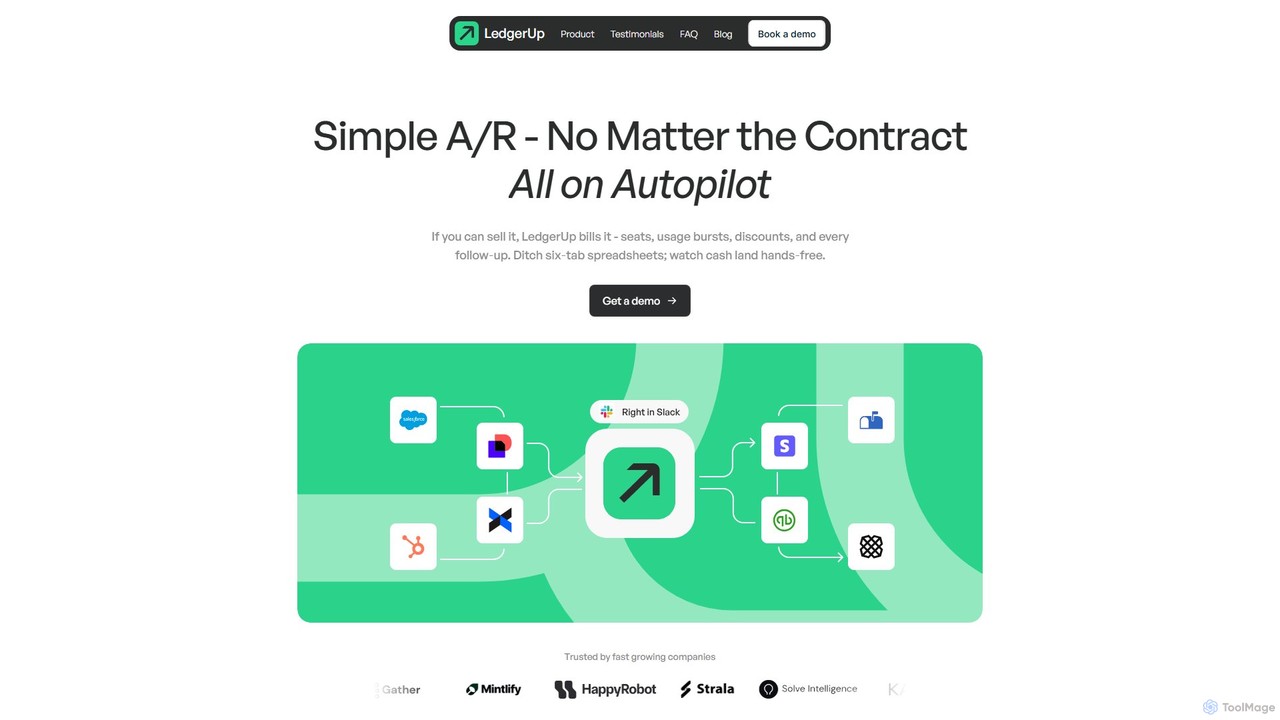
AI Billing tools are a specialized category of AI-powered solutions designed to automate, optimize, and intelligently manage financial invoicing, payment processing, and revenue operations. These tools leverage artificial intelligence, machine learning, and data analytics to streamline complex billing workflows, reduce manual errors, and provide actionable insights into financial performance. They go beyond traditional billing systems by offering predictive capabilities, anomaly detection, and smart automation, significantly enhancing efficiency and accuracy in revenue management.
Core Features
- Automated Invoicing: Automatically generate and dispatch invoices based on predefined schedules, usage data, or contract terms.
- Payment Reconciliation: Intelligently match incoming payments with outstanding invoices, identifying and flagging discrepancies for review.
- Subscription Management: Handle recurring billing cycles, prorations, renewals, upgrades, and downgrades for subscription-based services.
- Fraud Detection: Utilize AI algorithms to analyze transaction patterns and identify suspicious activities or potential billing fraud.
- Revenue Forecasting: Predict future revenue streams and cash flow based on historical data, customer behavior, and market trends.
Applicable Scenarios
AI Billing tools are invaluable for businesses across various sectors, particularly those with complex or high-volume billing needs. SaaS companies benefit from automated subscription management, while e-commerce platforms can streamline payment reconciliation. Service providers use these tools for accurate, usage-based invoicing, and large enterprises leverage them for robust fraud detection and revenue assurance.
How to Choose
When selecting an AI Billing solution, prioritize integration capabilities with existing CRM, ERP, and accounting systems to ensure seamless data flow. Evaluate its scalability to accommodate future growth and transaction volumes. Consider the level of customization offered to align with unique billing models and business rules. Finally, assess its reporting and analytics features for comprehensive financial insights and ensure robust security and compliance with relevant financial regulations.