CloudVerse AI
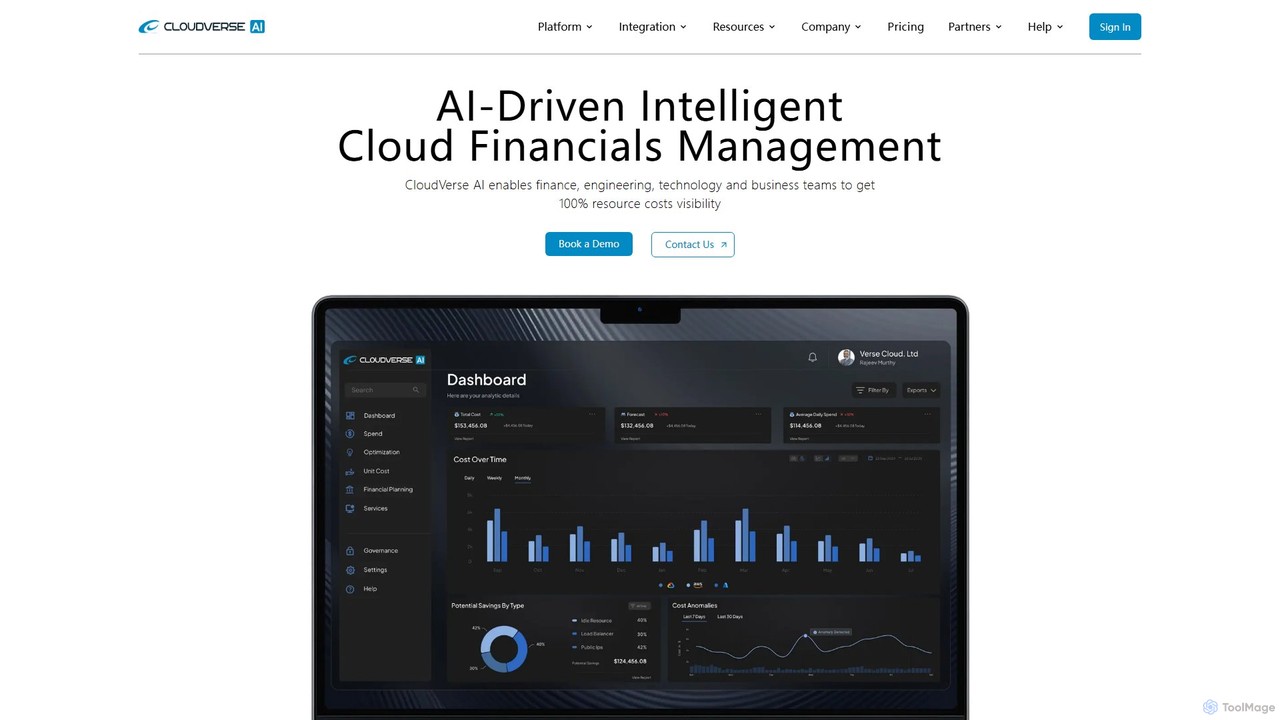
CloudVerse AI is an AI-powered FinOps platform designed for comprehensive cloud financial management. It helps enterprises govern, manage, …
CloudVerse AI is an AI-powered FinOps platform designed for comprehensive cloud financial management. It helps enterprises govern, manage, and optimize their spending across multicloud environments like AWS, Azure, and GCP. By leveraging intelligent algorithms and features like virtual tagging, it provides clear cost allocation, enhances budget control, and aims to significantly reduce cloud expenses, making the cloud simple and cost-effective.
cloudnein
cloudnein is an AI-powered cloud management platform designed to optimize costs, enhance security, and automate operations for AWS, …
cloudnein is an AI-powered cloud management platform designed to optimize costs, enhance security, and automate operations for AWS, GCP, and Azure. It provides intelligent recommendations and proactive insights to help businesses manage their cloud infrastructure efficiently and securely.
About Cost Optimization
AI Cost Optimization tools are a specialized category of financial software that use machine learning to analyze spending and identify savings opportunities. They process data from various sources like cloud providers, SaaS subscriptions, and internal budgets to detect inefficiencies and forecast future expenses. These tools empower businesses to proactively manage budgets, reduce operational waste, and optimize resource allocation for better financial health. Unlike traditional spreadsheets, they offer real-time monitoring, automated recommendations, and predictive insights to prevent cost overruns.
Core Features
- Cloud Cost Management: Monitors usage of services like AWS, Azure, and GCP to recommend right-sizing and shut down idle resources.
- SaaS Spend Analysis: Tracks software subscriptions to identify duplicate licenses and analyze usage, eliminating underutilized tools.
- Predictive Forecasting: Uses historical data to accurately predict future costs and model the financial impact of business decisions.
- Anomaly Detection: Automatically flags unusual spending patterns or sudden cost spikes that could indicate errors or waste.
- Automated Recommendations: Provides actionable, data-driven suggestions for cost reduction without requiring manual analysis.
Use Cases
These tools are particularly valuable for technology companies, enterprises with large cloud infrastructures, and fast-growing startups. Key users include FinOps teams, IT administrators, financial controllers, and DevOps engineers who are responsible for managing significant and variable operational expenses.
How to Choose
When selecting a tool, consider its integration capabilities with your key platforms (e.g., AWS, Salesforce). Evaluate the level of automation it offers—does it just report, or can it execute changes? Also, assess the customizability of its dashboards and its pricing model, which could be a flat fee or a percentage of savings.

Cost OptimizationUse Cases
Optimizing Cloud Infrastructure Costs
A FinOps engineer at a growing tech company uses an AI cost optimization tool to analyze their monthly AWS bill. The tool automatically identifies over-provisioned EC2 instances and suggests switching to more cost-effective instance types based on actual usage patterns. It also flags idle resources that can be safely terminated. By implementing these automated recommendations, the company reduces its monthly cloud spend by 25% without impacting application performance, freeing up capital for product development.
Managing SaaS Subscription Sprawl
An IT manager at a mid-sized enterprise is tasked with reducing software spending. They deploy an AI tool that integrates with their financial systems to discover all active SaaS subscriptions across the company. The platform identifies redundant applications (e.g., three different project management tools) and highlights licenses assigned to former employees. This unified view allows the manager to consolidate subscriptions, negotiate better enterprise deals, and eliminate wasteful spending, resulting in a 15% reduction in the annual software budget.
Forecasting Project Budget Overruns
A project manager for a large construction project uses an AI tool to monitor costs in real-time. The tool ingests data from invoices, payroll, and material suppliers. Its predictive model analyzes current spending trends and forecasts that the project is likely to exceed its budget by 10% in the next quarter. This early warning allows the manager to renegotiate with a supplier and adjust resource allocation, successfully bringing the project back on budget before the overrun occurs.
Detecting Anomalous Financial Transactions
A financial controller implements an AI cost optimization tool to monitor corporate credit card spending. The system learns the typical spending patterns for each department. One day, it flags a transaction for $5,000 from an unrecognized software vendor charged to the marketing department's card. The controller is immediately alerted, investigates, and discovers it was an unauthorized charge. They are able to dispute the transaction and prevent a potential recurring fraudulent expense, securing the company's funds.
Allocating Departmental Budgets Effectively
A CFO preparing for the annual budget cycle uses an AI platform to get a unified view of spending across all departments. The tool analyzes historical data and benchmarks it against industry peers, revealing that the sales department's travel expenses are 30% higher than average for similar-sized companies. Armed with this data, the CFO can have a constructive conversation with the sales head to find more cost-effective travel solutions, allowing for a more strategic allocation of that budget towards high-ROI marketing campaigns.
Reducing Kubernetes Cluster Costs
A DevOps team manages a large Kubernetes environment and struggles with unpredictable costs. They implement an AI-powered optimization tool that continuously analyzes resource utilization within their clusters. The tool identifies underutilized nodes and automates the process of 'node right-sizing' to match actual workload demands. It also provides recommendations for using spot instances for non-critical workloads, safely reducing costs. This leads to a 40% reduction in Kubernetes-related compute costs while maintaining system reliability.