Encubatorr
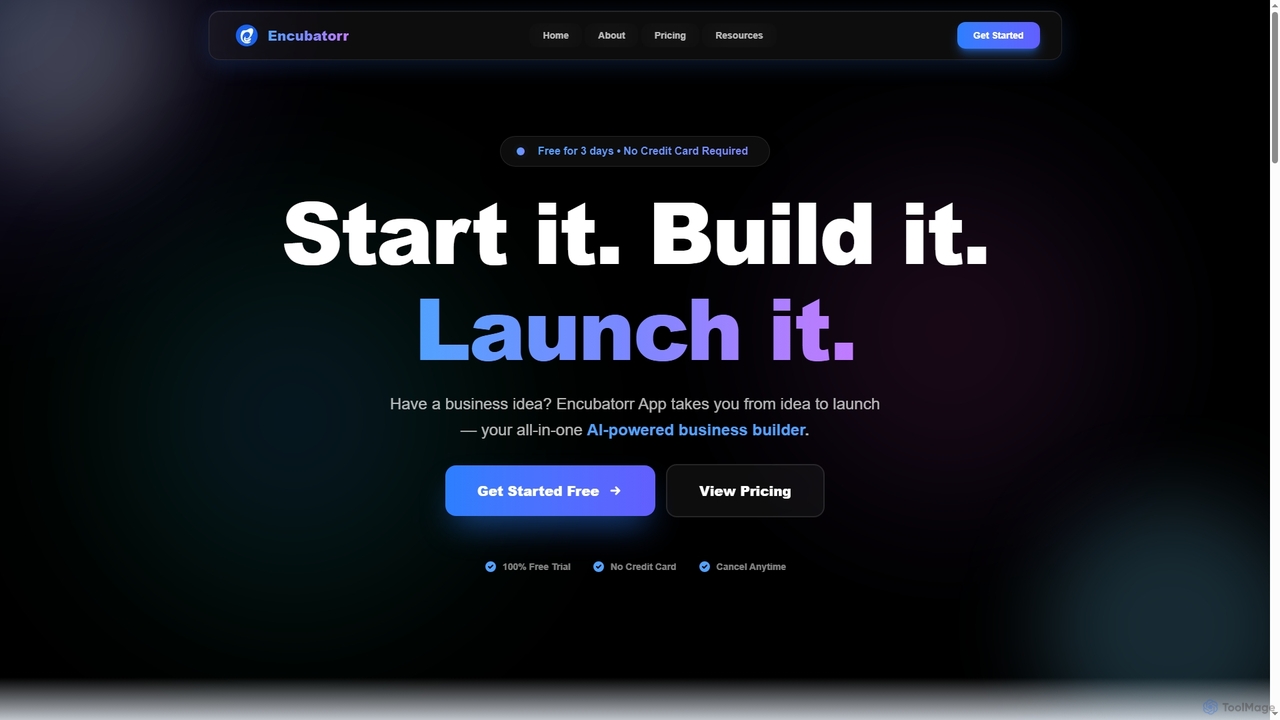
Encubatorr is an all-in-one AI-powered business builder designed to guide entrepreneurs from initial idea to successful launch. It …
Encubatorr is an all-in-one AI-powered business builder designed to guide entrepreneurs from initial idea to successful launch. It provides comprehensive tools for business planning, market research, financial projections, competitive analysis, and document generation, empowering founders to build and grow their ventures efficiently.
CheckFast
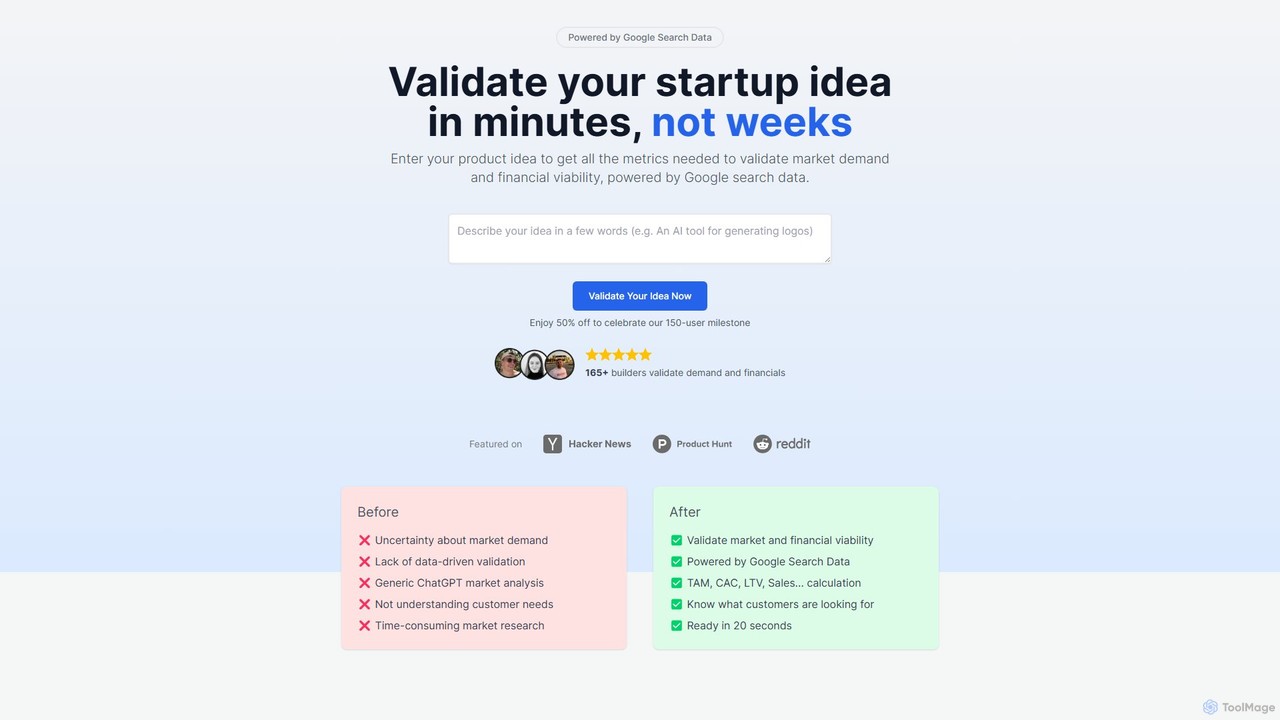
CheckFast is an AI-powered tool for entrepreneurs and founders to instantly validate product ideas. By analyzing Google Search …
CheckFast is an AI-powered tool for entrepreneurs and founders to instantly validate product ideas. By analyzing Google Search data, it assesses market demand and financial viability, delivering a comprehensive report with metrics like TAM, LTV, CAC, and a P&L statement in just 20 seconds.
sheety.ai
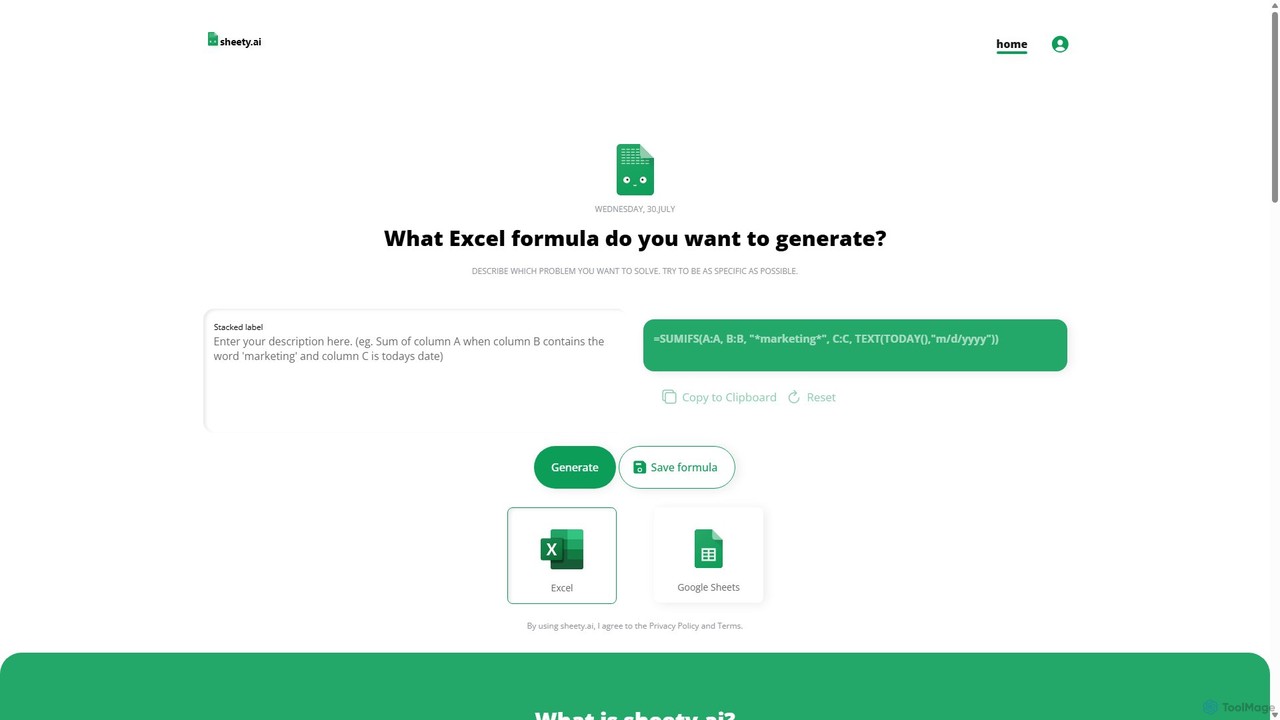
sheety.ai is an AI-powered tool that instantly generates complex spreadsheet formulas for Excel and Google Sheets from natural …
sheety.ai is an AI-powered tool that instantly generates complex spreadsheet formulas for Excel and Google Sheets from natural language descriptions. Simply describe the problem you want to solve, and the AI will provide the correct formula, saving you time and eliminating the need to memorize syntax. It's designed for everyone from students to financial analysts, boosting productivity and data accuracy.
Slidebean
Slidebean is an AI-powered platform designed for startups to create professional pitch decks and financial models. It combines …
Slidebean is an AI-powered platform designed for startups to create professional pitch decks and financial models. It combines an intuitive presentation builder with expert consulting services, offering templates, AI-driven content generation, financial planning tools, and direct access to fundraising experts to help founders secure investment.
IdeaBuddy
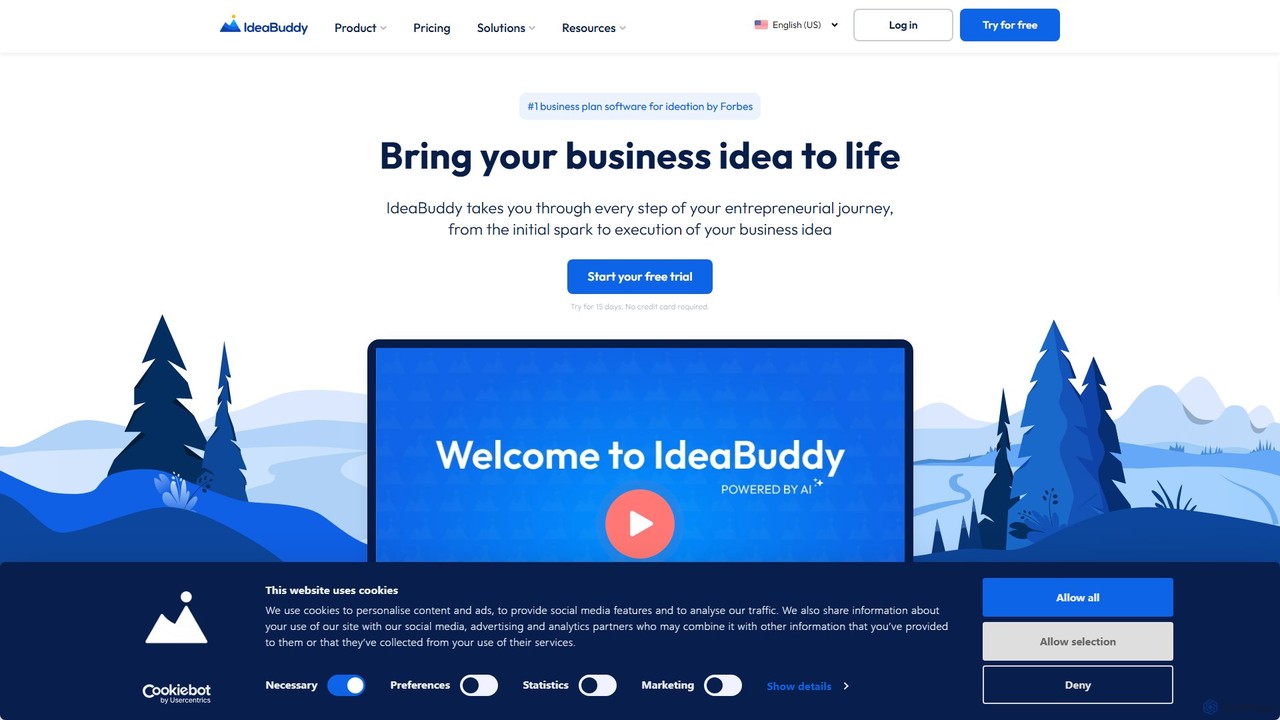
IdeaBuddy is an all-in-one, AI-powered business planning software designed for entrepreneurs and startups. It guides users through the …
IdeaBuddy is an all-in-one, AI-powered business planning software designed for entrepreneurs and startups. It guides users through the entire process of developing a business idea, from initial concept to a comprehensive, investor-ready business plan. The platform simplifies market research, financial forecasting, and strategic planning, making it easier to build a solid foundation for a new venture.
Sturppy
Sturppy is an AI-powered financial modeling and planning platform designed for startups and small businesses. It replaces complex …
Sturppy is an AI-powered financial modeling and planning platform designed for startups and small businesses. It replaces complex Excel spreadsheets with an intuitive interface, enabling founders to build investor-ready financial models, track key metrics, and generate business insights using GPT-4.
Magnimetrics
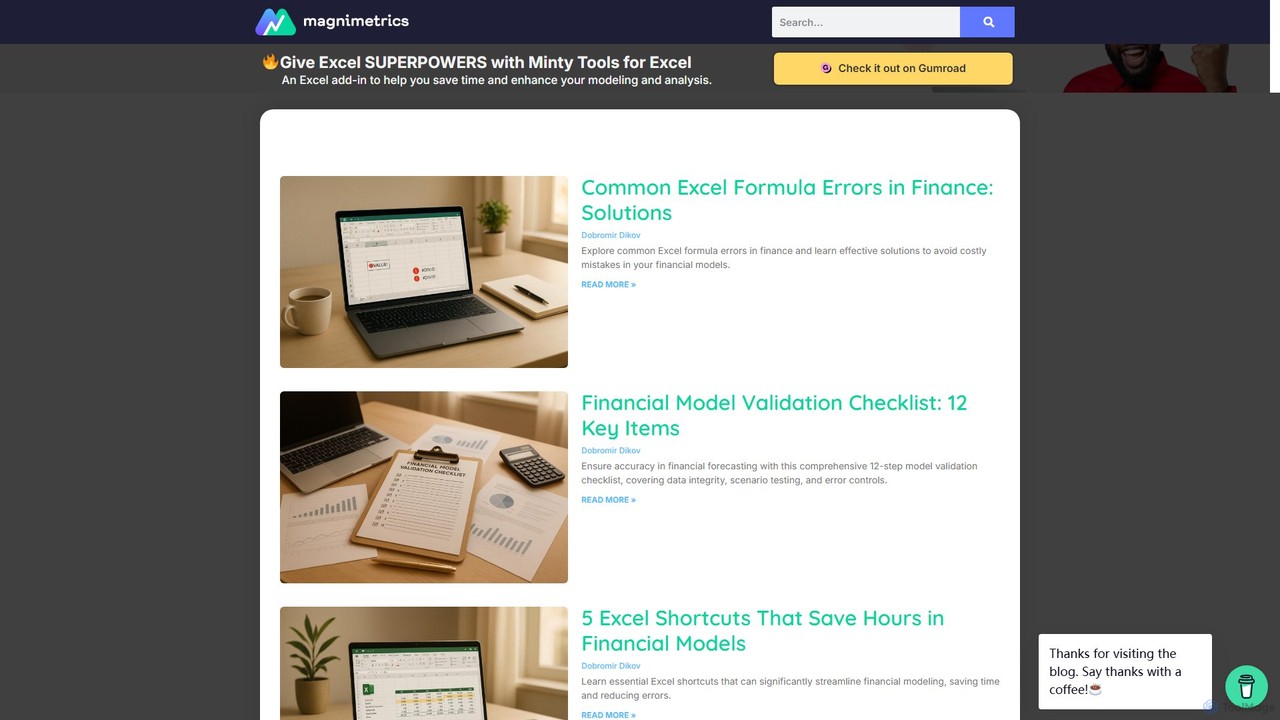
Magnimetrics offers expert resources and a powerful Excel add-in for financial professionals. It specializes in FP&A and financial …
Magnimetrics offers expert resources and a powerful Excel add-in for financial professionals. It specializes in FP&A and financial modeling, providing tools to enhance accuracy, validate models, automate error checking, and boost productivity. Ideal for analysts, startups, and enterprises looking to build robust, error-free financial spreadsheets.
About Financial Modeling
AI Financial Modeling tools are a specialized category of finance software that leverages machine learning to build, analyze, and forecast business outcomes. These platforms automate data integration and use predictive algorithms to generate dynamic financial statements, valuations, and scenario analyses with greater speed and accuracy than traditional spreadsheets. They empower financial professionals to move beyond manual data entry and focus on strategic decision-making by uncovering complex patterns and running sophisticated simulations. This approach transforms static models into interactive, intelligent forecasting engines.
Core Features
- Automated Data Integration: Connects directly to ERPs, accounting software, and market data sources to ensure models are always up-to-date.
- Predictive Forecasting: Employs machine learning algorithms, such as time-series analysis, to project revenue, expenses, and cash flow.
- Scenario & Simulation Analysis: Runs thousands of what-if scenarios and Monte Carlo simulations to assess risk and opportunity under various conditions.
- Natural Language Querying: Allows users to ask complex financial questions in plain language and receive instant model-driven answers and visualizations.
- Model Auditing & Validation: Automatically detects formula errors, logical inconsistencies, and unusual deviations within complex financial models.
Use Cases
These tools are primarily used by financial planning and analysis (FP&A) teams for budgeting and rolling forecasts, investment bankers for M&A valuation, and startup founders for fundraising and business planning. Venture capital and private equity firms also use them for portfolio analysis and due diligence, creating robust models that can be easily adjusted and shared with stakeholders.
How to Choose
When selecting an AI Financial Modeling tool, consider its integration capabilities with your existing financial stack (e.g., QuickBooks, SAP). Evaluate the sophistication of its AI features—does it offer true predictive forecasting or just template automation? Assess the platform's flexibility to build custom models versus relying on pre-built templates. Finally, consider the user interface's learning curve for non-technical finance professionals.
Financial ModelingUse Cases
Startup Valuation for Fundraising
A startup founder needs to create a robust three-statement financial model to present to venture capitalists. Instead of spending weeks building complex spreadsheets, they use an AI financial modeling tool. The tool integrates with their accounting software to pull historical data, then uses predictive algorithms to forecast revenue based on market size and growth assumptions. The founder can instantly generate multiple scenarios (e.g., 'aggressive growth' vs. 'conservative') and answer investor questions on the fly by querying the model in natural language, such as 'Show the impact on cash flow if we delay our Series A by six months.' This increases credibility and significantly shortens the fundraising cycle.
Automated Corporate Budgeting and Forecasting
An FP&A (Financial Planning & Analysis) team at a mid-sized company is responsible for the annual budget and quarterly rolling forecasts. This process is traditionally time-consuming and prone to errors. By implementing an AI modeling tool, they connect it to their sales CRM and ERP systems. The platform automatically pulls actuals, identifies seasonal trends, and generates a baseline forecast. The team can then collaborate directly on the platform to adjust drivers and assumptions, rather than emailing different spreadsheet versions. The AI can also perform variance analysis automatically, highlighting key deviations from the budget and suggesting potential causes, reducing manual analysis time by over 60%.
M&A Target Valuation and Due Diligence
An investment banking analyst is tasked with building a Discounted Cash Flow (DCF) model for a potential acquisition target. Using an AI financial modeling platform, they can rapidly build the model by connecting to financial data providers like Capital IQ. The AI assists in identifying comparable companies and automatically calculates industry-average multiples and beta. The analyst can then run hundreds of sensitivity analyses on key assumptions like WACC and terminal growth rate in seconds. This allows them to present a comprehensive valuation range to their managing director, complete with probabilistic outcomes, far more quickly and thoroughly than would be possible with a manual spreadsheet approach.
Real Estate Investment Feasibility Analysis
A real estate developer is evaluating a new commercial property project. They use an AI modeling tool to create a detailed financial model that projects cash flows over a 20-year horizon. The tool automatically incorporates macroeconomic forecasts for interest rates and inflation. The developer can easily model different financing structures (debt vs. equity) and leasing scenarios (varying occupancy rates and rental yields). Using Monte Carlo simulations, the platform calculates the probability of achieving a target IRR (Internal Rate of Return) and identifies the most critical risk factors, such as construction cost overruns or slower-than-expected lease-up periods, enabling a more informed investment decision.
Venture Capital Portfolio Performance Modeling
A venture capital firm needs to project the potential returns of its entire fund. An analyst uses an AI modeling tool to aggregate the financial projections of all portfolio companies. The platform allows them to model various exit scenarios for each company (e.g., IPO, acquisition at different multiples) and assign probabilities to each outcome. The AI can then run a simulation across the entire portfolio to generate a probability distribution of the fund's overall return (MOIC and IRR). This provides the firm's partners with a data-driven view of potential fund performance, helping them manage LP expectations and inform future investment strategies.
Dynamic Capital Allocation Strategy
The CFO of a large corporation needs to decide how to allocate capital across different business units for the upcoming year. Using an AI financial modeling tool, the strategy team builds a model that links operational KPIs (like customer acquisition cost and lifetime value) to financial outcomes for each unit. The tool allows them to run optimization scenarios to find the capital allocation mix that maximizes the corporation's overall enterprise value. They can also stress-test the strategy against potential market shocks, like a sudden increase in interest rates or a new competitor entering the market, ensuring a more resilient and data-backed capital plan.